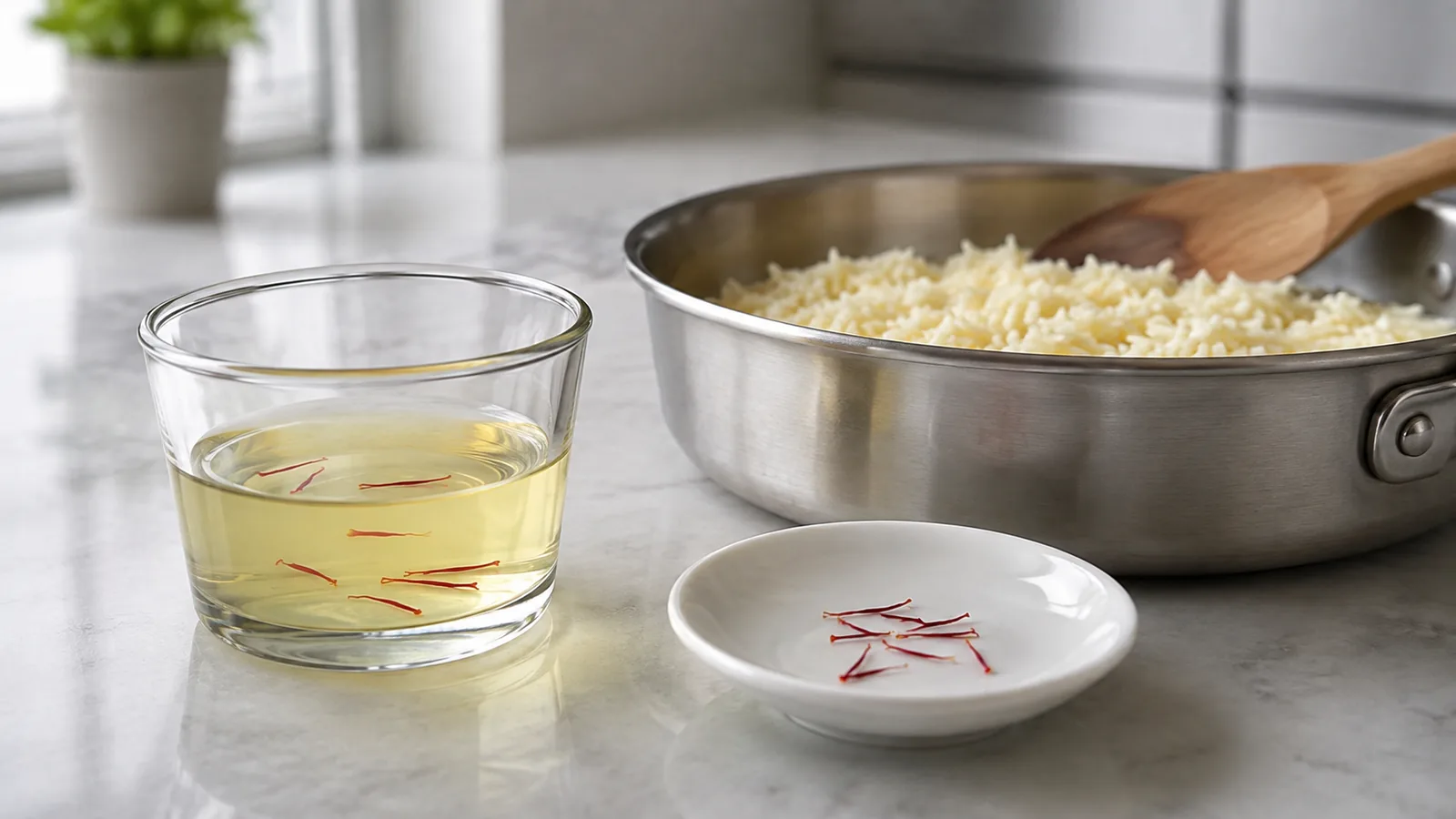
Yes, you can add saffron to yogurt. Bloom a few threads in a spoonful of warm milk or water for 10–15 minutes, let the infusion cool, then stir it into plain yogurt. Saffron in recipes like this brings a gentle aroma and golden colour; honey, cardamom, nuts, berries or mango can turn it into breakfast, a snack or a simple dessert.
Saffron in Recipes: Adding It to Yogurt for Flavor
Saffron is a premium spice that can elevate a variety of dishes, including yogurt. While yogurt is typically enjoyed plain or with fruits, saffron in recipes adds a delicate aroma, golden color, and subtle flavor that transforms this simple dish into a luxurious treat.
The method is easy, but adding dry threads straight to cold yogurt gives uneven results. A brief warm infusion releases the saffron first. Cooling that liquid before mixing protects the yogurt’s texture and makes the colour easier to distribute.
Preparing Saffron
Before adding saffron to yogurt, soak a few threads in warm milk or water for 10–15 minutes. This process releases the color and aroma, ensuring even distribution throughout the yogurt and enhancing its visual appeal.
Crush the threads lightly between clean fingers or in a small mortar. Use only enough liquid to cover them; too much will thin the yogurt. The milk or water should feel warm, not boiling. Once it has turned golden and smells aromatic, allow it to cool to room temperature.
For a dairy-free yogurt, use warm water or a compatible plant milk. Check that the plant milk does not contain a strong flavour that will hide the saffron.
How and When to Add Saffron
Stir the saffron infusion into yogurt just before serving. Adding it at the end preserves its delicate aroma and vibrant color. Gently mix to blend without overpowering the yogurt’s natural taste.
You can mix it completely for an even pale-gold bowl or fold it only a few times for visible streaks. If the yogurt becomes too loose, use less infusion next time or begin with a thicker strained yogurt.
Taste before adding sweetener. Saffron has a faint bitterness, but the yogurt already brings acidity. A small amount of honey may be enough to round both.
How Much Saffron Should You Use?
Start with a small pinch for one or two bowls. Strength changes with grade, freshness and storage, and individual threads vary in size, so a rigid count is less useful than a cautious first batch.
More is not automatically better. Excess saffron can taste medicinal or sharply bitter. If the aroma is too faint after mixing, add a little more prepared infusion rather than dropping dry threads into the yogurt.
Which Yogurt Works Best?
Plain whole-milk yogurt gives a soft, rounded result, while Greek or strained yogurt makes a thicker dessert or dip. Low-fat yogurt can also work but may taste more tart, so adjust honey or fruit after tasting.
Sweetened or flavoured yogurt is less predictable because vanilla, fruit concentrate and added sugar can obscure the spice. Start with plain yogurt when you want to understand the pairing, then build the flavour yourself.
Dairy-free yogurt can be used if its base is mild. Coconut is rich but distinct; almond and oat products vary widely. Choose one you already like on its own.
Flavor Pairings
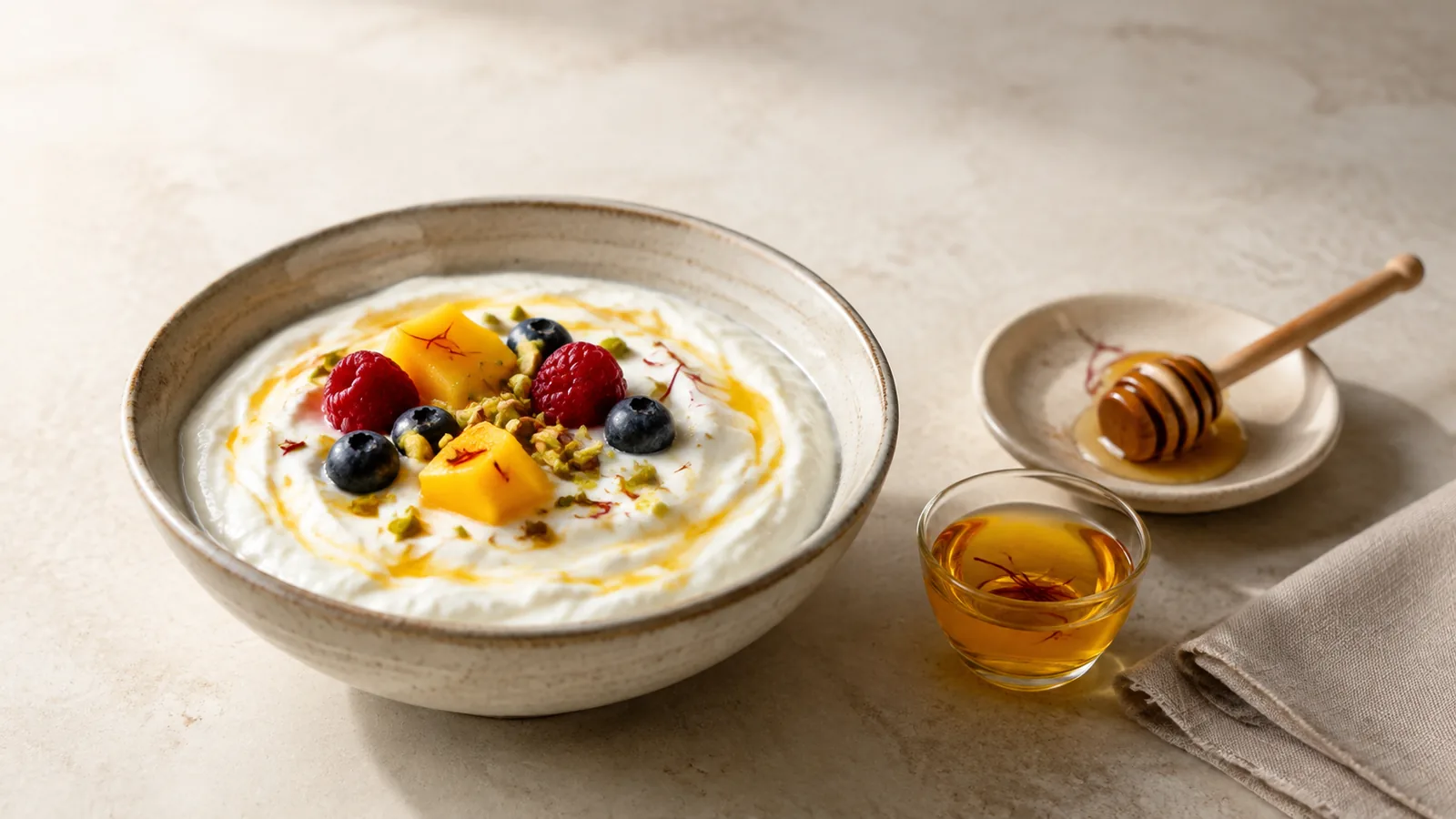
Saffron pairs beautifully with honey, nuts, cardamom, and fresh fruits such as berries or mango. Combining saffron with these ingredients enriches the flavor, creating a sophisticated and aromatic dessert or snack.
Pistachios and almonds add crunch without needing much sweetness. Cardamom should be used lightly because it can quickly dominate. Rosewater is another traditional companion, but one or two drops may be enough for a bowl.
Mango brings sweetness and a smooth texture. Berries create a sharper contrast, while pear, peach or orange can work when ripe. Add fruit shortly before serving so it remains fresh and does not release too much liquid.
A Simple Sweet Saffron Yogurt
Bloom a small pinch of lightly crushed threads in a spoonful of warm milk for 10–15 minutes. Cool it, then stir it into a bowl of plain strained yogurt. Add honey to taste and finish with chopped pistachios.
For a fruit version, fold in diced mango or spoon berries over the top. Keep some of the saffron colour visible rather than mixing until the bowl looks completely uniform.
A Savoury Saffron Yogurt Dip
Saffron yogurt does not have to be sweet. Mix the cooled infusion into thick plain yogurt with a small pinch of salt. Add finely chopped cucumber or mild herbs if they suit the meal. Serve it beside rice, grilled vegetables or cooked chicken.
Garlic can work, but use it sparingly so the saffron remains noticeable. Avoid combining many assertive spices in the same dip. The point is a clean, aromatic accompaniment, not a competition of flavours.
Can You Prepare It Ahead?
Yes. Mixing saffron yogurt a few hours ahead gives the colour time to settle and the flavour time to blend. Keep it covered and refrigerated, then stir gently before serving.
Add crunchy nuts at the last moment. Fresh fruit can also be held back if it is likely to release juice. Follow the yogurt manufacturer’s refrigeration and use-by guidance, especially once other ingredients have been mixed in.
Common Mistakes
Boiling the milk with saffron is unnecessary for this preparation. Very hot liquid can also warm and thin the yogurt when mixed immediately. Bloom gently and cool first.
Another mistake is using too much liquid. A tablespoon or small spoonful is easier to manage than a full cup. If you need more aroma, make the infusion stronger rather than making the bowl watery.
Do not use turmeric as a flavour substitute. It can create a yellow colour, but it tastes earthy and does not reproduce saffron’s aroma. For a broader explanation of extraction, see how to add saffron to a dish.
Serving and Presentation
A shallow bowl shows the golden streaks and toppings well. Use a small spoonful of honey, a few nuts or neatly cut fruit instead of burying the yogurt under garnish. The visual appeal should come from the food itself.
Serve sweet saffron yogurt with breakfast, after a meal or as a cool afternoon snack. The savoury version can sit alongside rice and grilled food. In either case, keep the portion balanced so the saffron remains a flavour rather than decoration alone.
Conclusion
Using saffron in recipes like yogurt adds elegance, aroma, and a unique taste to a simple dish. Bloom a few threads in warm milk or water for 10–15 minutes, cool the infusion and stir it in just before serving. Start lightly, then pair it with honey, nuts, cardamom, berries or mango as the dish needs. Whole threads are available through the original all red saffron page.