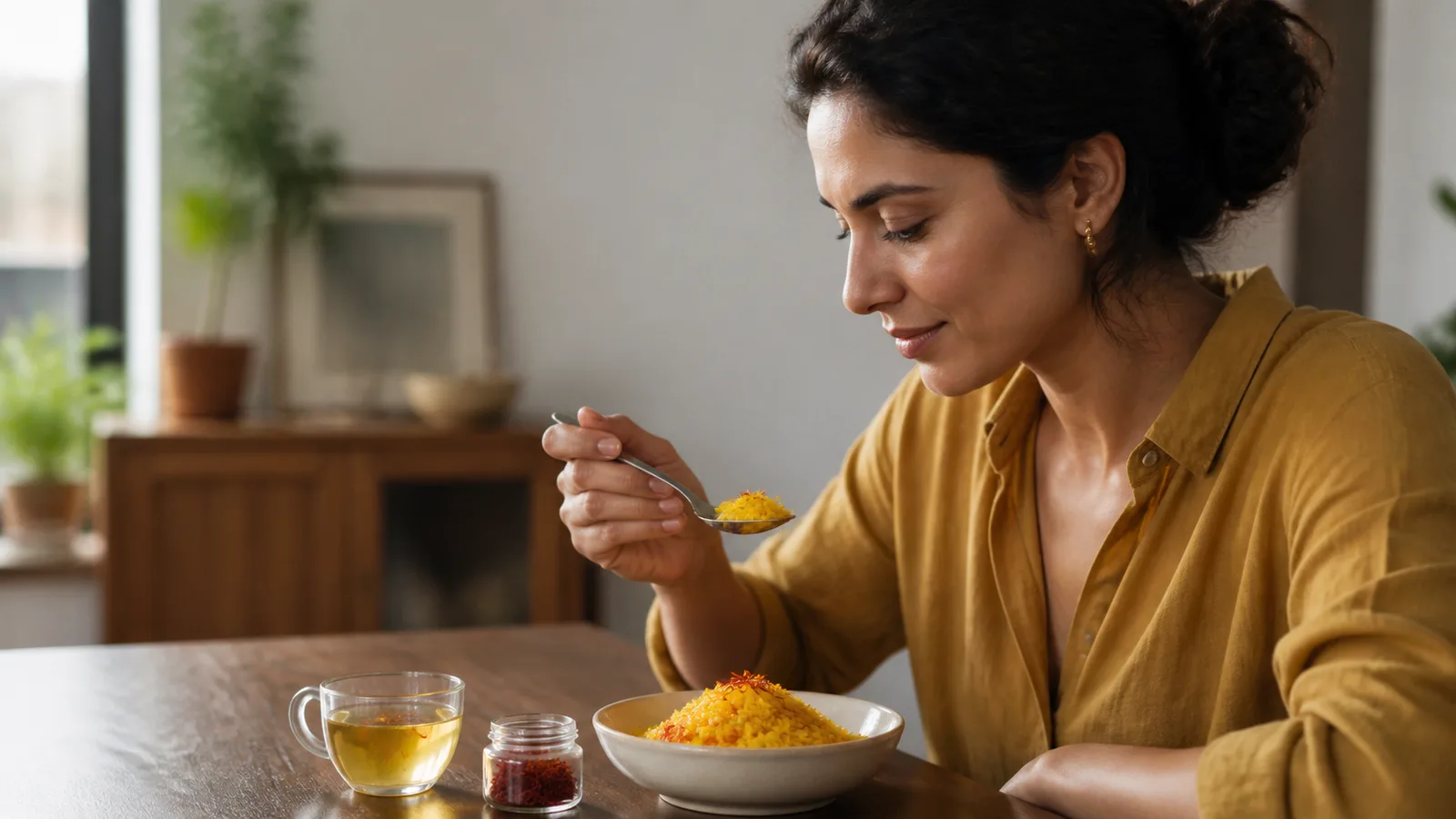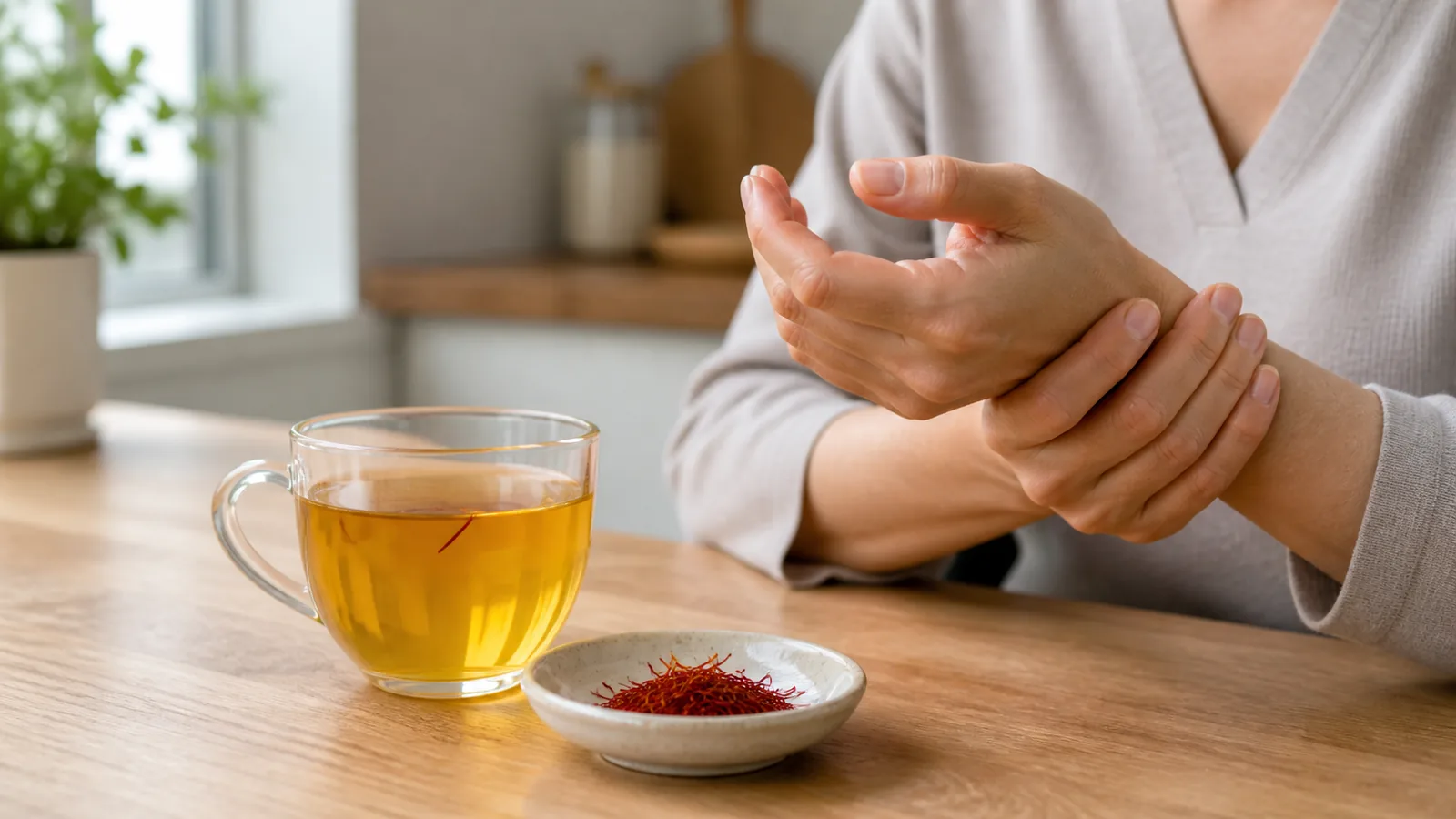
What does saffron do for a woman’s body? There is no single female-specific effect. Research has tested defined saffron preparations for premenstrual symptoms, mood, some sexual-function problems and perimenopausal complaints, with mixed levels of evidence. It does not prove that saffron balances hormones, raises oestrogen, improves fertility, clears skin or manages weight.
Culinary saffron in food is also different from a capsule used in a trial. The following saffron benefits for women describe what researchers have measured and where the claims run ahead of the data.
What Does Saffron Do for a Woman’s Body?
Saffron contains crocins, crocetin, safranal and other compounds. These are not “women’s nutrients,” and women do not need saffron simply because of their sex. Most benefits of a varied diet, adequate sleep, movement and appropriate preventive care are broader and better established.
The more specific evidence concerns symptoms in selected groups. A result for people with diagnosed premenstrual syndrome, for example, should not be expanded into a promise for every menstrual cycle or every stage of life.
Boosts Mood and Reduces Stress
Saffron extracts have been studied for depression and anxiety, including trials enrolling women. A 2026 GRADE-assessed systematic review and meta-analysis found improvements in some self-reported depression and anxiety scales, but not several clinician-rated or other mood measures. The studies differed considerably, and the evidence was rated moderate rather than conclusive.
Mood change around a period or during perimenopause can be real and disruptive. It can also need assessment. Saffron should not replace psychotherapy, prescribed treatment or urgent help for severe depression, self-harm thoughts or inability to function.
Supports Hormonal Balance
The phrase “hormonal balance” is too vague to be a medical outcome. Does saffron increase oestrogen? Human evidence does not establish a predictable oestrogen rise, nor show that culinary saffron regulates oestrogen and progesterone. Someone with irregular periods, fertility concerns, heavy bleeding or menopausal symptoms should not use that claim as a diagnosis or treatment plan.
There is narrower research on symptoms. A 2026 meta-analysis of randomised trials reported improvements in premenstrual-syndrome and dysmenorrhoea scores. The result supports further study; it does not show that saffron corrects the cause of painful periods or is safe for every person.
Is saffron good for periods? It may have a role in symptom research, but severe pain, very heavy bleeding, fainting, bleeding between periods or a sudden change deserves medical attention. Endometriosis, fibroids, anaemia and other conditions require proper investigation.
A placebo-controlled trial in 86 perimenopausal women found improvements in psychological symptoms after 12 weeks of one standardised extract. It did not improve vasomotor or physical symptoms more than placebo and was industry-funded. That is not evidence that saffron stops hot flushes or serves as hormone therapy.
Enhances Skin Health
Saffron compounds show antioxidant and pigment-related activity in laboratory research, and the spice appears in cosmetic formulas. Strong clinical evidence does not show that eating it brightens a woman’s complexion, removes dark spots or slows skin ageing. Those claims are no more established for women than for anyone else.
For a fuller evidence and safety discussion, see our guide to saffron and skin. A formulated cosmetic also differs from a homemade paste, which may stain or irritate.
Promotes Digestion and Weight Management
There is no good basis for saying a culinary serving stimulates gastric juices or improves nutrient absorption. Trials have investigated appetite and metabolic measures, but the preparations, participants and outcomes vary. A spice should not be presented as a weight-loss programme.
Persistent digestive symptoms, unexplained weight change or disordered eating warrants qualified care. Adding saffron to balanced meals can make them aromatic and enjoyable; that is a culinary benefit, not proof of altered metabolism.
Supports Sexual Health
A 2019 systematic review and meta-analysis pooled five small studies with 173 participants and found an improvement in sexual-dysfunction measures, with moderate variation between studies. The authors called for further research. Some trials involved antidepressant-associated sexual dysfunction, so the average result should not be treated as a universal libido effect.
Sexual wellbeing is influenced by relationships, comfort, hormones, menopause, medicine effects, pelvic health, mood and illness. Pain, bleeding or a persistent change deserves assessment. Do not stop an antidepressant to pursue a supplement effect.
Conclusion
The best-supported saffron effects on women are preliminary changes in selected symptom scales, particularly in mood, PMS and some sexual-function research. Saffron has not been shown to “balance” all female hormones, increase oestrogen on demand, guarantee easier periods or transform skin and weight.
Normal culinary use is the simplest context. Ask a doctor or pharmacist before using concentrated saffron if you are pregnant or breastfeeding, take regular medicine, have a bleeding condition, are preparing for surgery or are treating a health problem. Our saffron products are intended for food; contact us for product questions.