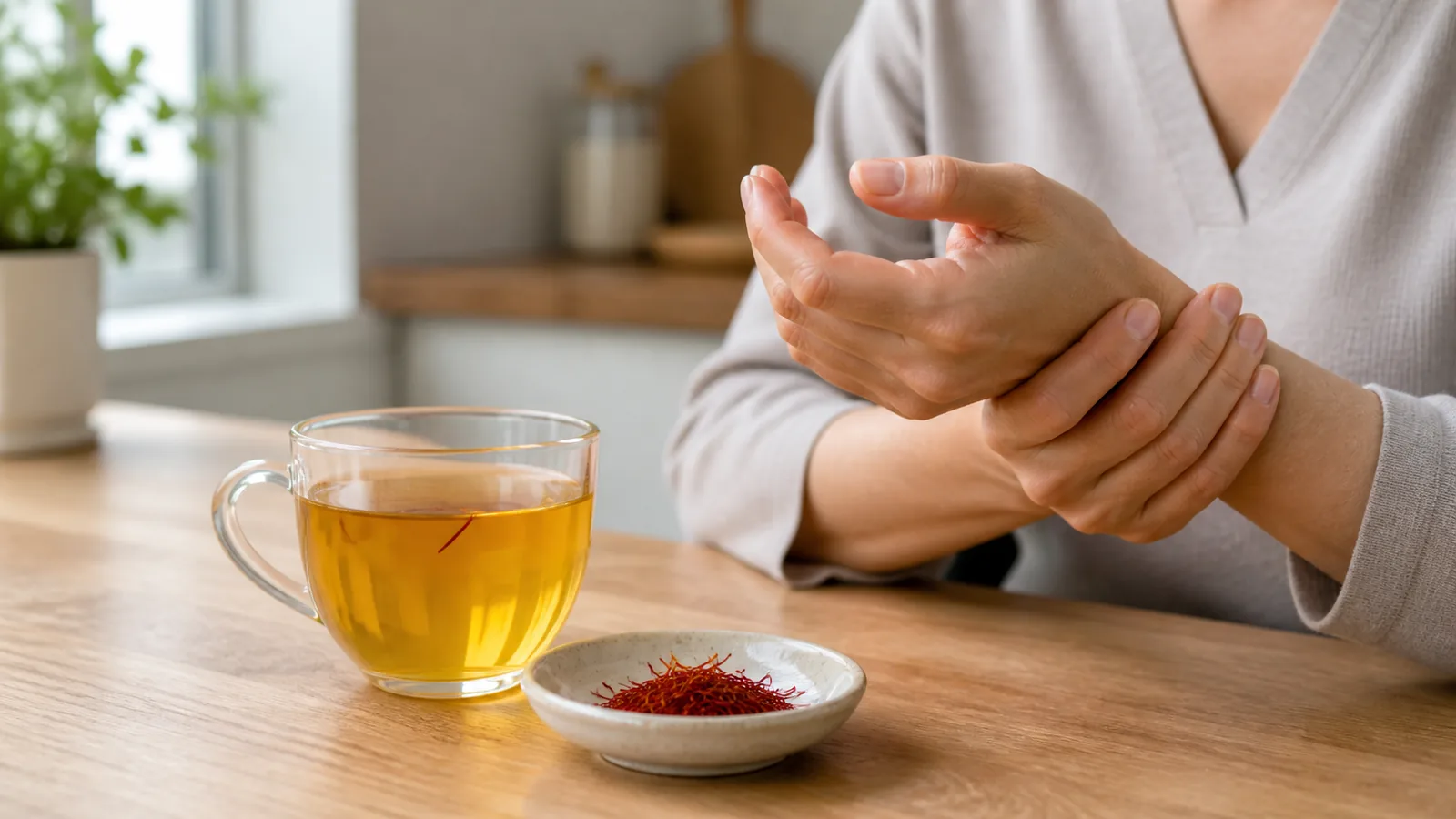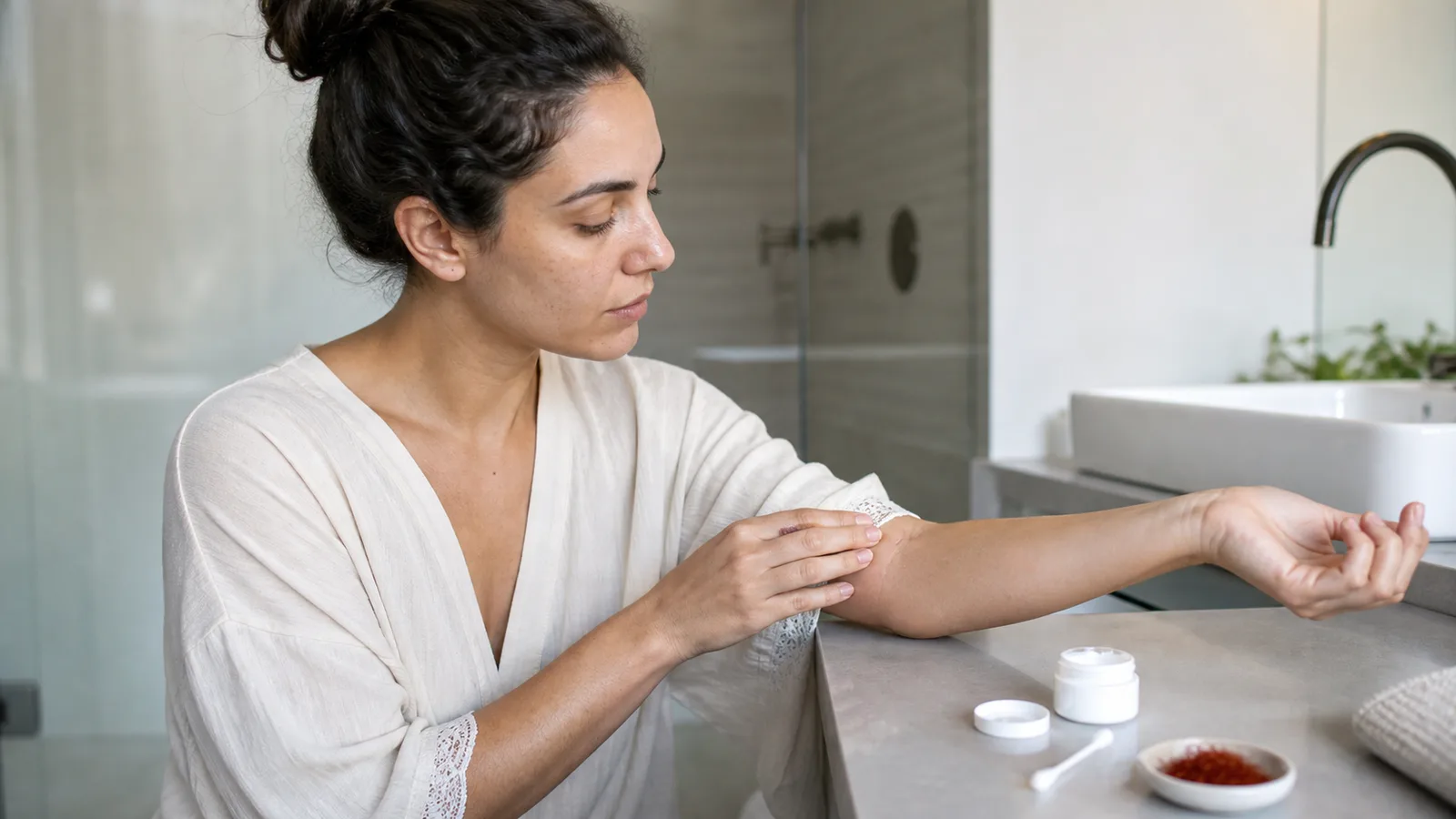
The main saffron side effects on skin are the same kinds of reactions possible with many botanical skincare ingredients: irritation or allergic contact dermatitis. Redness, itching, burning, tightness, scaling and swelling are reasons to stop using the product. The culprit may be saffron, but it may also be fragrance, a preservative, another extract or the base cream.
Serious saffron allergy is rare, yet it has been documented. A product described as natural is not automatically suitable for sensitive skin, and a cream with “saffron” in its name cannot be judged from that word alone.
Saffron side effects on face: irritation or allergy?
Irritant contact dermatitis happens when a substance disrupts the skin barrier. It may cause stinging, burning, dryness, redness or peeling, often where the product was applied. High concentrations, repeated applications and mixtures with other irritating ingredients can increase the chance of a reaction.
Allergic contact dermatitis is an immune reaction to an ingredient. A saffron allergic reaction can appear hours or days after contact and may cause an itchy saffron allergy rash, redness or swelling. Occupational research in 110 saffron workers confirms that parts of the saffron plant can act as contact allergens, although heavy workplace exposure is not the same as occasional use of a finished face cream.
A rare immediate allergic reaction to saffron has also been reported after ingestion. If facial swelling is accompanied by swelling of the lips or tongue, wheezing, trouble breathing, faintness or widespread hives, seek emergency help rather than trying another skincare remedy.
Saffron cream side effects depend on the whole formula
Saffron face cream side effects can come from any part of a formula containing dozens of ingredients. Fragrance, essential oils, preservatives, exfoliating acids, retinoids and the cream base may be more relevant to a reaction than the saffron. Even products labelled unscented or plant-based can contain ingredients that bother sensitive skin.
This matters for searches about Bhramara Saffron Milk Facial side effects, Zafran whitening cream side effects, Saffron Gold cream side effects, Safrozan cream side effects or saffron night cream side effects. Those names refer to different commercial formulas. Without the current package, full ingredient list, country-specific formulation and batch details, it would be unsafe to assign a side effect to saffron or declare a brand safe.
The same rule applies when researching saffron milk glow facial cream side effects, saffron soap side effects or the side effects of kesar products. Check the exact label and directions; do not rely on the colour of the cream, a product name or an online review.
Possible skin reactions to watch for
- Redness, burning or stinging: these can signal irritation, especially when the skin barrier is already dry or damaged.
- Itching, bumps or a spreading rash: these may fit allergic contact dermatitis and can take time to develop.
- Dryness, tightness or flaking: stop adding more product in an attempt to “push through” the reaction.
- Swelling: wash off the product. Marked facial, eyelid, lip or tongue swelling needs prompt medical assessment; breathing symptoms are an emergency.
- New darkening or lightening: inflammation itself can leave pigment changes, especially after rubbing or repeated use.
Does saffron cause photosensitivity?
There is no reliable human evidence that ordinary topical saffron makes the face photosensitive. One laboratory study found no phototoxicity from saffron alone in its cell models; that is not a clinical safety trial, but it does not support the claim that saffron commonly causes sunburn or a sunlight rash.
A finished product may still contain a different photosensitizing or exfoliating ingredient. Follow its label. Sunscreen is sensible daily skin protection, not an antidote that makes an irritating cream safe, and applying the product only at night does not solve an allergy.
Whitening and brightening creams need extra scrutiny
Saffron is often promoted as able to brighten skin, reduce dark spots and even out skin tone. Human evidence is limited: a small 20-person study tested a specifically formulated saffron-extract and avocado-oil cream for 12 weeks. It did not establish the safety or effectiveness of raw threads, homemade masks, soaps or unrelated commercial creams.
More importantly, “saffron whitening cream” describes a product category, not its contents. The FDA warns about skin-lightening products containing mercury or nonprescription hydroquinone and notes reports of rash, facial swelling and permanent discoloration. A handmade, incomplete or missing label is a reason not to use a product on the face.
How to patch-test a new saffron face product
A one-time dab for a few minutes can miss a delayed reaction. The American Academy of Dermatology recommends applying the normal amount to several small test areas twice daily for seven to ten days. Use an area such as the underside of the arm or bend of the elbow, and leave a wash-off product on only as long as its directions say.
In other words, trying a small amount once is not a complete patch test. Repeated use over the recommended test period is intended to catch delayed reactions, while the small area limits exposure.
Do not home-test something that previously caused a severe reaction. If the test area becomes red, itchy or swollen, wash the product off and do not use it again. Persistent or severe reactions, or difficulty identifying the responsible ingredient, are reasons to see a dermatologist; formal patch testing is different from a home product test.
What not to do with raw saffron
There is no standard “safe dilution” for mixing threads or saffron extract into a carrier oil, cream, milk, yogurt, honey or lemon juice. Homemade concentration is uncertain, the other ingredient can irritate or cause allergy, and a kitchen mixture is not a stability- or contamination-tested cosmetic. Adding moisturizer after a reaction does not make the original mixture safe.
If you still choose a simple cosmetic that lists saffron, use the finished product exactly as labelled, introduce one new product at a time and keep it away from the eyes and broken skin. Rowhani saffron is sold as a culinary food product, not as a tested face cream or treatment for pigmentation.
The safest answer
What are the side effects of saffron on the face? Irritation, dryness and allergic rash are possible; swelling can be serious. Photosensitivity from saffron itself is not established. With a commercial cream, soap or whitening product, the entire ingredient list matters more than the saffron name. Stop after a reaction, keep the package for review and seek medical help when symptoms are severe or do not settle.