


OSEC was presented in Iran as a proposed international organisation for saffron-producing and exporting countries. Its advocates imagined an institution loosely modelled on OPEC: countries and industry participants would coordinate standards, protect producers, strengthen Iran’s position in world trade and reduce the loss of value through anonymous bulk exports.
The original report described an ambition, not proof that a treaty organisation had been established. This updated article preserves what the speakers proposed in 2020 and separates it from the standards and quality work that can be verified today.
What OSEC was supposed to mean
Seyed Ehsan Mostafavi, described as the designer of the World Saffron Production and Export Organization, used the acronym OSEC for an organisation covering domestic and international work. In his account, OSEC would support participants across the value chain: farmers, processors, exporters, large traders and saffron-producing countries.
The concept had several connected goals:
- develop and harmonise saffron quality standards;
- coordinate production and export information;
- protect the rights of producing countries and people working in the trade;
- reduce opportunistic dealing and destructive competition;
- make Iranian origin and quality more visible to buyers;
- move more saffron from anonymous bulk sale into traceable, branded channels.
Mostafavi argued that international commodity organisations can give producing countries a structured place to discuss a market. The OPEC comparison explained the scale of the idea, but it did not mean saffron and petroleum markets work in the same way. Saffron has dispersed growers, variable harvests, many grades, private brands and substitutable origins; an organisation could not create durable value merely by announcing a price.
The domestic foundation described in Torbat-e Heydarieh
The report presented Torbat-e Heydarieh in Khorasan Razavi as a practical base for the proposal. Mostafavi listed large saffron warehouses, a specialised trading hall, a saffron museum and library, a dialogue forum, an agricultural-equipment shop and specialised laboratories. These details recorded the facilities he said were operating at the time; they should not be read as a current inventory without a new institutional audit.
He also described a machine for sorting saffron corms—the botanical term for what the translation called “onions.” According to his statement, fields planted with machine-sorted corms could exceed 10 kg per hectare, compared with a national average he gave as 3.08 kg. The article supplied no trial design, field conditions or independent dataset, so those figures are preserved as an attributed historical claim rather than a forecast for growers.
The price-authority argument
Seyed Hassan Hosseini Shahroudi, then identified as spokesman for the Majles Economic Commission, said the OSEC plan was on the agenda. He linked it to Iran’s large production share, commodity-exchange trading, better recognition of Iranian quality and a stronger reference price for exports.
His concern was that Iranian saffron was often exported in bulk and then packed and sold under identities created elsewhere. In that view, better organisation of production, marketing and sales would help farmers, exporters and consumers receive fairer treatment while preserving the product’s Iranian origin.
A commodity exchange can make bids, grades and delivery terms more visible, but neither an exchange nor OSEC can guarantee a “real” or higher price. Buyers still respond to tested quality, available supply, payment and delivery risk, competing origins, inventory, currency and demand. Price coordination also has legal and competition implications in each participating market.
Branding was part of the proposal, but traceability comes first
Ramin Asmi, identified as head of the saffron unit of the Khorasan Razavi Agriculture-Jahad organisation, called OSEC a route to protect Iranian saffron from being presented under another country’s name. He supported an international approach to recognition and branding in both domestic and export markets.
Branding alone cannot prove origin. A credible system needs lot-level records from grower or aggregator through drying, testing, packing and shipment. It also needs controls over who may use a collective mark, how complaints are investigated and what happens when a batch fails. Without that machinery, a new name on a box adds marketing but not verification.
What has changed in saffron standards
International standardisation does not need to begin from zero. ISO 3632-1:2025 now specifies requirements for dried Crocus sativus saffron in filament, cut-filament and powder forms, with storage and transport recommendations. That is the current edition of the specification; the 2011 edition referenced in older trade material has been withdrawn.
ISO compliance is one layer, not a complete commercial guarantee. Sampling must represent the lot, laboratories must use appropriate methods, and buyers may impose additional food-safety, contaminant, residue, labelling and traceability requirements. Powdered saffron presents a particular authenticity risk because foreign material is harder to see.
Current work is focused on quality integrity
Recent official programmes describe concrete work in the areas OSEC advocates discussed. FAO and Iran have been working on saffron authenticity, traceability, post-harvest practice, safety, modern marketing and value-chain governance. A 2025 FAO quality-integrity workshop brought together farmers, processors, cooperatives, traders and national experts.
That work is evidence of collaboration on the saffron sector. It is not evidence that an international body called OSEC acquired members, legal personality or price-setting authority. Until a current official charter, member list and governing record can be produced, OSEC is best described as the proposal reported here.
The steps an OSEC organisation would actually require
1. A published mandate
The founders would need to state whether the body is a trade association, standards forum, treaty organisation, promotion council or data service. Those forms have different powers and obligations.
2. Verifiable membership and governance
Participating countries and organisations, voting rules, financing, conflicts of interest, audit arrangements and dispute procedures should be public. Growers and small processors need meaningful representation, not merely a reference in the mission statement.
3. Shared definitions and data
Production and trade numbers must use comparable crop years, moisture bases, product forms and grades. Publishing a range and methodology is more credible than announcing one precise global figure built from incompatible reports.
4. Accredited testing and traceability
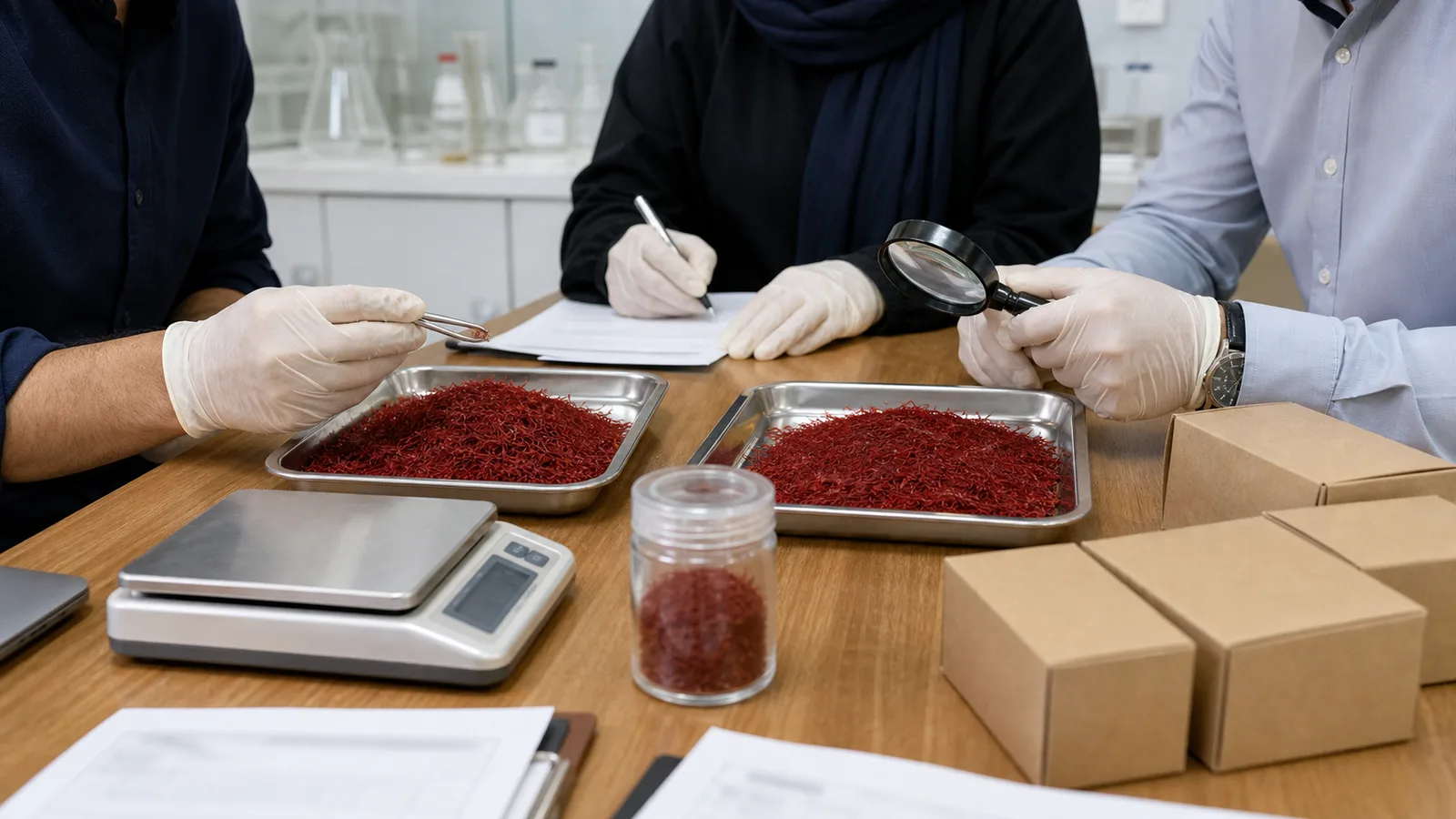
Standards need representative sampling, capable laboratories, proficiency checks and a traceable connection between each certificate and shipment. A failed or substituted lot must be detectable after export.
5. Market services that buyers will use
Reliable specifications, price and volume reporting, model contracts, origin verification and complaint resolution can reduce transaction risk. Claims of authority matter less than services that produce repeat orders.
6. Independent review
The organisation would need to publish outcomes: whether farmer returns improved, rejected shipments fell, origin claims became more reliable and value-added exports grew. Unverified yield or market-share promises should not stand in for results.
What the OSEC proposal still teaches
The lasting point is not the acronym. The 2020 speakers identified real weaknesses: fragmented production, inconsistent standards, bulk export, weak origin visibility and too little value returning to the people who grow and process saffron. Current quality-integrity projects address several of those problems through testing, traceability and better post-harvest practice.
If OSEC is revived, its value will depend on a transparent charter and measurable work—not on comparison with OPEC or a promise to command the global saffron price.

![Exporting Saffron to Turkey + Price Guide [Complete 0 to 100]](https://img.rowhanisaffron.com/20260827003933/saffron-export-turkey-quality-inspection.webp)



