This Sweets Kolompeh Kermani Saffron Recipe makes the softly spiced date-and-walnut cookies associated with Kerman. Each kolompeh has a tender saffron dough, a fragrant filling and the patterned top that gives the pastry its familiar character.
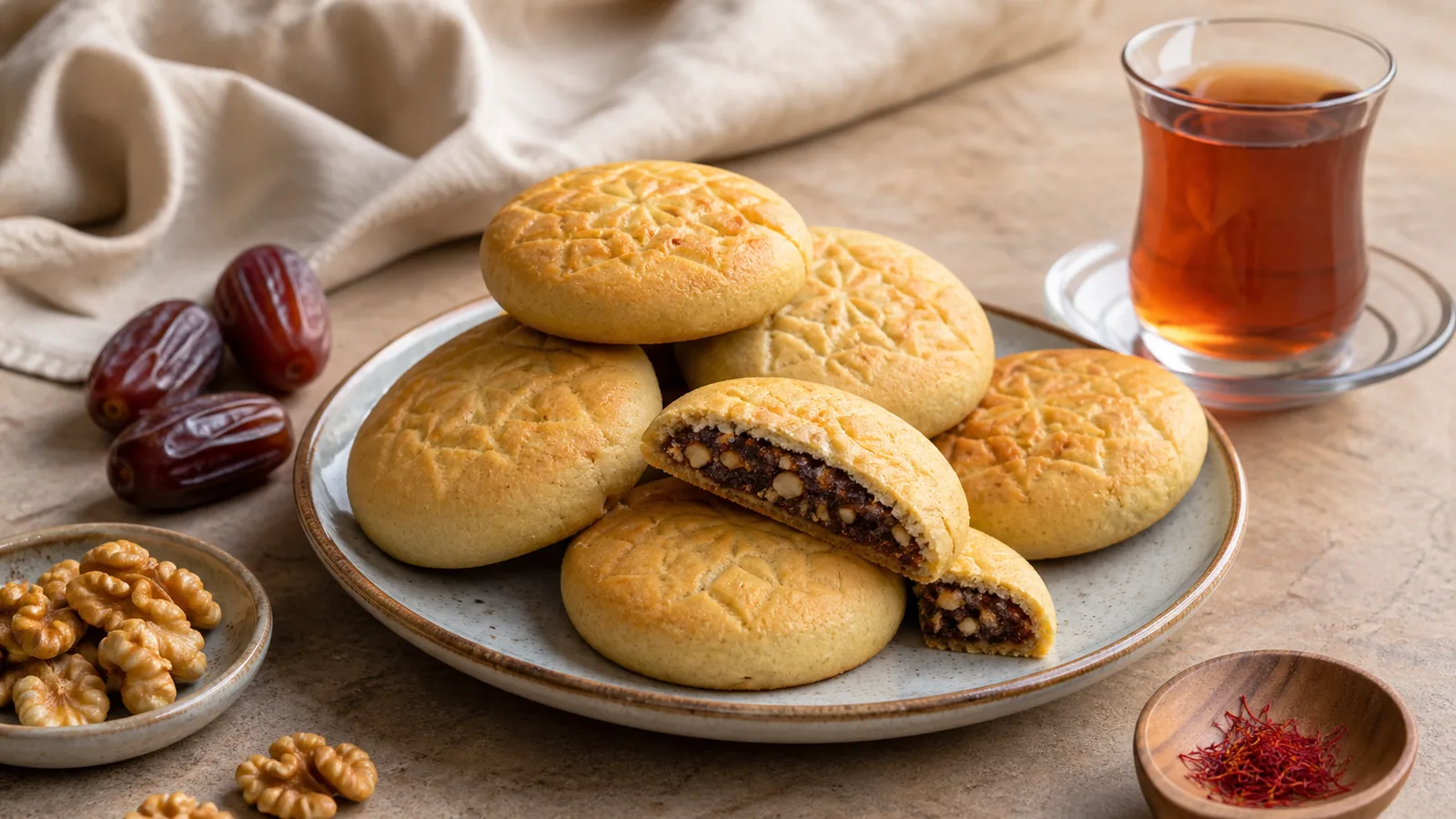
The name is occasionally written kolampeh. The dough itself is not sweetened in this version; the dates provide the sweetness. It is also handled lightly rather than kneaded, which helps the baked cookies stay delicate instead of becoming tough.
Kolompeh recipe ingredients
For the saffron dough
- 500 g plain white flour, about 4 cups, plus a little for rolling
- 250 g solid pastry fat, vegetable shortening or ghee
- 180 g plain yogurt, about 12 tablespoons
- 2 egg yolks
- 1 teaspoon baking powder
- 1/3 teaspoon saffron threads, finely ground
- 1 tablespoon hot water, for infusing the saffron
For the date and walnut filling
- 150 g soft dates, weighed after removing the stones
- 50 g finely ground walnuts
- 1/3 teaspoon ground cinnamon
- 1/2 teaspoon ground cardamom
You will also need a round cutter and, if you have one, a kolompeh stamp. A clean cookie stamp or a fork can make a simple pattern when the traditional carved stamp is not available.
Prepare the saffron dough
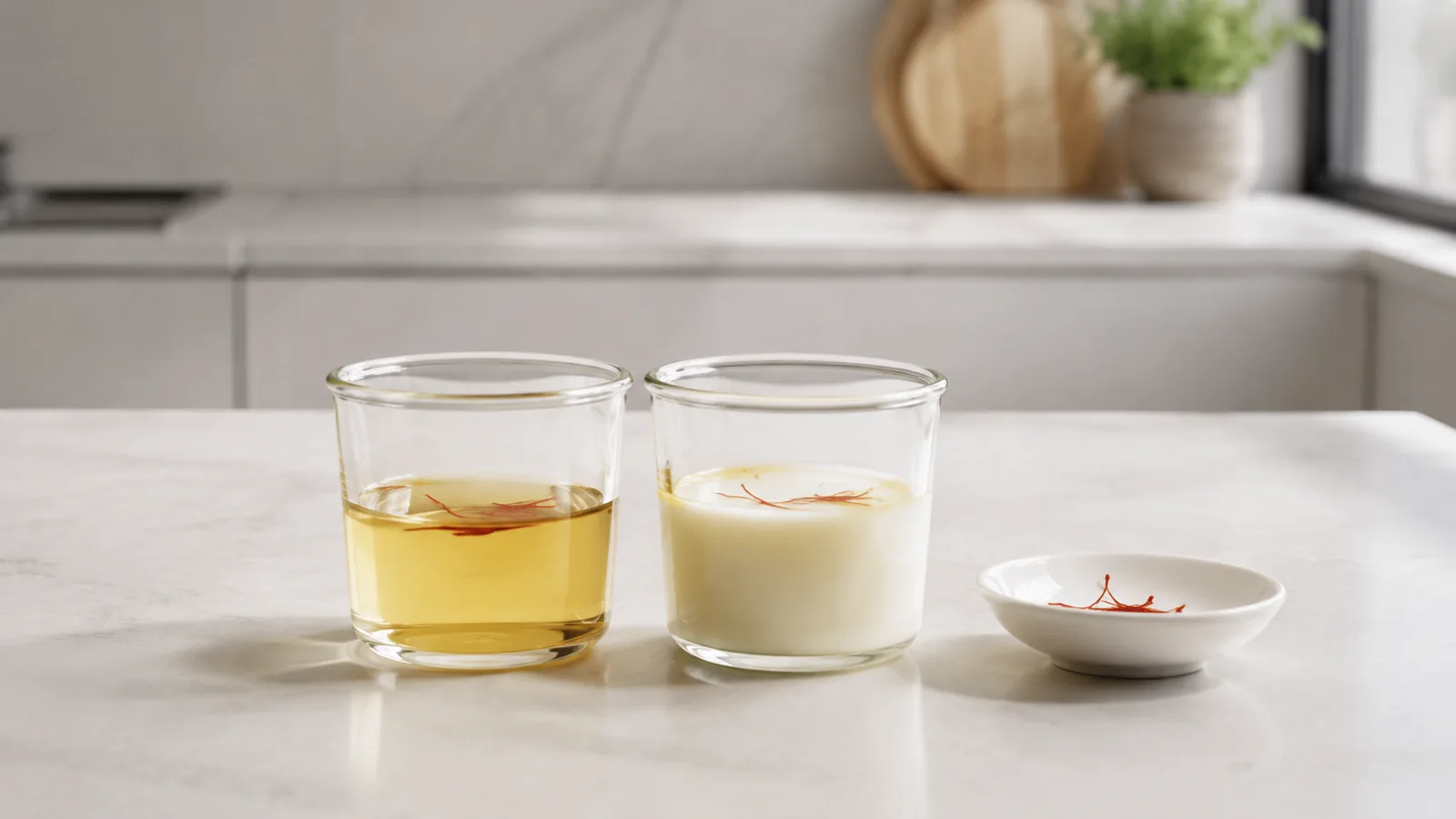
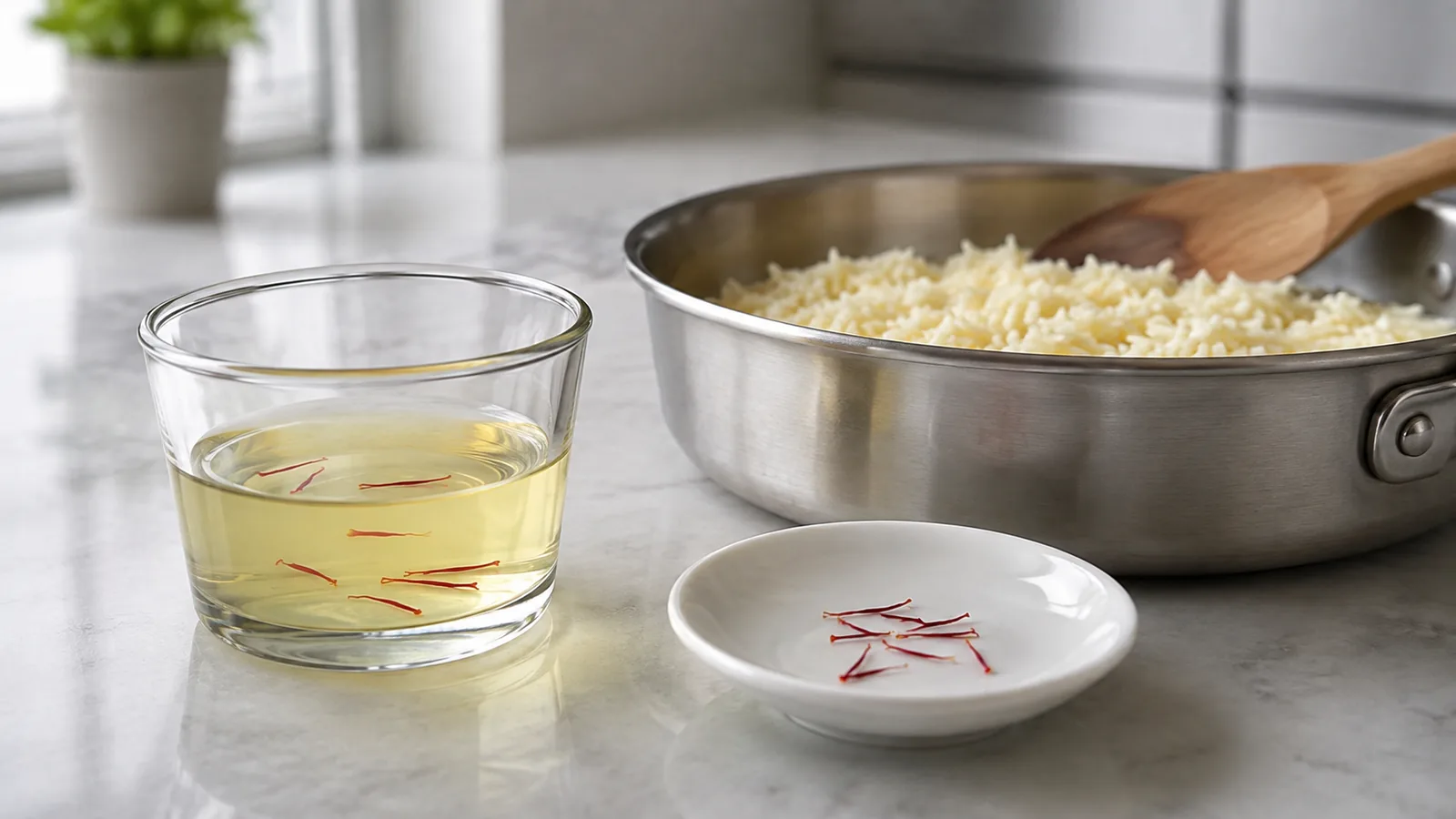
Steep the ground saffron in the tablespoon of hot water until the liquid is strongly coloured and has cooled to lukewarm. For a fuller explanation, see our guide to brewing saffron.
Put the flour in a wide bowl. Rub in the solid fat with your fingertips until the mixture is even and resembles fine crumbs. Do not melt the fat: a warm, oily mixture will make the dough difficult to shape.
In another bowl, stir the baking powder into the yogurt. Add the egg yolks and saffron infusion, then whisk just until smooth.
Pour the yogurt mixture into the flour. Fold and press gently until the crumbs come together as a soft dough. Avoid prolonged kneading. If a few dry patches remain, bring them in with damp fingertips rather than pouring in extra water.
Flatten the dough into a thick disc, wrap it and refrigerate for 2 hours. This rest firms the fat, reduces stickiness and makes the rounds easier to stamp.
Make the date filling
If the dates are already soft, simply remove their stones and mash the flesh. For firm or dry dates, cover them with hot water for only a few minutes, drain well and slip off any loose skin. Pat them dry before mashing so the filling does not wet the dough.
Mix the date paste with the walnuts, cinnamon and cardamom. It should hold together when pinched. Divide it into small portions so you can fill the cookies without stopping once the dough is rolled.
Shape and stamp the kolompeh cookies
Heat the oven to 160°C. Line a baking tray with baking paper.
Lightly flour the work surface and rolling pin. Roll part of the chilled dough to about 5 mm thick, keeping the rest refrigerated. Cut an even number of rounds because each cookie needs a bottom and a top.
Place a modest spoonful of filling in the centre of one round, leaving a clear rim. Lay a second round over it and press around the filling to expel trapped air. Seal the edges firmly; an overfilled cookie is more likely to open in the oven.
Press the kolompeh stamp straight down on the top, firmly enough to leave the pattern without cutting through the dough. If the design sticks, dust the stamp very lightly with flour. A fork can be used to crimp the edge and add a simple pattern.
Transfer the shaped cookie to the tray, then repeat with the remaining dough and filling. Gather scraps gently and reroll them once; repeated rolling can make the last cookies firmer than the first.
Bake without over-browning
Bake on the middle shelf for 15 to 20 minutes. The base should be set and the top should remain fairly pale; this kolompeh recipe is not intended to produce a deeply browned, crisp biscuit.
Let the cookies stand on the tray for 5 minutes before moving them to a rack. They are fragile while hot and settle as they cool.
How to keep the stamp clear
- Chill the dough fully: soft fat makes the pattern blur.
- Use flour sparingly: too much dries the surface and dulls the design.
- Do not overfill: a flat, even filling allows the stamp to reach the whole top.
- Stamp before baking: press once with steady pressure instead of rocking the tool.
Serving and storage
Serve the cooled kolompeh with tea or coffee. Its date centre tastes sweeter once the warm spices have had time to settle, so the cookie does not need icing or a sugar glaze.
Keep the completely cooled cookies in an airtight container in a cool, dry place. Separate layers with baking paper to protect the stamped surfaces. This recipe contains wheat, dairy, egg and walnuts.