


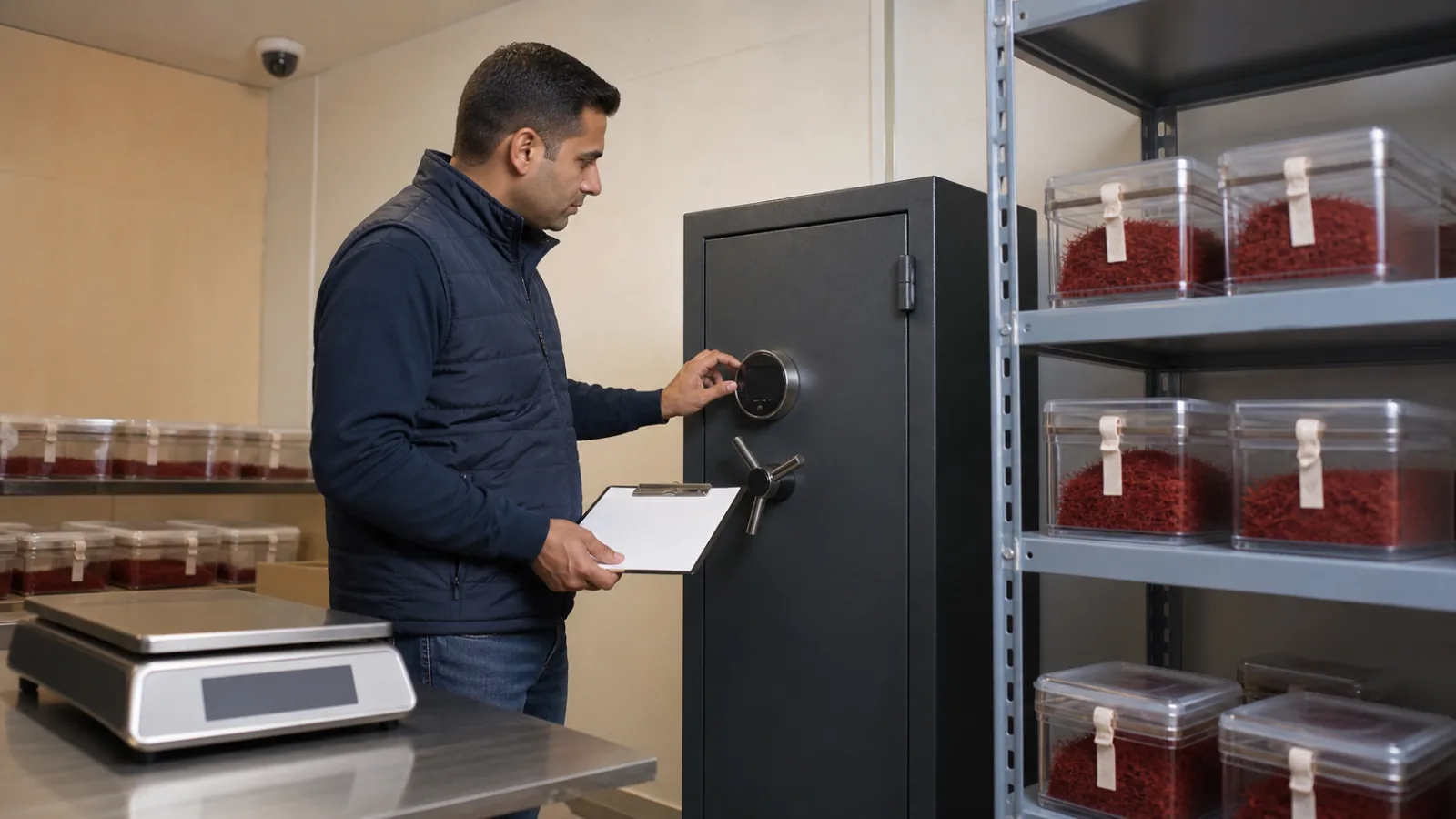
“Stealing a gang of saffron safes” is the awkward translated title of a historical crime report from Torbat-e Heydarieh. The incident concerned saffron kept in a merchant’s large safe, not a gang stealing multiple safes. According to the account, two suspects were detained after part of the missing stock was offered for sale locally.
The surviving report does not give a clear publication date, the total weight taken or the final court judgment. For that reason, this article distinguishes the police narrative and alleged admissions from facts established at trial. It also avoids repeating operational details that would turn an old news item into instructions for theft.
What the historical report said happened
A major saffron merchant in Torbat-e Heydarieh travelled to Mashhad with his family. The report said a 22-year-old acquaintance had watched the house and learned that it would be empty. He allegedly discussed the plan with a friend, obtained a pickup and entered the property at night.
The old translation repeats a damaged description of the break-in. Its clear points are that a large commercial-style safe was targeted, cutting equipment was used, and the saffron stored inside was removed. It described the missing quantity only as “tens of kilograms,” so a more precise total should not be invented.
When the merchant returned, he reported the theft to police in Torbat-e Heydarieh. An intelligence team identified in the source as being led by Colonel Zargham began investigating places where an unusual quantity of saffron might be offered for sale.
How the saffron was reportedly traced
The account said a buyer became suspicious when a young seller appeared not to know the normal value of the saffron he was offering. Police were contacted and recovered six kilograms during the first detention. Investigators then detained a second suspect in Mashhad and reported finding a further eight kilograms at his home.
Those figures establish that the old story reported 14 kilograms recovered in two locations. They do not establish the original loss, how much remained missing or the grade and condition of the recovered material. The text also said the two accused described the scene in the presence of an official named Saffar from the third branch of the Torbat-e Heydarieh court office.
One accused was reported as saying that a prior dispute with the merchant motivated the act. That remains an attributed statement from the case report, not an independent finding about motive. The names in the original were first names only, and repeating them adds little to the public value of the record.
Why stored saffron attracts security risk
Dried saffron concentrates substantial value into a small, portable volume. A wholesaler may hold stock gathered from many growers, and an intruder does not need a large vehicle to remove a meaningful quantity. The same characteristics that make saffron efficient to transport also make inventory control important.
Security should therefore cover the product, the information around it and the chain of custody. A safe is one layer, not the whole system. Sensible controls include:
- keeping dated weight, grade, batch and package records so a loss can be identified accurately;
- limiting knowledge of stock volume, storage location and travel schedules;
- using layered physical security, alarms and monitored access appropriate to the value held;
- separating bulk stock where practical so one breach does not expose the entire inventory;
- recording every handover between grower, processor, warehouse and buyer; and
- contacting police rather than confronting a suspicious seller or attempting private recovery.
These are general risk-management principles, not a guarantee against crime. Businesses should obtain a professional assessment suited to their premises, local law, insurer requirements and actual inventory value.
Traceability helps after a loss
The case narrative turned on an unusual local sale, but suspicion about price is not a dependable tracing system. Sealed batches, consistent lot identifiers, transaction records and documented weights make it easier to explain what is missing and to distinguish legitimate goods from questionable stock.
Traceability also protects quality. Saffron recovered after unknown storage and handling should not automatically return to sale. Packaging may have been opened, batches may have been mixed, and exposure to moisture, contamination or unsuitable conditions may be impossible to reconstruct. Any recovered food product needs an appropriate safety and quality decision before commercial release.
Reading this report responsibly
This incident should not be confused with a separate 2019 Torbat-e Heydarieh case involving 280 kilograms taken from a processing and packaging company. The dates, quantities and reported circumstances differ. Combining the two would create a more dramatic story, but it would be inaccurate.
The durable lesson from the saffron-safe case is simple. High-value inventory needs accurate records and layered protection, and reports about arrests need careful language until the legal process is known. This page keeps the event in the historical record without treating allegation as conviction or damaged translation as verified detail.
Sources and limits
- The original Rowhani Saffron article, attributed to a Khorasan/Tabnak report, is the source for this older safe-theft narrative, the Torbat-e Heydarieh and Mashhad locations, reported recoveries of six and eight kilograms, and the named officials. The underlying page was not recovered independently, so uncertain details remain qualified.
- For comparison only, Tasnim’s report of the later 280-kilogram company theft confirms that it was a different case and should not be merged with this one.

![Exporting Saffron to Turkey + Price Guide [Complete 0 to 100]](https://img.rowhanisaffron.com/20260827003933/saffron-export-turkey-quality-inspection.webp)



