


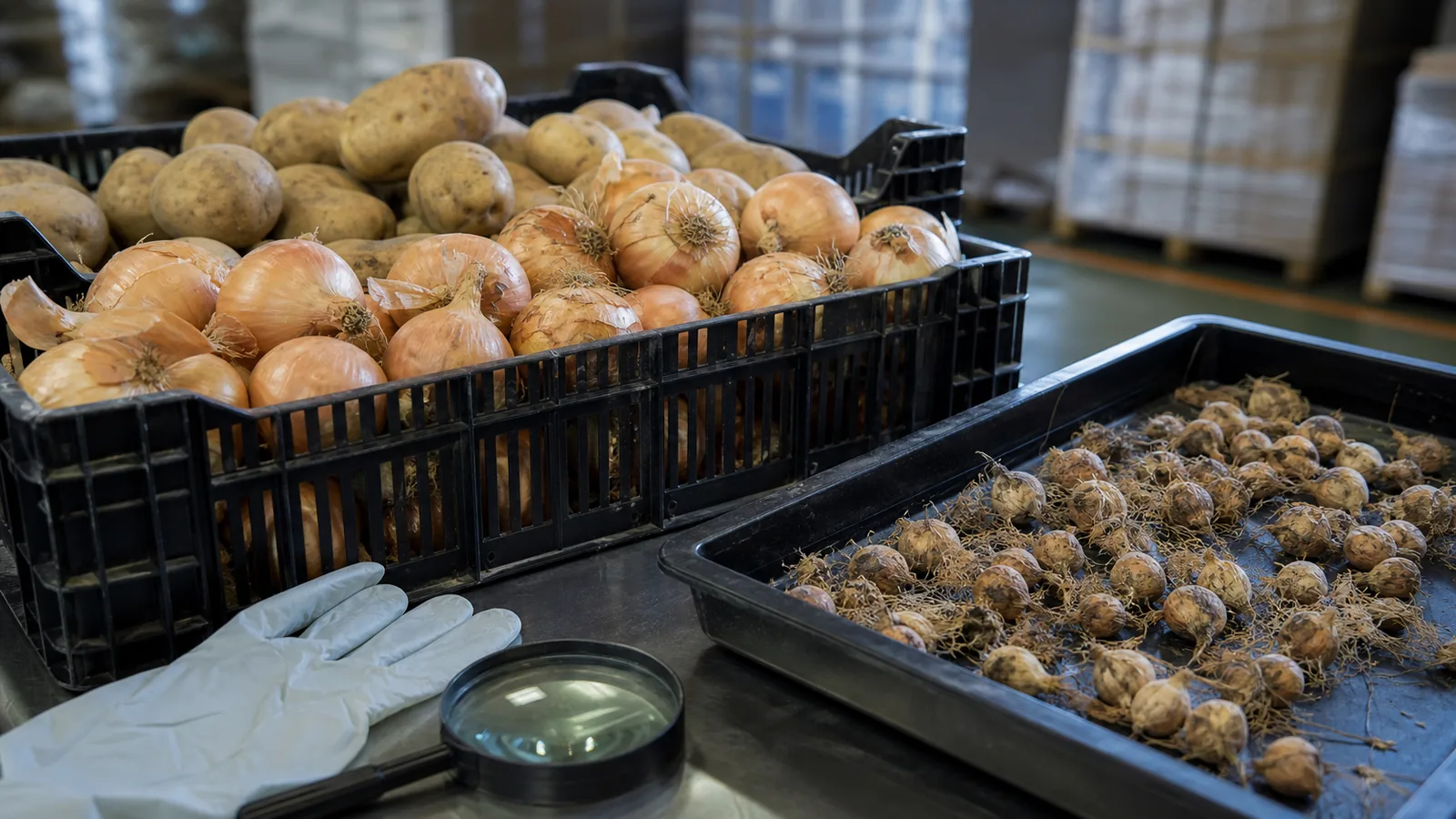
The smuggling of saffron described in this October 2017 Mehr News interview primarily concerned live saffron corms concealed among ordinary onions and potatoes—not packages of dried red spice. Gholamreza Miri of Iran’s National Saffron Council said the activity followed the season when corms could be lifted from the ground.
The quantities, tariffs and harvest timing below are preserved as claims from that interview. They are not current enforcement figures or a present market update.
When corm smuggling was said to occur
Miri said late April to mid-September was the usual risk period. By the time of the interview, saffron plants were entering their flowering season and the corms were in the soil, so he did not regard October as the normal time for moving them.
That seasonal distinction is practical. Corms are dormant and handled differently from a flowering crop. A report about planting material therefore cannot be read as evidence that finished saffron threads were unavailable or being seized at the same time.
How concealment was alleged to work
The translated article says corms were hidden in consignments described as onions and potatoes. Miri referred to loads of about 10–20 tonnes and said one-third or two-thirds might consist of saffron corms. He presented this as information he had heard, not as a documented seizure in the article.
He also recalled a visitor asking to buy 200 tonnes of saffron corms for removal from Iran and saying that such material was obtained from the country every year. Miri said the request was refused after he explained that the movement would be smuggling.
The report alleged that some farmers accepted high offers from buyers seeking corms. It did not identify those growers, produce invoices or quantify how much planting stock actually crossed a border.
Afghanistan and the tariff incentive
Miri pointed to saffron cultivation expanding in Afghanistan as support for his concern about Iranian corms leaving the country. Expansion alone cannot prove the origin of every corm, but it formed part of his 2017 argument.
He also cited an Indian tariff of 38% on saffron imported from Iran and said the rate for Afghan saffron was zero. For China, he said he did not know the exact figure but had heard it was about 36%.
According to the interview, some Chinese importers had previously declared saffron under a different medicinal-plant category to avoid the charge, but officials had begun applying the saffron tariff. These are attributed historical claims, not current customs advice. Tariffs and product classifications must be checked in the latest official schedules.
Corms and culinary saffron are different goods
- Saffron corms: live planting material used to propagate Crocus sativus.
- Saffron flowers: the short-lived crop harvested for its stigmas.
- Saffron threads: dried stigmas sold as a culinary spice.
Each can be subject to different agricultural, plant-health, food and customs requirements. Calling all three “saffron” without the noun that follows it creates legal and commercial confusion.
The harvest update in the interview
Miri said harvesting had begun about ten days before the interview, but only one or two kilograms of new saffron had reached the market. He expected the main harvest between 10 and 25 November, with work continuing until about 10 December as more provinces entered the season.
He said the saffron price had not yet changed. That statement was tied to the early 2017 harvest and cannot describe a current price or supply condition.
What evidence would strengthen a smuggling claim
A reliable assessment needs seizure dates, route, declared cargo, actual corm weight, origin records and the authority that verified the plant material. Photographs alone may not establish legality; documents and the applicable export rule matter.
For agricultural enforcement, traceable corm lots and trained inspectors are more useful than broad accusations. For a legitimate buyer, current permits, phytosanitary documents, supplier identity and destination-country rules should be confirmed before shipment.
Why this remains a historical report
The page records what Miri told Mehr in 2017 about timing, concealment, a refused 200-tonne request, tariffs and the beginning of harvest. It does not prove that the same routes or volumes continue today.
The enduring issue is the distinction between lawful, documented trade and movement designed to evade agricultural or customs controls. Any current claim should be supported by recent official enforcement and trade data.

![Exporting Saffron to Turkey + Price Guide [Complete 0 to 100]](https://img.rowhanisaffron.com/20260827003933/saffron-export-turkey-quality-inspection.webp)



