

This article revisits a 2017 proposal to expand pre-sale and exchange-based trading for Iranian saffron. It describes the plan as it was reported at the time; it is not a statement of current trading rules or a promise of present-day returns.
The proposed pre-sale of saffron was meant to give growers another way to bring their crop to market before the usual sale cycle was complete. Instead of relying only on a local buyer at harvest, a farmer could potentially use a formal commodity-market mechanism, provided the saffron met the required standards and an approved route was available.
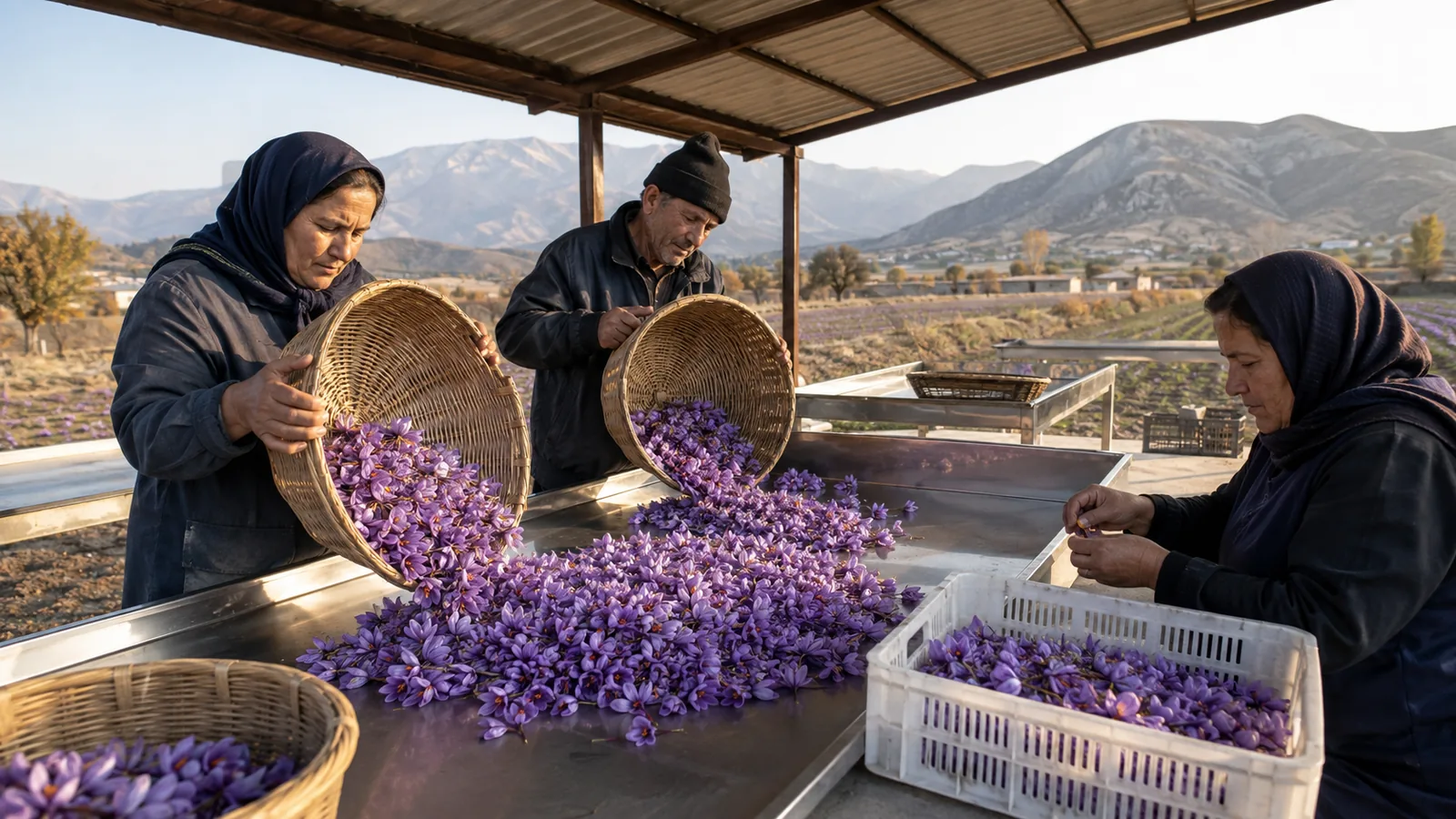
That idea mattered because saffron production is spread among many farms, while grading, storage and export demand more coordination. A transparent market cannot solve every difficulty a grower faces, but it can make quality, quantity and price easier to compare.
What saffron pre-sale meant in this proposal
In this context, “pre-sale” did not mean an ordinary online reservation from a retail saffron boutique. It referred to developing financial and exchange tools around the agricultural crop. The reported aim was to let eligible growers supply saffron through recognised warehouses and trade documents connected with the deposited product.
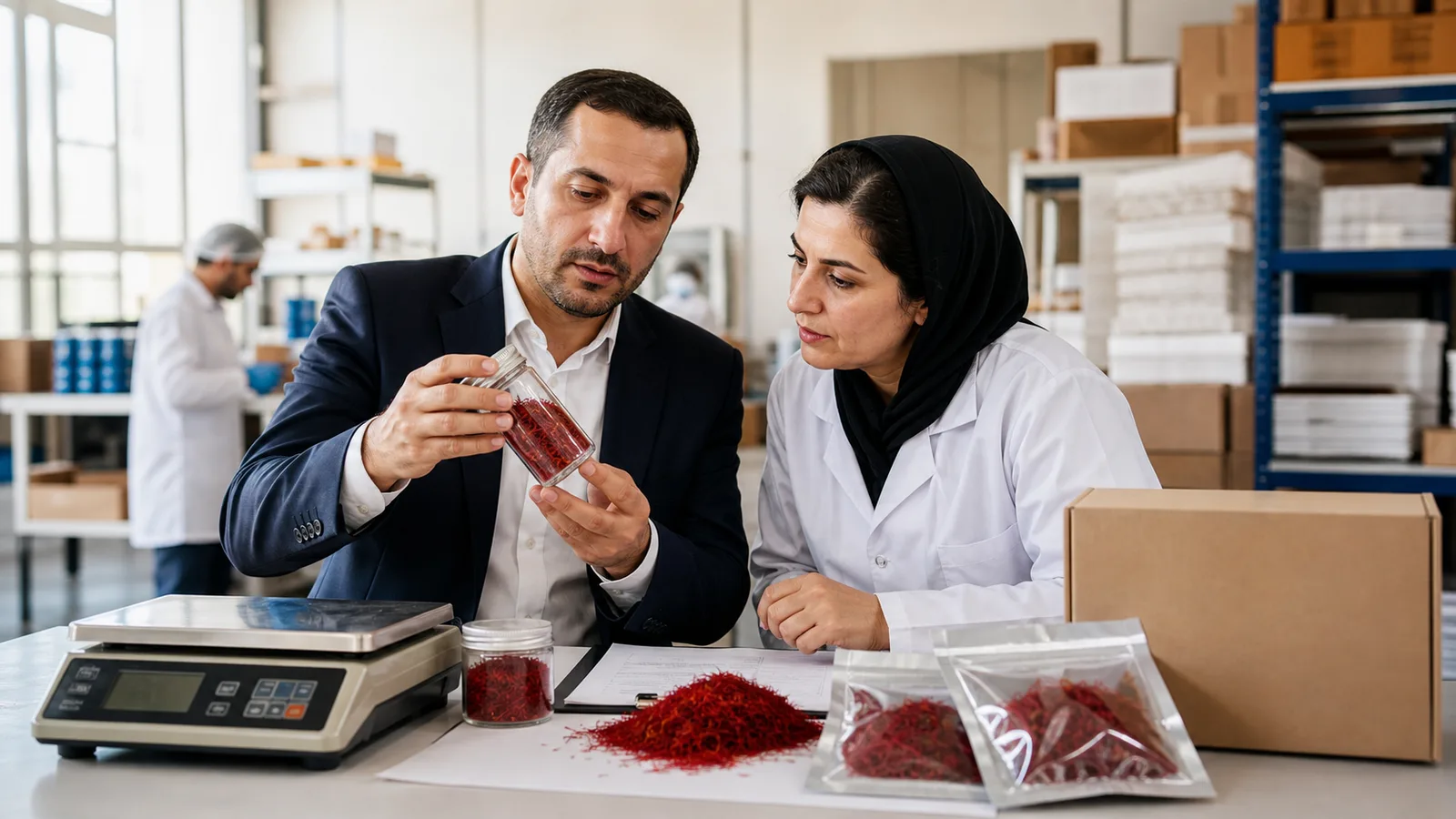
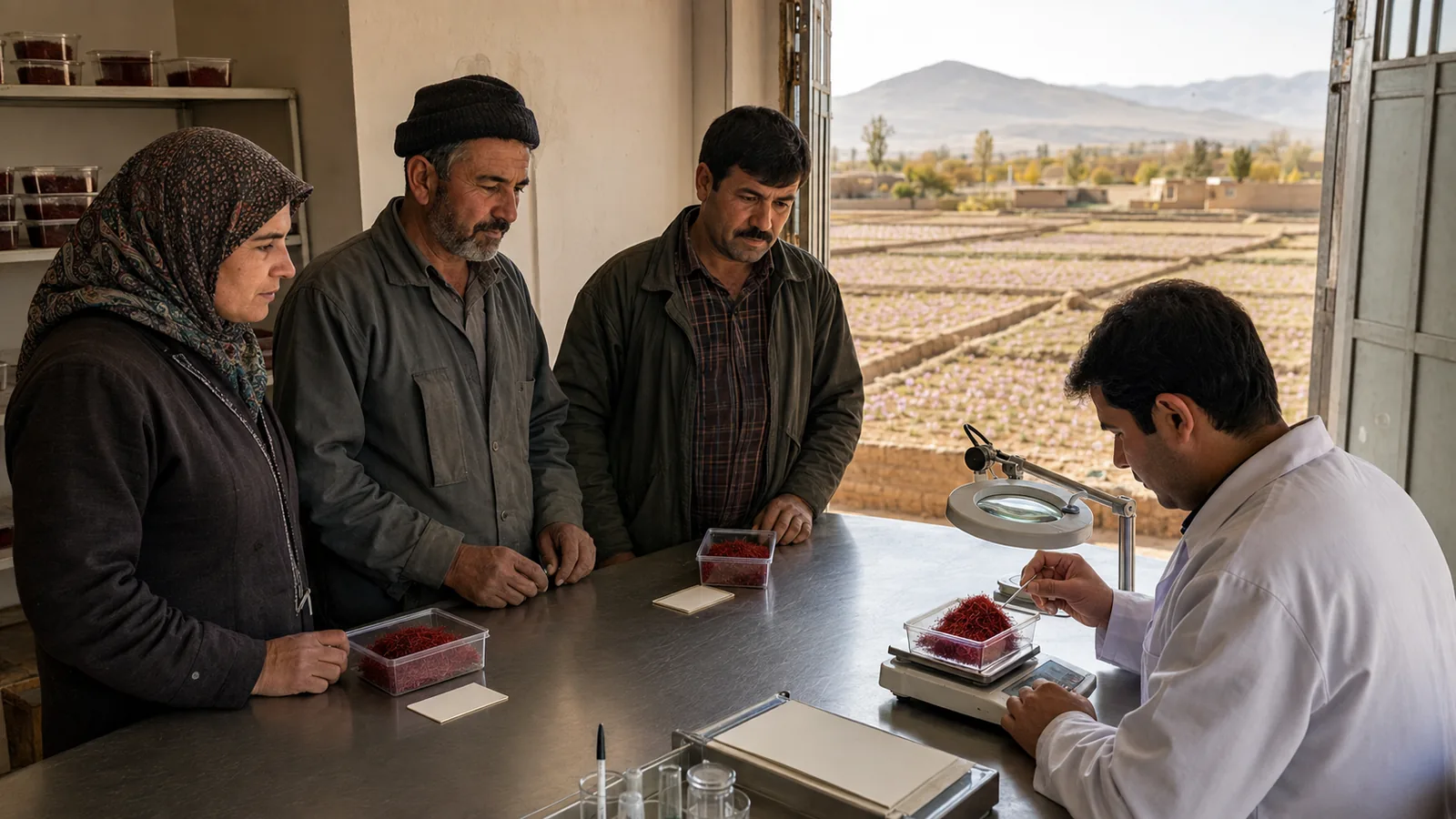
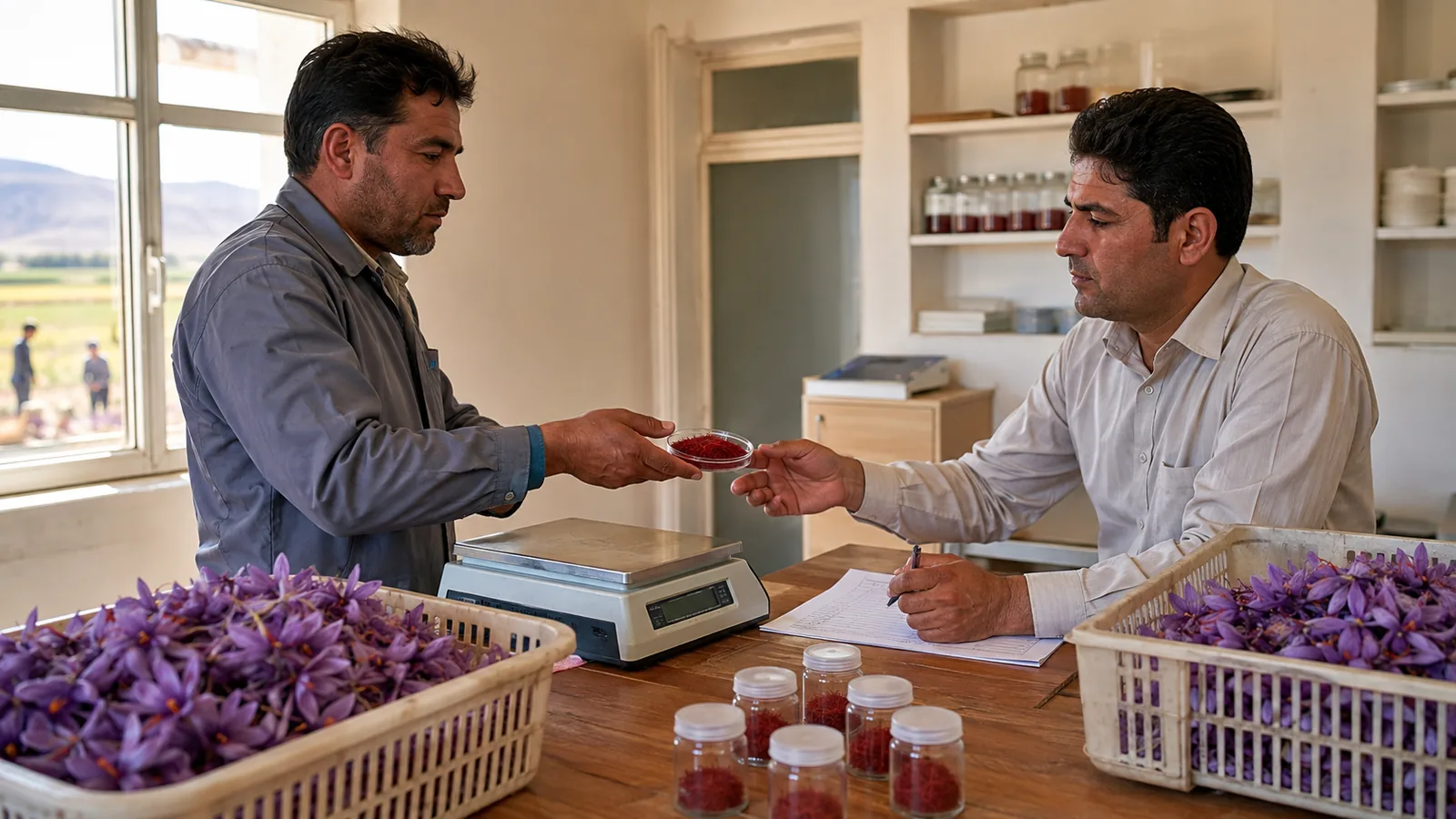
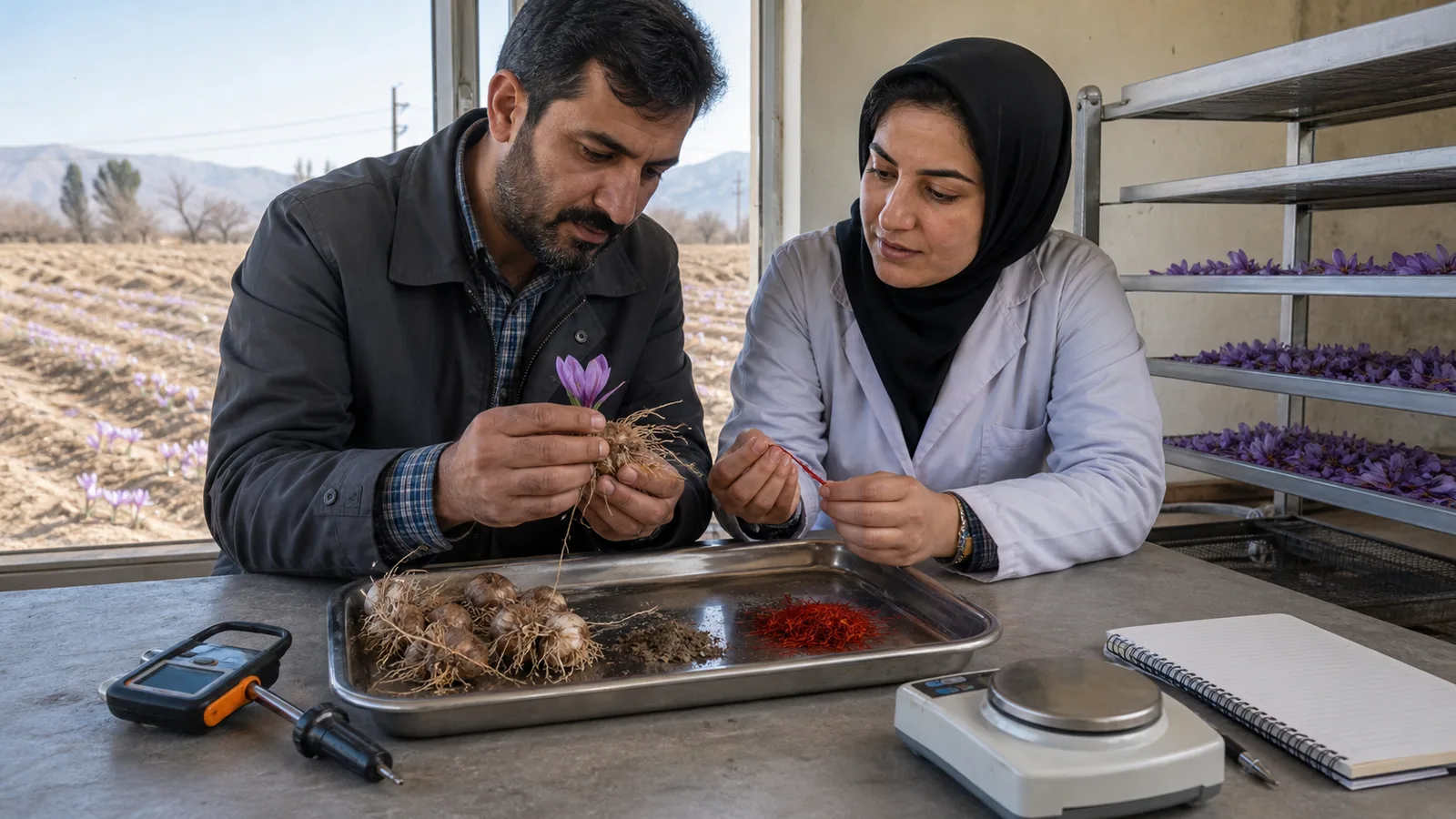
A warehouse receipt or commodity deposit certificate represents a specified amount of produce held under defined conditions. For saffron, the usefulness of that document depends on reliable weighing, grading, packaging and storage. Those controls are essential because two packages with the same weight may differ in moisture, purity, colour strength or physical grade.
Why certified storage was central to the plan
The 2017 report linked the proposal to an expansion of crop warehouses. This was not a minor detail. Formal trading works only when buyers can trust that the deposited saffron corresponds to the description attached to it.
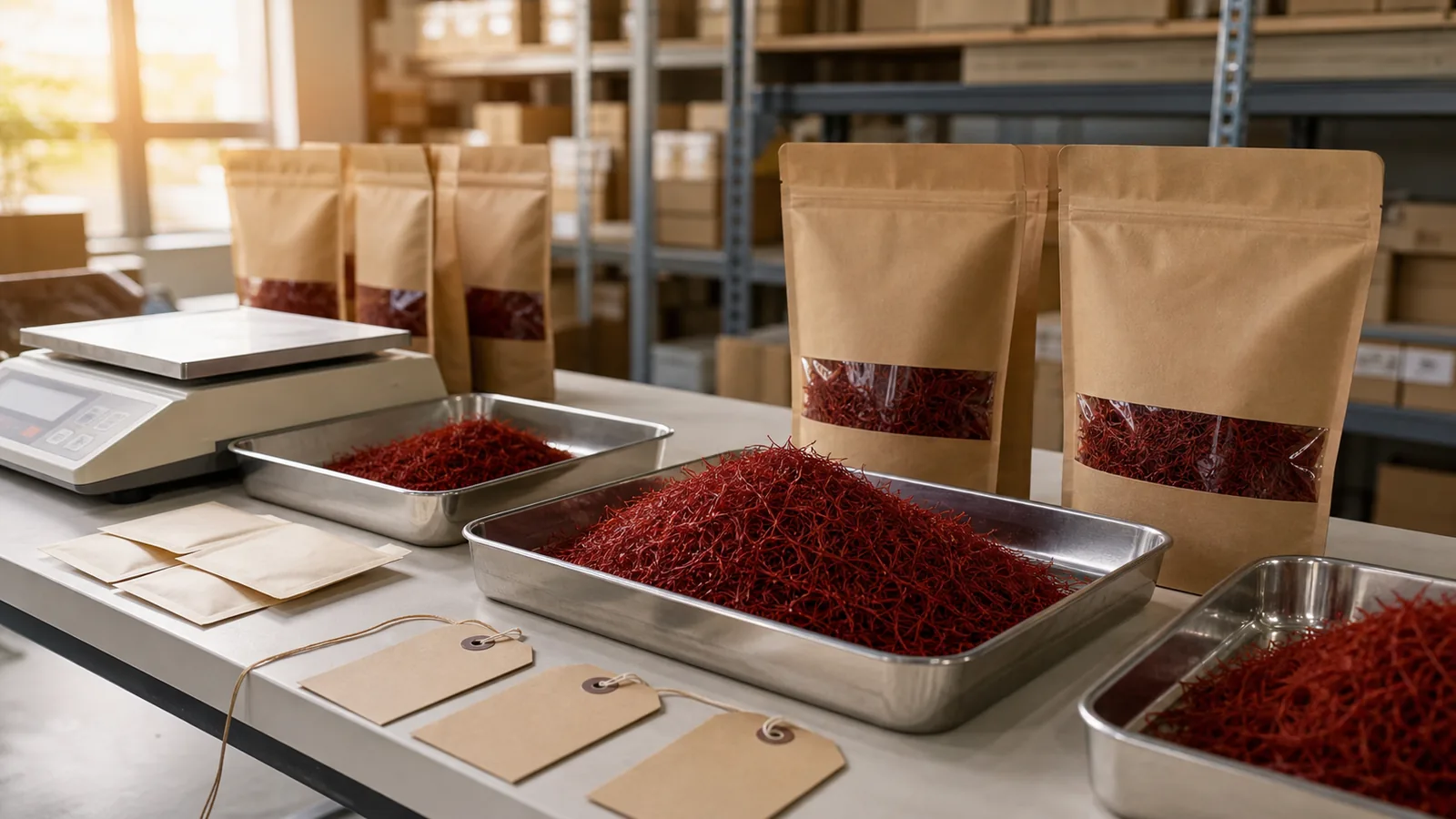
A practical warehouse system can support several steps:
- accepting saffron that meets the scheme’s stated conditions;
- recording its weight, grade and ownership;
- protecting the crop during storage;
- issuing documentation that can be used in an approved transaction; and
- providing traceable information when ownership changes.
For growers, such a system could reduce the pressure to accept the first offer available immediately after harvest. For buyers, it could create a more consistent basis for comparing lots. Neither benefit is automatic: fees, access to an approved warehouse, grading decisions and the terms of the relevant contract all affect the result.
The wider problem the market plan tried to address
Iran has long been closely associated with saffron production, yet a large crop alone does not guarantee that farmers capture its full value. A fragmented supply chain can make it harder to assemble consistent export lots, document quality and establish a clear market reference.
The exchange initiative described in the original report was intended to bring more of the supply and demand into a visible system. Better records could help market participants understand how much certified product was available and what buyers were willing to pay for particular grades. The proposal also presented saffron as part of a broader programme for agricultural commodities rather than an isolated experiment.
What the plan did not guarantee
Formal trading should not be confused with a guaranteed high price. Saffron prices still respond to crop size, quality, export demand, currency conditions and the number of buyers active at a particular time. A receipt or exchange contract may improve market access, but it cannot remove normal commercial risk.
The mechanism also depends on clear rules. Growers need to know which grades are accepted, how sampling is performed, what storage costs apply, when payment is made and how the saffron can be withdrawn or transferred. Anyone considering a current transaction should consult the applicable exchange, warehouse and financial documents rather than relying on a historical news account.
Why the 2017 proposal remains useful context
The pre-sale proposal shows how policymakers and market operators were trying to connect small-scale saffron production with standardised storage and more organised trading. Its enduring lesson is straightforward: saffron earns trust when origin, handling and quality are documented, and growers benefit when they can compare more than one route to market.
For a retail customer, the same principle appears in a simpler form. A reputable saffron seller should describe the product accurately, protect it from moisture and light, and provide enough information for the buyer to understand what is being purchased. Whether saffron moves through a commodity warehouse or a boutique, clarity and traceability are more valuable than grand promises.