


The “slow death” in the title was a warning voiced by Iranian saffron-industry representatives in 2016. They argued that saffron corm smuggling into Afghanistan, combined with lower labour costs and unequal tariffs in destination markets, could gradually weaken Iran’s position. The warning deserves context: illegal movement of planting material is a real trade and plant-health concern, but Afghanistan also has a legitimate saffron industry with its own growers, government programmes and recognised production areas.
What was allegedly being smuggled?
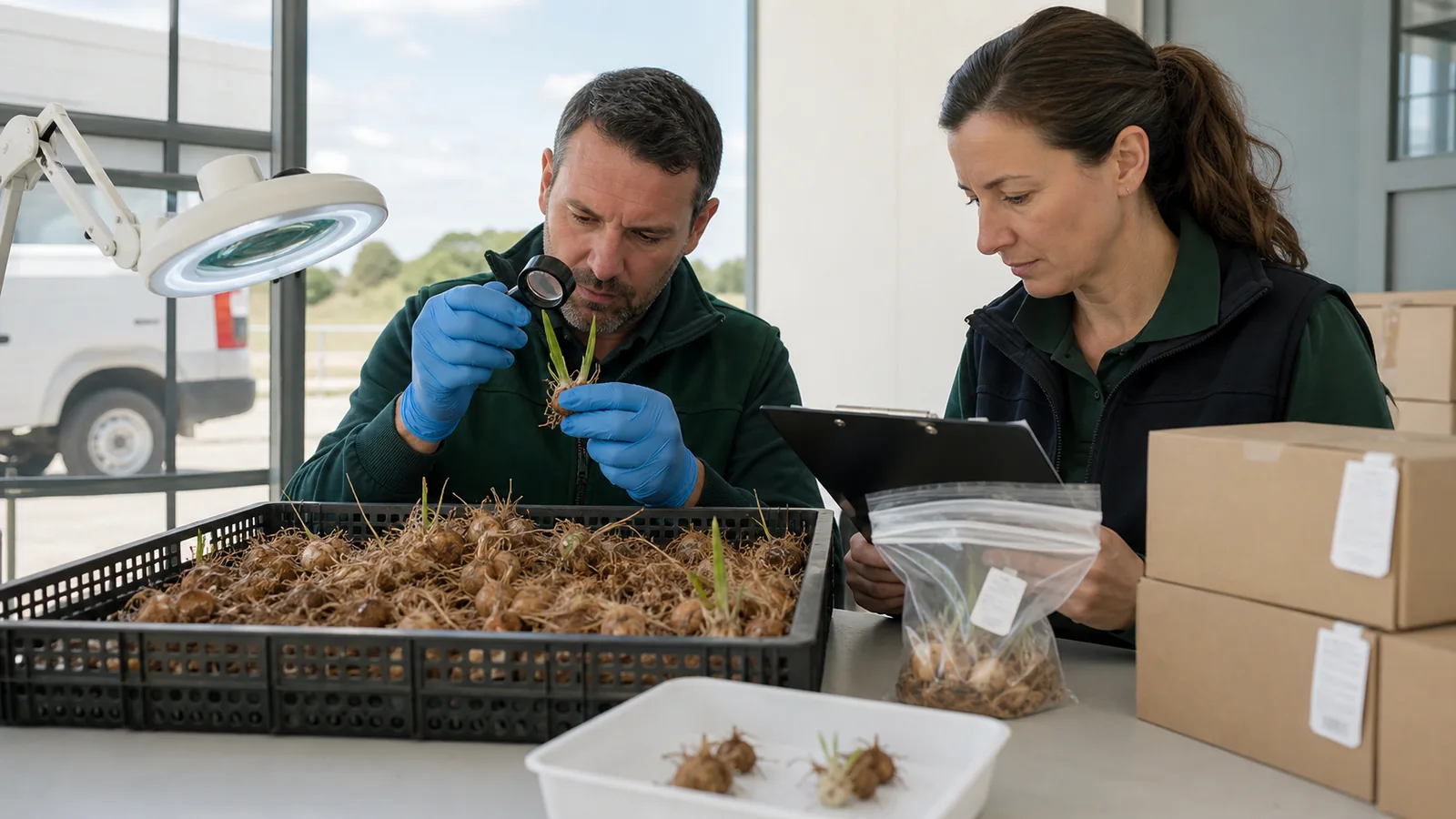
The original report was mainly about saffron corms, not packets of dried saffron. Although they are often called saffron bulbs or even “saffron onions,” the underground planting units of Crocus sativus are corms. Because cultivated saffron does not normally produce viable seed, farmers establish and expand fields by dividing and planting these corms.
That makes planting material economically important. Moving a shipment of dried threads transfers a finished crop. Moving healthy corms can help establish production for several future seasons. This was the basis of the industry representatives’ concern.
The article alleged that corms had been taken illegally from Iran to Afghanistan for about 15 years. It also contained a badly translated line about corms being hidden among onions, potatoes or other agricultural goods and mentioned both China and Afghanistan. The exact route in that sentence cannot be verified from the surviving English text, so it should not be treated as a confirmed account of a particular shipment.
The 2016 warning from Iran’s saffron sector
Ali Hosseini, identified as a member of Iran’s National Saffron Council, said the Ministry of Agriculture opposed the export of saffron corms. He argued that Iranian growers would not willingly export the planting stock behind years of work in the country’s dry production areas.
Hosseini’s forecast was stark. If smuggling continued and cultivation expanded in Afghanistan, he believed lower labour costs could help Afghan production compete for markets that Iran had traditionally supplied. The title’s image of a slow death came from this fear of a gradual loss of position, not from evidence that Iranian saffron cultivation had literally ended.
Gholam Reza Miri, then described as vice-president of the National Saffron Council, made a similar argument. He said an earlier government had permitted corm exports to neighbouring countries including Afghanistan, while the Ministry of Agriculture later opposed the practice. The report does not provide the regulation, dates or shipment records needed to verify that policy sequence independently, so it remains an attributed statement.
Why the India tariff comparison mattered
Miri also connected cultivation and trade. He said Afghan saffron could enter India without the tariff applied to Iranian saffron, making the Afghan route commercially attractive. The original translation says Iranian exports had to “pay the consequences”; in context, it means they faced an import duty or tariff disadvantage.
That issue is separate from corm smuggling. A tariff difference can affect where dried saffron is shipped, packaged or declared. Corm movement concerns the spread of planting material and production capacity. Later reports also alleged that some Iranian dried saffron moved through Afghanistan before export to India, but that is a different supply-chain allegation and should not be used as proof that every Afghan lot originated in Iran.
Tariff rates change. Importers should check the current Indian tariff classification, origin rules and documentation for the specific shipment instead of relying on a percentage quoted in an older interview.
Afghan saffron has its own documented production base
A balanced account cannot describe Afghanistan only as the recipient of smuggled Iranian corms. Afghanistan’s Ministry of Agriculture says cultivation in Ghoryan district of Herat began in 1991 when returning refugees brought saffron corms and experience from Iran, and that official experimental support began in 1998. Its National Saffron Development Program includes adaptation trials, quality-corm production, farmer training, processing centres, certification and market development.
FAO now lists Herat-Bastan saffron as an Afghan geographical-indication product linked to named districts in Herat Province. That does not resolve every historical claim about planting material. It does show that Afghan saffron cannot responsibly be dismissed as merely Iranian saffron under another name.
Iran remains the dominant producer. FAO’s work on the Iranian value chain describes the country as producing more than 90% of the world’s saffron. The two facts can coexist: Iran has overwhelming scale and deep cultivation knowledge, while Afghanistan has developed a smaller industry with recognised production of its own.
Why undocumented corm movement is risky
There is an agricultural reason to control planting material beyond protecting market share. Corms can carry soil, pathogens and pests from one production area to another. The International Plant Protection Convention treats cross-border movement of plants and plant products as a pathway that national plant-protection organisations may need to inspect, test and certify.
For a legitimate corm transaction, the questions are practical:
- Is export of this planting material legal in the country of origin?
- Does the destination require an import permit or phytosanitary certificate?
- Can the seller document the cultivar, field source, lot and health status?
- Are the corms free of prohibited soil and visible damage?
- Has an authorised plant-health laboratory performed any required testing?
- Can the receiving farm isolate and trace the lot if a problem appears?
Smuggling bypasses those checks. That can expose both the receiving grower and neighbouring farms to losses, even if the corms initially appear healthy.
What Iran can protect without denying competition
The 2016 speakers called for measures to stop corm smuggling and support Iranian producers and exporters. Border enforcement is one part of that response, but it is not enough to preserve long-term value. Corm traceability, clean planting-stock programmes, better field productivity, careful drying, authenticity testing and origin-linked branding all make the legitimate chain more defensible.
FAO’s current work with Iran focuses on authenticity, traceability, quality integrity and innovation in the saffron value chain. Those measures address a broader weakness behind the original warning: when valuable Iranian material leaves the country without reliable records or identity, the origin captures less of the value.
Exporters can help by keeping the connection between grower, harvest area, batch, laboratory result and finished pack. Farmers benefit when clean corms are multiplied through controlled channels and when buyers reward traceable quality rather than anonymous bulk volume.
How to read the “slow death” claim today
The phrase should be read as industry rhetoric from a period of anxiety, not as a measured forecast that came true. Iran did not lose all saffron production to Afghanistan. Afghanistan did expand cultivation, and trade disputes over origin, tariffs and alleged smuggling continued. Those developments make the concerns historically relevant, but they do not justify treating Afghan growers or Afghan-origin saffron as inherently illegitimate.
The durable issue is control of identity. Corms should move only through legal, documented plant-health channels. Dried saffron should carry records that support its actual origin. Tariff preferences should be claimed only when the origin rules are satisfied. With those distinctions in place, enforcement can target smuggling without turning a complex regional agricultural history into a claim against an entire country’s farmers.
Sources reviewed: Afghanistan’s Ministry of Agriculture saffron history and National Saffron Development Program, FAO’s Afghanistan geographical-indication profile and Iran value-chain work, and International Plant Protection Convention material on cross-border plant movement. The statements by Ali Hosseini and Gholam Reza Miri are retained as claims reported in 2016; where the surviving translation lacks records or precise wording, that limitation is stated.

![Exporting Saffron to Turkey + Price Guide [Complete 0 to 100]](https://img.rowhanisaffron.com/20260827003933/saffron-export-turkey-quality-inspection.webp)



