

The sharp decline in saffron prices in Torbat Heydarieh was a historical market episode that prompted local officials to pursue a negotiated purchase programme for growers. The surviving report does not state the price before the fall, the price after it, or the exact date of the market quotation. It should therefore be read as a record of the response to a local price shock, not as a source for today’s saffron price.
What the report does establish is the scale of concern. Agricultural Jihad and rural cooperative bodies were being asked to agree a purchase mechanism, meetings had taken place at the Khorasan Razavi Agricultural Jihad Organization, and Torbat Heydarieh accounted for a substantial share of the province’s saffron area at the time.
What officials proposed after the price decline
A local official said an agreed purchase of saffron was being pursued with the responsible organizations, including Agricultural Jihad and the Rural Cooperative Organization. The intention was to support saffron growers when open-market prices had fallen sharply.
Mohammad Karimi, then director of Agricultural Jihad in Torbat Heydarieh, confirmed that meetings had been held at provincial level. He expected the negotiated purchase to proceed, but said the official amount would need to be announced by the head of the provincial Agricultural Jihad organization.
That wording matters. A discussion, an expectation and an authorized programme are different things. The stored article contains no final procurement rate, purchase volume, opening date or eligibility rules. It would be unsafe to turn the old statement into a claim that a particular price was approved or that every grower could sell under the scheme.
Why Torbat Heydarieh mattered to the provincial market
The same historical account placed the saffron area of Khorasan Razavi at 70,000 hectares and the area in Torbat Heydarieh County at 8,000 hectares. Eight thousand divided by 70,000 is about 11.4 percent, which the official rounded to approximately 12 percent.
Those figures explain why a local price fall could have consequences beyond a few farms. When a county represents roughly one-eighth of a major producing province’s planted area, its harvest, trading capacity and grower finances form an important part of the wider supply chain. The numbers are dated, however, and should not be reused as the county’s current share without a new official survey.
Torbat Heydarieh’s agricultural economy was also described as diverse. The report said the county produced 37 types of field crop and 31 types of horticultural product, ranking fifth and third in Khorasan Razavi on those measures respectively. It described a county population of about 250,000 and located the city roughly 150 kilometres southwest of Mashhad. These details provide historical context; they are not a substitute for current census or crop data.
Why saffron prices can fall quickly at harvest
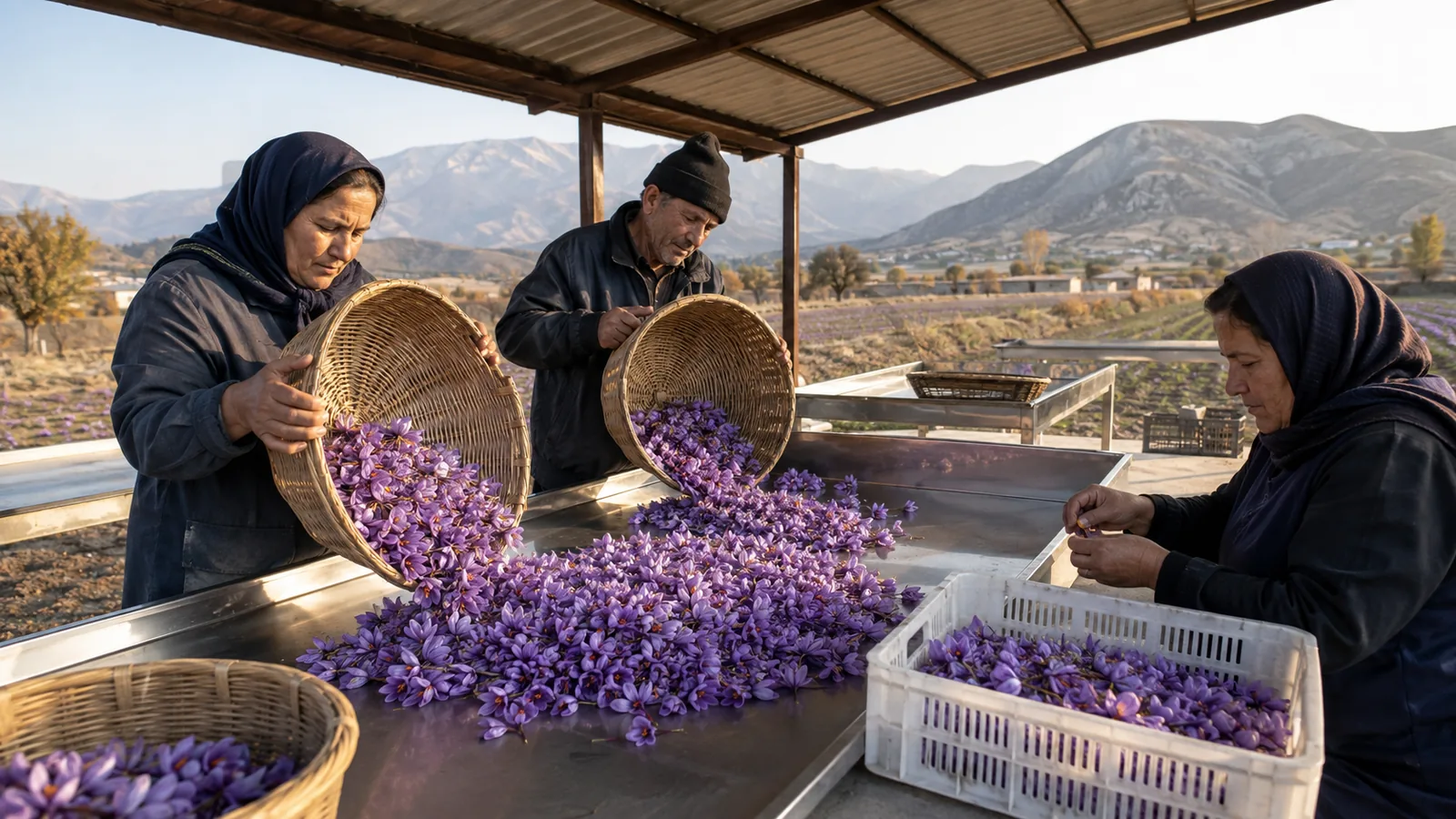
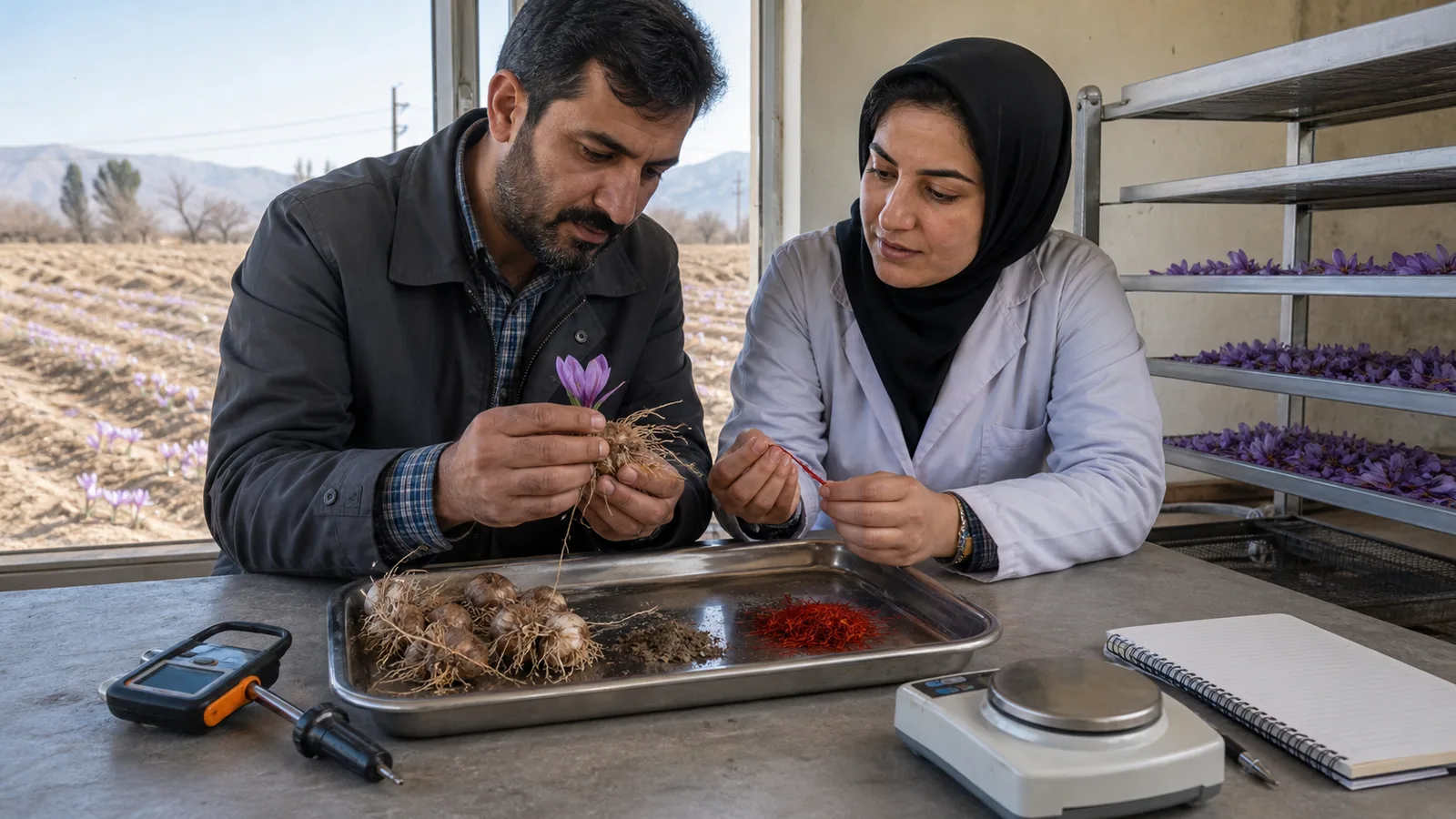
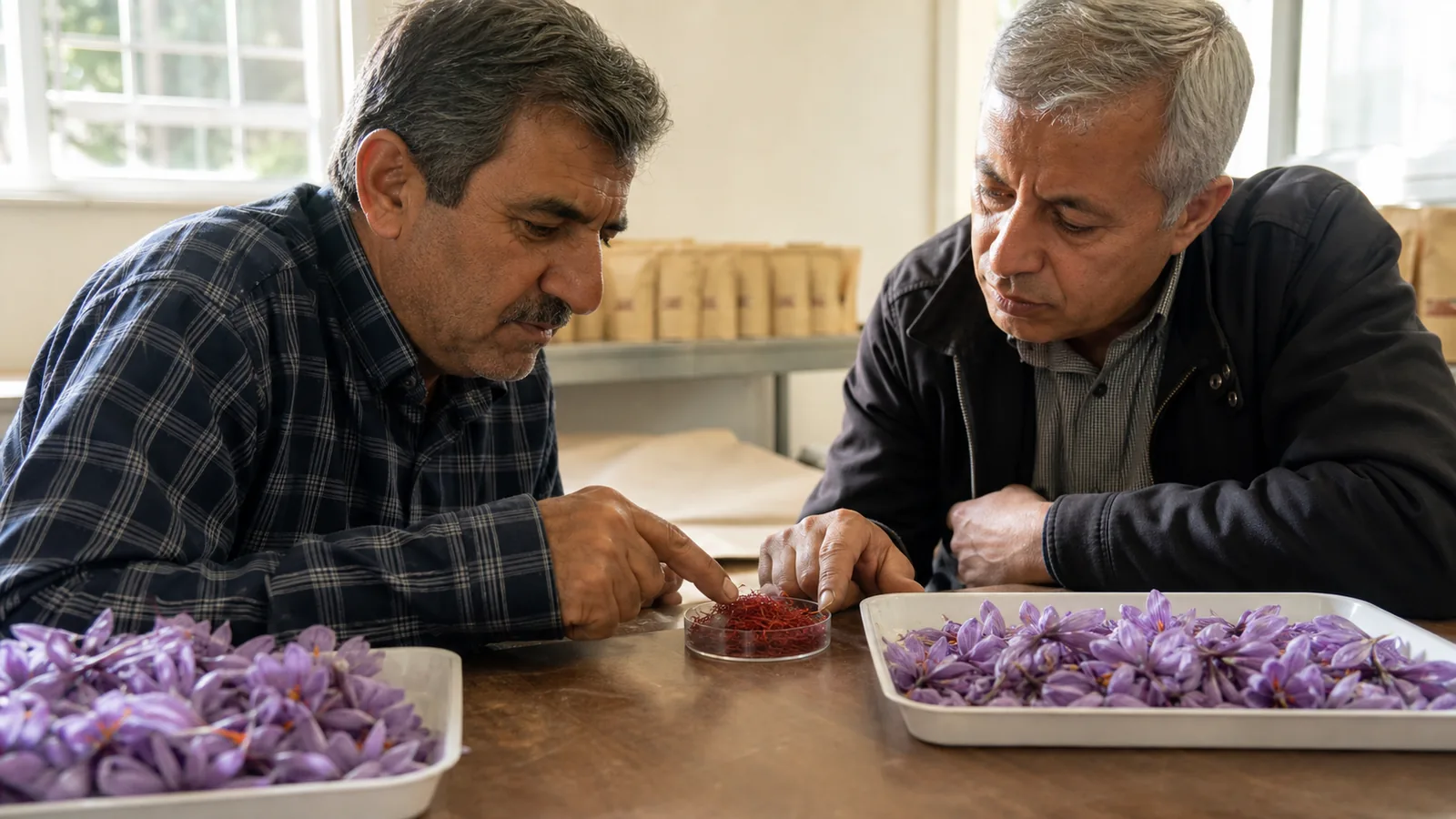
Saffron has two very different market stages. Fresh flowers are delicate and must be opened and separated promptly. Properly dried saffron is more stable, but turning flowers into a consistent dry product requires labour, hygiene, skill and suitable equipment. A grower who lacks that capacity has less time and fewer options when many farms bring flowers to market together.
A price can also refer to different things: fresh flowers, dried stigmas, a particular commercial grade, or a wholesale lot with specific testing and packaging. Units and quality definitions matter. A headline saying “saffron prices fell” is incomplete unless it identifies the product, grade, market, date and unit being compared.
Other pressures may include a concentrated harvest, uneven buyer demand, export conditions, credit constraints and the need for growers to cover immediate costs. These factors can interact, so the historical article does not prove a single cause for the Torbat Heydarieh decline. It documents the policy response rather than a complete market investigation.
What a negotiated purchase can and cannot do
A negotiated purchase may give growers another sales channel and create a reference point during a disorderly market. Its effect depends on the grade accepted, inspection rules, total buying capacity, payment time and whether the announced buyer can operate at the required scale.
It does not by itself improve saffron quality, expand processing capacity or secure export demand. Nor does an announced purchase rate necessarily become the price for every transaction. Farmers and traders need the written terms, not a preliminary statement.
For anyone researching this historical case, the missing details are as important as the details reported:
- the article gives no before-and-after price or percentage decline;
- it does not identify the saffron grade or whether the discussion concerned fresh flowers or dried saffron;
- the final agreed purchase rate and volume are not included; and
- there is no completion report showing how much product was ultimately bought.
How to use this report today
The article remains useful as a snapshot of how Torbat Heydarieh officials reacted to a sharp saffron price decline: they sought coordination between agricultural and cooperative bodies in a county that held about 8,000 hectares of the province’s reported 70,000-hectare saffron area.
It is not a live price bulletin. A current buying or selling decision should use a same-day quotation that names the grade, unit, lot size and place of delivery, and any government or cooperative purchase should be checked against its current written notice. Preserving that distinction protects both the historical record and readers who arrive looking for today’s market.