


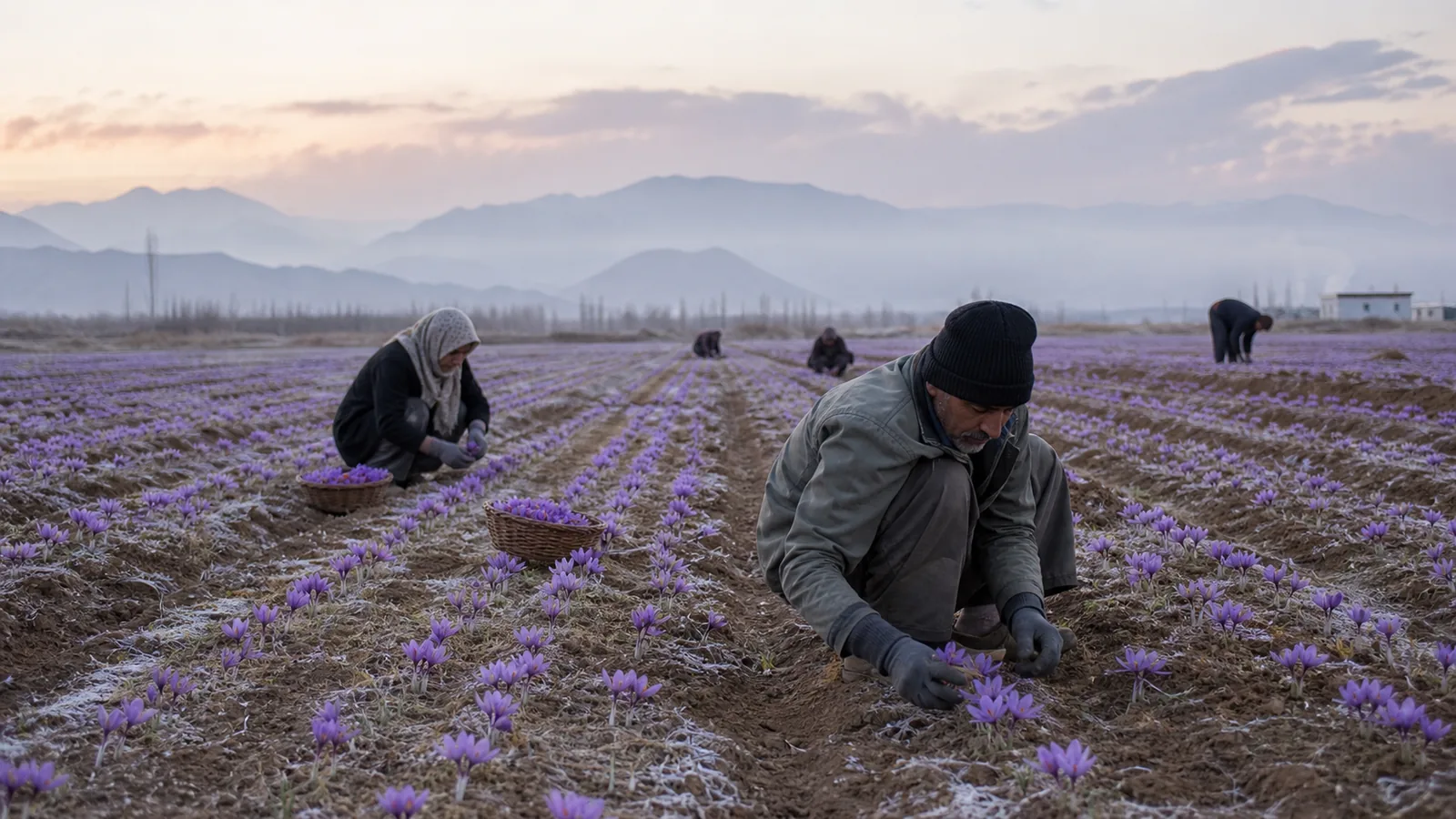
Farooj expected to harvest 3,300 kilograms of sargol saffron from 1,600 hectares in the season covered by this historical report. Agricultural director Ahmad Kanaani said recent cold had delayed picking, while cultivated area had risen by 60% as growers responded to the dry climate and saffron’s comparatively modest water needs.
The original English version repeatedly turned Farooj into “Faroe” or “Faroe Islands” and dropped the first digit from the acreage. The report concerns Farooj County in North Khorasan, and its stated area was 1,600 hectares, not 600.
The Farooj harvest forecast
Kanaani forecast 3,300 kilograms of sargol saffron from the county’s fields. Sargol is a commercial cut made from the separated red stigma, without the yellow style portion. The figure therefore described a dry finished saffron grade rather than the weight of fresh flowers.
He also reported a 60% increase in the area under this strategic crop. These numbers belong to the period of the news item; they should not be mistaken for today’s acreage, output, or market position.
Cold weather had delayed the start of harvest. Temperature affects when saffron flowers emerge, and a delay can compress an already intense picking window. Farmers then need enough people, baskets, transport, separation space, and drying capacity ready when flowering accelerates.
What the 63-kilogram conversion meant
The report highlighted an average of one kilogram of sargol from 63 kilograms of saffron flowers. The old translation called this “one kilogram of saffron sprouts,” which obscured the comparison.
Flower-to-dry-saffron conversion can vary with flower condition, stigma size, separation style, the grade being produced, and final moisture. A low flower weight for each kilogram of finished saffron can indicate strong stigma yield, but the result still needs consistent definitions and measurement.
For a meaningful farm record, the flower batch should be weighed promptly, the separated grade named, and the finished saffron weighed only after controlled drying. Mixing sargol, pushal, and bunch saffron makes comparisons unreliable.
Why saffron attracted Farooj farmers
Kanaani connected saffron’s expansion with Farooj’s dry climate and the crop’s lower water requirement relative to some alternatives. That does not mean saffron needs no water. Establishment, flowering, corm growth, soil condition, and the timing of irrigation all affect a multi-year field.
Before expanding, a grower should consider:
- soil drainage, salinity, and local field history;
- the health, source, and size of planting corms;
- water availability and quality across the crop cycle;
- the risk of cold, heat, or untimely rainfall around harvest;
- labour for rapid picking and stigma separation;
- clean drying and storage capacity; and
- the grade, testing, price, and payment terms offered by buyers.
Expansion makes sense when these pieces grow together. More hectares without enough harvest labour or processing capacity can reduce quality and weaken the grower’s bargaining position.
Farooj’s first provincial processing unit
The report said the first saffron processing unit in North Khorasan had begun operating in Farooj. Local processing can shorten the time between picking, separation, drying, grading, and packing. It can also help the county retain more value instead of shipping an undifferentiated crop elsewhere.
A processing unit improves quality only when its controls are sound. Work areas, tools, personnel hygiene, drying conditions, batch separation, moisture protection, storage, and traceability all matter. A machine or building cannot compensate for flowers that waited too long in a deep, warm pile.
Kanaani also said high-quality Farooj saffron was being exported to Switzerland. That is a historical trade statement, not evidence that the same route operates today. Export suitability depends on the requirements of the destination and buyer, including accurate documentation and food-safety compliance.
Farooj within North Khorasan
The original item placed Esfarayn, Shirvan, and Jajarm after Farooj in the province’s saffron cultivation ranking. It also described North Khorasan as third nationally by saffron area after Razavi Khorasan and South Khorasan.
Rankings can change as planted areas mature, fields are lifted, drought affects water, and reporting years differ. They are best preserved as part of the dated report rather than presented as a current league table.
From field expansion to durable quality
Saffron was taken from farms of Farooj during a season shaped by cold, rapid expansion, and a growing processing base. The 1,600 hectares, 3,300-kilogram sargol forecast, 60% rise in area, and 63-to-one flower conversion explain why the county drew attention.
The durable measure is not acreage alone. Farooj’s value depends on healthy fields, careful water use, prompt harvesting, precise conversion records, clean processing, traceable batches, and buyers who reward the quality that growers preserve.

![Exporting Saffron to Turkey + Price Guide [Complete 0 to 100]](https://img.rowhanisaffron.com/20260827003933/saffron-export-turkey-quality-inspection.webp)



