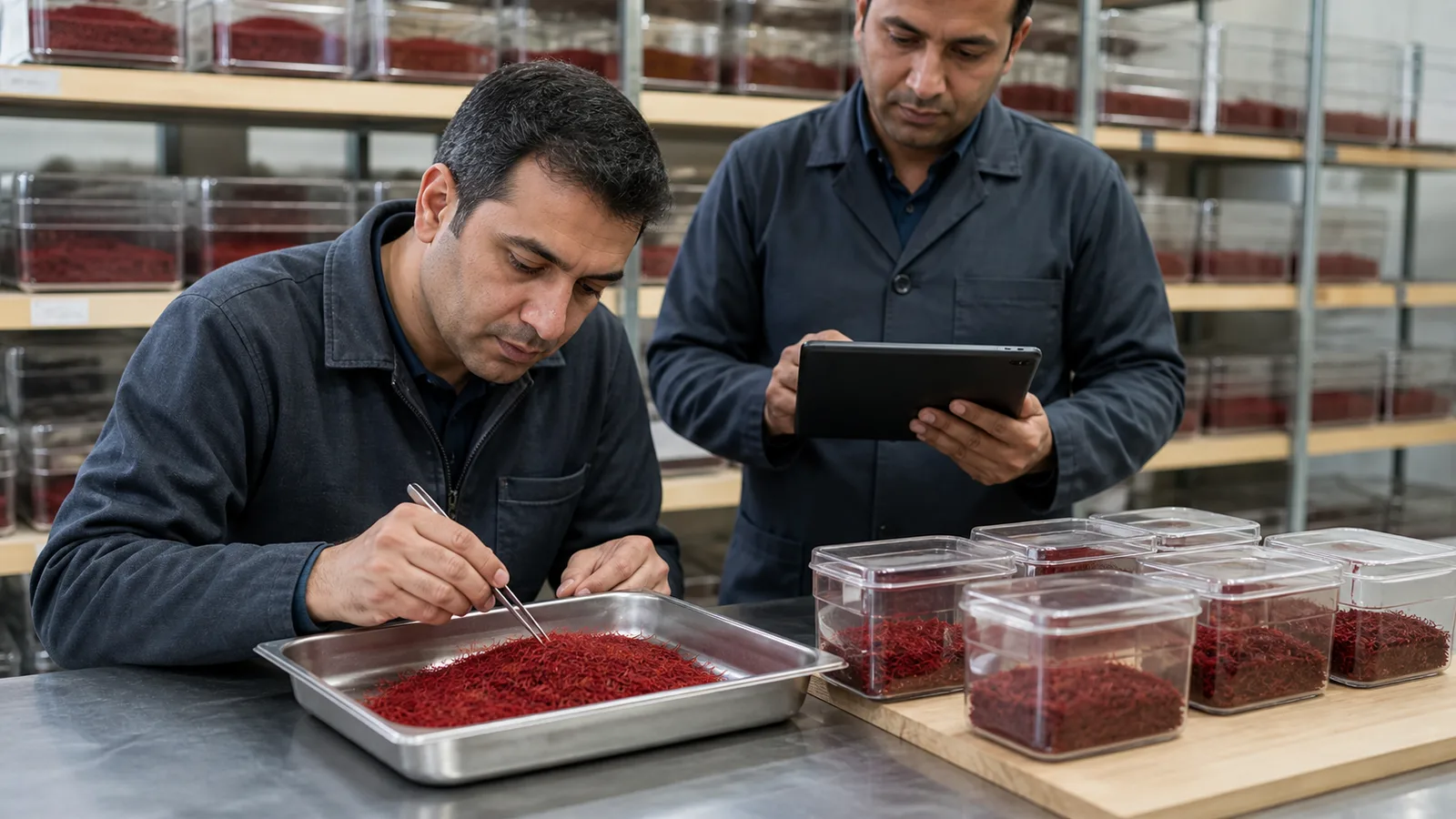
“Saffron soon will be enter the stock exchange” was a forward-looking headline in 2016. The wording is awkward, but the underlying idea was real: standardised saffron would move into organised trading through the Iran Mercantile Exchange. Saffron warehouse-receipt trading began the following year, and saffron futures followed later.
This was not a plan to list saffron as a company share on the Tehran Stock Exchange. It concerned a commodity market where approved agricultural goods can be stored, graded and represented by tradable certificates. That distinction matters when interpreting the original report.
The 2016 proposal included saffron and raisins
The original interview came from the Kashmar, Bardaskan and Khalilabad area of Khorasan Razavi. A parliamentary representative discussed low farm-gate prices, the influence of speculators and why a guaranteed purchase price for raisins was not on the agenda. He argued that better processing and an organised market could give producers more reliable routes to buyers.
The report also described a private-sector raisin washing and processing facility established in Kashmar with a stated capacity of 7 tons. The surviving English calls this “pure raisin washing”; in practical terms, it describes processing rather than a documented purity certification. The old text does not say whether the capacity applied per batch, day or hour, so it should not be converted into an annual figure.
Another damaged figure says Kashmar produced “20 to 25 tons a year.” Contemporary accounts of the region place raisin production in the thousands of tonnes, which indicates that the translated unit or number is incomplete. The safe conclusion is that Kashmar had a substantial raisin crop and needed more capacity to clean, grade and prepare it for export—not that its entire annual output was only 20 to 25 tonnes.
The speaker expected improved processing to attract more international trade attention to Iranian raisins. The phrase rendered as “World Trade Center raisins” in the old English copy appears to mean world trade or overseas buyers; it is not evidence that a specific World Trade Center organisation endorsed the project.
What happened after the “soon” announcement
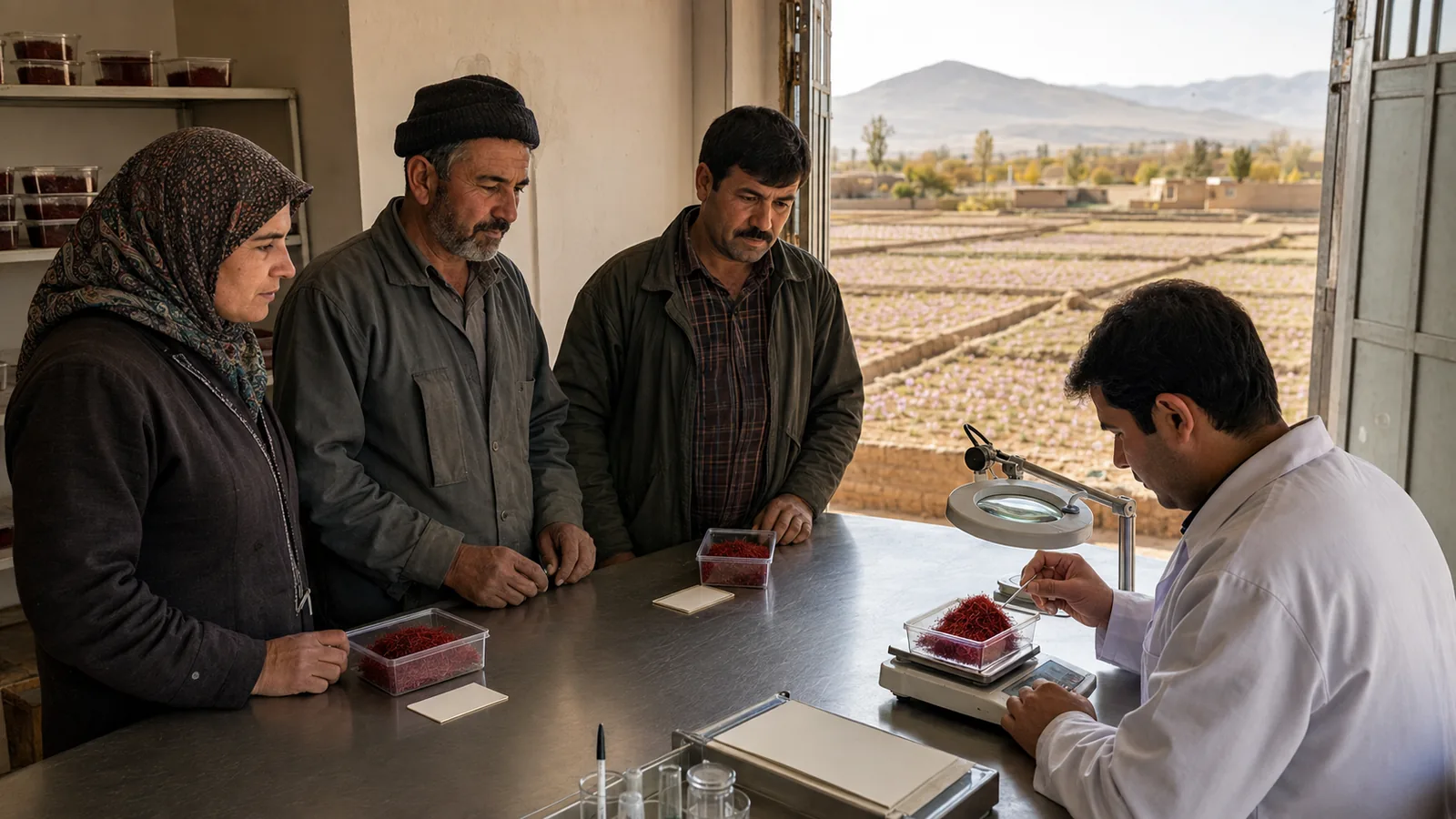
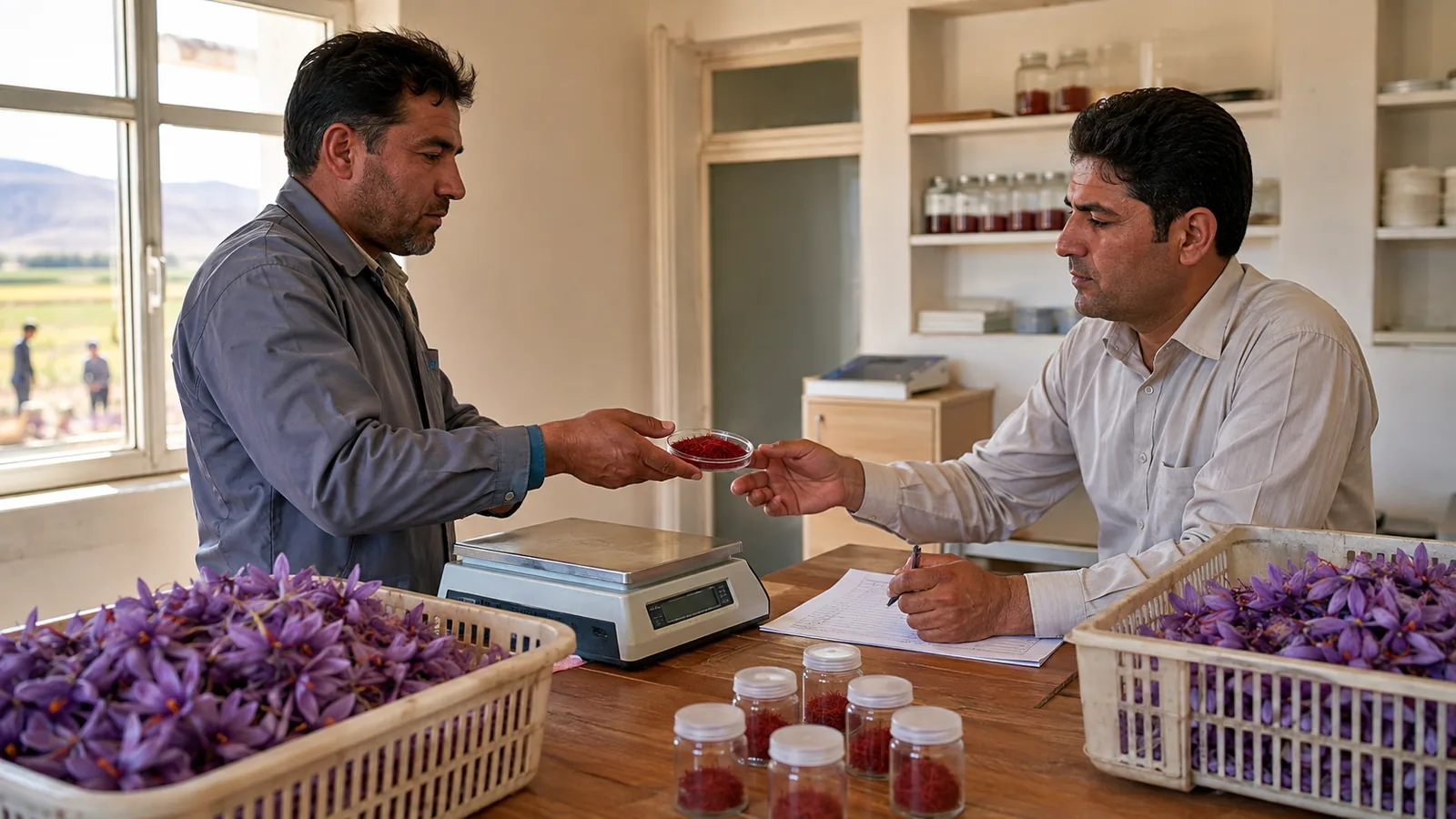
The forecast is rendered in the old copy as “Saffron and raisins will be available soon in stock.” It meant that the commodities would become available through exchange trading, not that a share certificate would contain physical spice or fruit. The saffron part of the plan did move forward. In February 2017, the Iran Mercantile Exchange launched trading in saffron commodity deposit certificates. Farmers could deliver qualifying saffron to an exchange-approved warehouse, receive a warehouse certificate for the accepted quantity and trade that certificate through an authorised broker.
Saffron futures trading was operating by June 2018. A futures contract is different from a warehouse receipt: it sets terms for a transaction at a later date and can be used to manage price risk, while the receipt represents standardised product already held in an approved warehouse.
Raisins reached the certificate market later. An exchange announcement reported the start of raisin commodity-deposit-certificate trading in September 2020. The sequence shows that the 2016 article captured an early stage of a broader effort to bring agricultural products into a warehouse-based commodity system.
How a saffron warehouse receipt works
The physical saffron does not move between every buyer and seller each time a trade is made. A simplified process looks like this:
- A producer or owner delivers saffron to an approved warehouse.
- The warehouse checks the lot against the specifications attached to that trading symbol.
- Accepted product is stored and represented by an electronic commodity deposit certificate.
- The certificate can be offered through a licensed brokerage on the exchange.
- After settlement, the holder may continue to own the certificate or follow the applicable procedure to take delivery.
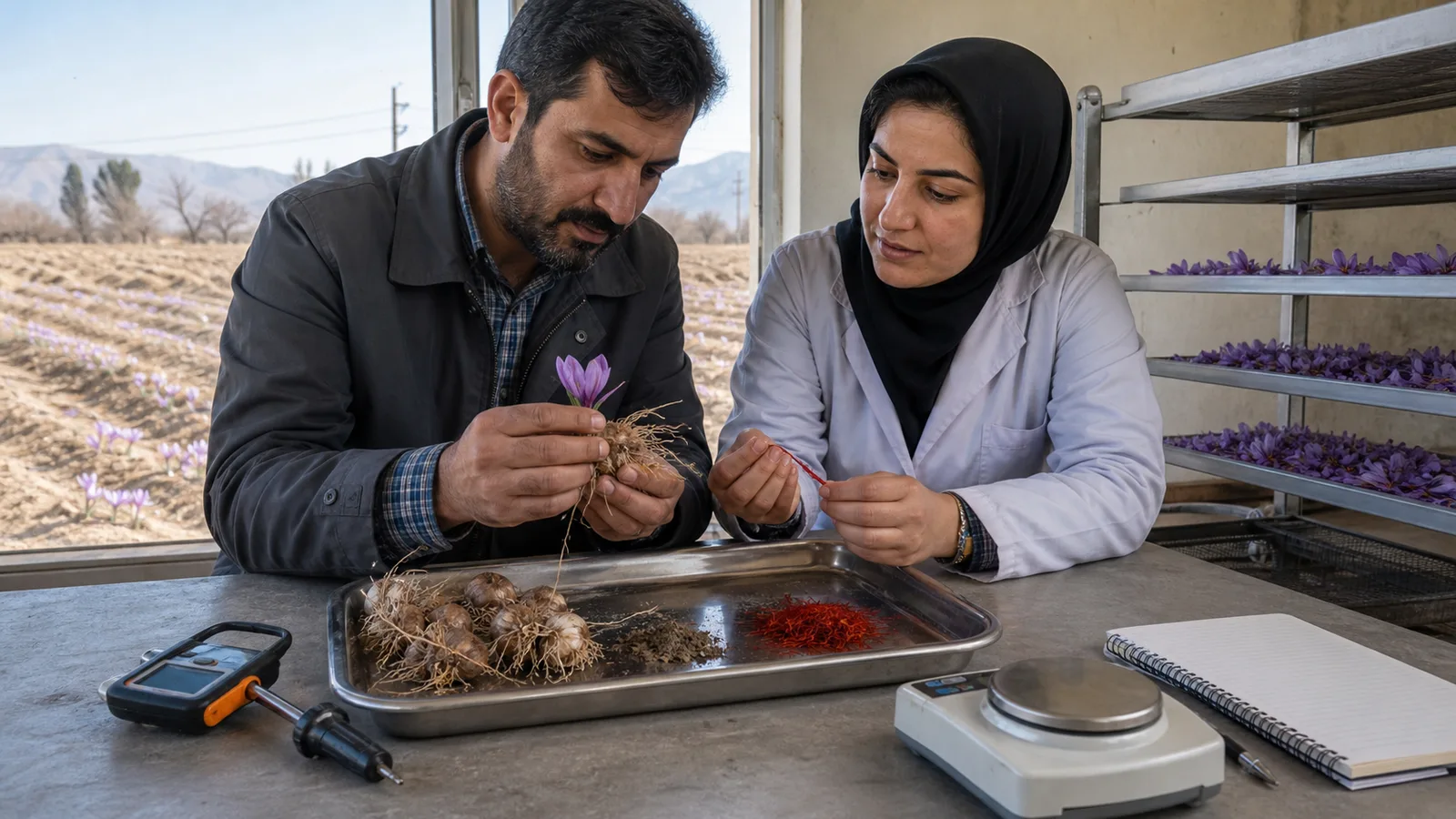
Not every saffron lot is interchangeable. Grade, crop year, warehouse, symbol rules and certificate expiry can affect what is accepted and traded. The exchange’s warehouse standard is also a trading specification, not a substitute for every quality or food-safety check a commercial buyer may require. Our guide to Iranian saffron standards explains the quality measurements behind colour, aroma and flavour-related characteristics.
What organised trading can and cannot do
A warehouse-receipt market can make offers and completed prices more visible. It can reduce repeated movement of the physical product, create a common specification and give eligible producers another selling route. The 2017 launch announcement also emphasised access for both small and large transactions and settlement of proceeds after trading costs and warehouse charges.
Those benefits do not amount to a guaranteed high price. Market prices still respond to supply, demand, grade, storage costs, exports, currency conditions and the number of active buyers and sellers. A farmer must also be able to reach an approved warehouse, meet its quality rules and use an authorised broker.
Nor does an exchange automatically remove every intermediary. Warehouses, laboratories, brokers, buyers, processors, exporters and saffron shops all perform different functions. The useful question is whether the system makes those functions, charges and prices clearer while giving the producer a practical choice.
Processing still matters outside the exchange
The original report linked the exchange proposal to the new raisin-processing facility for a reason. A market cannot create export quality after the crop has already been handled badly. Washing where appropriate, sorting, grading, hygienic packaging and traceable storage determine whether an agricultural product can reach a demanding buyer.
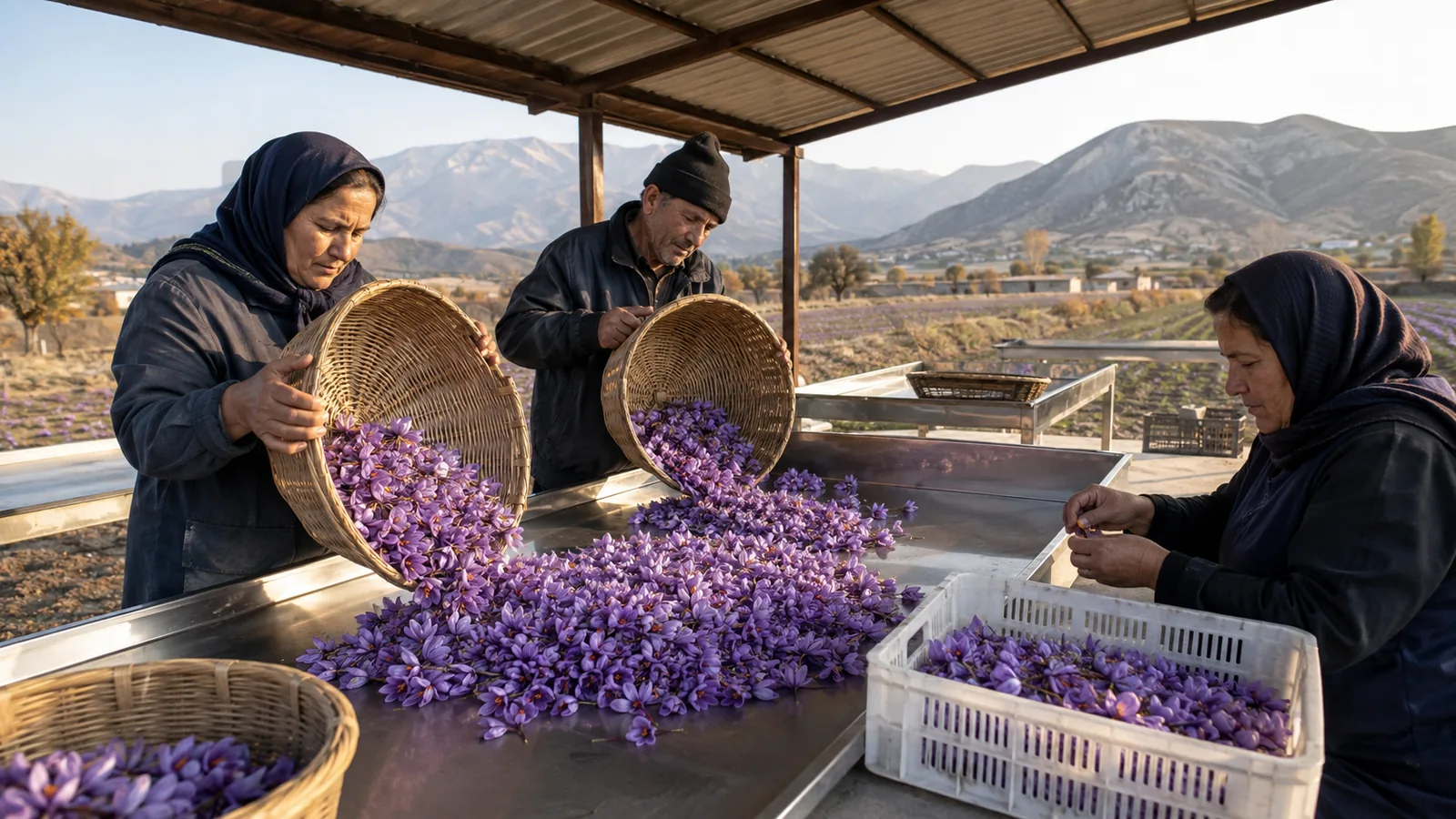
The same principle applies to saffron. Flowers must be picked and processed promptly; threads need careful drying and protection from moisture, light and contamination. Organised trading can reward a defined specification, but producers and processors still have to deliver it.
Guaranteed purchase and farmer protection
The 2016 interview also raised guaranteed purchasing. That is a government support mechanism and is not the same as exchange trading. A guaranteed programme promises purchasing under stated public rules; an exchange brings buyers and sellers together and records a market price.
The representative wanted producers of saffron and raisins to have both better purchasing protection and access to the exchange. Later rural-cooperative programmes did use saffron warehouse receipts alongside physical purchasing, showing that the two mechanisms can operate together. Their results still depend on funding, warehouse access, timing and the terms offered to farmers.
A dated headline with a completed first step
The title says saffron would enter the stock exchange “soon.” Read in its 2016 context, that prediction was broadly fulfilled: deposit-certificate trading arrived in 2017 and futures trading followed in 2018. Raisin certificates came later, in 2020.
The larger goals named in the old report—producer protection, export preparation, job creation and what it called a “resistance economy” in agriculture—cannot be proven by the launch dates alone. In this context, the policy phrase referred to more durable local production and employment. Those results require evidence about participation, costs, prices and income over time. What the timeline does establish is that saffron and raisins gained formal trading routes that did not exist when the interview was published.
For a separate example of why date, grade and market layer matter when reading a quotation, see our review of a historical saffron price range.
Sources and further reading
- The immutable 2016 Rowhani Saffron backup: source of the Kashmar interview, 7-ton facility statement, damaged 20–25-ton figure, guaranteed-purchase concern and producer/job-creation themes.
- Launch details for saffron commodity deposit certificates (IANA, reporting the Iran Mercantile Exchange, 2017).
- Saffron futures market report (IANA, 2018).
- Start of raisin commodity deposit certificate trading (IANA, reporting the Iran Mercantile Exchange, 2020).

![Exporting Saffron to Turkey + Price Guide [Complete 0 to 100]](https://img.rowhanisaffron.com/20260827003933/saffron-export-turkey-quality-inspection.webp)