


Selling saffron can happen through a direct physical sale, an organised commodity market or an export contract. Each route needs a clearly defined product. Origin, harvest year, thread type, grade, test evidence, batch weight, packaging, price unit and delivery terms should be agreed before buyer and seller compare a number.
Iran’s commodity-exchange system was created to make part of this trade more standardised and visible. It does not replace every wholesaler, cooperative or exporter, and it does not guarantee that every participant earns a profit. It provides a formal route with specified warehouses, product requirements, brokers and recorded transactions.
How saffron entered the commodity exchange
The original article anticipated saffron entering the Iran Mercantile Exchange as a way to organise sales and support value-added exports. That was a forward-looking announcement when written. It is now historical: saffron warehouse-receipt trading formally began in 2017.
At the launch, an approved lot was deposited in an exchange-supervised warehouse, assessed against the stated standard and represented by a commodity deposit certificate. The owner could then offer that certificate through an authorised brokerage. An IANA account of the first saffron certificates explains the original deposit, testing and trading process.
Historical fees, warehouse deadlines, trading hours and settlement periods on that launch page are not current instructions. Exchange symbols and rules can change. A prospective seller must check the current Iran Mercantile Exchange notice, approved warehouse specification and broker requirements before delivering product.
What a warehouse receipt represents
A warehouse receipt is not simply a photograph of saffron or a promise that a farmer owns some. It represents a specified quantity accepted into an approved warehouse under the applicable contract. The physical saffron remains in storage while ownership of the corresponding certificate can be traded.
The basic flow is:
- The owner checks the current eligible saffron type, warehouse and delivery conditions.
- The physical lot reaches the approved warehouse with the required identification.
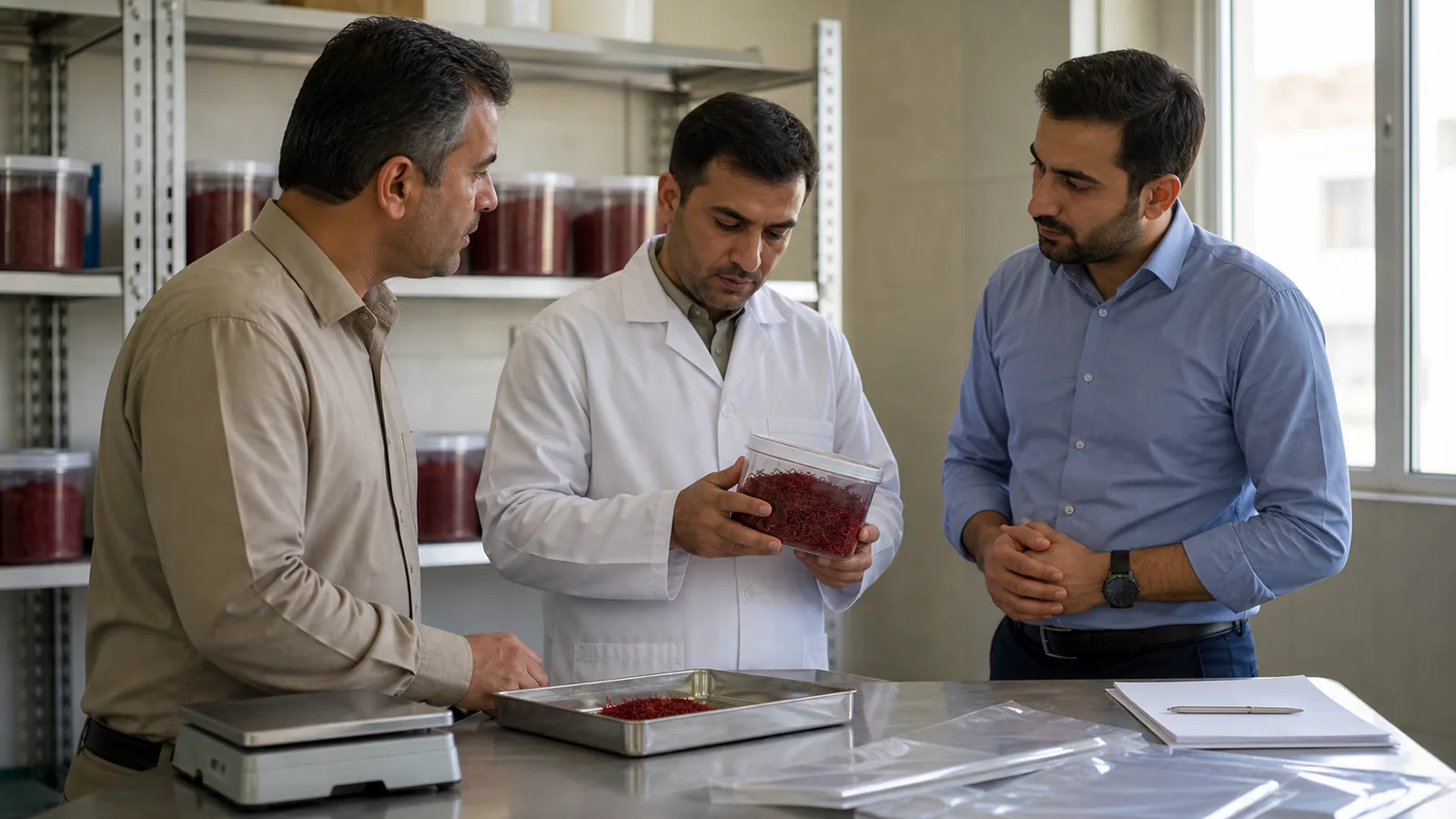
- The warehouse samples, weighs and assesses it under the current specification.
- A conforming net quantity is recorded and a certificate is issued.
- The owner uses an authorised brokerage and the applicable market account to offer it.
- After a sale, settlement and any physical withdrawal follow the current market rules.
Rejection is possible if the lot does not meet the specification. Storage, sampling, brokerage, taxes or other charges may apply. These must be checked before deciding whether an exchange sale is better than a direct buyer.
Why organised trading can help
The archived source article criticised saffron buying and selling for inadequate oversight. It said dealers dominated price setting, much of the export trade remained in bulk and product testing between buyers and sellers was limited. Those were the writer’s observations from an earlier market, not proof that every saffron sale today lacks supervision.
A formal market can address part of that problem by making accepted specifications, bids, offers, transaction prices and warehouse records more visible. It can also let smaller eligible quantities be represented without moving the physical jar or sack at every trade.
Recent policy use shows the mechanism is still active. In 2024, Iran’s Central Rural Cooperative Organization described guaranteed saffron offers through the commodity exchange and said non-standard product could not be offered under that programme. In 2025, it offered a specified basket of premium and semi-premium cut-thread saffron in the agricultural hall. Its published base price and delivery date belonged only to that offer and are not current quotations.
What exchange trading does not solve
A quoted price is useful only for the product and moment it represents. It may not match a retail jar, an export-ready private-label order or a lot with different origin, grade, test scope and delivery cost. It also does not reveal every cost paid by the grower before the saffron reached the warehouse.
An exchange cannot by itself:
- raise field yield or lower harvest labour cost;
- repair saffron damaged by slow separation or poor drying;
- create international demand;
- make an unsuitable lot meet the warehouse standard;
- guarantee a favourable future price; or
- prevent informal trade outside its own system.
The decision to use it is commercial and, for market instruments, financial. This article explains the product flow; it is not investment advice.
Bulk saffron versus packaged saffron
The source described bulk export as a major weakness. Bulk is not automatically bad. A food manufacturer, distributor or private-label customer may need a large, well-documented lot and may pack it in the destination market. The weakness is exporting an undifferentiated product without origin protection, test evidence, traceability or bargaining power.
Retail packaging can capture more value only when it fits the destination’s labelling rules, consumer sizes, language, distribution channel and shelf expectations. An attractive box that lacks a reliable batch is not a stronger product.
For an export buyer, a direct commercial offer should define incoterms, payment, inspection, certificates, pack format and responsibility for import compliance. Someone searching to import saffron from Iran needs a supplier quotation, not a historic exchange headline.
Testing must be more than a private glance
The source also complained that testing between buyers and sellers was limited. Visual inspection can find obvious foreign matter, but it cannot establish every aspect of identity, quality or sophisticated adulteration. A meaningful test must use a defined method, representative sample and traceable laboratory report.
FAO’s current work with Iran combines routine quality controls with more advanced authenticity methods and post-harvest guidance. Its 2025 programme notes that commonly used tests do not always detect subtle quality differences or sophisticated adulteration. That supports a layered approach: supplier qualification, batch records, appropriate laboratory work, retained samples and clear acceptance criteria.
How to compare selling routes
Before choosing where to sell saffron, calculate the net result rather than the headline price. For a direct sale, include testing, packing, sales effort, payment risk and delivery. For an exchange route, include eligibility, transport to the approved warehouse, assessment, storage, brokerage, settlement and withdrawal terms. For export, add compliance, documentation, freight, insurance and currency risk.
Then compare the same grade and net weight on the same date. Our saffron price guide explains the details behind a physical quotation.
A stronger market starts with a defined batch
The commodity exchange answered a real need identified in the older articles: a more organised route for saffron trading. Its greatest value is not a promise of a higher price. It is a structure in which an eligible stored lot, a certificate and a recorded transaction refer to the same product.
Direct wholesale and export sales can be equally professional when they use the same discipline. Know the batch, test what matters, state the terms and preserve origin. That is how selling saffron becomes transparent enough for both sides to make a sound commercial decision.

![Exporting Saffron to Turkey + Price Guide [Complete 0 to 100]](https://img.rowhanisaffron.com/20260827003933/saffron-export-turkey-quality-inspection.webp)



