


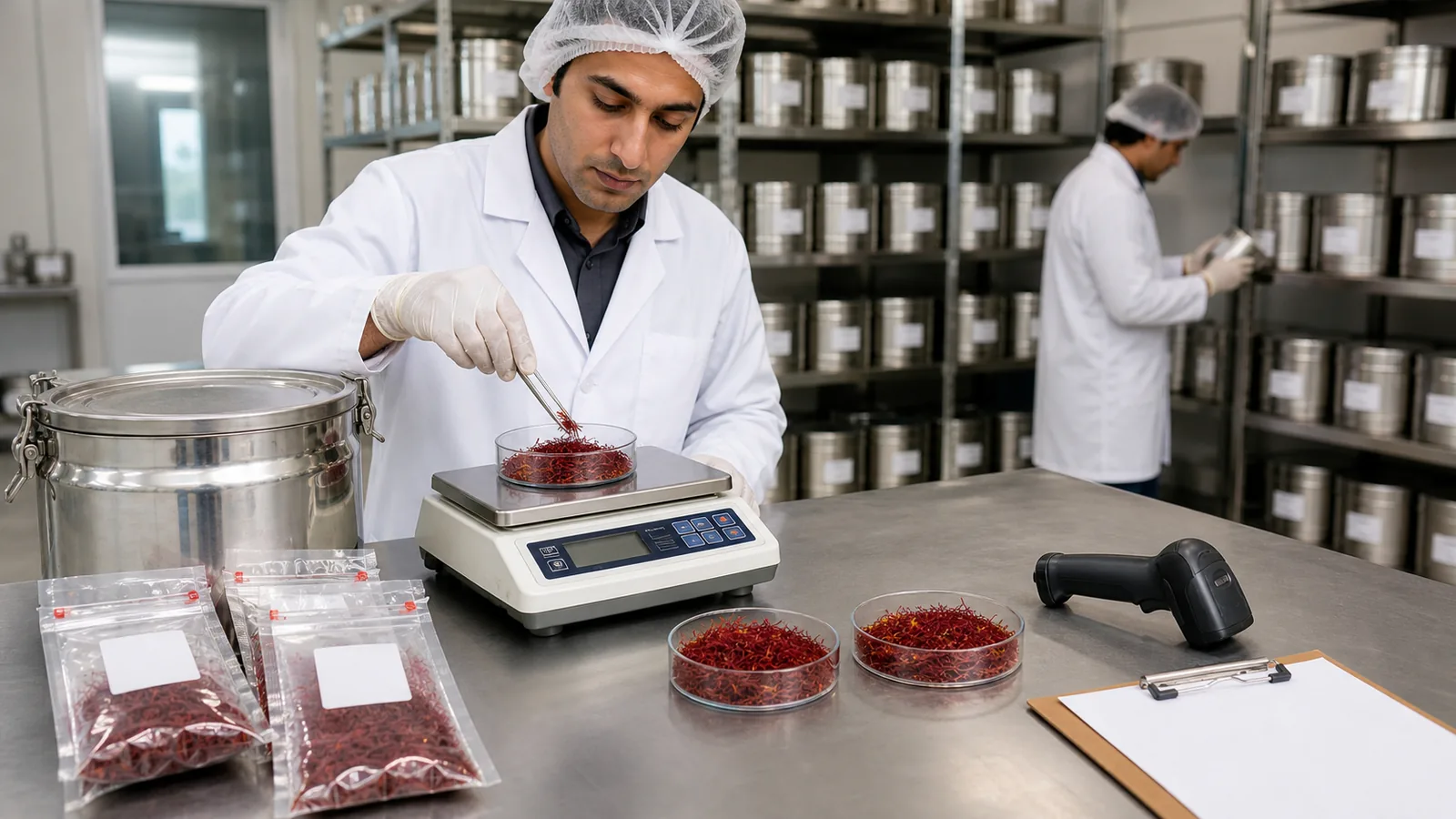
Saffron sales through an agricultural commodity exchange depend on something more exact than a buyer and seller agreeing on the word “saffron.” The lot needs a defined grade, an approved warehouse, reliable sampling and testing, a traceable receipt, clear trading rules and a way to deliver the physical product. Without that chain, a quoted exchange price cannot represent a known commodity.
This was the central concern in a 2014 interview with Ali Hosseini, then described as a member of Iran’s National Saffron Council. He supported bringing saffron to the commodity exchange, but warned that the process would be complicated because quality changes from lot to lot and storage conditions matter.
What the original saffron exchange proposal said
Hosseini argued that Iran, as the leading saffron-producing country, could use an exchange to improve professional production management and price formation. He did not present the exchange as an easy or automatic solution. Daily price fluctuations, variable quality and the need for specialised storage all had to be addressed first.
He called for warehouses that met technical requirements and laboratories capable of testing saffron before it entered the market. Those checks would allow different lots to be compared and priced according to an agreed quality basis instead of being treated as interchangeable by name alone.
The interview also said producers should be present in the exchange system and that foreign buyers or their representatives would need a workable route to participate. Hosseini asked public organisations and industry bodies to support the infrastructure. The article recorded a proposal and the conditions needed to make it credible; it was not a notice that every part of the market was already operating.
How a warehouse receipt connects saffron to a trade
A warehouse-receipt system separates the stored commodity from the document used in the transaction. The producer or owner delivers an eligible lot to an approved warehouse. The lot is weighed, sampled and assessed against the applicable specification. Once accepted, a receipt or electronic certificate represents the quantity and grade held in storage.
The receipt can then be transferred under the market’s rules while the saffron remains in controlled storage. A buyer who wants physical delivery follows the contract and warehouse procedure. If the instrument is eligible as collateral, a lender may also rely on the stored goods, subject to the legal and financial terms.
The FAO and EBRD guide to warehouse-receipt finance explains why quality certification, grading, storability, market transparency and reliable warehouse operation are basic conditions. The exact Iranian rules are different, but the operational logic is the same: trust in the receipt depends on trust in the goods and the institution holding them.
Why saffron is difficult to standardise
Saffron is compact and valuable, yet it is not simple to trade as a uniform bulk commodity. Two packages with the same net weight can differ in style content, broken material, moisture, foreign matter, aroma, colouring strength, origin documentation and handling history.
Words such as “Negin,” “Sargol” or “premium” may be useful in a commercial conversation, but a contract needs measurable acceptance criteria. The exchange or warehouse specification has to say what is sampled, how the sample is taken, which method is used, what tolerance applies and what happens when a result is disputed.
The official Codex standards catalogue lists CXS 351-2022 for dried saffron. It defines commercial forms and core composition, quality, contaminant, hygiene and labelling provisions. An exchange contract can be narrower than the Codex baseline, but it should not leave the actual product undefined.
Sampling has to represent the lot
A laboratory result is only as useful as the sample sent for analysis. Taking threads from the top of one container may not represent a larger lot. Sampling procedures, seals, identifiers and custody records protect both buyer and seller when the result affects acceptance or price.
Storage has to protect the tested condition
Testing a good lot at entry is not enough if moisture, light, heat, odours or poor packaging can alter it before delivery. The warehouse needs documented controls, stock records, inspection and a clear response to damage or loss. Storage charges and the receipt’s expiry also belong in the economics of the trade.
Lots need traceability
The warehouse identity, depositor, intake date, crop year where required, quantity, grade, sample and certificate should connect without guesswork. A break in that chain makes investigation difficult if the delivered saffron does not match the traded description.
From a 2014 proposal to warehouse-certificate trading
The exchange system developed after the interview. A 2017 report from the Iranian Agriculture News Agency described saffron commodity-deposit-certificate transactions and the associated warehouse and settlement process.
That later development confirms why the warehouses and laboratories discussed in 2014 were essential. It does not make an old trading timetable current. Warehouse symbols, eligible crop years, minimum physical-delivery quantities, expiry dates, fees and market hours can change. Anyone planning a transaction needs the present exchange, warehouse, broker and regulator documents rather than a copied figure from an earlier notice.
What an exchange price does and does not show
An exchange can make bids, offers and completed transactions more visible for the product described by a particular contract. That helps price discovery, but the displayed figure still has a basis. It belongs to a grade, warehouse or delivery network, contract unit, date and settlement arrangement.
It is not automatically the farm-gate price, an export quotation or the retail price of branded packs. A private-label shipment may include sorting, packaging, certificates, freight, customs work, insurance and buyer-specific testing that are outside the warehouse certificate. The guide to export of Iranian saffron explains why origin, packing and route can change the commercial offer.
Nor does exchange trading remove volatility. New harvest supply, inventory, currency conditions, financing costs and participants’ expectations can move the market. A transparent change is still a change. The exchange gives the movement a visible mechanism; it does not promise a particular direction or a better price for every seller.
Questions a producer should answer before depositing saffron
- Is the warehouse currently approved for the precise saffron contract?
- Which crop year, grade, packaging and minimum quantity are eligible?
- How will the lot be sampled, tested and classified?
- What happens if the deposit is rejected or assigned a lower grade?
- Which storage, testing, brokerage, settlement and delivery charges apply?
- When do the receipt and trading symbol expire?
- How and when does the seller receive funds?
- What records are needed to withdraw or transfer the physical product?
The calculation should use the likely net proceeds, not the screen price alone. A producer also has to compare the time and cost of delivery to the approved warehouse with a documented private sale.
What a buyer should check
A buyer needs the full contract specification and the current warehouse notice. Confirm whether the purchase is intended for financial settlement, later resale or physical delivery. If physical saffron is required, check the minimum withdrawal quantity, packaging, delivery window, storage charges and documents before placing the order.
Exchange acceptance establishes conformity with its own specification. It does not necessarily satisfy a buyer’s country, food-safety programme, organic claim, customer label or private grade. Additional sampling or certification may still be needed.
For buyers who need a particular origin story, processing method, pack or recurring specification, a direct relationship with qualified Iranian saffron suppliers may solve needs that a standard warehouse lot cannot. The two channels are not mutually exclusive; they serve different contracts.
Foreign participation needs more than market access
Hosseini’s call for foreign buyers and representatives was commercially understandable. An exchange can help them compare a defined domestic lot, but it cannot by itself solve brokerage eligibility, identity checks, currency transfer, sanctions, customs, export licensing, insurance or destination-country food requirements.
A foreign buyer should obtain current legal and banking advice and confirm who will take title, withdraw the product, export it and carry the risk at each step. A quoted warehouse price without a workable delivery and payment route is not yet an import cost.
The enduring point behind the interview
The 2014 article was right that saffron sales on agricultural commodity exchanges require infrastructure. The market screen is the visible end of a longer system: defined grades, capable laboratories, controlled warehouses, reliable receipts, settlement rules, producer access and informed buyers.
When those parts are clear, an exchange can provide a useful reference for a specific standardised lot. When they are vague, the price may look precise while the saffron behind it is not. That is why current contract documents and lot evidence should always come before a trading decision.
Market structure and food-standard sources reviewed 28 August 2026. This article is educational, not investment, legal or current-price advice; verify live rules with the relevant exchange, warehouse, broker and regulator.

![Exporting Saffron to Turkey + Price Guide [Complete 0 to 100]](https://img.rowhanisaffron.com/20260827003933/saffron-export-turkey-quality-inspection.webp)



