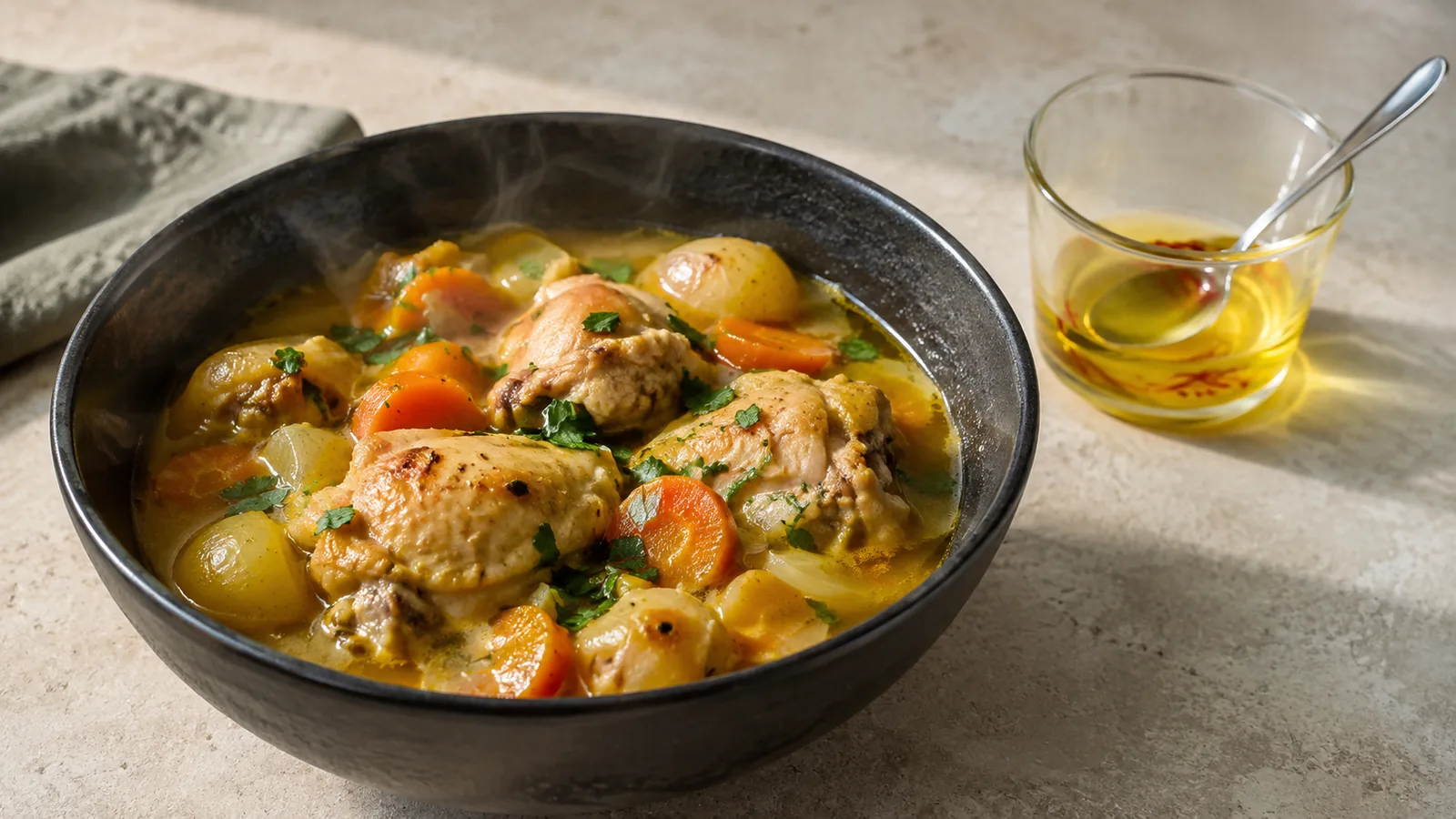
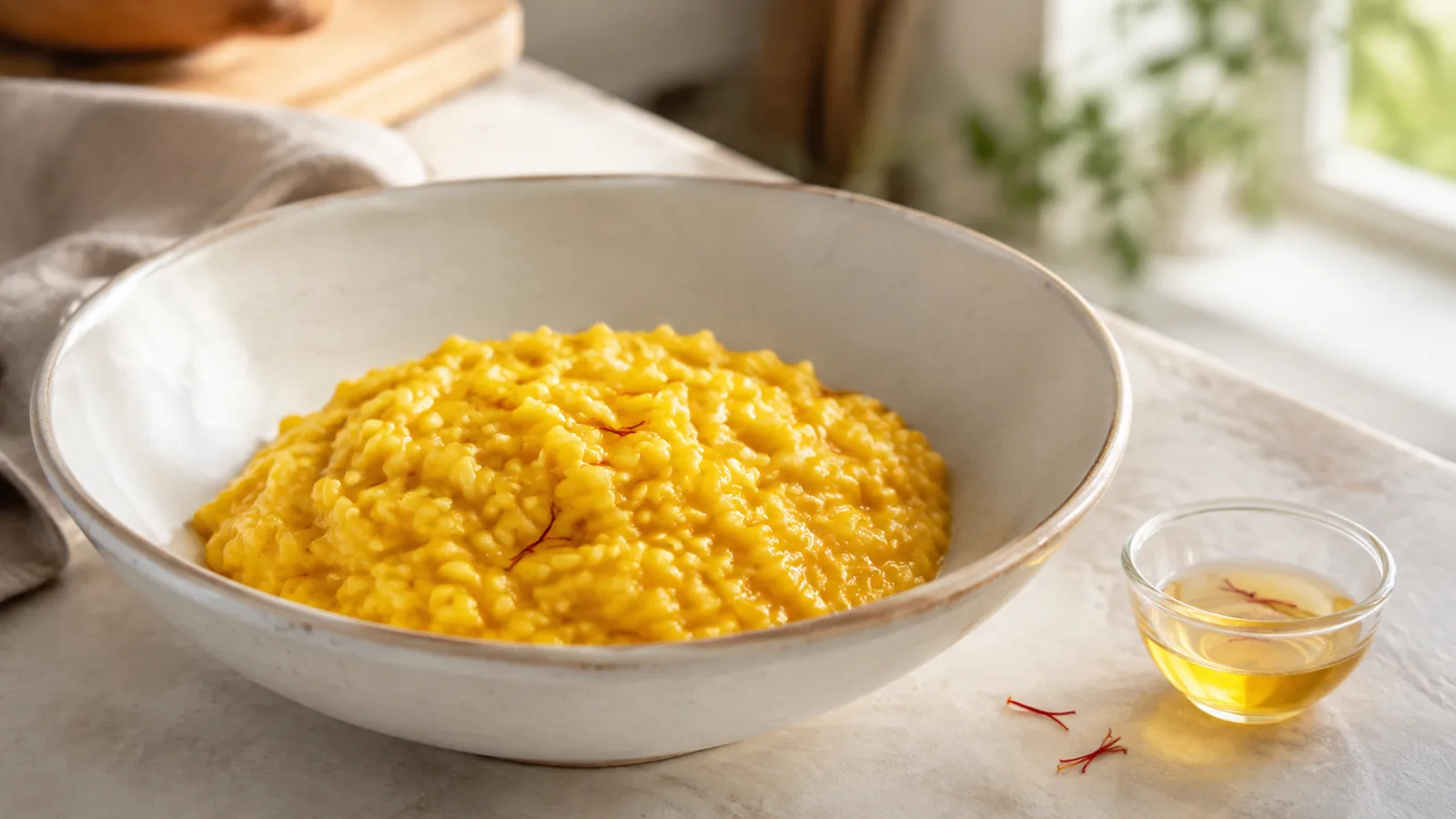
Saffron Mouse cooking is the original title of this recipe, but the dessert is a saffron mousse, not “mouse.” It is a chilled cream-and-egg-white dessert set lightly with gelatin and finished with pistachio.
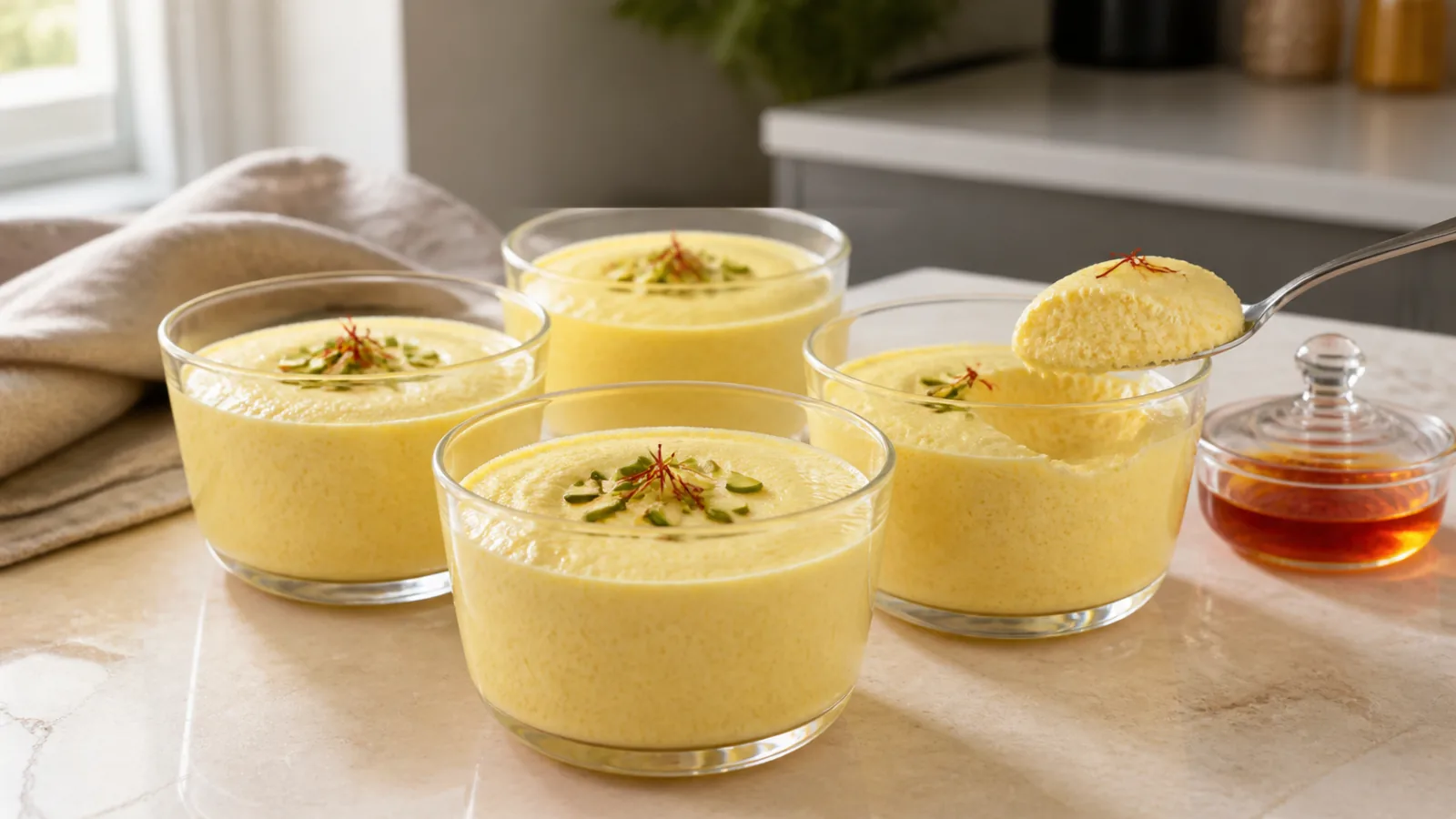
The old translation left the milk quantity unclear and instructed readers to use uncooked egg whites. This corrected version keeps the intended saffron, cream, egg white, sugar, gelatin and pistachio combination while giving four people a repeatable, safer method.
Saffron mousse at a glance
- Serves: 4
- Active preparation: about 25 minutes
- Chilling: at least 4 hours
- Texture: airy, softly set and spoonable
Ingredients
- 3 pasteurized egg whites, about 90 grams, chilled
- 120 grams powdered sugar, sifted
- 100 millilitres cold whipping cream
- 120 millilitres whole milk
- 2 teaspoons powdered gelatin
- 3 tablespoons cold water, for blooming the gelatin
- 1 tablespoon concentrated saffron infusion, at room temperature
- 2 tablespoons pistachio slivers, plus a little extra to finish
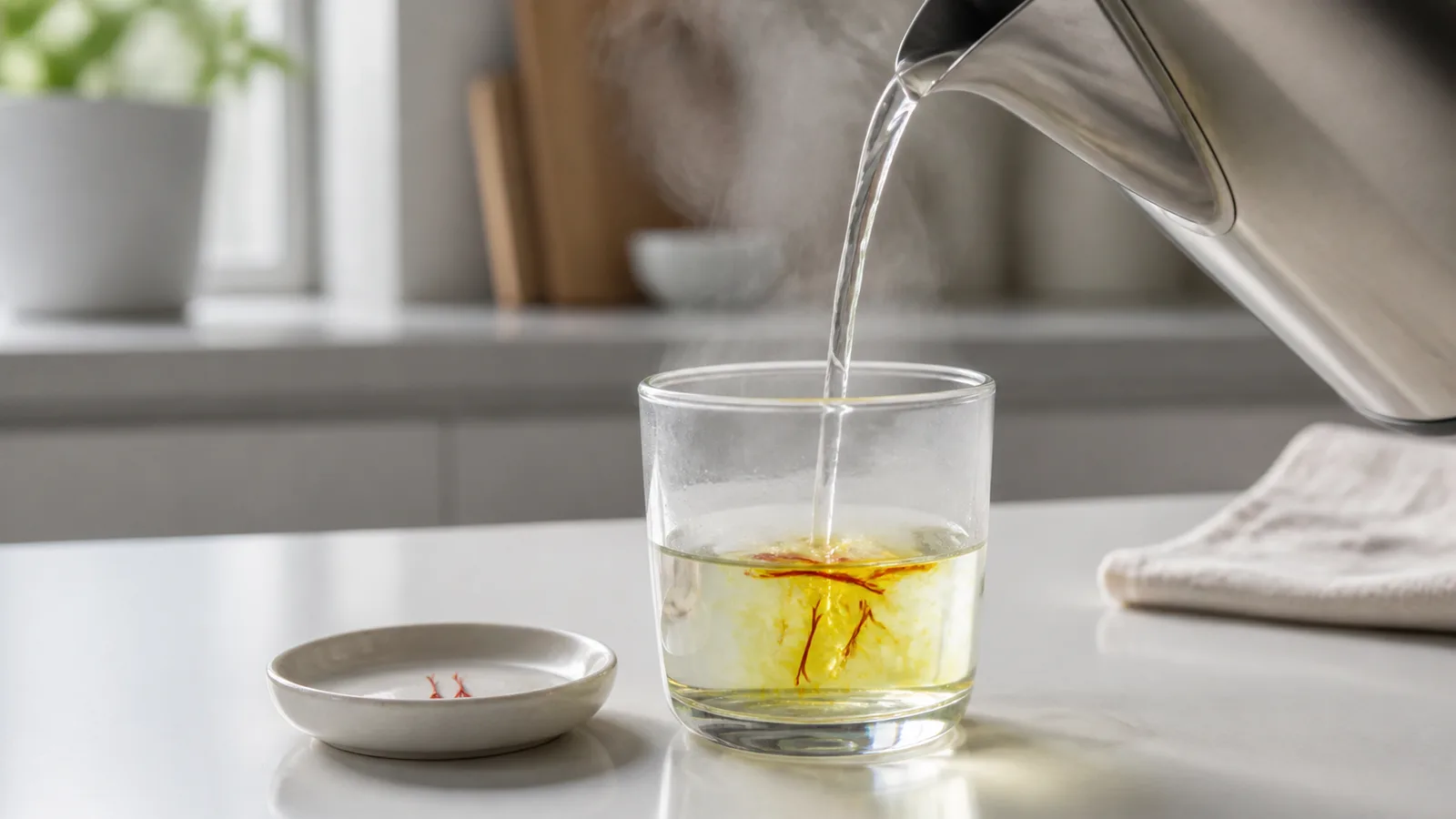
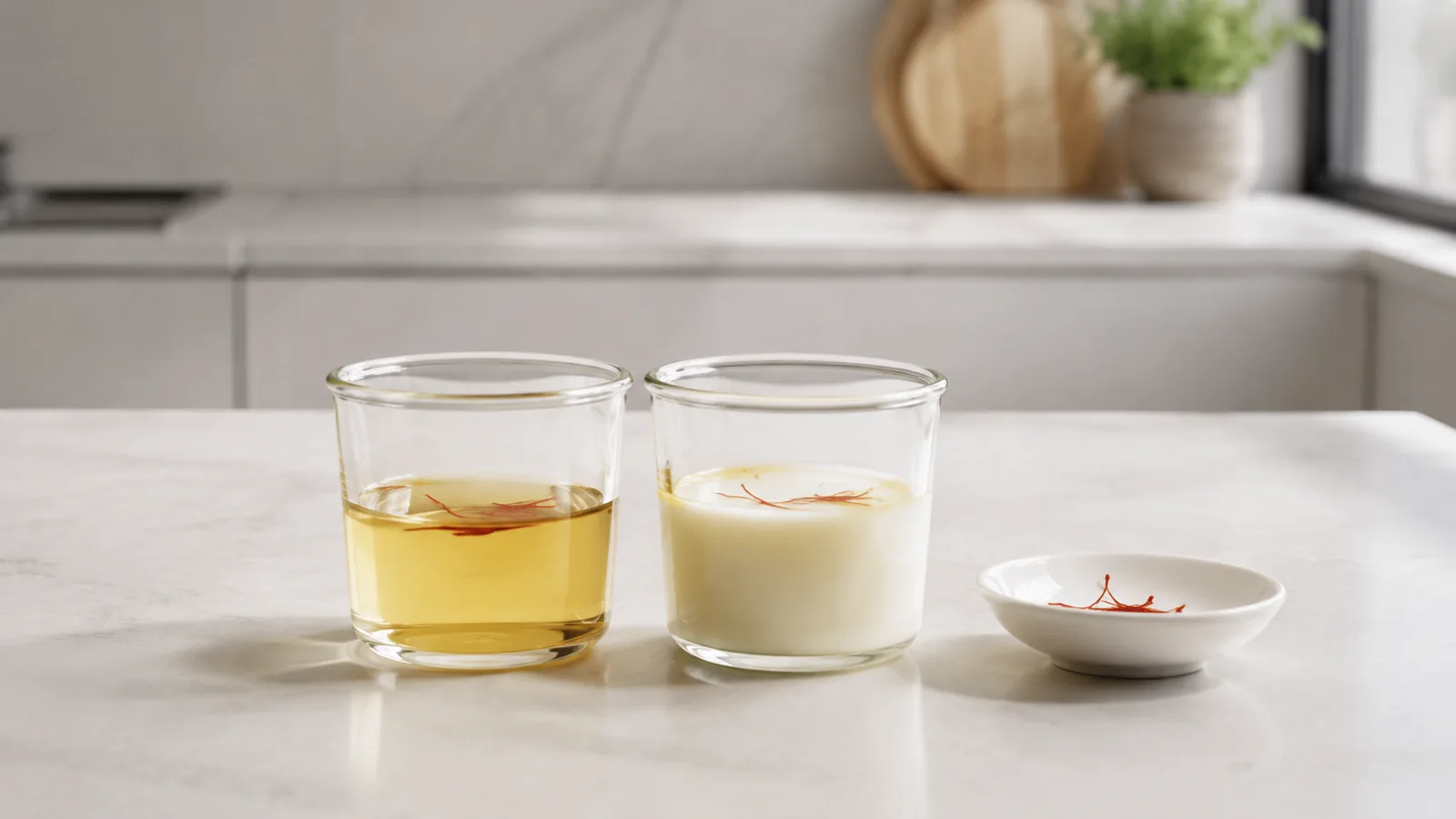
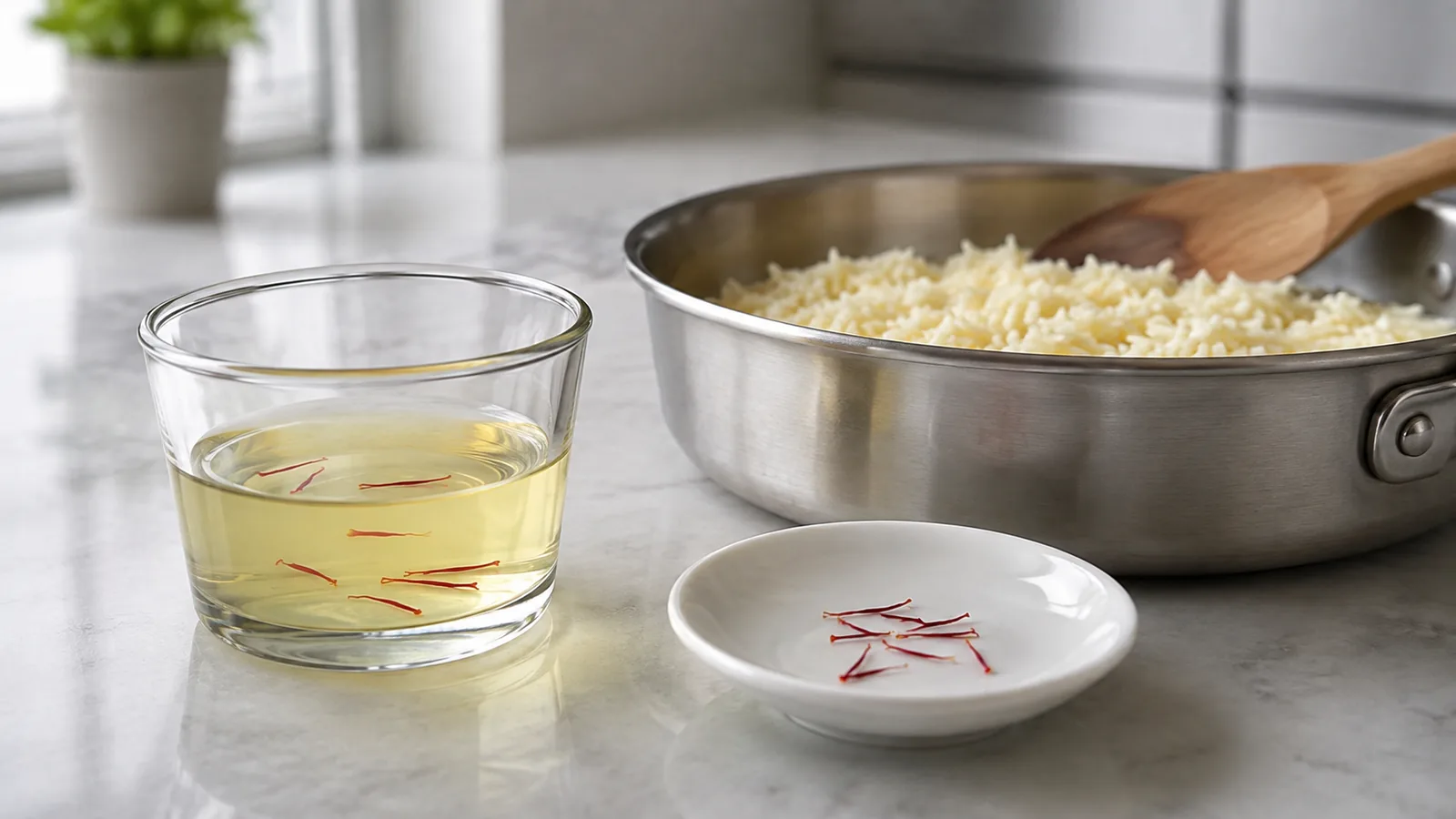
To make the infusion, grind a generous pinch of saffron threads, add just enough hot—not boiling—water to produce one tablespoon, cover and leave it for 10 minutes. The original recipe’s “1 tablespoon saffron” is best understood as prepared infusion; a tablespoon of dry threads would overwhelm this amount of mousse.
How to make saffron mousse
- Bloom the gelatin. Put the cold water in a small bowl, sprinkle the gelatin evenly over it and leave it undisturbed for 5 to 10 minutes.
- Prepare the saffron base. Warm the milk in a small saucepan until it is steaming but not boiling. Remove it from the heat, add the bloomed gelatin and stir until completely dissolved. Stir in the saffron infusion, then leave the mixture to cool to room temperature. It must remain fluid.
- Whip the cream. In a cold bowl, whip the cream to soft peaks. Refrigerate it while you prepare the egg whites.
- Make the meringue. In a spotless bowl, beat the pasteurized egg whites until foamy. Add the powdered sugar a spoonful at a time and continue beating until the mixture is glossy and holds a firm peak.
- Lighten the base. Whisk one large spoonful of meringue into the cooled saffron-milk mixture. Fold in the whipped cream, then gently fold in the remaining meringue in two additions. Stop as soon as the colour and texture are even.
- Add the pistachios. Fold in the pistachio slivers without overmixing.
- Set the mousse. Divide it among four clean serving glasses, cover and refrigerate for at least 4 hours. Add the reserved pistachios immediately before serving.
If you want to turn out one mould, wipe its inside with the thinnest film of neutral oil before filling. Once set, dip the outside in warm water for only a few seconds and invert it onto a chilled plate. Individual glasses are easier and preserve more of the air.
Why pasteurized egg whites matter
This mousse is served cold and the egg whites are not cooked after whipping. The US Food and Drug Administration’s egg-safety guidance recommends pasteurized shell eggs or pasteurized egg products for recipes served with raw or undercooked egg.
Use a carton labelled pasteurized egg whites or pasteurized shell eggs. Ordinary raw shell egg whites are not an equivalent substitution in this method. Keep the finished mousse refrigerated at 5°C/41°F or colder and return it to the refrigerator promptly after serving.
The translated ingredient list needed repair
The earlier version listed “Tap: 1 pc,” then told the cook to add milk without giving an amount. “Tap” is not an identifiable ingredient here, so the corrected recipe does not pretend to know what it meant. The 120 millilitres of milk above is a tested working ratio for this version.
It also listed two tablespoons of gelatin powder. For this volume, that would produce a much firmer gel than a light mousse and may have been a unit error. Two teaspoons give enough structure for serving glasses while retaining an airy texture.
These are deliberate recipe corrections, not silent changes to the old wording.
How to keep the mousse light
Temperature and folding make the difference. If the saffron-milk base is warm, it can melt the whipped cream. If it becomes cold enough to gel before folding, it leaves rubbery strands. Aim for room temperature and fluid consistency.
Use a wide flexible spatula and rotate the bowl as you lift the mixture from bottom to top. Vigorous stirring knocks out the air built into the egg whites and cream. Stop folding once no white streaks remain.
Flavour and serving notes
Saffron should lead without tasting bitter. A concentrated infusion distributes the flavour more evenly than dry threads added at the end. Pistachio gives contrast, but keeping it to a small amount prevents the mousse from becoming heavy.
Serve the mousse as a chilled dessert or a small sweet snack. It pairs well with unsweetened tea, berries or a few orange segments. Avoid adding wet fruit hours in advance because released juice can mark the surface and soften the set.
For an egg-free moulded alternative, see our saffron dessert recipe, which uses milk, cream and gelatin without whipped egg whites.
Troubleshooting
The mousse did not set
The gelatin may not have bloomed fully, may not have dissolved, or the mousse may not have chilled long enough. Give it the full four hours before judging the texture.
The mousse is dense
The cream or egg whites may have been under-whipped, or the mixture may have been stirred rather than folded. Over-whipping can also create a grainy result that loses volume during mixing.
There are gelatin threads
The saffron-milk base began setting before it was folded in. Next time, cool it only to room temperature and combine it while it is still completely fluid.
Prepared this way, the recipe delivers what the original Saffron Mouse wording was trying to describe: a fragrant saffron mousse with a clean set, a light spoonful and enough structure to serve four.