


This article records a saffron contest reported in Torbat Heydarieh in 2018. It describes the event and the traditional harvest tasks it highlighted; dates and programme details refer to that report rather than a current event schedule.
A saffron contest in Torbat Heydarieh turned familiar harvest work into a public event. According to the Khorasan Razavi service of Iran’s national broadcaster, the programme was created to help more people understand how saffron is cultivated, harvested and prepared, as well as the income connected with the crop.
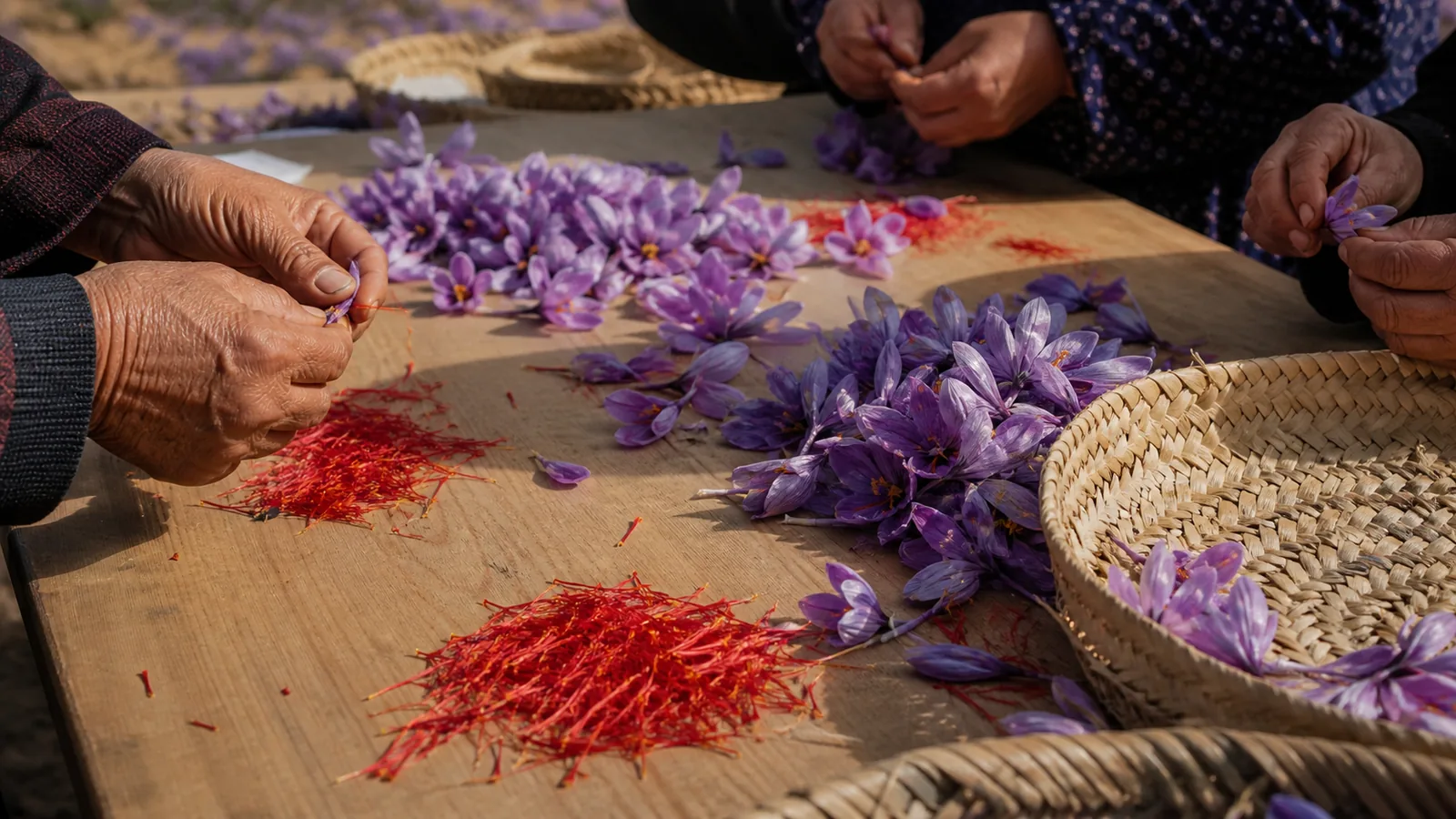
The event included challenges based on practical saffron work. The original English translation called them a “saffron rationing contest” and a “saffron racing contest,” but those phrases do not explain the activity clearly. In harvest communities, the meaningful skills are picking crocus flowers promptly, separating the red stigmas carefully and handling the delicate threads without contaminating or crushing them.
Why turn saffron work into a contest?
A contest gives visitors a reason to watch a process that is usually carried out on farms and around family worktables. It also makes the labour behind a small package of saffron easier to see. The spice reaches a buyer as light, dry threads, but it begins as individual flowers that must be collected and opened.
Speed alone is not the point. Clean handling matters, and so does separating the useful red portion consistently. An event can reward dexterity while still showing why care is more valuable than haste. When the task is presented well, spectators learn that saffron preparation is skilled seasonal work rather than a simple matter of gathering a finished spice from a field.
The harvest skills an event can demonstrate
A well-run public programme can follow the crop from flower to prepared threads:
- Picking: flowers are gathered and moved without being compressed into a damaged mass.
- Sorting: leaves, soil and visibly damaged flowers are kept away from the working area.
- Separating: the red stigmas are removed from each flower with controlled hand movements.
- Preparing: the separated material is spread and handled in a way that supports even drying.
- Protecting: finished saffron is kept clean and away from conditions that can impair its aroma and appearance.
The 2018 news item did not publish judging rules, participant numbers or results. Those details should not be invented. What the report does establish is the organisers’ educational purpose and the use of saffron-related competitions in Torbat Heydarieh.
What visitors can learn from saffron separation
The most revealing part of a harvest demonstration is often the contrast between the volume of flowers and the small amount of spice being prepared. Watching one flower opened at a time changes the way a person sees the final product. The value is tied not only to the plant, but also to repeated, careful work.
Visitors can also see why the appearance of the threads matters. Genuine saffron is not an anonymous red powder emerging from a machine. The separated material has a recognisable shape and texture, and poor handling can mix it with unwanted floral parts. A demonstration therefore gives customers practical context without making extravagant claims about quality.
A community event, not a current buying offer
The title of the original post can sound like an active competition announcement. It is better read as an archive of a local cultural and agricultural programme. Anyone looking for a present-day Torbat Heydarieh saffron festival, entry form or timetable should check a current notice from the organiser or local authorities.
Nor was the contest a retail saffron sale. Its reported purpose was public awareness: helping people understand cultivation, harvest work and the crop’s economic role. That makes it useful background for customers who want to know what happens before saffron is graded, packed and offered in a shop.
The lasting value of the Torbat Heydarieh contest
Agricultural events are most useful when they show real work honestly. The Torbat Heydarieh saffron contest gave everyday harvest skills a public setting and connected the finished spice with the people who prepare it. Even without a full set of contest results, the record preserves a clear idea: customers appreciate saffron more when they can see the care required between the field and the package.
Original report: Khorasan Razavi service of IRIB News, as cited by the 2018 post.

![Exporting Saffron to Turkey + Price Guide [Complete 0 to 100]](https://img.rowhanisaffron.com/20260827003933/saffron-export-turkey-quality-inspection.webp)



