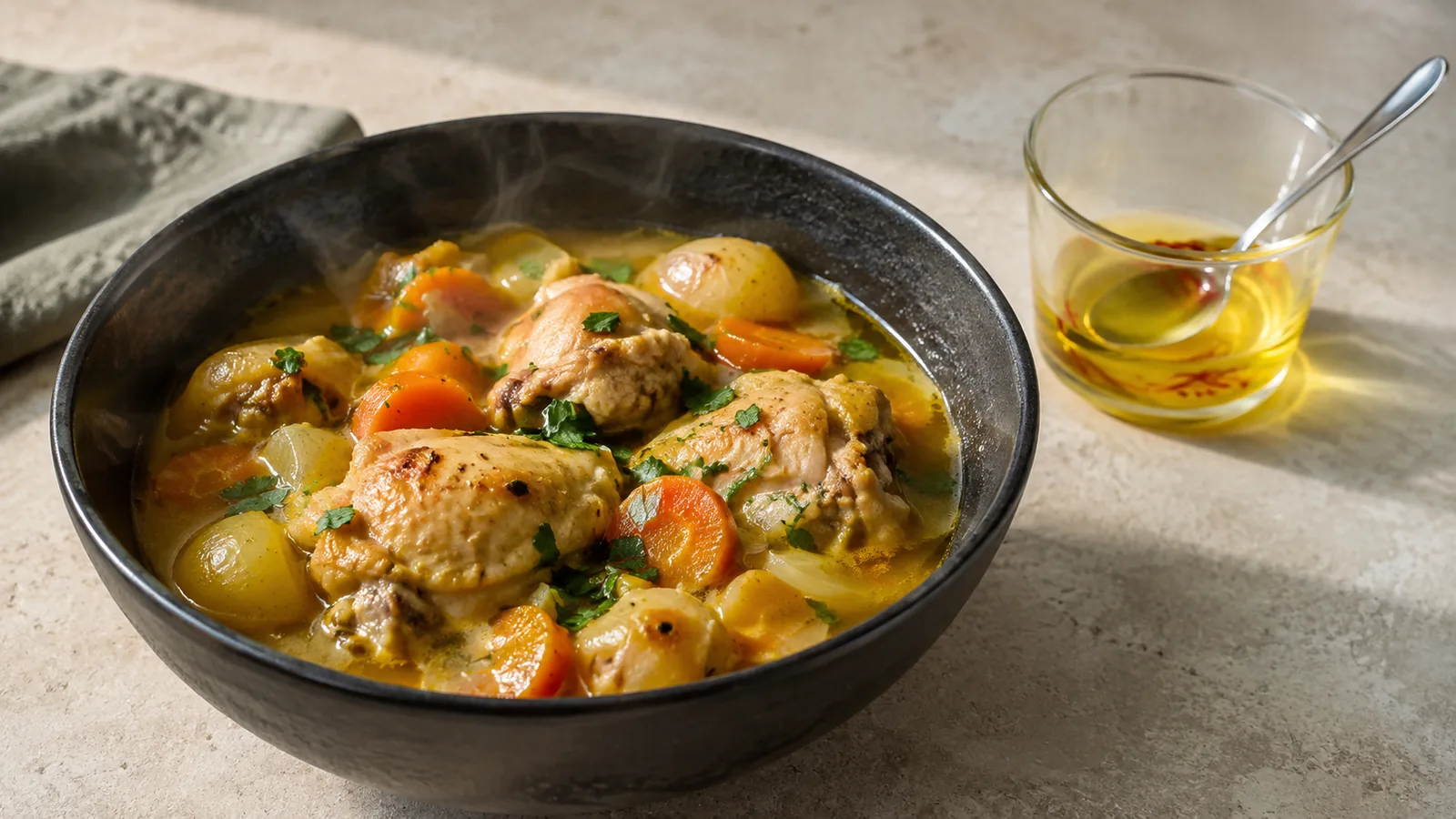
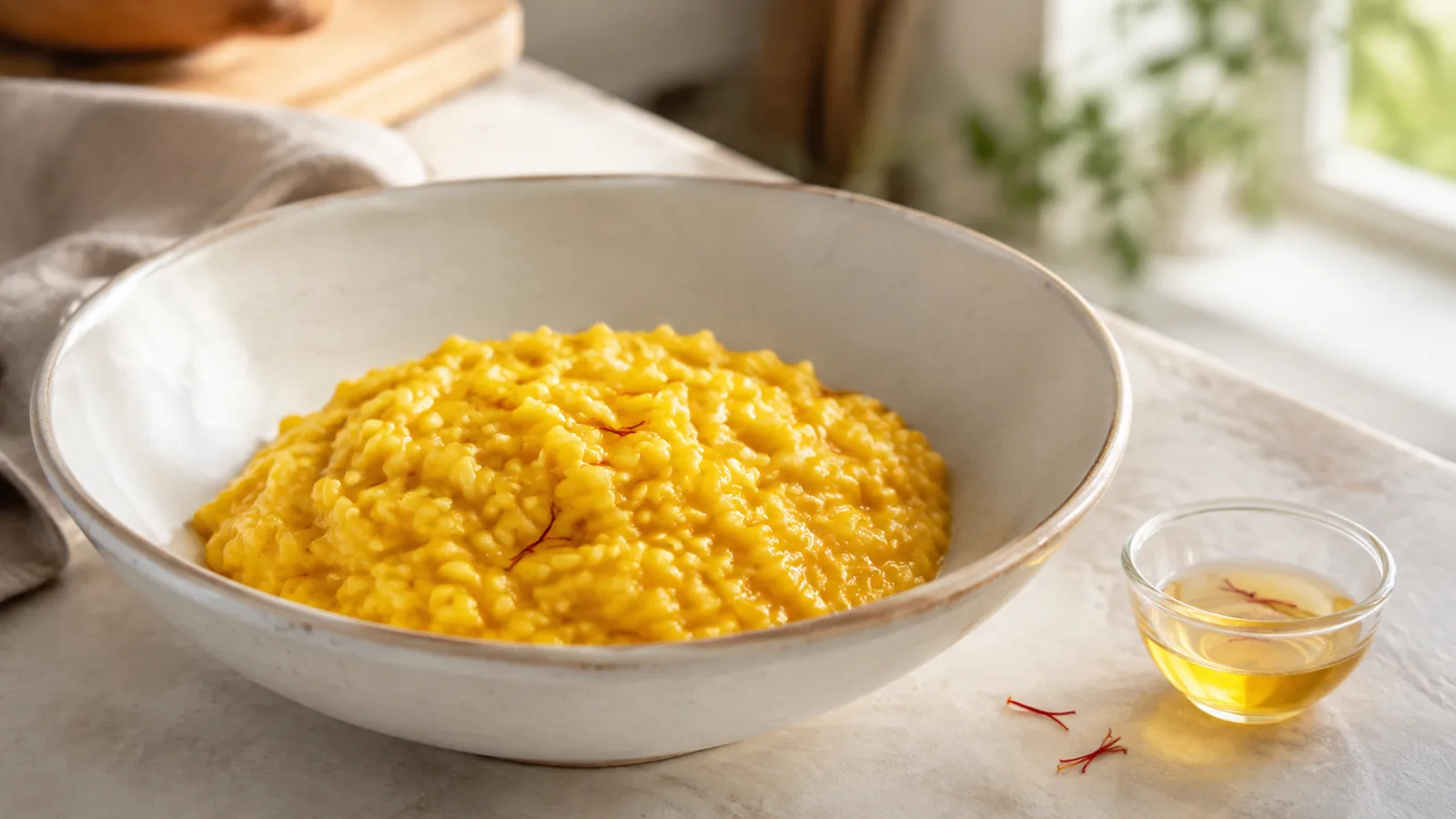
This saffron chicken recipe uses a pressure cooker to turn bone-in chicken, onions and a measured saffron infusion into a tender dinner with a glossy sauce. The method is quick once the cooker reaches pressure, but it still leaves room to brown the meat, develop the onion and add part of the saffron at the end, where its aroma is easier to notice.
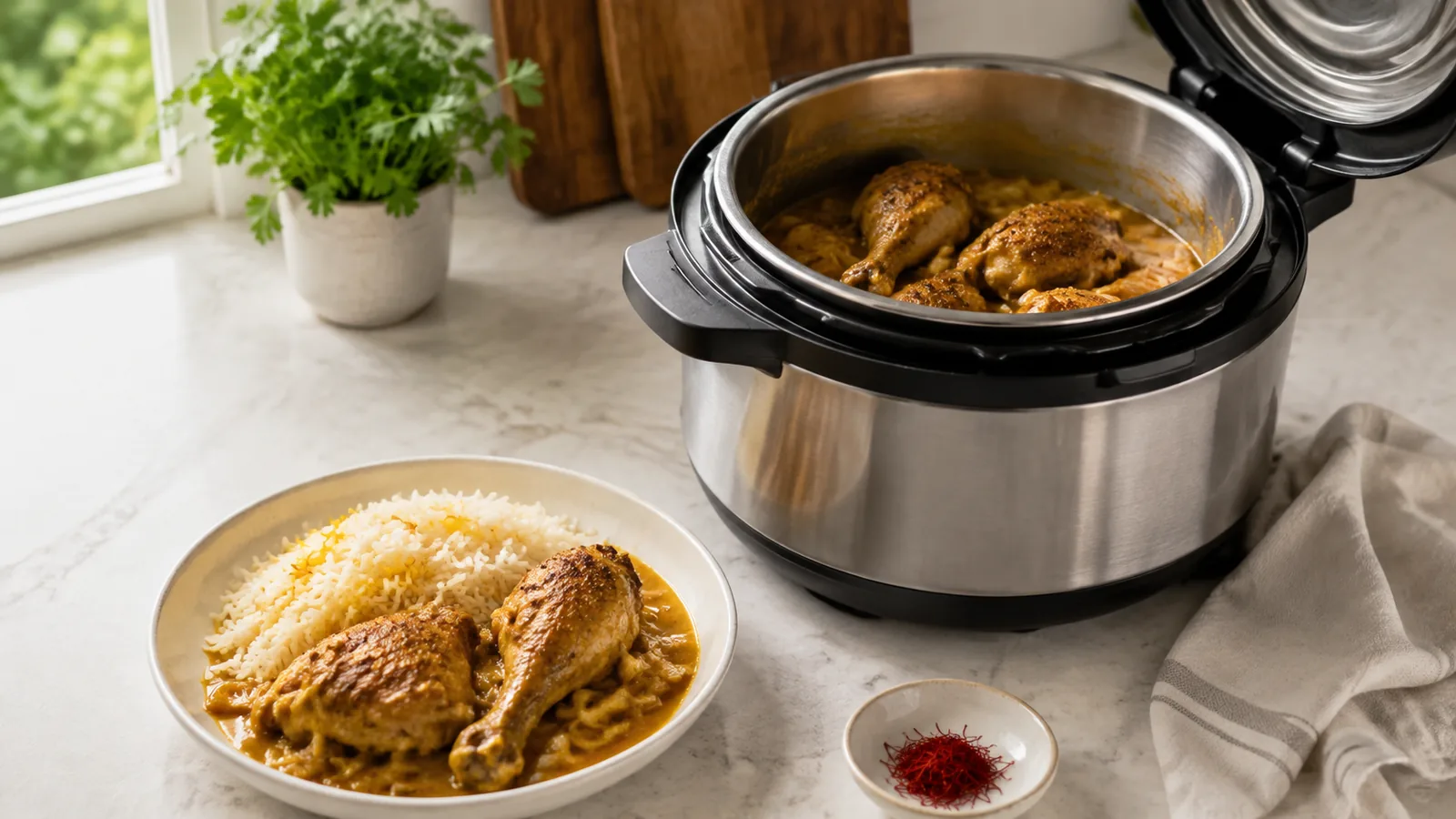
Pressure-cooker saffron chicken at a glance
- Serves: 4–6
- Preparation: about 20 minutes
- Pressure time: about 10 minutes for medium bone-in pieces
- Release: 10 minutes natural release, then follow the appliance instructions
- Finish: 5–10 minutes to reduce the sauce
Pressure time is not the whole cooking time. The cooker must heat and pressurise first, and that varies with the model, liquid temperature and amount of food. Always follow the manual for your own electric or stovetop cooker, including its minimum liquid, fill limit and release procedure.
Ingredients
- 6 medium bone-in chicken thighs or drumsticks, about 1.1–1.3 kg
- 2 medium onions, thinly sliced
- 2 garlic cloves, finely chopped
- 2 tablespoons neutral oil
- 0.2 g saffron threads, about ¾ teaspoon loosely packed
- 3 tablespoons hot water for blooming the saffron
- 1 teaspoon ground turmeric
- ½ teaspoon black pepper
- 1 teaspoon fine salt, plus more after tasting
- 250 ml low-sodium chicken stock or water, or the minimum required by your cooker
- 1 tablespoon tomato paste, optional
- 1 bay leaf or a small cinnamon stick, optional
- 15 g butter, optional, for finishing
- 1–2 teaspoons lemon juice, if the finished sauce needs acidity
Thighs and drumsticks stay juicier under pressure than small breast pieces. If you use breast, choose similarly sized pieces and expect a shorter pressure time; check the thickest part with a thermometer rather than relying on the clock.
Bloom and divide the saffron
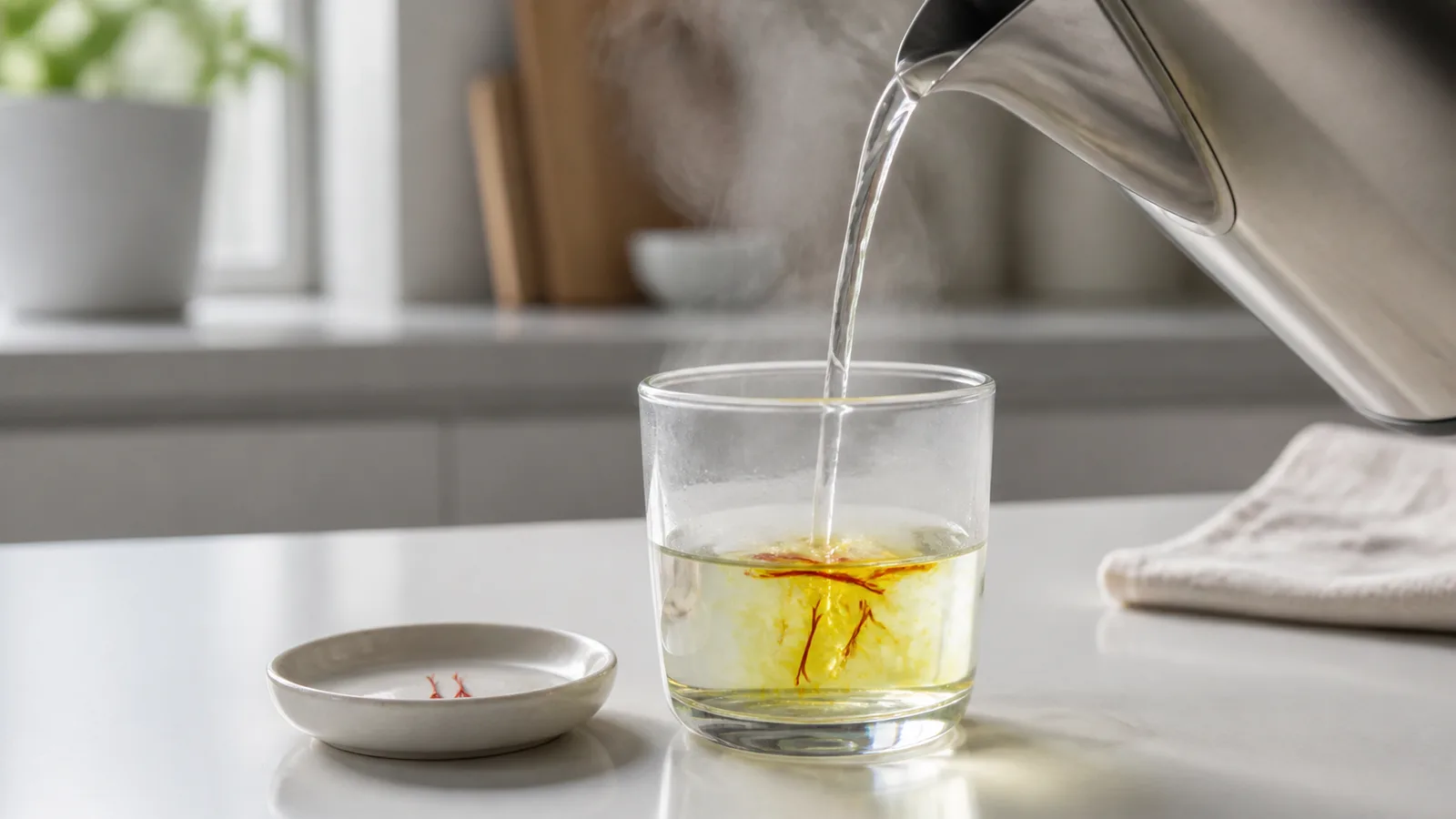
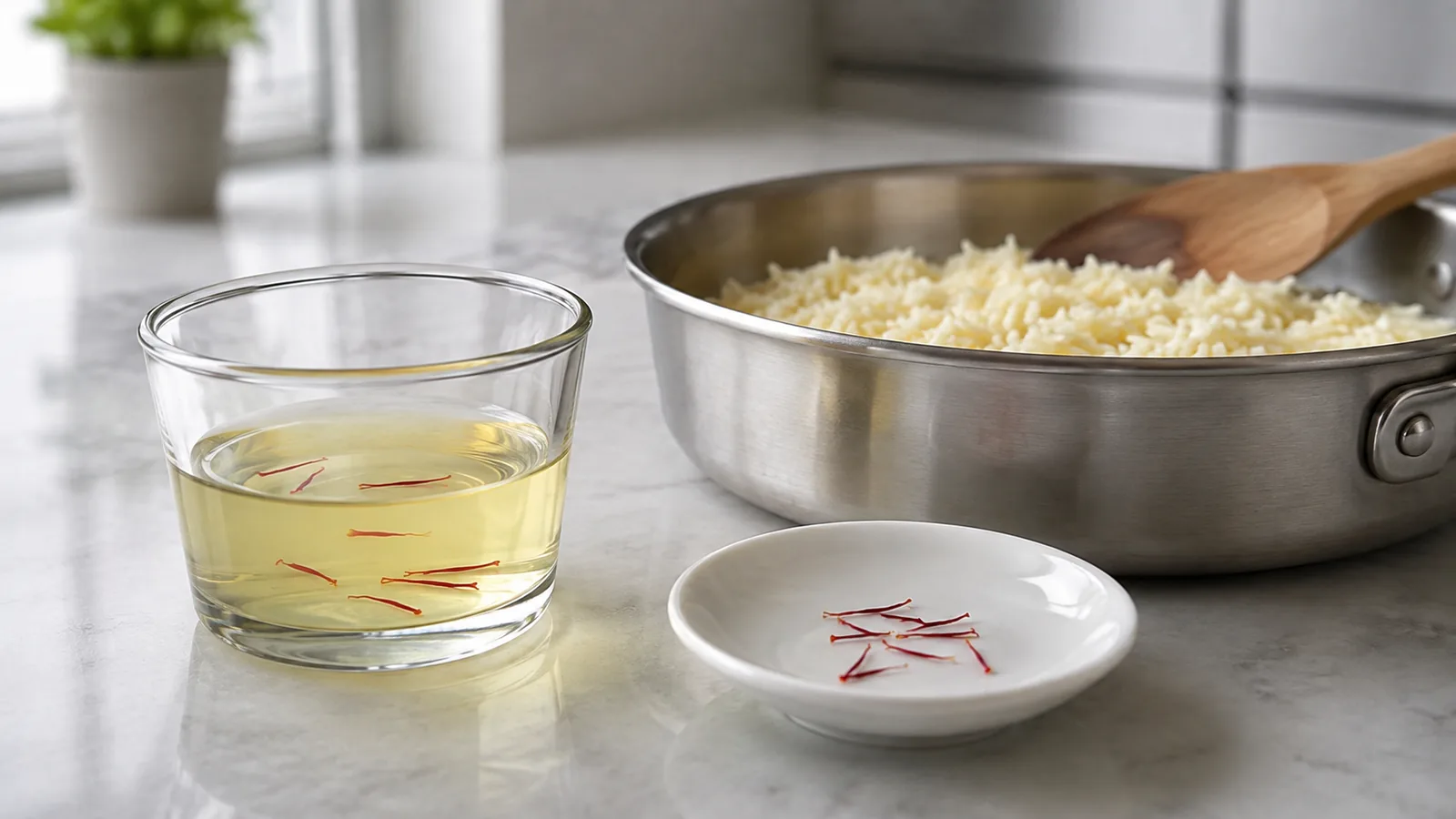
Grind the saffron to a coarse powder with a pinch of the measured salt. Add 3 tablespoons of hot, not vigorously boiling, water. Cover and leave for 10–15 minutes.
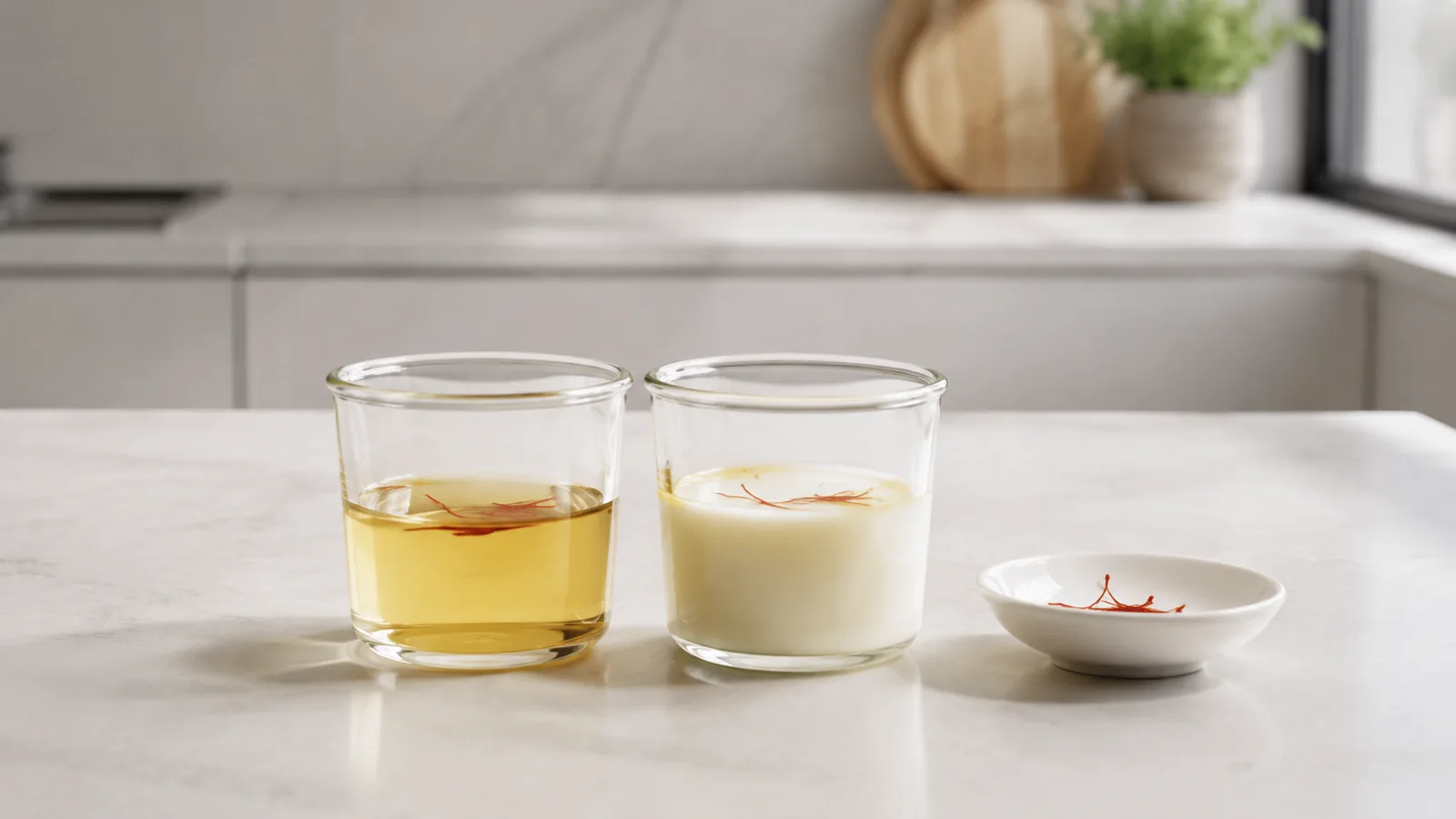
Divide the infusion in two. One portion goes into the pressure cooker and seasons the chicken throughout. The other is stirred into the reduced sauce at the end, protecting more of the aroma. For a closer look at the technique, see how to bloom saffron before cooking.
How to make saffron chicken in a pressure cooker
1. Season and brown the chicken
Pat the chicken dry; do not wash it. Season with the turmeric, pepper and half the salt. Select the sauté setting on an electric cooker, or place an uncovered stovetop cooker over medium heat. Add the oil and brown the chicken in batches for 2–3 minutes per side.
The goal is colour, not cooking the centre. Crowding the pot releases steam and prevents browning. Move each batch to a clean plate and keep raw-meat utensils away from foods that will not be cooked.
2. Cook the onions and optional tomato paste
Add the onions to the pot. Cook for 6–8 minutes, stirring, until softened and lightly golden. Add the garlic and cook for 30 seconds. If using tomato paste, stir it through the onions for one minute so it loses its raw taste.
Pour in the stock or water and scrape the base thoroughly. Any browned bits stuck to the bottom should be released before pressure cooking; on an electric model, an uncleared base can trigger a burn warning. Add the bay leaf or cinnamon if using.
3. Add the chicken, liquid and saffron
Return the chicken and any collected juices to the cooker. Pour in half of the saffron infusion. The liquid does not need to cover the chicken completely. Use at least the minimum required by your model, but do not add unnecessary water or exceed its safe fill line.
Lock the lid and make sure the valve is in the correct pressure position. Use high pressure for about 10 minutes for medium bone-in thighs or drumsticks. On a stovetop model, begin timing only when full pressure is reached, then adjust the heat to maintain it according to the manual.
4. Release pressure safely
When the programmed time ends, let the pressure fall naturally for 10 minutes. Then release any remaining pressure exactly as the manufacturer directs. Keep your face, hands and cupboards away from the steam path. Never force the lid open; it should unlock only after the pressure indicator has dropped.
Open the lid away from you. Check the thickest part of the largest chicken piece, avoiding bone. Poultry should reach at least 74°C/165°F. If it has not, simmer uncovered on sauté until it does, or return to pressure only if your model’s instructions support that procedure.
5. Reduce and finish the sauce
Transfer the safely cooked chicken to a clean warm plate. Remove the bay leaf or cinnamon. Select sauté or simmer the uncovered sauce over medium heat for 5–10 minutes, until it lightly coats a spoon.
Turn the heat low and add the remaining saffron infusion. Stir in the butter if using. Taste before adjusting salt, then add lemon juice a teaspoon at a time if the onions have made the sauce too sweet. Return the chicken for a minute so it is evenly coated.
Should the chicken be fried again?
It is optional. Pressure-cooked skin becomes soft, even if it was browned at the start. For a deeper finish, place the cooked pieces under a hot grill or broiler for a few minutes, or sear them briefly in a wide pan. Brush with a little saffron butter first and watch closely.
Do not judge safety by browning. Complete the thermometer check before serving, and avoid moving cooked chicken back onto the plate that held it raw.
Using chicken breast
Breast cooks faster and has less fat than thighs. Large bone-in breast pieces tolerate pressure better than thin boneless slices. If using boneless breast, shorten the pressure time according to your cooker manual and use a natural release only as long as needed, because retained heat continues cooking the meat.
Another option is to cook the onion-and-saffron sauce under pressure first, then add breast pieces and finish them on the sauté setting. This gives you more control over doneness, although it is no longer a one-stage pressure recipe.
Adding vegetables without turning them soft
Carrots and potatoes can cook with bone-in chicken if cut into large, even pieces, but their texture depends on variety and size. Place them on top rather than stirring small pieces through the liquid. Peas and chopped fresh herbs need only the final simmer after pressure has been released.
Chives, parsley and dill are better as finishing herbs. Long pressure cooking dulls their colour and fresh flavour. If the chicken will be served with herb rice, keep the sauce simple rather than adding every herb to both.
Tomato, cinnamon and other flavour variations
Tomato paste gives the sauce a reddish-gold colour and a savoury base. One tablespoon is enough; a large amount dominates saffron. A short cinnamon stick or one bay leaf can soften poultry aromas, but remove it before reducing the sauce.
Garlic powder can replace fresh garlic in a pinch. Start with ½ teaspoon. Avoid a heavy mixed “chicken spice” blend unless you know what it contains, because extra salt and strong spices can make the final sauce hard to balance.
What to serve with pressure-cooker saffron chicken
Steamed basmati rice is the simplest partner. Zereshk Polo adds tart barberries, dill rice brings a fresher profile, and broad-bean rice makes the plate more substantial. Spoon the saffron sauce beside or over the rice rather than drowning it.
The chicken can also be cooled promptly, removed from the bone and shredded for tahchin or salad olivier. If it will be mixed into another seasoned dish, keep the finishing salt restrained.
Troubleshooting
- The cooker shows a burn warning: release pressure safely, then check whether the base was fully deglazed and whether enough thin liquid was used.
- The sauce is watery: remove the chicken and reduce the liquid uncovered after pressure cooking.
- The chicken is dry: use thighs, choose larger pieces or shorten the pressure time for breast.
- The sauce is bitter: check the saffron amount and make sure the onion, garlic or tomato paste did not burn.
- The saffron is faint: use fresh threads and reserve part of the covered infusion for the finish.
- The chicken is not at 74°C/165°F: continue cooking and check again; do not serve it based on appearance.
- The vegetables collapsed: cut them larger or add quick-cooking vegetables after pressure release.
Storage and reheating
Cool leftovers promptly and refrigerate them in a covered shallow container. Keep the sauce with the chicken so the meat does not dry out. Reheat only the portion you need until it is thoroughly hot, adding a spoonful of water if the sauce has thickened.
Pressure cooking saves active stove time; it does not make food shelf-stable or guarantee nutrient preservation. Normal safe cooling and refrigeration still matter.
Quick saffron chicken without rushing the important steps
The pressure cooker shortens the tenderising stage, but flavour still comes from browning, softened onion, a deglazed pot and saffron added at the right moments. Respect the appliance’s liquid and release rules, confirm the chicken at 74°C/165°F, and reduce the sauce after cooking. The result is quick, but it tastes considered rather than hurried.