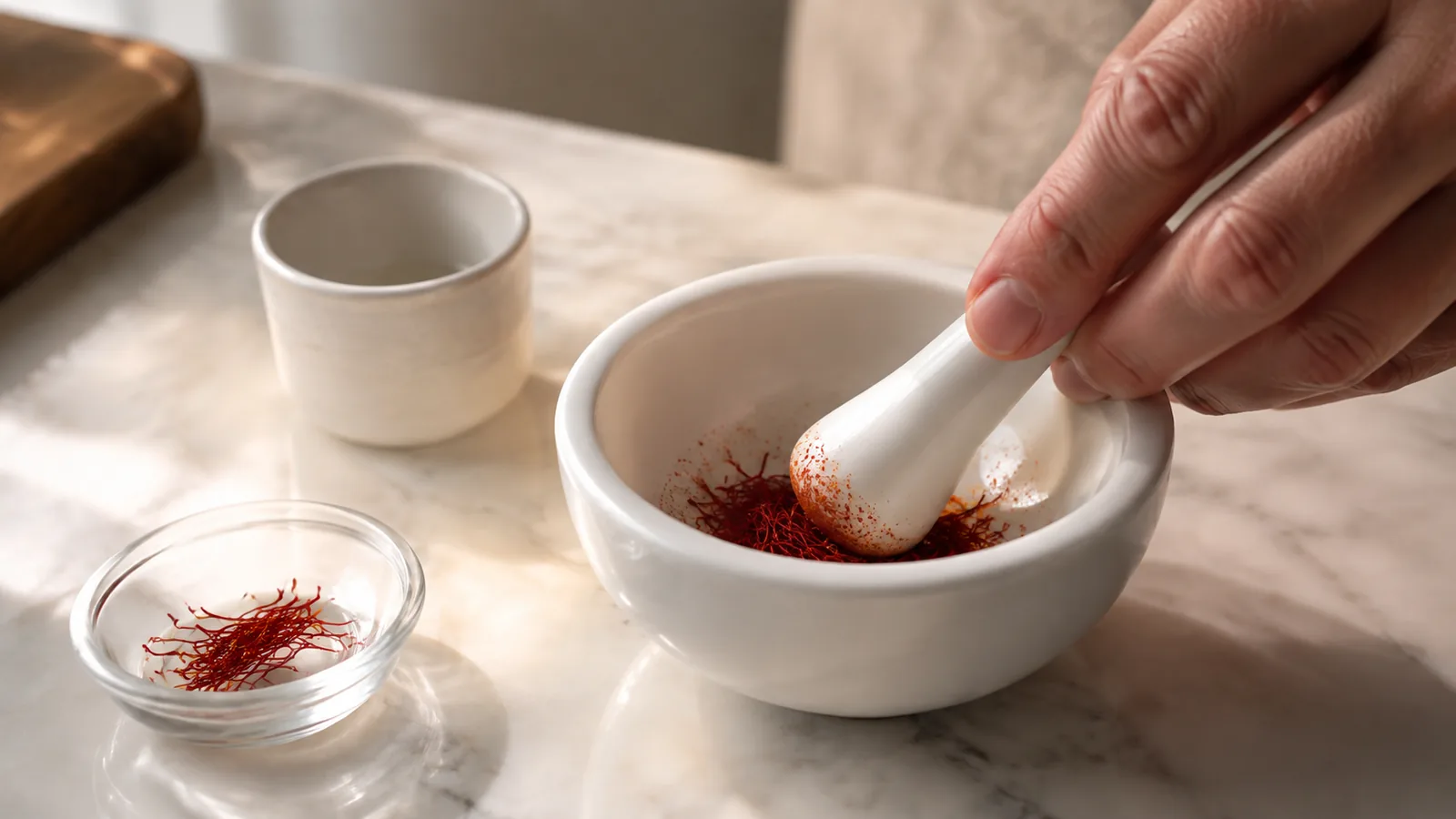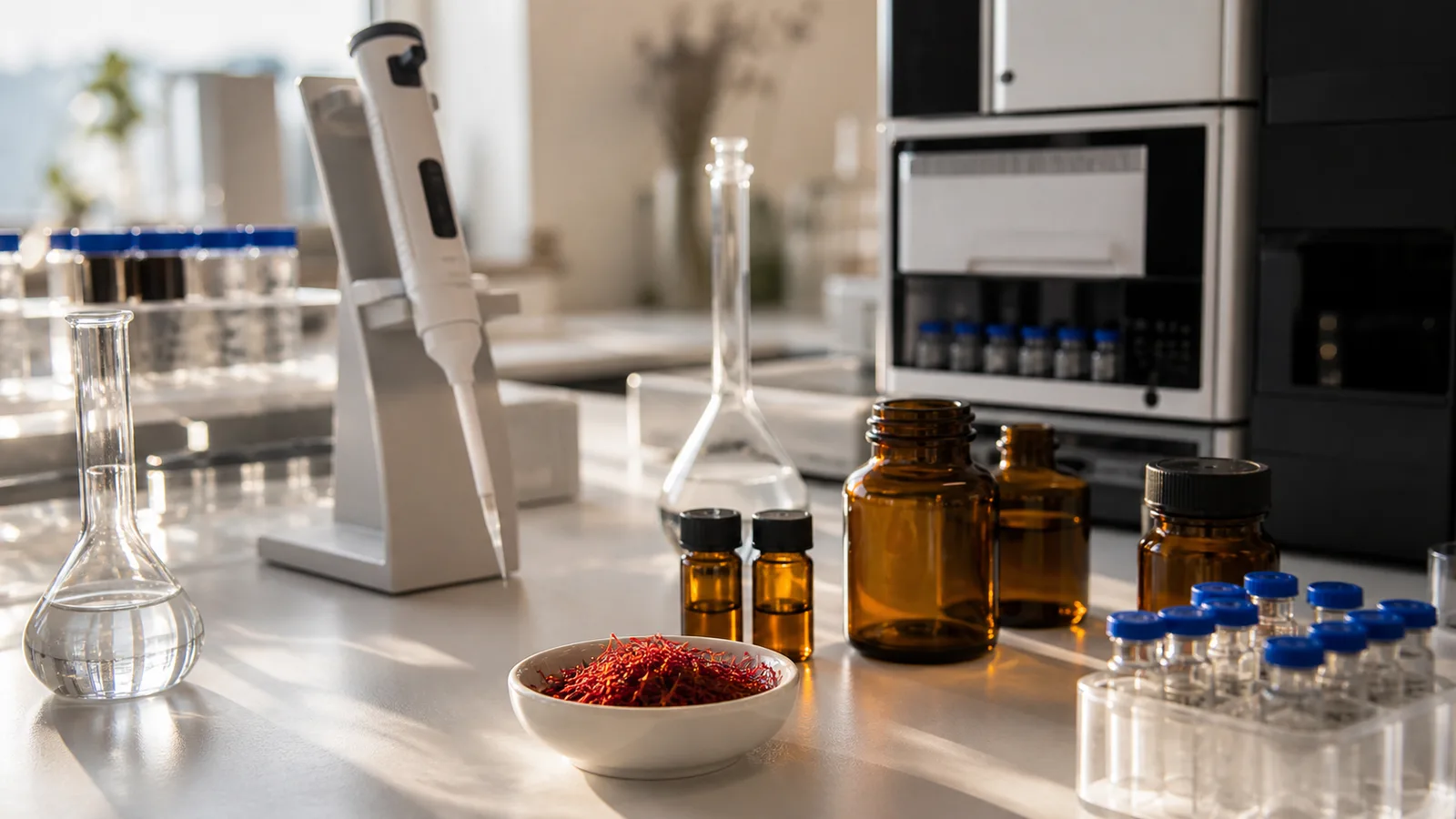
Saffron-based pharmaceutical products are a field of research and development, not a single class of proven medicines. The phrase can refer to standardized saffron extracts, formulations used in clinical trials, isolated compounds such as safranal, or early drug candidates. Those categories should not be treated as interchangeable.
Safranal is especially interesting because it is a major volatile compound behind saffron’s aroma and has produced biological effects in laboratory and animal studies. The central question is whether a defined formulation can show an acceptable balance of quality, safety, and benefit in people. That requires much more than turning raw saffron into a tablet.
The future of saffron-based pharmaceutical products
The realistic future is built on standardization. Researchers need to know which saffron material was used, which compounds it contained, how those compounds were extracted, the dose delivered, how stable the formulation remained, and whether each manufactured batch matched the one studied.
A product can move through several distinct stages:
- Discovery: a whole extract or individual compound shows an effect worth investigating.
- Preclinical work: laboratory and animal studies explore mechanism, toxicity, exposure, and formulation.
- Clinical research: controlled studies in people examine safety, dose, efficacy, adverse effects, and interactions for a defined use.
- Regulatory review: the relevant authority evaluates the evidence, manufacturing controls, and proposed label.
- Post-market monitoring: an authorized medicine continues to be monitored in real-world use.
A paper, patent, prototype, exhibition sample, or announcement of production readiness does not complete that sequence. It may represent useful progress, but it is not proof that a medicine is approved or clinically effective.
What is safranal?
Safranal is a volatile monoterpene aldehyde associated with saffron’s characteristic aroma. It is related to changes that occur from picrocrocin during drying and storage. Crocins are better known for the spice’s color, while picrocrocin contributes bitterness.
The distinction matters in pharmaceutical writing. A saffron extract may contain a profile of crocins, safranal, picrocrocin, and other constituents. An isolated-safranal candidate has a different composition, dose, stability problem, and safety question. Evidence for one cannot automatically be transferred to the other.
What the safranal research shows
A 2023 review collected studies and patents on safranal through June 2022. It described research involving central-nervous-system pathways, inflammation, oxidative stress, cardiovascular and metabolic models, and cancer biology. Its important limitation was equally clear: more clinical studies are needed to verify beneficial effects in humans.
Much of the disease-specific safranal literature is preclinical. A change in cultured cells or an animal model can identify a mechanism or justify another experiment, but it cannot establish that safranal treats Alzheimer’s disease, Parkinson’s disease, depression, cancer, or another human condition.
Human research does exist for saffron and standardized saffron extracts, particularly in areas such as mood and sleep. That does not make safranal itself the tested active ingredient in every trial. Product composition and dose have to be checked study by study.
From saffron research to a pharmaceutical product
1. Define the starting material
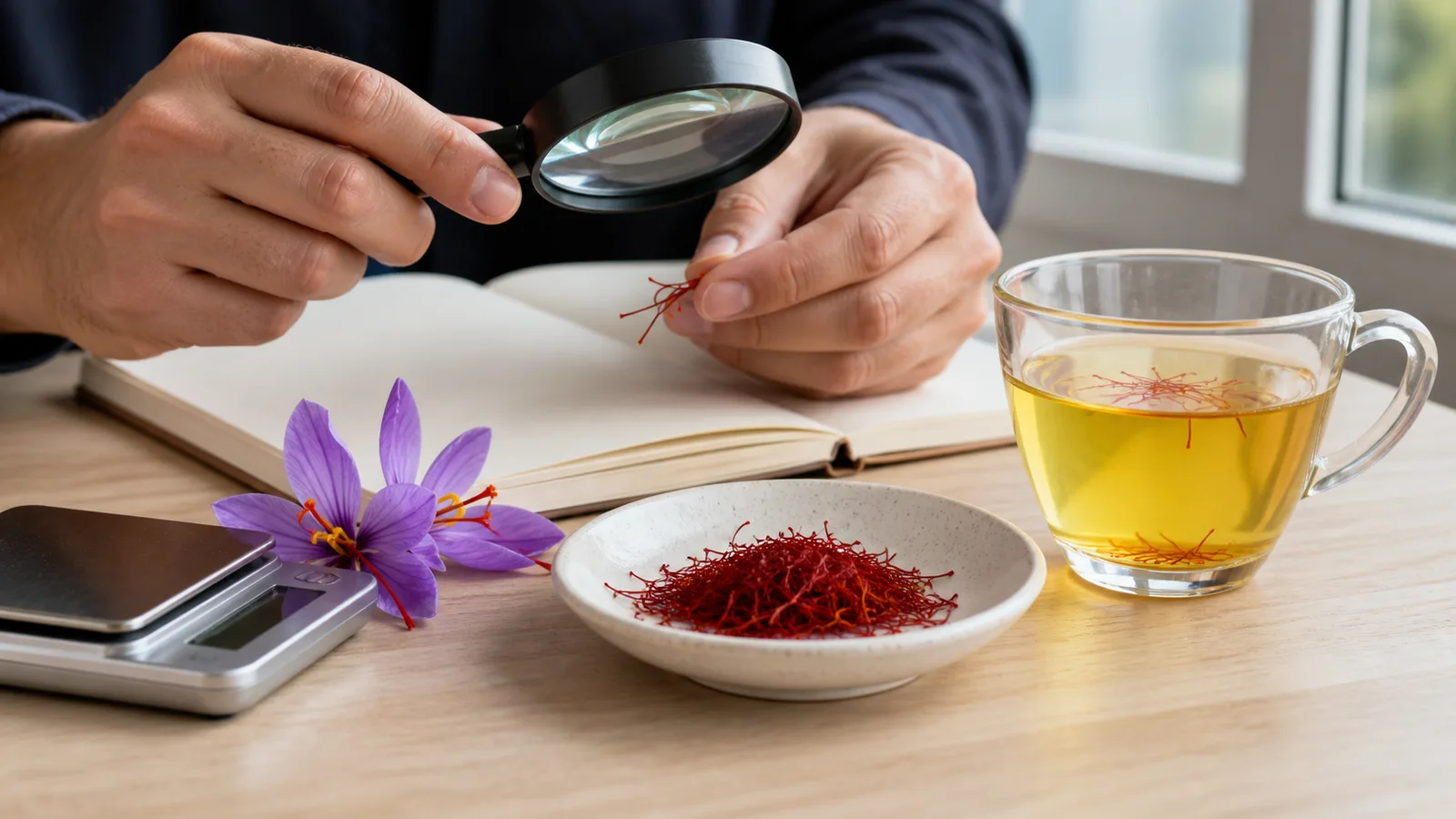
Researchers must document botanical identity, plant part, origin, harvest and drying conditions, storage, particle size, and contamination controls. Saffron intended for a research or medicinal supply chain needs batch traceability; visual appearance alone is not sufficient. ISO 3632 provides saffron specifications and test methods, while a pharmaceutical program may require additional pharmacopeial and regulator-specific controls.
2. Standardize the extract or compound
A label such as “saffron extract” is incomplete without the extraction solvent, drug-to-extract ratio, marker compounds, impurity limits, and assay method. For safranal, its volatility creates handling and stability challenges. Packaging, temperature, oxygen, light, and time may affect the amount that reaches the patient.
3. Build a reproducible formulation
Tablets, capsules, liquids, and other dosage forms behave differently. Developers have to study content uniformity, release, absorption, shelf life, and compatibility with excipients. A culinary saffron capsule and a clinical-trial product can look similar while delivering very different exposures.
4. Test safety and efficacy for one defined use
FDA’s development framework separates preclinical research from phased clinical trials because animal data cannot substitute for human evidence. Trials need a protocol, eligible population, comparator, dose, duration, prespecified outcomes, adverse-event monitoring, and statistical analysis. A positive result for one formulation and condition does not authorize broader claims.
5. Validate manufacturing
Scale-up is not simply making a larger batch. Raw-material variation, extraction yield, equipment, in-process controls, cleaning, packaging, and stability all have to remain within specification. Regulators evaluate whether the manufacturing system preserves identity, strength, quality, and purity.
What does “pharmaceutical-grade saffron” mean?
When buyers use the phrase “pharmaceutical grade saffron,” they should ask which documented specification, test method, and regulatory context it refers to. It is not a universal saffron grade that can be proven by a logo or photograph. A credible supplier or developer should be able to identify the applicable standard and provide batch-specific evidence for identity, assay, microbial quality, pesticides, heavy metals, adulterants, moisture, and other relevant limits.
Consumers searching for saffron pharmaceutical products, packaging photos, or a saffron pharma logo should not use visual branding as proof of approval. Check the named manufacturer, ingredient panel, batch information, marketing authorization or registration where required, and the regulator’s own database in the country of sale.
Claims about a “Safranal” product or brand
Safranal is the common chemical name of a saffron constituent; it may also appear in project or product branding. Those uses need to be separated. The previous article attributed a commercial product called “Safranal,” readiness for mass production, and health/economic claims to researchers at the University of Birjand. Publicly accessible primary documentation reviewed for this update did not establish the product’s formulation, manufacturer, trial record, authorization, or current production status.
That does not show the research group or product does not exist. It means the commercial and regulatory claims should remain unconfirmed until supported by an official university notice, manufacturer dossier, trial registry, or regulator record. A conference presentation or secondary news item would not by itself establish approval.
Why raw-saffron quality still matters
A pharmaceutical development program cannot repair adulterated or poorly controlled starting material after the fact. Identity and quality checks begin with the crop and continue through drying, storage, extraction, and formulation. The guide to identifying pure saffron explains consumer-level observations, but pharmaceutical quality requires validated laboratory methods.
Whole saffron, standardized extract, and isolated compound also need different specifications. A result reported for one cannot be assumed for the others simply because all trace back to Crocus sativus.
Economic potential without inflated numbers
Turning an agricultural crop into tested extracts, analytical standards, formulations, and intellectual property can retain more technical and manufacturing value in a producing region. It can also create work in agronomy, analytical chemistry, toxicology, formulation science, clinical research, quality assurance, and regulated manufacturing.
Economic projections still need dated sources. The earlier article stated that Iran produces about 450 tonnes annually and sells 80% as raw material, but it provided no year, dataset, or definition of “raw.” Saffron output and export mix change by crop year and reporting method, so those figures are not carried forward as current facts.
Collaboration and the road ahead
Useful collaboration connects growers, botanists, analytical laboratories, pharmacologists, clinicians, manufacturers, and regulators around one testable product. The strongest projects publish enough detail for others to understand the material, reproduce the assay, evaluate the trial, and distinguish exploratory findings from approved use.
Investment and international exhibitions may help a project find partners, but visibility is not validation. The milestones that matter are reproducible batches, credible toxicology, registered clinical work, transparent results, regulatory decisions, and continuing safety oversight.
A careful reading of the opportunity
Safranal remains a serious research subject, and saffron-based pharmaceutical development may produce useful products. The evidence is strongest when each claim stays attached to the exact material and study that generated it. Preclinical promise should lead to better experiments, not a premature treatment claim.
For readers, the practical rule is simple: identify whether a page is discussing culinary saffron, a supplement, a standardized research extract, an investigational drug, or an authorized medicine. Then judge the evidence and label for that category. Never replace prescribed care with saffron or safranal because a laboratory result sounds promising.
Evidence and regulatory guidance: 2023 updated review of safranal pharmacology; review of saffron phytochemistry, pharmacology, and clinical evidence; FDA drug development process; EMA herbal medicinal product guidelines; and WHO quality-control methods for herbal materials.