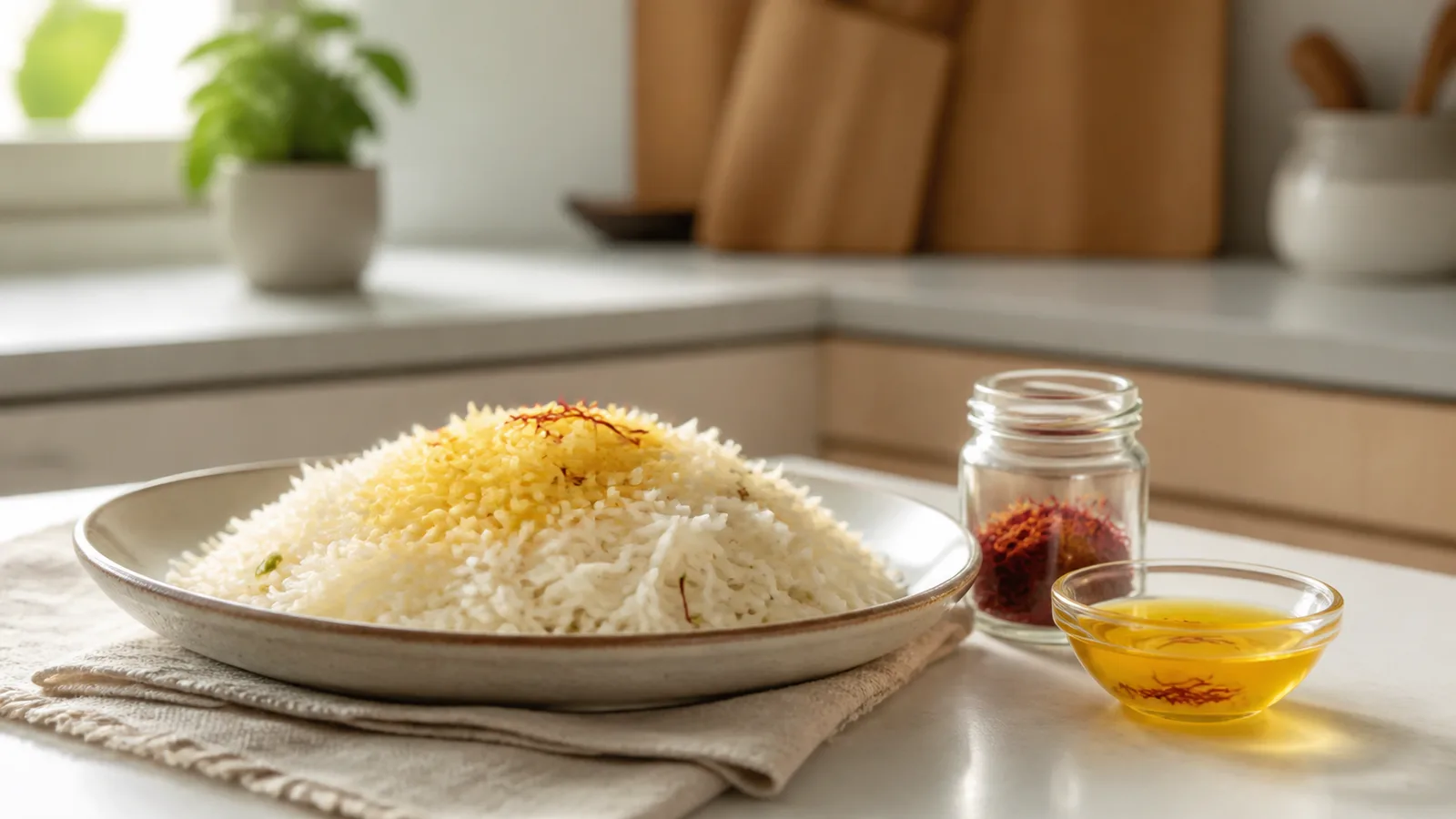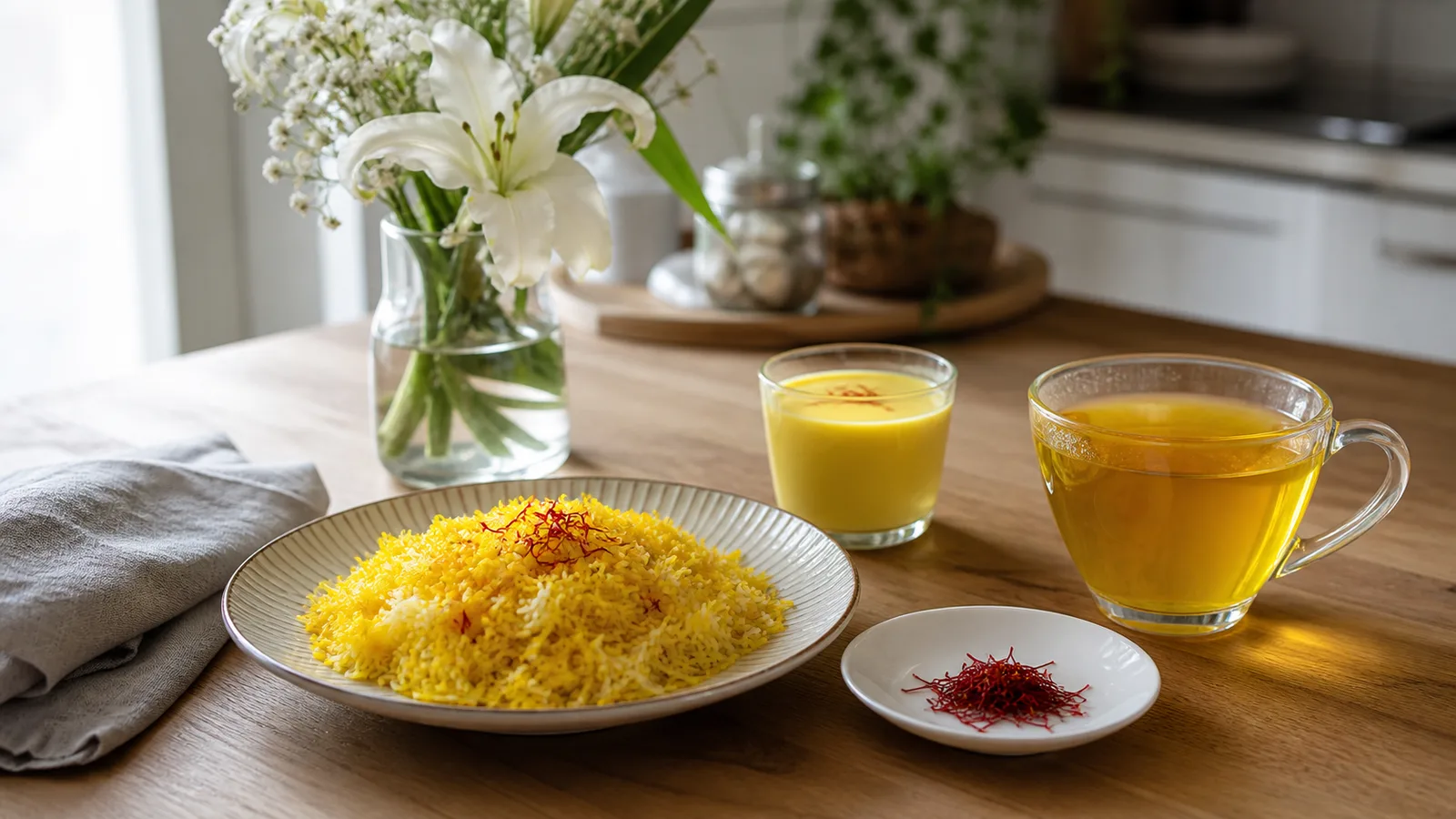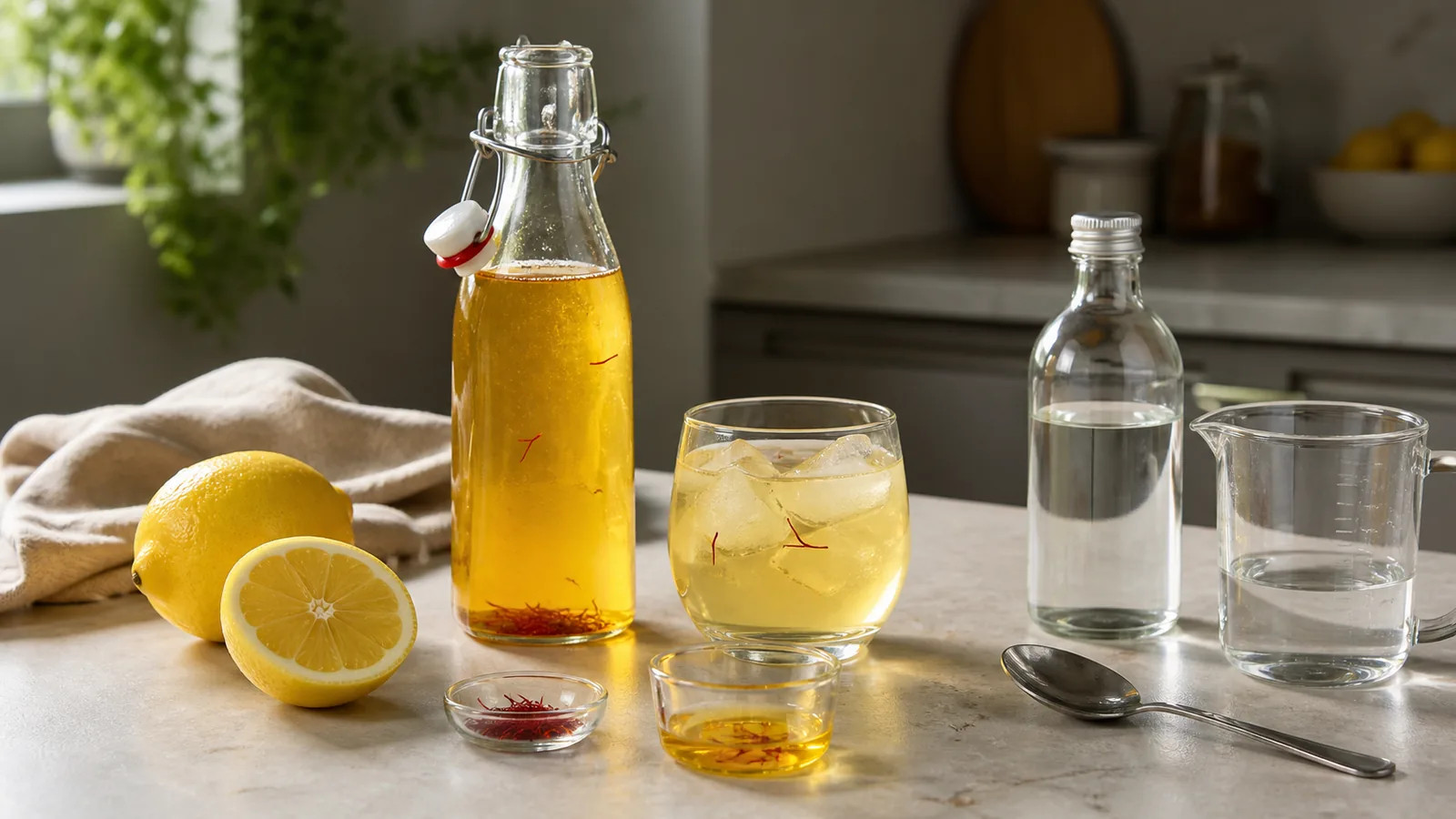
Saffron and lemon juice make a bright summer drink when the lemon is sharp, the saffron is properly infused and the sugar is kept in balance. This version is a rosewater-scented cordial: prepare a small bottle of concentrate, chill it, then dilute each serving with cold still or sparkling water.
The original 2015 recipe used saffron, lemon juice, sugar and an ingredient translated simply as “rose.” It also said the mixture could remain in the refrigerator for a long time. The flavour idea is sound, but the old quantities and storage claim need clarification before anyone follows them.
A practical saffron and lemon juice cordial
This recipe makes about 700 ml of concentrate, enough for roughly 12 to 16 drinks depending on the glass and preferred sweetness.
Ingredients
- ½ gram good saffron threads;
- 30 ml warm water for the saffron;
- 500 ml water;
- 500 g granulated sugar;
- 100 ml fresh lemon juice, strained;
- 15 to 30 ml food-grade rosewater, according to its strength;
- cold still or sparkling water and ice, for serving.
A small scale is the best way to measure saffron. Spoon measures vary because long, loose threads occupy more space than finely broken ones. Half a gram gives the concentrate a clear saffron character without using the two-gram quantity from the much larger old formula.
Method
- Lightly crush the saffron in a clean, dry mortar. Add 30 ml of warm, not vigorously boiling, water and leave it covered for 15 minutes.
- Put 500 ml water and the sugar in a saucepan. Warm gently, stirring only until the sugar has completely dissolved. There is no need to cook it into a thick caramel-like syrup.
- Remove the pan from the heat. Let the syrup cool for about 10 minutes, then stir in the saffron infusion, including the threads.
- When the mixture is no longer hot, add the strained lemon juice and 15 ml rosewater. Taste a cooled spoonful diluted with water before adding more rosewater.
- Transfer the cordial to a clean bottle or covered jar and refrigerate promptly.
To serve, begin with one part cordial and three parts cold water. Add ice, stir and taste. A sharper drink may need extra lemon; a sweeter concentrate may need more water. For sparkling saffron juice, pour the chilled sparkling water last and stir gently.
Why the saffron is infused separately
Saffron disperses more evenly when the threads meet a small amount of warm water before they enter a larger recipe. That gives the colour and aroma time to move into the liquid, and it prevents a few concentrated threads from collecting in one glass.
Grinding should be light. A fine red powder is not the goal, and there is no reason to boil the saffron for a long time. The finished infusion should look golden to orange-yellow and smell recognisably of saffron. Very old threads may colour the water without providing much aroma.
The lemon is added after the syrup has cooled somewhat. This keeps more of its fresh character and makes the balance easier to judge. Rosewater comes last because brands vary dramatically: one tablespoon can be enough, while a weaker product may need two. Too much will cover both the lemon and saffron.
What the old three-litre recipe said
The surviving post listed two grams of “saffron flower heads,” 50 ml lemon juice, three litres of “rose” and one kilogram of sugar. It instructed the reader to heat the water and sugar, add the lemon and half of the powdered saffron, turn off the heat, continue stirring, pour the mixture into a jug and refrigerate it.
“Saffron flower heads” almost certainly describes the saffron ingredient badly; this recipe uses dried stigmas, the familiar saffron threads, not whole flowers. The word “rose” may mean rosewater, ordinary water or a damaged combination of the two. Three litres of rosewater would be unusually dominant, while one kilogram of sugar in three litres of water would make a sweet drink rather than a particularly viscous concentrate. The source does not let us choose a translation with confidence.
For that reason, the historical amounts are not silently rewritten as though they were a tested formula. The smaller cordial above preserves the same four-part flavour—saffron, lemon, rosewater and sugar—but uses quantities a home cook can taste and adjust.
How to balance saffron, lemon and rosewater
Start with the lemon. Its acidity determines how much sugar the drink needs. Fresh lemons differ, so a fixed number of fruits is less reliable than measuring the juice and then tasting the diluted cordial.
Saffron should be distinct but not bitter. Adding more does not automatically make a better drink, especially when a properly infused smaller amount already provides colour and aroma. If the result seems weak, check the age and storage of the threads before doubling the quantity.
Rosewater is optional. It creates the Persian-style aromatic profile implied by the original post, but the cordial still works without it. Add it in stages and judge it only after dilution; the concentrate will smell stronger than the final glass.
For a lighter recipe mixed directly in a pitcher, see the site’s saffron lemon drink guide. That version uses less sugar and is designed to be served soon after mixing rather than stored as a cordial.
Fresh lemon juice needs clean handling
Wash the lemons under running water before cutting them, even though the peel is not going into the drink. Use clean hands, utensils, bottles and work surfaces. The U.S. Food and Drug Administration’s juice-safety guidance explains that microbes on the outside of produce can enter fresh juice during cutting or squeezing; it recommends washing produce under running water rather than with soap or detergent.
A homemade mixture is not shelf-stable merely because it contains sugar and lemon. Its final acidity and sugar concentration have not been measured or processed under a validated preservation method. Cover it, refrigerate it promptly at 4°C/40°F or below, and make a small enough batch to use within three to four days. That short limit follows the conservative refrigerated-leftover window in USDA food-safety guidance, rather than the old article’s undefined “long time.”
Freeze surplus cordial in clean ice-cube trays if it will not be used in that period. Discard it if mould, bubbling, pressure, cloudiness or an unexpected smell develops. Do not taste a questionable batch to decide whether it is safe.
Saffron juice is a drink, not a treatment
The old post called the syrup nourishing, soothing and exhilarating. A chilled glass may certainly feel refreshing, but those words should not be turned into medical promises. This recipe has a substantial amount of added sugar in concentrated form, and dilution changes the amount in each serving.
Enjoy it for its flavour, colour and aroma. It has not been shown to treat anxiety, improve mood, “detox” the body or replace medical care. Anyone who needs to limit added sugar can make the lighter pitcher version, reduce the sweetener to taste or use saffron and lemon in unsweetened water.
Serving ideas that do not hide the saffron
Serve the drink very cold in a clear glass so its natural golden colour is visible. A thin lemon wheel or a small mint sprig is enough garnish. Large amounts of mint, orange blossom water, cardamom and fruit can all be pleasant, but adding them together turns the drink into a different recipe and makes the saffron hard to recognise.
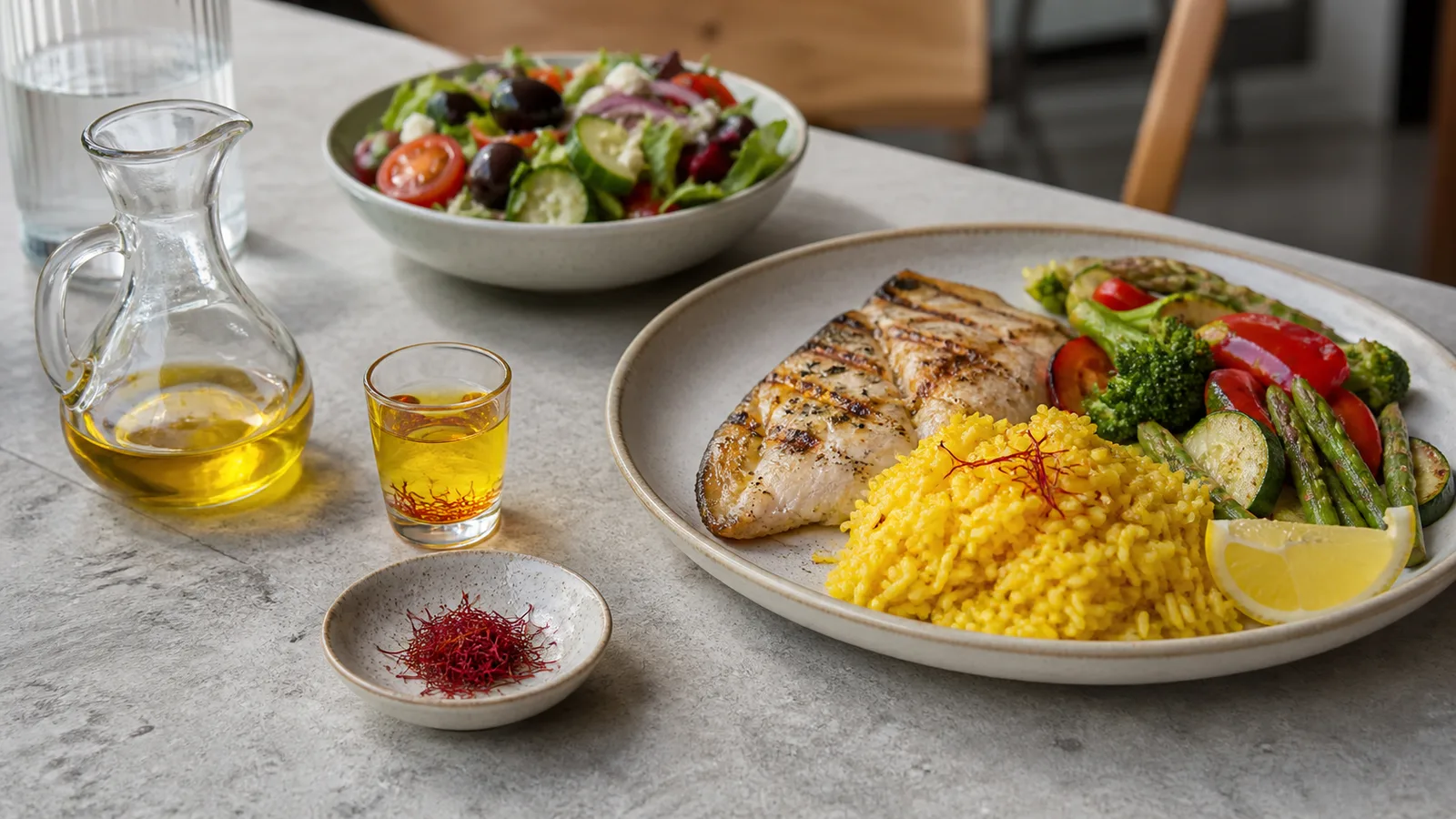
For a meal, the cordial works best beside simply seasoned rice, grilled food or lightly sweet pastries. With dessert, dilute it more than usual so that the sugar does not compete. For an alcohol-free reception drink, use sparkling water and prepare each glass just before it is handed to the guest.
The central lesson is simple: bloom the saffron, dissolve the sugar without overcooking it, add lemon and rosewater with restraint, and treat the finished saffron juice as a fresh refrigerated drink. That preserves what made the original recipe appealing while replacing its unclear measurements and unsafe open-ended storage promise.
The original two-gram saffron, 50 ml lemon, three-litre “rose” and one-kilogram sugar quantities are preserved above as the site’s 2015 wording, not represented as a validated formula. FDA and USDA food-safety resources were reviewed on 29 August 2026.