


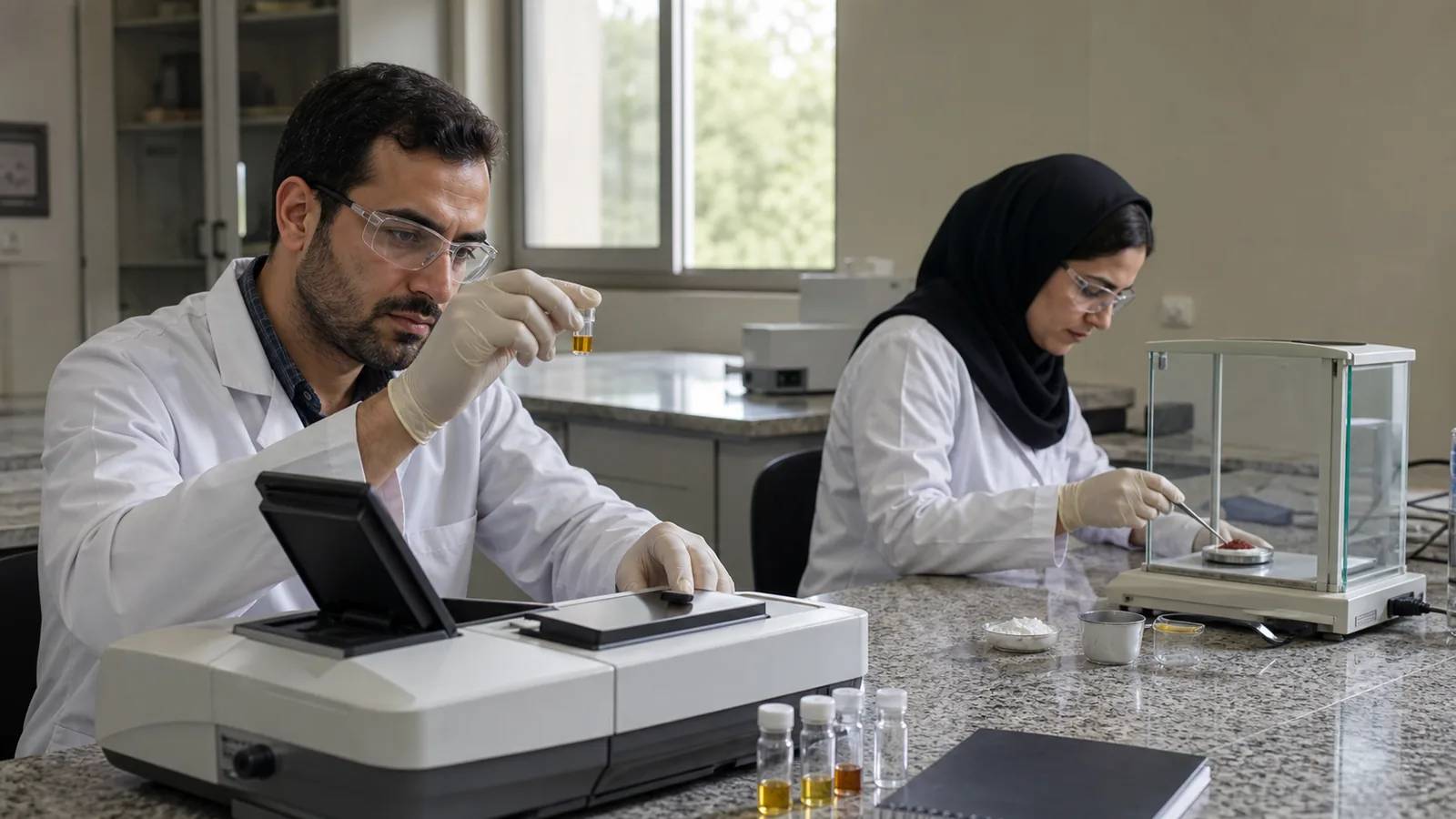
Equipping a saffron research institute in Khorasan Razavi was presented as one way to help Torbat Heydarieh turn production strength into measurable quality, local expertise and a recognised economic identity. Regional officials connected that proposal with a wider call to support saffron and silk, complete stalled infrastructure and make public investment more accountable.
The statements come from a historical political and development debate. Project status, production shares and funding values should not be assumed to describe conditions today.
What the saffron research proposal was trying to change
Hassan Fathinia, then governor of Torbat Heydarieh, argued that better equipment for the saffron research institute and a settled branding strategy could transform the regional economy. His concern was that a leading production centre still captured too little value under its own name.
The report did not list the equipment already installed or the instruments being requested. It would therefore be wrong to invent a laboratory inventory. The useful test for any investment is what the institute can actually deliver: reproducible crop research, grower guidance, post-harvest trials, authenticity and quality analysis, trained staff, and results accessible to local producers and processors.
The current ISO 3632-1:2025 specification sets requirements for dried saffron. A capable local laboratory can help businesses understand how their lots perform against defined specifications, while our overview of Iranian saffron hygiene and export standards explains why product testing and export paperwork are distinct.
Production leadership did not guarantee a Torbat brand
Fathinia said Torbat Heydarieh produced 70% of the world’s saffron yet had not registered the crop’s economic brand locally. He also said exported Iranian saffron was sold in international markets under Spanish branding.
Those claims were not accompanied by a production dataset, customs evidence or a definition of whether “Torbat” meant the city, county or wider production region. The 70% figure should not be used as a current global share. The branding concern is still understandable: when saffron leaves a producing region in bulk and later appears under another business’s identity, the final customer may never know where the farming value began.
The governor further claimed that a region or country holding 55% of a world product could use an international exchange under “the law.” The report did not name that law or exchange rule. Market access depends on the actual venue, contract specification and applicable regulation, not a general threshold repeated without a source.
An MP also called for saffron and silk support
Abolghasem Khosravi, representing the Torbat Heydarieh and Zaveh area, likewise called for government support for local saffron and silk. He argued that neglecting the two products caused substantial losses to the provincial economy.
Fathinia’s related silk proposal was to establish a national silk council. He said about 70% of the country’s silk processing and production took place in Bayg, a city within the county. As with the saffron share, the article did not identify the period or statistical source, so it remains an attributed development claim.
Putting saffron and silk together was not a suggestion that their supply chains are the same. It reflected a common policy question: how a region known for specialised products can retain research, processing, branding and jobs instead of exporting raw value.
The development agenda extended beyond agriculture
Both officials placed saffron research within a larger list of unfinished projects. Fathinia referred to three privately financed steel complexes and said the government should secure clear completion commitments from their owners. He also called for a biological-compounds complex serving agriculture, livestock and food industries.
His account described a planned 270-bed Imam Hossein hospital on a major regional corridor, with historical estimates of 400 billion rials for completion and 500 billion rials for equipment. Khosravi separately referred to a 32-bed hospital project, the steel city, Shahid Modarres Airport and urban works. The different bed counts appear to concern different projects and should not be merged into one hospital.
These items are not evidence that a research instrument directly completes a hospital or airport. They show the political setting in which the saffron proposal was made: residents were asking why several promised regional assets remained unfinished.
Criticism of delayed credit and project execution
Khosravi criticised the government’s commodity-basket programme and said project credits still had not been allocated six months into the year. He praised the government’s foreign-policy direction, efforts to control inflation and cooperation among branches of government, while arguing that execution on local employment and construction lagged behind.
That political assessment is part of the historical source, but it does not verify the success of any saffron, silk or infrastructure project. The relevant evidence would be a published budget, procurement record, equipment acceptance, operating staff and measurable outputs.
What would make research investment useful to growers?
A well-equipped building is only the beginning. Research has local value when it answers field and market problems, publishes methods, shares results in language growers can use and remains independent enough to report poor results as clearly as good ones.
For Torbat Heydarieh saffron, useful outcomes could include verified lot testing, improved post-harvest consistency, evidence on water and corm management, detection of adulteration and practical support for processors preparing traceable products. They should be reported through metrics such as samples tested, turnaround time, studies completed, grower participation and changes adopted in practice.
The original proposal was right to connect research with economic identity, but equipment alone cannot create a brand. Quality evidence, dependable processing, honest origin claims and sustained cooperation among growers, laboratories and exporters are what allow a producing region’s name to carry value.

![Exporting Saffron to Turkey + Price Guide [Complete 0 to 100]](https://img.rowhanisaffron.com/20260827003933/saffron-export-turkey-quality-inspection.webp)



