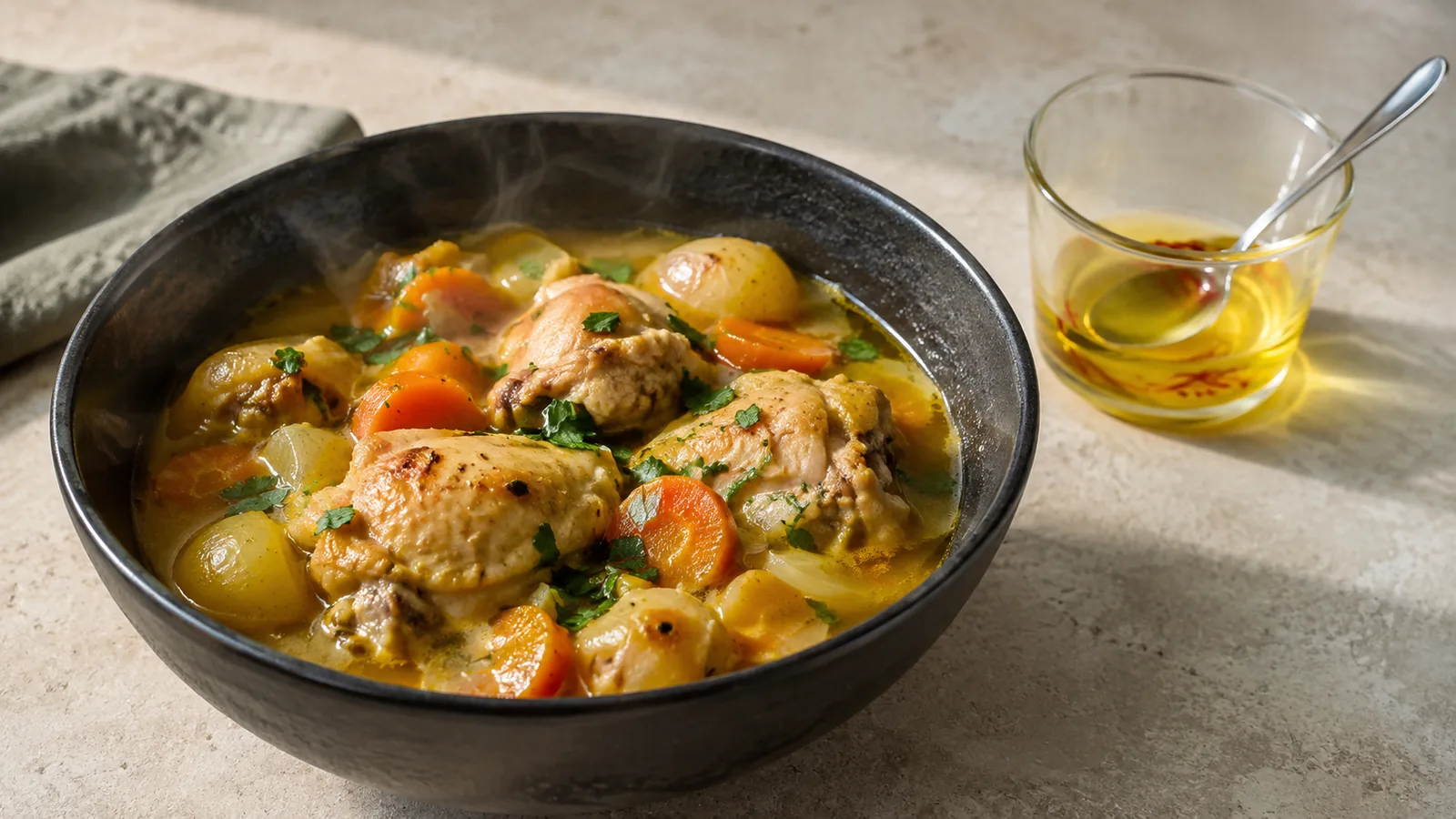
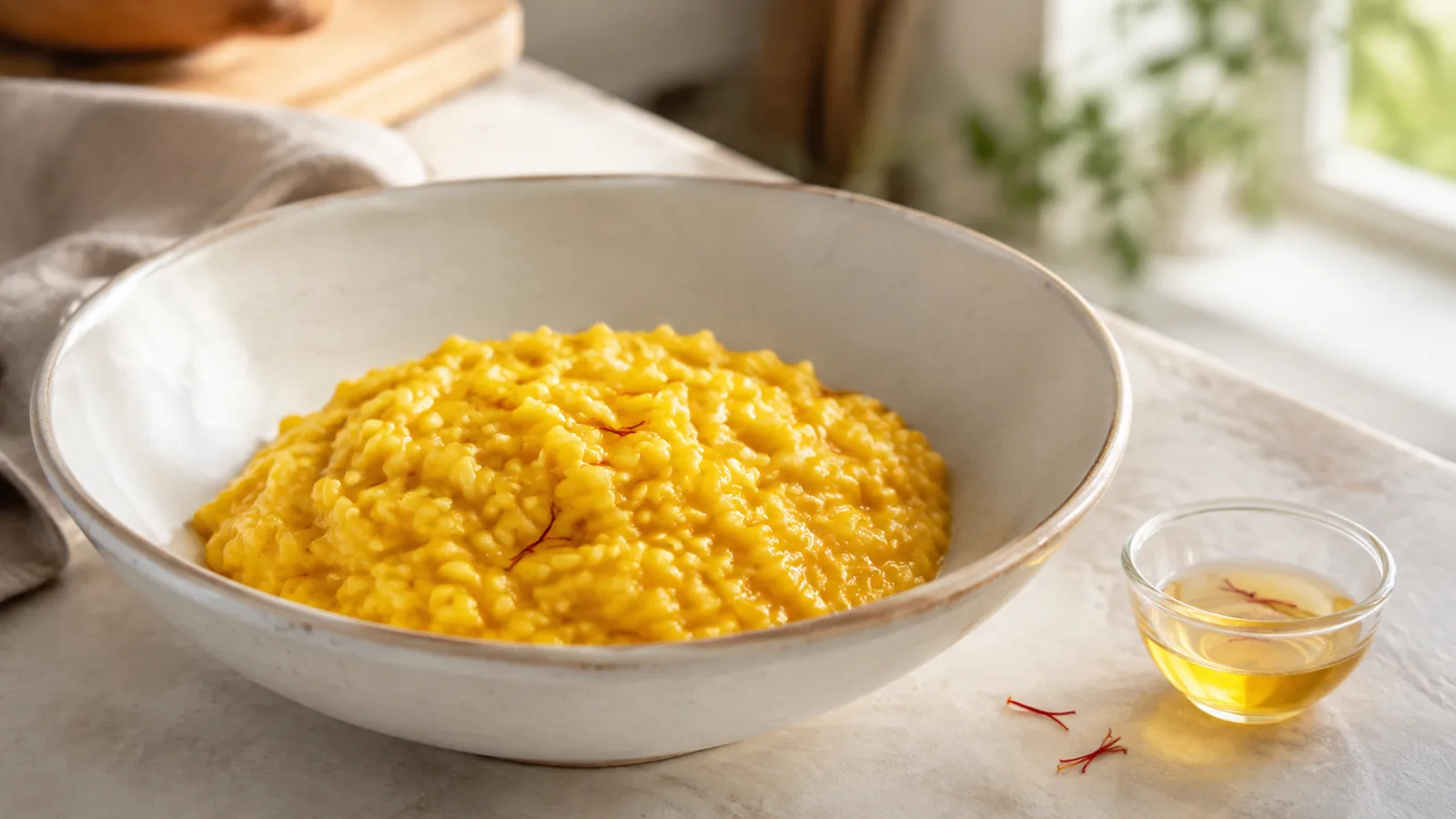
Qazvin wheel sweets are delicate, ridged biscuits made with wheat flour, rice flour, yoghurt and egg yolk. Known in Persian as Shirini Charkhi or Nan-e Charkhi, they are gently fragrant with saffron, rosewater and cardamom and are traditionally served for Nowruz with tea.
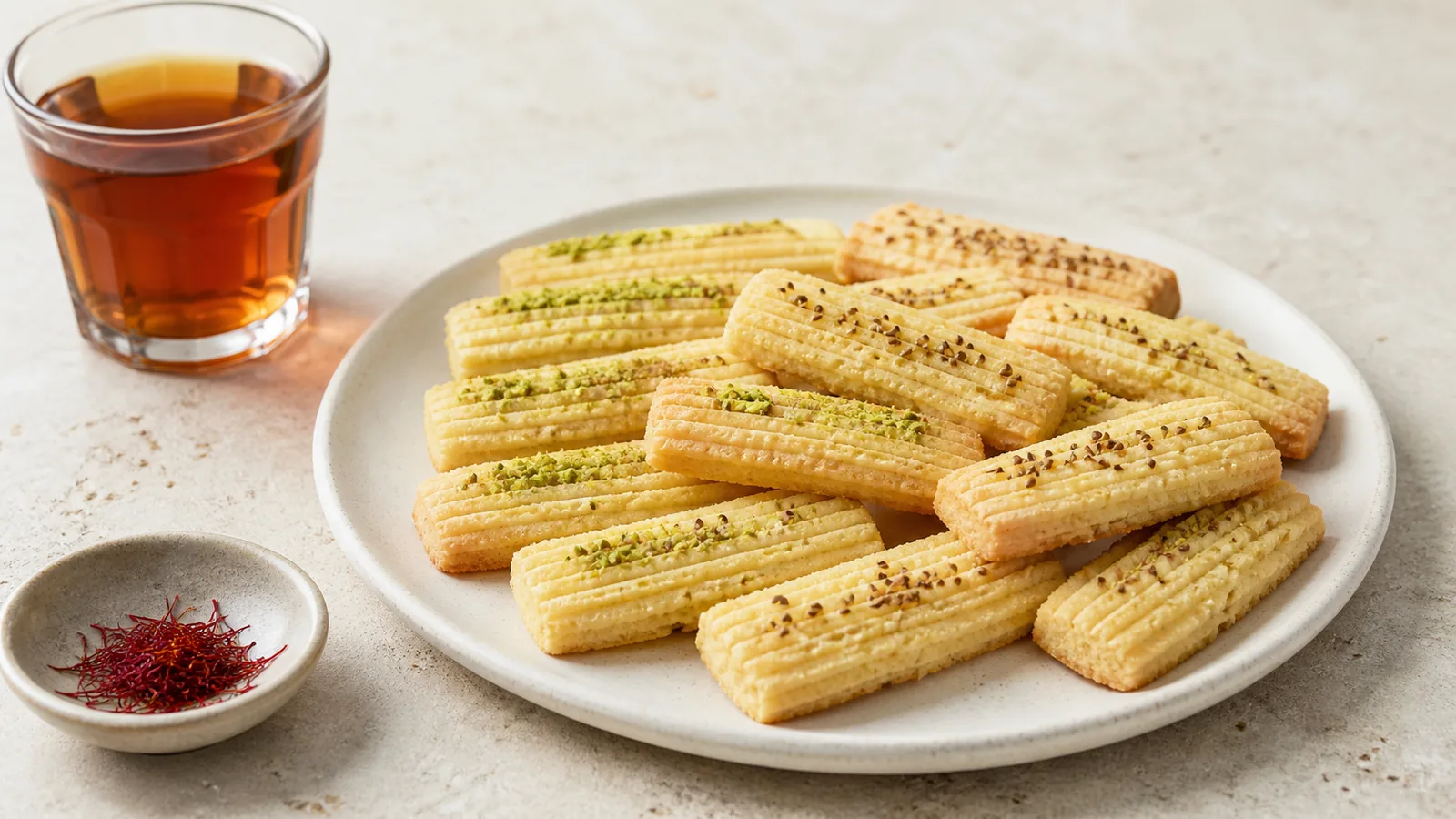
The “wheel” in the English name refers to the way the dough is passed through a hand-cranked mincer or meat grinder fitted with a fluted pastry plate. It emerges in patterned strips that are cut into short biscuits. If you do not have that attachment, a strong piping bag or a cutter still gives good sweets.
What makes Qazvin wheel sweets distinctive?
Shirini Charkhi has a fine, crumbly texture rather than a chewy centre. Equal amounts of wheat flour and rice flour keep the biscuit light, while whipped solid fat and icing sugar create tiny air pockets. The yoghurt softens the dough enough to pass through the patterned plate.
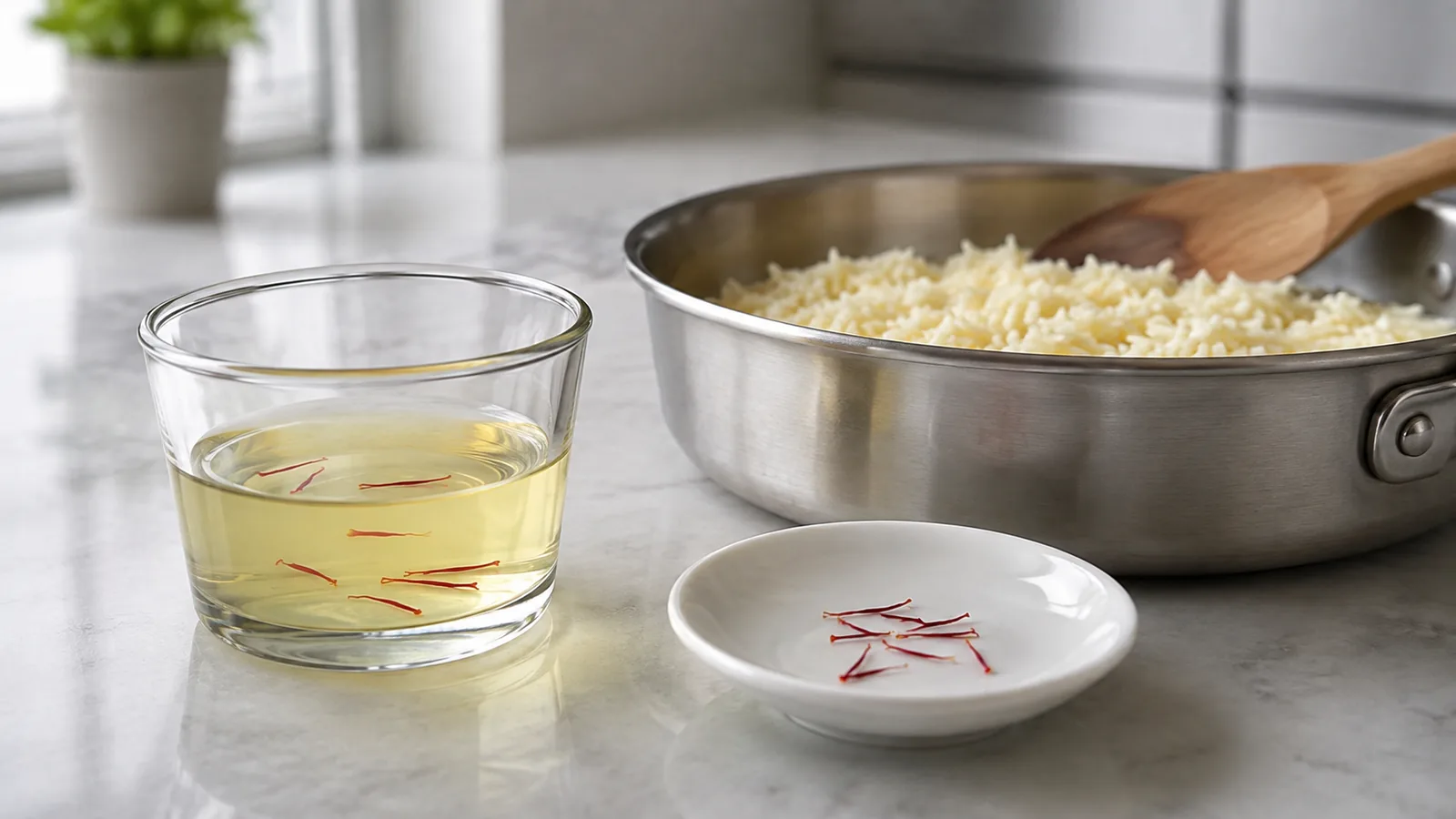
The saffron on the wheel sweets is not a surface coating; a concentrated infusion is mixed into the dough. Keep the liquid modest so the ridges remain sharp. Purslane seeds, ground pistachio or coconut can decorate the tops.
Ingredients
- 125 g plain flour
- 125 g fine rice flour
- 95 g solid pastry fat or confectionery shortening
- 90 g icing sugar
- 38 g plain full-fat yoghurt
- 2 egg yolks
- 1/4 teaspoon baking powder
- 1 tablespoon rosewater
- 1–2 teaspoons concentrated brewed saffron, as needed
- 3/4 teaspoon finely ground cardamom, optional
- Purslane seeds, ground pistachios or desiccated coconut, for decorating
Solid pastry fat gives the cleanest traditional shape. Soft butter has more water and melts sooner, so a direct substitution may make the dough spread. If you use clarified butter or another solid fat, bake a few test biscuits before shaping the entire batch.
How to make Qazvin wheel sweets
1. Whip the fat and sugar
Make sure the solid fat is soft enough to beat but not melted. Put it in a bowl with the sifted icing sugar and beat for about five minutes. The mixture should become noticeably paler and lighter.
Add the egg yolks, rosewater, 1 teaspoon of brewed saffron and the cardamom. Beat for about one minute, just until evenly combined.
2. Prepare the yoghurt
Stir the baking powder into the yoghurt in a small bowl and leave it for two or three minutes. It may foam slightly. Add it to the fat mixture and stir only until incorporated.
3. Add the flours without kneading
Sift the wheat flour and rice flour separately, then whisk them together. Add the blend in two or three additions, folding with a spoon and finally bringing the dough together with your fingertips.
Do not knead. Prolonged handling warms the fat, develops the wheat gluten and can leave the baked sweets hard or oily. The finished dough should hold together when pressed without feeling wet. If it is very stiff, add the remaining saffron infusion a few drops at a time.
4. Rest the dough safely
Cover the dough closely and refrigerate it for four to six hours. The original recipe rested it for up to six hours in a cool room, but the dough contains raw yolk and yoghurt; refrigeration is the safer choice. Do not leave it overnight with the baking powder already mixed in.
Take the dough out 10–15 minutes before shaping. It should be pliable enough to extrude without becoming greasy.
5. Shape the Charkhi pastry
Remove the cutting blade from a clean meat grinder and fit the fluted biscuit plate. Feed in small pieces of dough, support the patterned strip as it emerges and cut it into even lengths of about 5–6 cm. A manual grinder offers the most control; if you use an electric model, work slowly and keep fingers and utensils out of the feed tube.
Set the pieces on a parchment-lined tray with a little space between them. Misshapen pieces can be passed through once more, but repeated working will warm and toughen the dough.
Without a grinder attachment, press the dough through a heavy piping bag fitted with a large ridged nozzle. You can also roll it between two sheets of parchment to about 6 mm thick and use a small cutter. The flavour stays the same, although the classic Charkhi ridges will be different.
6. Decorate and bake
Sprinkle half the biscuits with purslane seeds. Leave the others plain if you plan to add pistachio or coconut after baking.
Preheat the oven to 170°C/340°F for at least 15 minutes. Bake one small test tray first. If the ridges spread, chill the shaped pieces for 10 minutes or lower the oven slightly.
Bake the full tray for about 12–15 minutes, until the bases and very edges are pale gold but the tops remain light. Oven temperatures vary, and rice-flour biscuits can go from pale to dry quickly.
7. Cool before moving
Leave the wheel sweets on the tray for five minutes, then move them carefully to a rack. They are fragile while hot. Once fully cold, dust the undecorated half with ground pistachio or coconut if you wish.
How to keep the texture light
- Sift the icing sugar, fine rice flour and wheat flour before mixing.
- Whip the fat and sugar until pale; this is where much of the lightness begins.
- Use concentrated saffron rather than adding a large quantity of water.
- Bring the dough together with fingertips and stop as soon as it is cohesive.
- Keep the shaped biscuits cool while the oven preheats.
- Remove them while the tops are still pale.
Why did the cookies spread or become hard?
If the ridges disappear
The fat may have been too warm, the dough too wet or the oven not fully heated. Chill a test batch, confirm the oven temperature and add liquid saffron sparingly. Changing from solid pastry fat to ordinary butter also increases spreading.
If the sweets are hard
The dough was probably kneaded, packed with excess flour or overbaked. Rice flour makes the cookies delicate, but too much additional flour will make them dry. Judge the dough by whether it can pass through the attachment, not by whether it feels like bread dough.
If the dough crumbles in the grinder
Let chilled dough soften briefly, then press a small piece in your palm. If it still will not hold, work in a few drops of brewed saffron or rosewater. Do not pour in a whole spoonful at once.
Saffron and cocoa variations
For a saffron-forward batch, omit cardamom and keep the rosewater gentle so the spice is easy to notice. For cocoa wheel sweets, replace a small spoonful of wheat flour with the same amount of unsweetened cocoa rather than adding cocoa on top of the full flour quantity.
You can divide the dough before adding the final flavour, but weigh the portions so each receives the correct amount of dry ingredient and liquid. Do not make one half much wetter than the other.
Storage
Store completely cooled Qazvin wheel sweets in a dry, airtight container, with parchment between layers. Keep them away from direct light, kitchen steam and strongly scented foods. Their low moisture gives them a useful keeping quality, but the best flavour and texture are in the first two to three weeks.
These biscuits are modest rather than intensely sweet. Their appeal comes from the crisp ridges, tender rice-flour crumb and the aroma that reaches the cup of tea before the first bite.