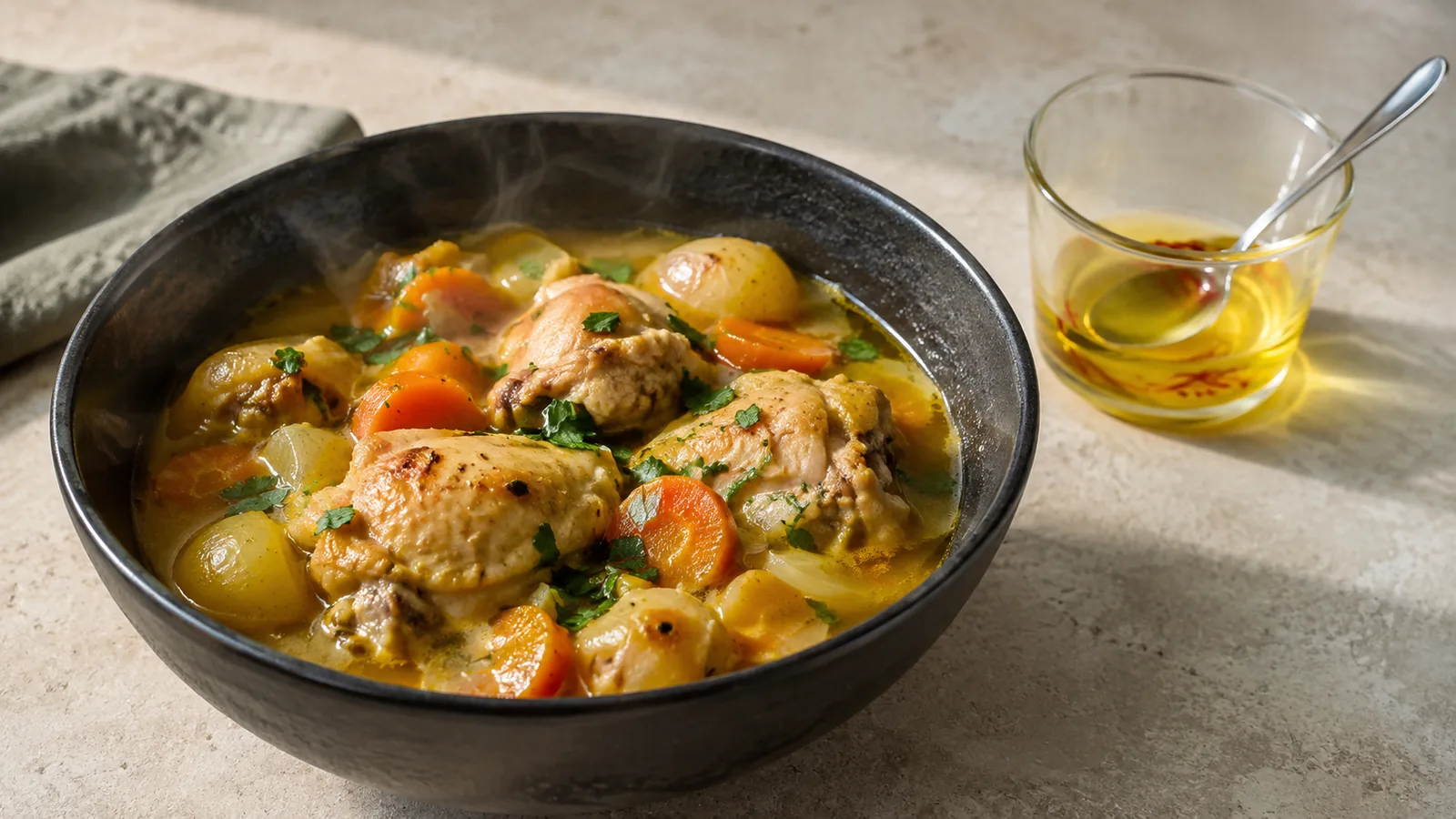
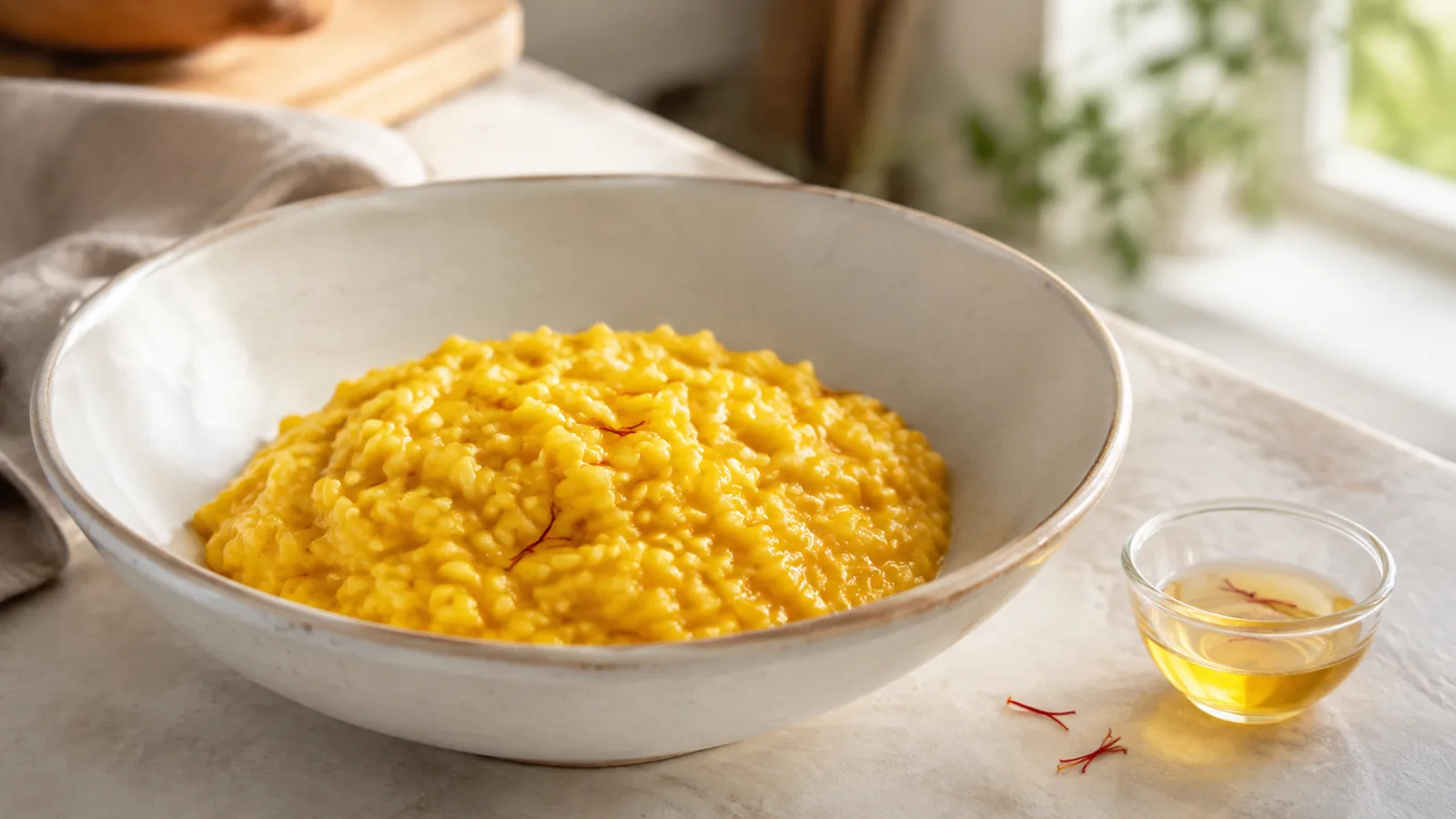
Halim lentils is a thick Khorasani porridge of peeled millet, lentils, minced meat, herbs and kashk. It is savoury, warming and substantial enough for breakfast or dinner, with fried onion, mint and saffron lifting the earthy grains.
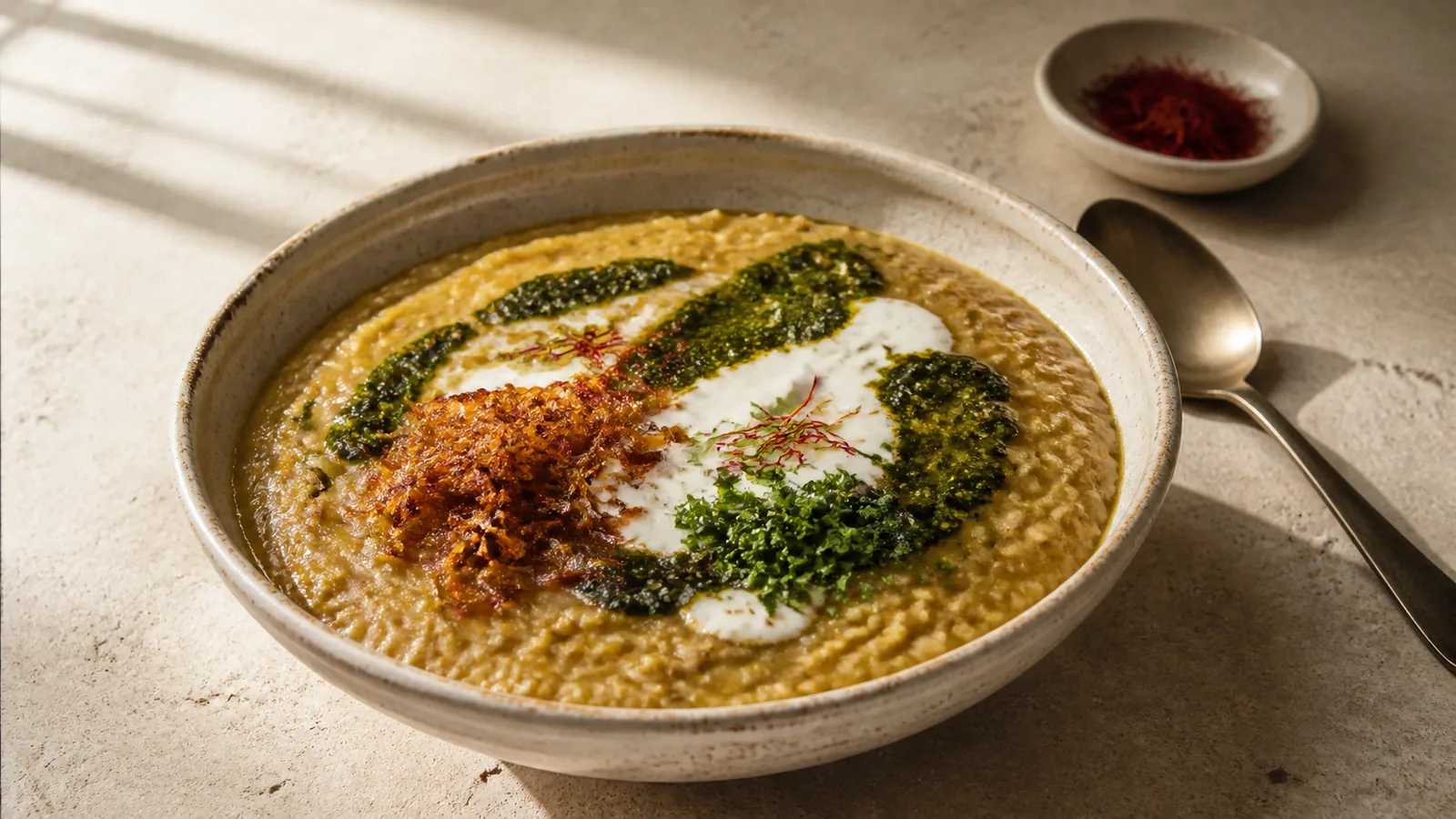
The name may also appear as lentil haleem. Unlike the better-known wheat haleem that is cooked and beaten for many hours, this local version uses millet and cooked lentils and can be ready in about an hour once the ingredients are prepared.
What is Khorasani Halim lentils?
This is a home-style dish from Khorasan rather than a single nationally standardised formula. Peeled millet forms the soft base. Lentils deepen the flavour, a modest quantity of minced meat adds richness, and kashk gives the finished bowl its characteristic tang.
The original English recipe called the grain “skinless millet.” Look for hulled or peeled millet, not millet still enclosed in a hard husk. The dish should finish like a loose, spoonable porridge; it is not meant to be a dry pilaf.
Ingredients for four servings
- 150 g minced beef or lamb
- 1 cup hulled millet, rinsed well
- 1/2 cup cooked lentils
- 3–5 garlic cloves, finely chopped
- 2 tablespoons fried onion, plus more for serving
- 1/2 cup chopped parsley
- 1 cup pasteurised kashk, plus more for serving
- 3 tablespoons dried mint
- 1 dessertspoon concentrated brewed saffron, about 10 ml
- 1/2 teaspoon turmeric
- Salt and black pepper, to taste
- 4–5 cups hot water, as needed
- 1–2 tablespoons neutral oil, for the pan and mint garnish
Commercial kashk varies greatly in thickness and salt. Taste it before seasoning the pot, follow any heating instruction on its package, and thin very concentrated kashk with a little hot water.
How to make Iranian lentil haleem
1. Rinse and soften the millet
Rinse the hulled millet in several changes of water. If the grain is coarse, soak it for one or two hours and drain; fine hulled millet can usually be cooked after rinsing.
Have the cooked lentils ready before you begin. They are added later because already-soft lentils can disappear into the porridge if they cook for the full millet time.
2. Brown the meat and aromatics
Warm 1 tablespoon of oil in a heavy saucepan over medium heat. Add the minced meat and break it into small pieces. Cook until no pink remains, then stir in the garlic, 2 tablespoons of fried onion, turmeric and black pepper.
Add the chopped parsley and cook for another minute. The United States government’s safe-temperature guidance lists 71°C/160°F for ground meat; the mixture will cook further with the grain, but it should reach that temperature before serving.
3. Cook the millet
Add the rinsed millet and 4 cups of hot water. Bring the pot to a boil, skim any foam, then reduce the heat to a gentle simmer. Partially cover and cook for 30–40 minutes, stirring every few minutes as the grain softens.
Millet absorbs water quickly. Add more hot water in small amounts whenever the spoon begins to drag across the base of the pan. A flame diffuser can help on a powerful burner, but the pot still needs regular stirring.
4. Add the cooked lentils
Stir in the cooked lentils and simmer for another 10–15 minutes. Press some of the millet and lentils against the side of the pan with the back of the spoon. This thickens the Halim lentils without turning every ingredient into a smooth purée.
5. Temper the kashk
Lower the heat. Put the kashk in a bowl and whisk in a ladleful of hot porridge, then another. Stir the warmed mixture back into the pan. This gradual step reduces the chance of the kashk splitting into grainy curds.
Simmer gently according to the kashk manufacturer’s instructions; do not let the thick pot scorch. Add salt only after tasting, because kashk and fried onion may already be salty.
6. Make mint oil and finish with saffron
Warm 1 tablespoon of oil in a small pan over low heat. Add the dried mint, stir for only 10–15 seconds and remove it immediately. Burnt mint tastes bitter.
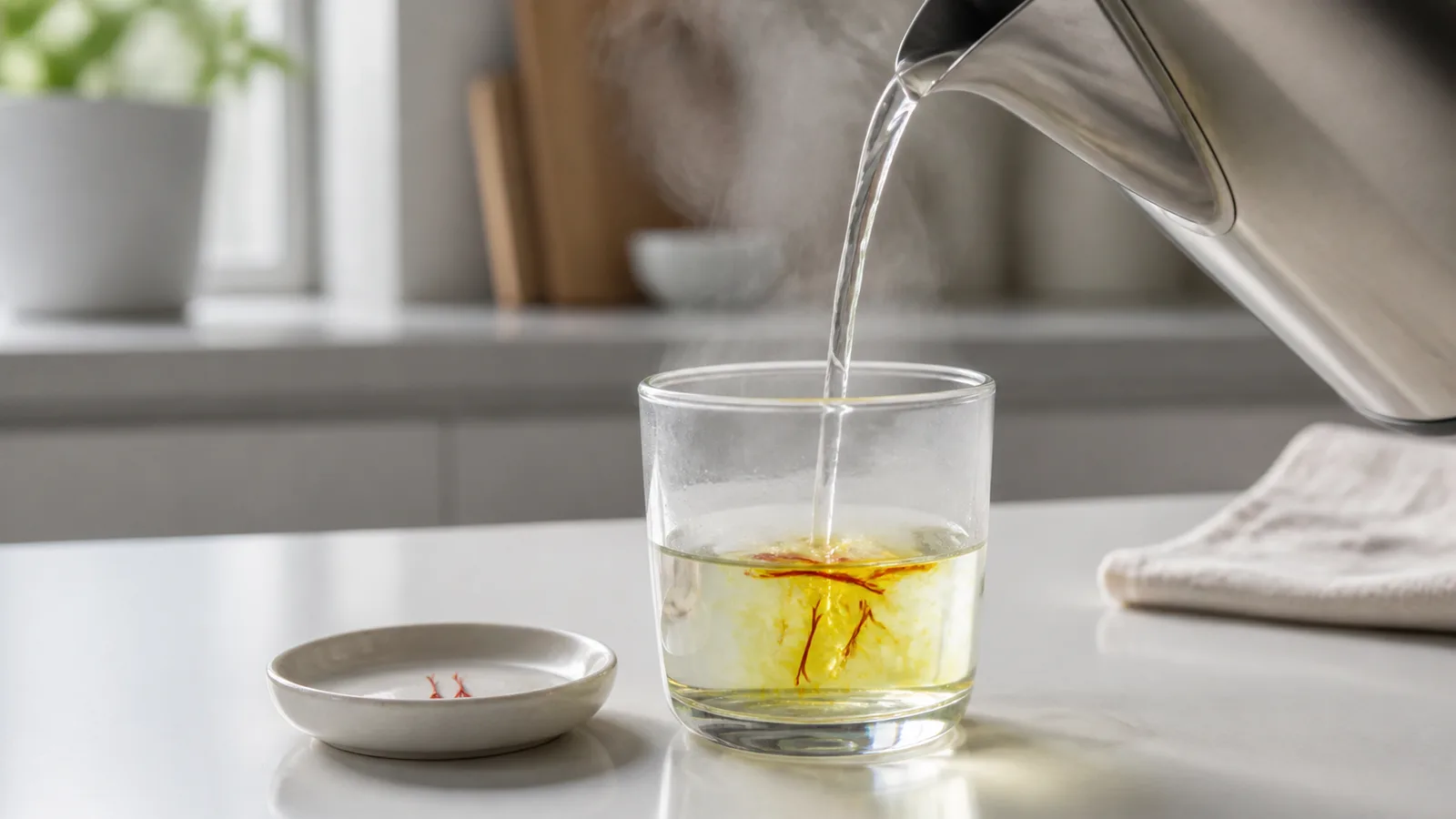
Stir half the brewed saffron into the haleem. Spoon the rest over the bowls with kashk, mint oil, fried onion and a little fresh parsley.
How thick should lentil haleem be?
It should mound softly on a spoon and settle back into the bowl. The porridge continues thickening as it stands, so take it off the heat while it is slightly looser than the texture you want to serve.
If the haleem becomes stiff, stir in hot water a little at a time and warm it gently. Cold water can cool the pot abruptly and makes it harder to judge the final consistency.
Why did the haleem catch on the bottom?
Millet releases starch and settles as it softens. Use a heavy pan, keep the flame low after boiling and scrape the base with a flat-edged spoon during the last half of cooking. Adding all the water at once does not remove the need to stir.
If you smell scorching, do not scrape the dark layer into the food. Transfer the unburnt porridge from the top into a clean pan and continue with gentler heat.
Can the recipe be made without meat?
Yes. Omit the mince, increase the cooked lentils to about 1 cup and begin with the garlic, turmeric and fried onion. The result is not identical, but it keeps the millet-lentil structure and works well as a vegetarian main dish if the kashk is suitable for your diet.
For a dairy-free version, kashk requires a true substitute rather than simple omission because it supplies salt, acidity and body. Unsweetened plant yoghurt can provide tang, but its flavour and stability vary; add it off the boil and label the dish as an adaptation.
Serving and storage
Serve Halim lentils hot for breakfast, dinner or as a small starter. It is also filling at iftar during Ramadan, especially when the fried garnishes are kept restrained.
Cool leftovers promptly in shallow containers and refrigerate. Reheat only the portion you need, adding water to restore the spoonable texture and bringing it thoroughly steaming hot. Fresh mint oil, kashk and saffron added at the table make reheated haleem taste newly finished.
The best bowl has contrast: soft millet and lentils underneath, sharp kashk, sweet fried onion, brief flashes of mint and a saffron aroma that arrives at the end rather than dominating the dish.