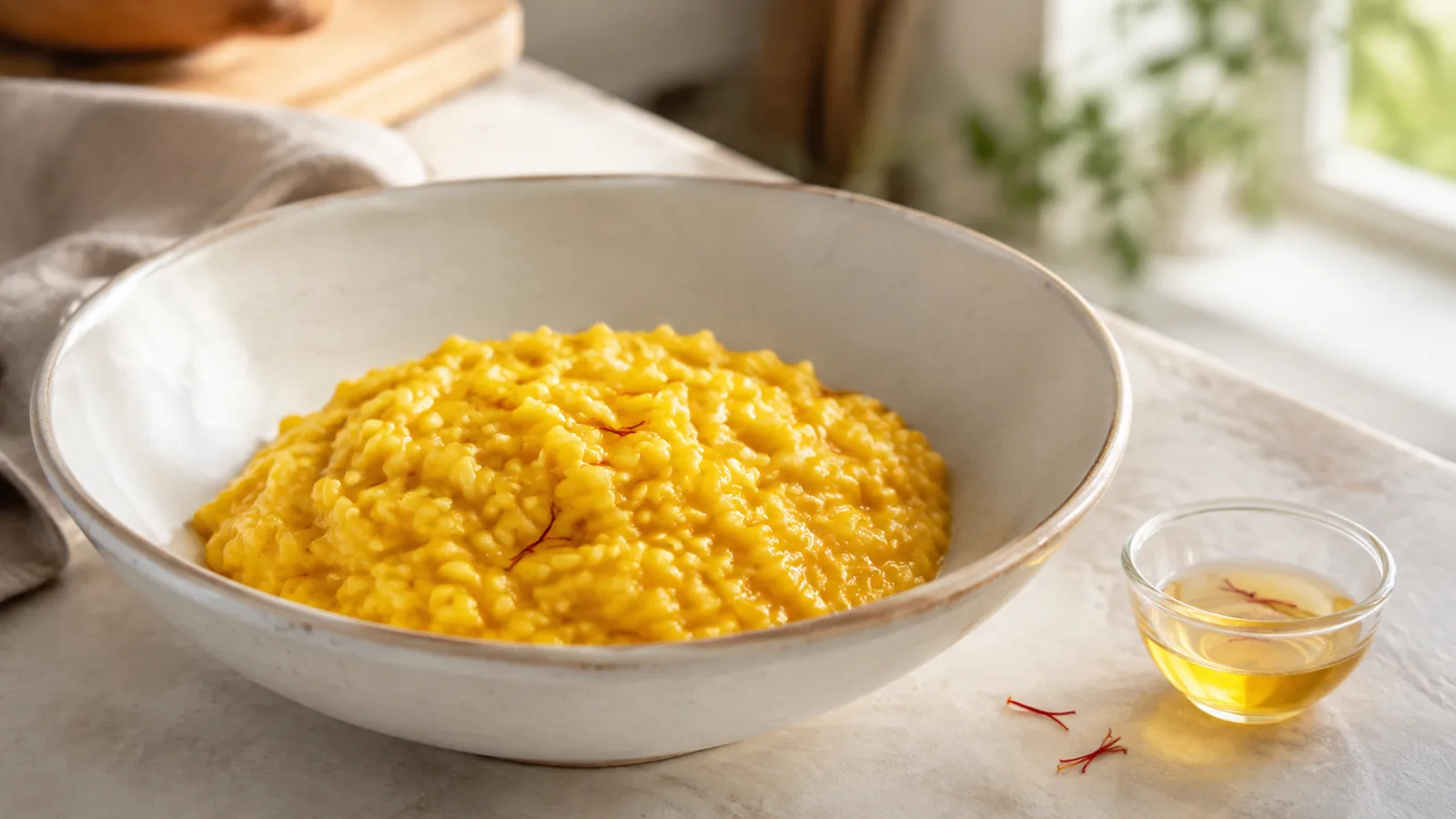
Mani rice, or Mani Polo, is a colourful Damghan dish layered with yellow split peas, Persian noodles, barberries, raisins, saffron and tender meat. Each spoonful moves between savoury, tart and gently sweet, while a yogurt-and-saffron tahdig gives the pot a crisp golden base.
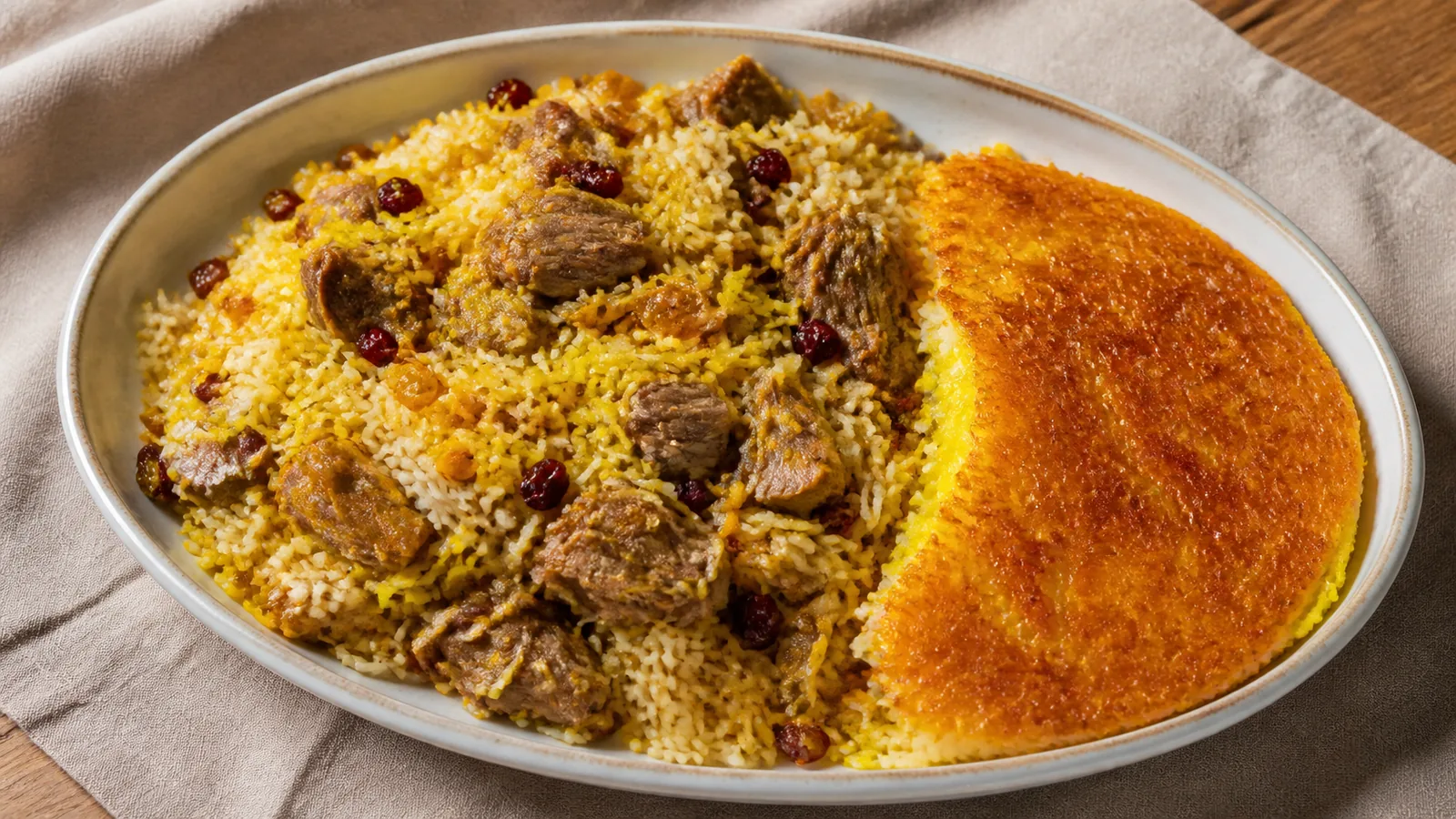
This is not Yamani rice or a Yemeni rice dish; the similar search spelling refers here to Mani Polo from Damghan in Semnan province. The meat can be left out, but Mani rice with meat is the fuller traditional presentation described in the original recipe.
Ingredients
For the rice and meat
- 3 cups long-grain basmati rice
- 1 cup dried yellow split peas
- 200 g Persian reshteh polo noodles
- 300 g lamb or beef stewing meat, cut into small cubes
- 1 large onion, finely chopped
- 100 g barberries
- 200 g raisins
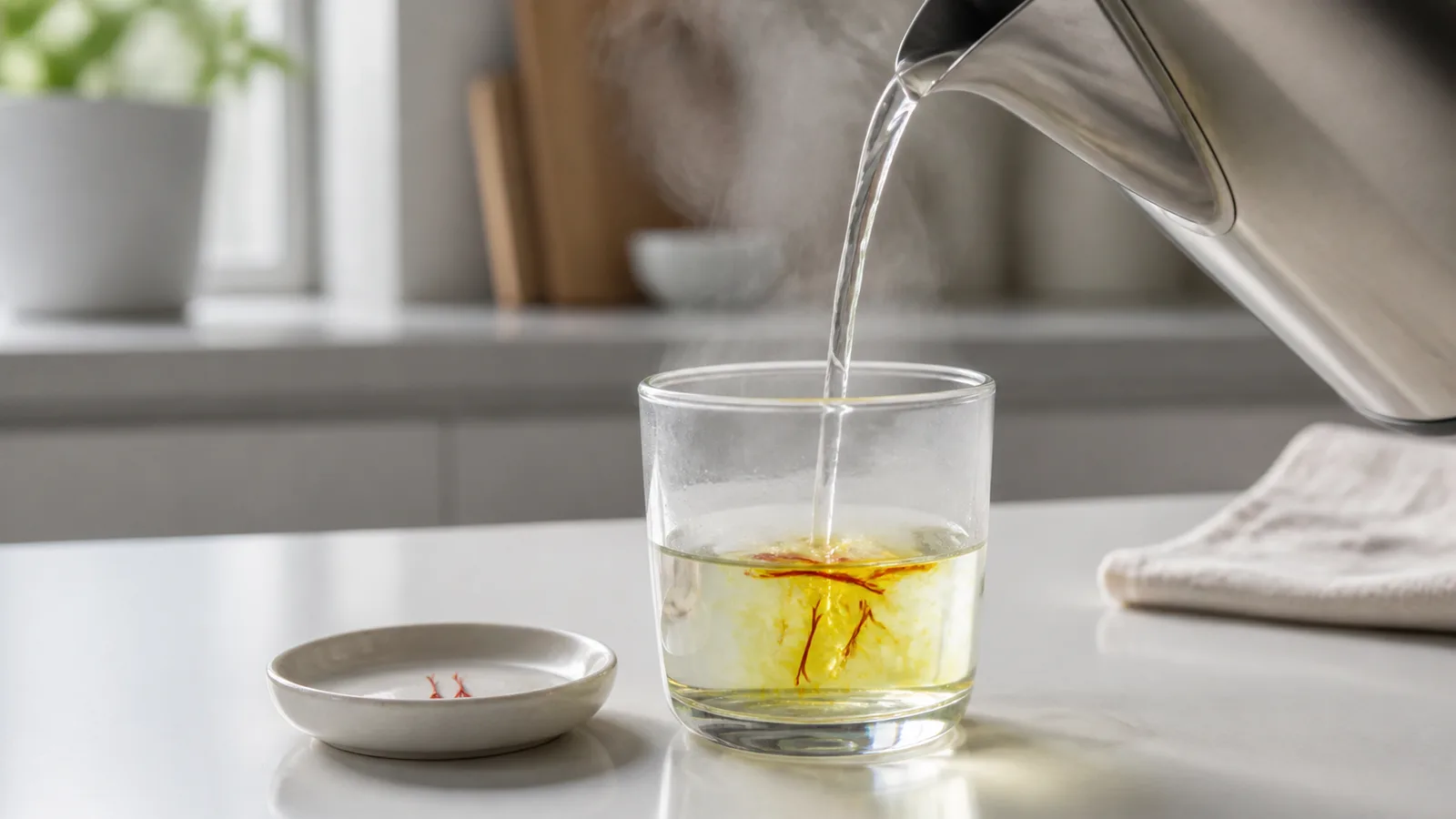
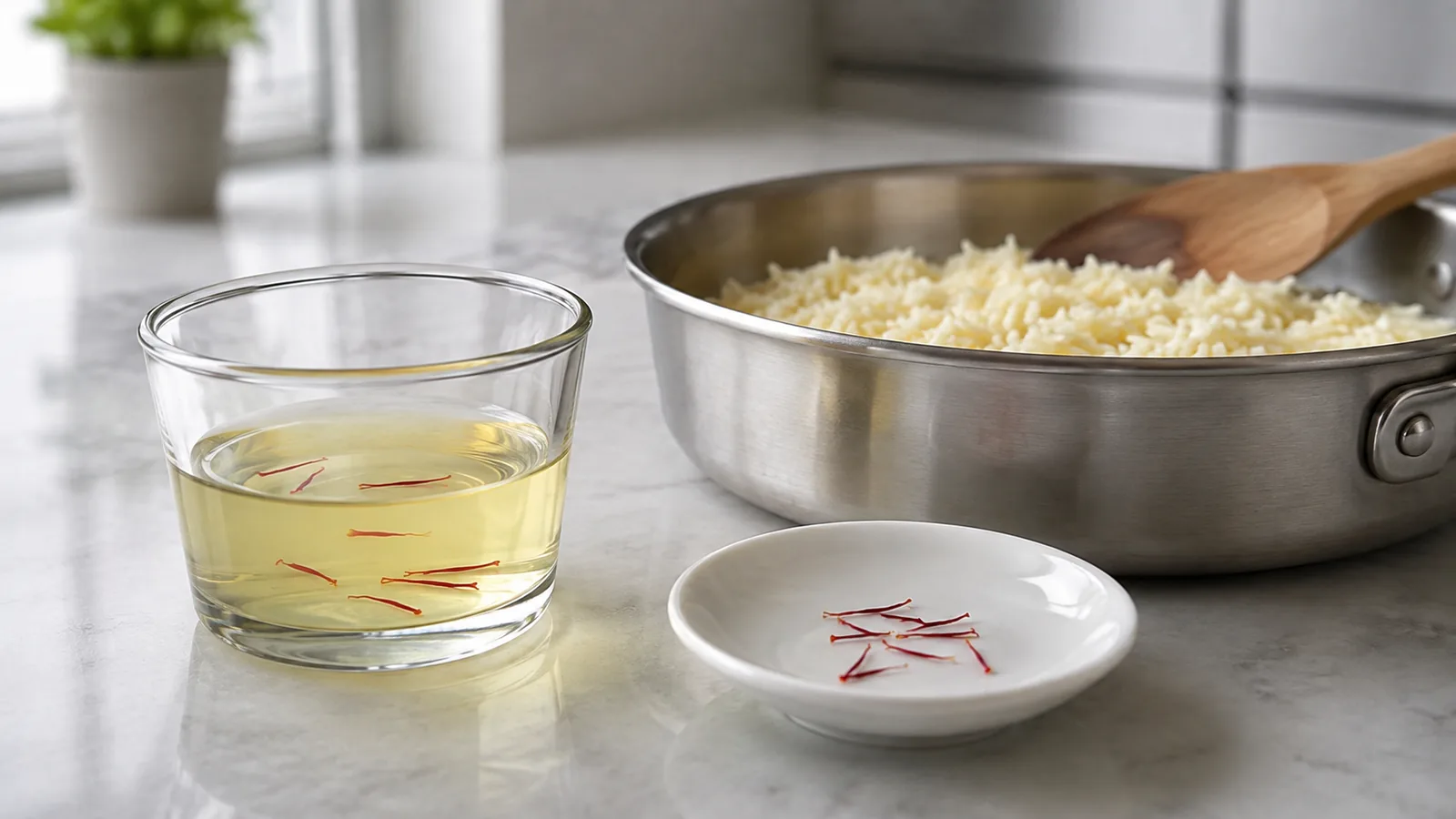
- ¼ cup brewed saffron
- Salt, black pepper and turmeric
- Neutral oil, as needed
- 1 teaspoon black cumin, optional
For the saffron tahdig
- 1 cup parboiled rice from the main batch
- 2 tablespoons thick plain yogurt
- 1 egg
- 2 tablespoons brewed saffron
- A pinch of salt and pepper
- Butter and a little oil for the pot
The source called the legume “chickpeas,” “cotyledons” and “cobs” in different places. Mani Polo is made here with yellow split peas, which cook and mix with rice differently from whole chickpeas.
Prepare the split peas and rice
Rinse the split peas and soak them for at least 2 hours, or overnight if they are old. Drain, cover with fresh water and simmer until just tender but not falling apart, usually 20 to 30 minutes. Drain immediately.
Rinse the rice until the water is much clearer, then soak it in salted water for 30 minutes to 2 hours. Keep the cooked split peas separate until the end of the parboiling stage. Adding them too early can make the cooking water starchy and the finished grains sticky.
Cook the Mani meat
Heat a little oil in a saucepan and fry the onion until golden. Reserve a spoonful for the final garnish if you like. Add turmeric, then the cubed lamb or beef. Brown the meat for several minutes and season with black pepper.
Add two cups of hot water, cover partly and simmer until the meat is tender, roughly 60 to 90 minutes depending on the cut. Add salt during the later part of cooking. When ready, the liquid should be reduced to a small amount of glossy sauce rather than a full broth.
Parboil the rice and noodles
Bring a large pot of salted water to a rolling boil. Drain the soaked rice and add it to the water. Cook until the outside of a grain is tender but the centre still has a fine firm line.
Break the reshteh noodles into shorter lengths. Add them during the final 3 to 4 minutes, following the package texture if it cooks faster. Add the cooked split peas for only the last 1 to 2 minutes, just long enough to warm them without breaking them down. Drain the mixture in a colander.
Build the yogurt-and-saffron tahdig
Mix one cup of the drained rice with the yogurt, egg, two tablespoons of brewed saffron, salt and pepper. The mixture should be moist enough to bind but not runny.
Coat the base of a non-stick heavy pot with butter and a little oil; the oil helps protect the butter from scorching. Press the tahdig mixture evenly over the bottom in a layer about 1 cm thick.
Steam the Mani rice
Spoon the rice, noodle and split-pea mixture loosely over the tahdig, forming a mound rather than pressing it down. Drizzle a little oil around the edge. If using black cumin, scatter it lightly between the upper layers.
Make several steam holes with a spoon handle. Cover the lid with a clean tea towel, set it on the pot and cook over medium heat for about 5 minutes to establish steam. Lower the heat and steam for 35 to 45 minutes.
Prepare the barberries and raisins
Rinse the barberries carefully and dry them. Warm a teaspoon of oil or butter over low heat and stir the barberries for 30 to 60 seconds, just until glossy. Remove them before they darken.
Warm the raisins separately for 1 to 2 minutes, until plump. Keeping them apart matters because raisins need longer than delicate barberries. Mix a small portion of cooked rice with the remaining quarter-cup brewed saffron.
Assemble the Damghan platter
Turn the steamed rice gently onto a broad serving platter or spoon it out while keeping the tahdig intact. Distribute the saffron rice, barberries and raisins in loose sections so the colours stay visible. Place the hot meat and its reduced onion sauce over the centre.
Serve the tahdig in pieces beside the rice. Thick yogurt, a crisp salad or fresh herbs balance the sweet dried fruit and rich meat. Sliced almonds are a useful optional garnish if you want to reduce or replace some of the raisins.
Variations and practical notes
- For meatless Mani rice, omit the braise and add more toasted almonds or walnuts for contrast.
- Use chicken browned with onion if you want a quicker version; cook it fully before serving.
- Do not fry barberries and raisins together, as their ideal timings differ.
- Keep the split peas just tender. Soft, broken peas make the rice heavy.
- Use reshteh polo noodles rather than soup noodles, which may dissolve during steaming.
Mani Polo succeeds when the components remain distinct: separate rice grains, intact split peas, soft noodles, tart barberries, plump raisins, tender Mani meat and a saffron tahdig that breaks cleanly at the table.