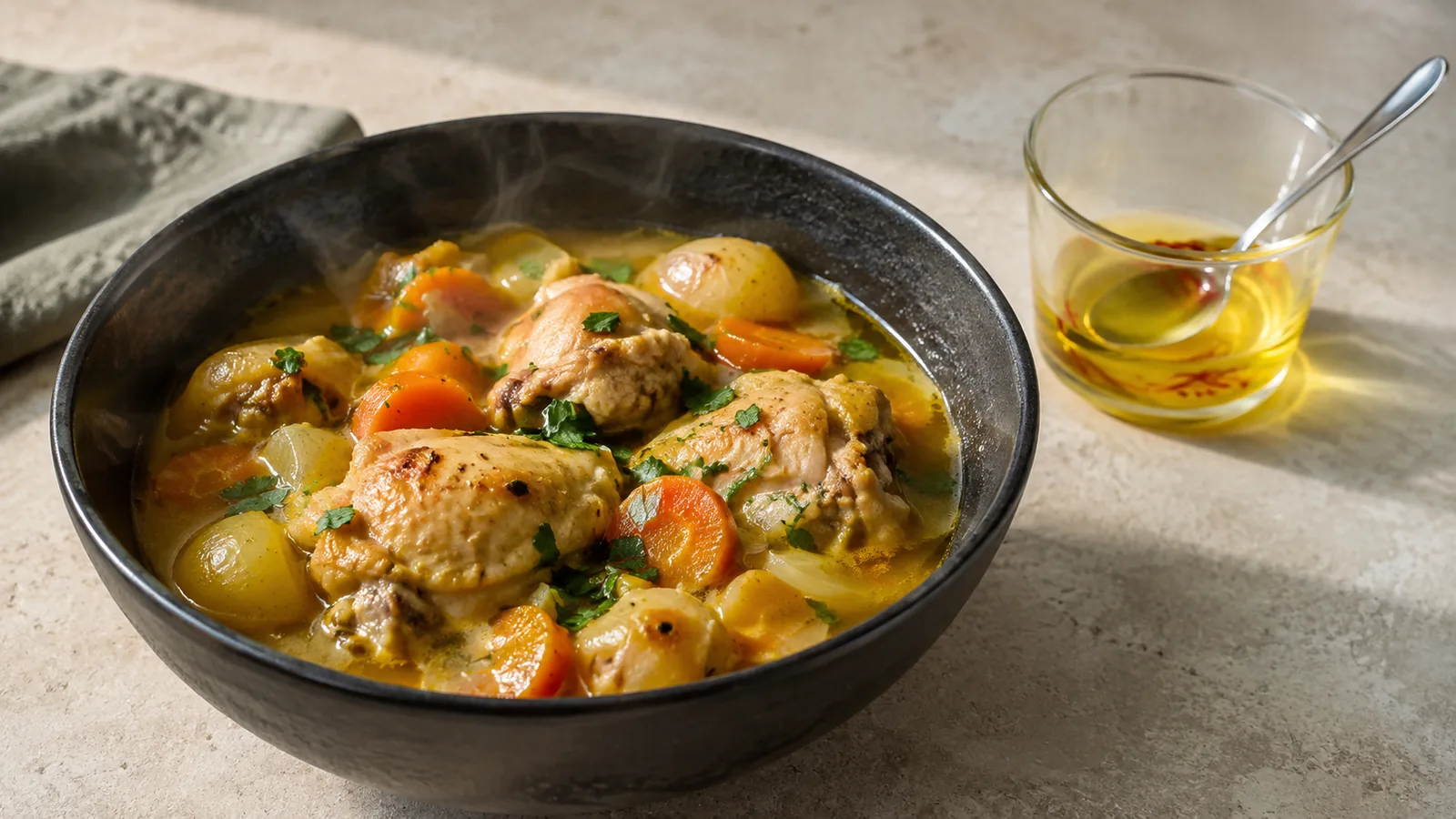
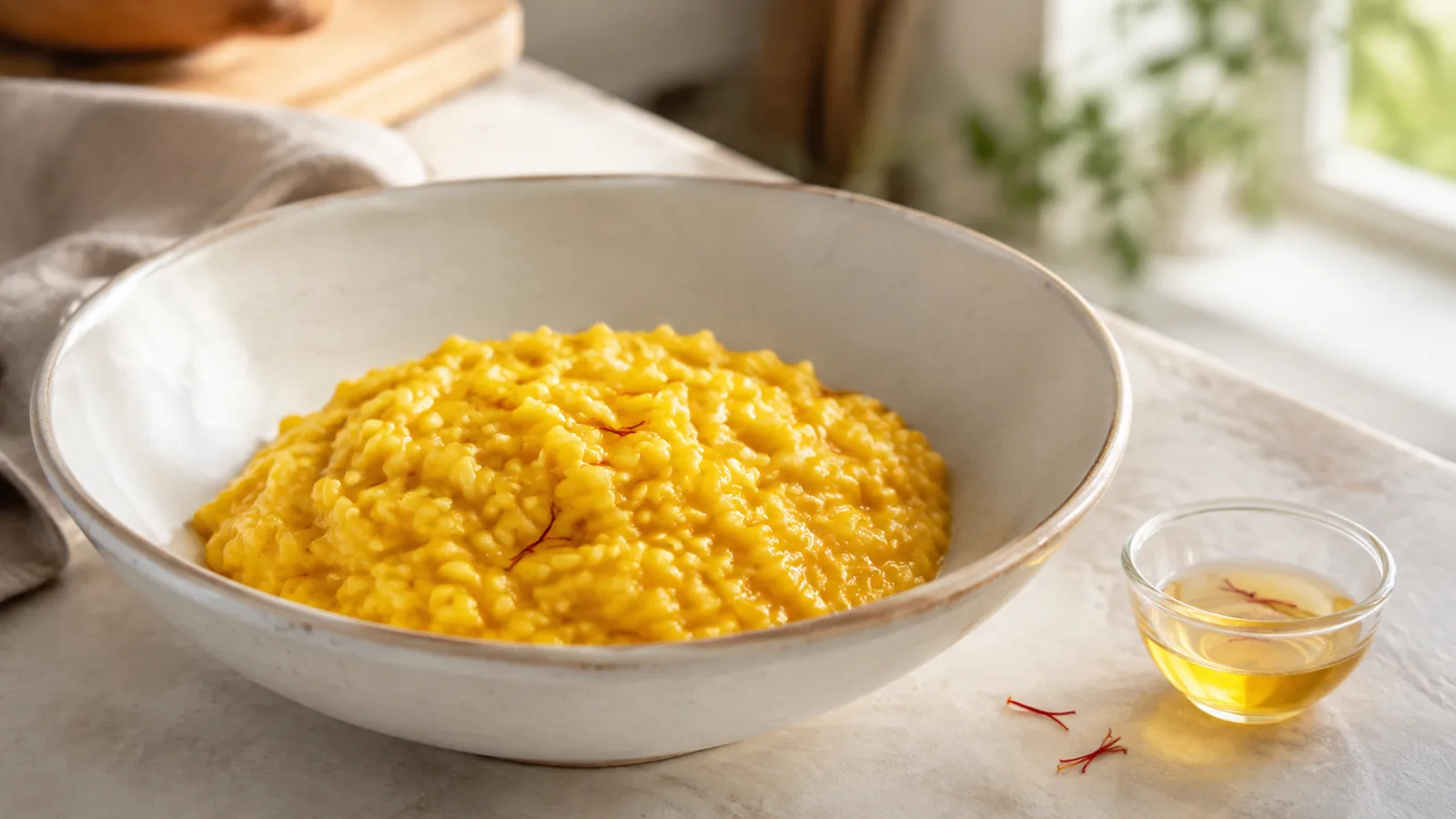
Recipe for delicious dessert of Dry milk halva with saffron makes a smooth, rich milk halva by toasting flour and milk powder with oil and butter, then working in a warm saffron, rose-water and cardamom syrup. It can be spread on a platter or piped into tart shells and small paper cups for individual servings.
What is dry milk halva?
This milk halva, sometimes searched as milk helva, is described in the source as a delicate Arabic-style sweet. Part of the dry mixture is cooking milk powder, which gives a round dairy flavour and a softer body than a flour-only halva.
Use ordinary food-grade milk powder sold for cooking or confectionery. The old phrase saying it is “different from formula” means it is not infant formula. The source also mentioned another Najaf halva under the mistranslated name “oral halva”; the original name cannot be recovered reliably from that English text.
Ingredients
For the toasted base
- 1⅓ cups plain white flour
- ⅔ cup full-fat milk powder for cooking
- ½ cup neutral cooking oil
- 50 g unsalted butter
For the saffron syrup
- ⅔ cup water
- 1½ cups sugar
- ½ cup food-grade rose water
- A pinch of saffron threads, lightly ground
- Ground cardamom, to taste
For serving
- Small ready-made tart shells, halva papers or paper capsules, optional
- Sliced pistachios, sliced almonds or desiccated coconut, as needed
The archived ingredient list printed dry milk as “2.3 cups.” In the same text, fractions were repeatedly damaged by translation; ⅔ cup matches the adjacent ⅔-cup water measure and the intended flour-to-milk-powder balance. The bad 2.3 value remains documented here rather than used as an unsafe quantity.
Prepare everything before heating
Sift the flour and milk powder separately. Measure the oil, butter and all syrup ingredients before the first pan goes on the heat. Once the syrup meets the flour mixture, the halva thickens quickly and leaves little time to search for a missing ingredient.
Use a heavy, light-coloured pan if possible. It makes gradual browning easier to see. A heat diffuser can help on a strong burner, matching the source’s suggestion to use a flame spreader.
Toast the white flour gently
- Put the 1⅓ cups flour in a dry saucepan over low heat.
- Stir continuously, scraping the base and corners.
- Toast until the raw flour smell softens and the colour changes only slightly.
- Remove the pan from the heat before adding the milk powder.
Milk solids colour faster than flour, so the powder should not spend the whole first stage over the flame. Let the pan cool for a moment, add the sifted ⅔ cup milk powder and mix until the colour is even.
Add the oil and butter
Return the pan to low heat. Add the ½ cup oil and 50 g butter, then stir steadily until the dry mixture absorbs the fat and becomes smooth. Continue cooking to the shade you prefer.
A pale halva keeps a stronger milk flavour; more browning gives toasted depth. Do not chase a dark colour at high heat. Milk powder and flour can scorch, making the whole dessert bitter, and uneven spots cannot be hidden by syrup.
Make the saffron and rose-water syrup
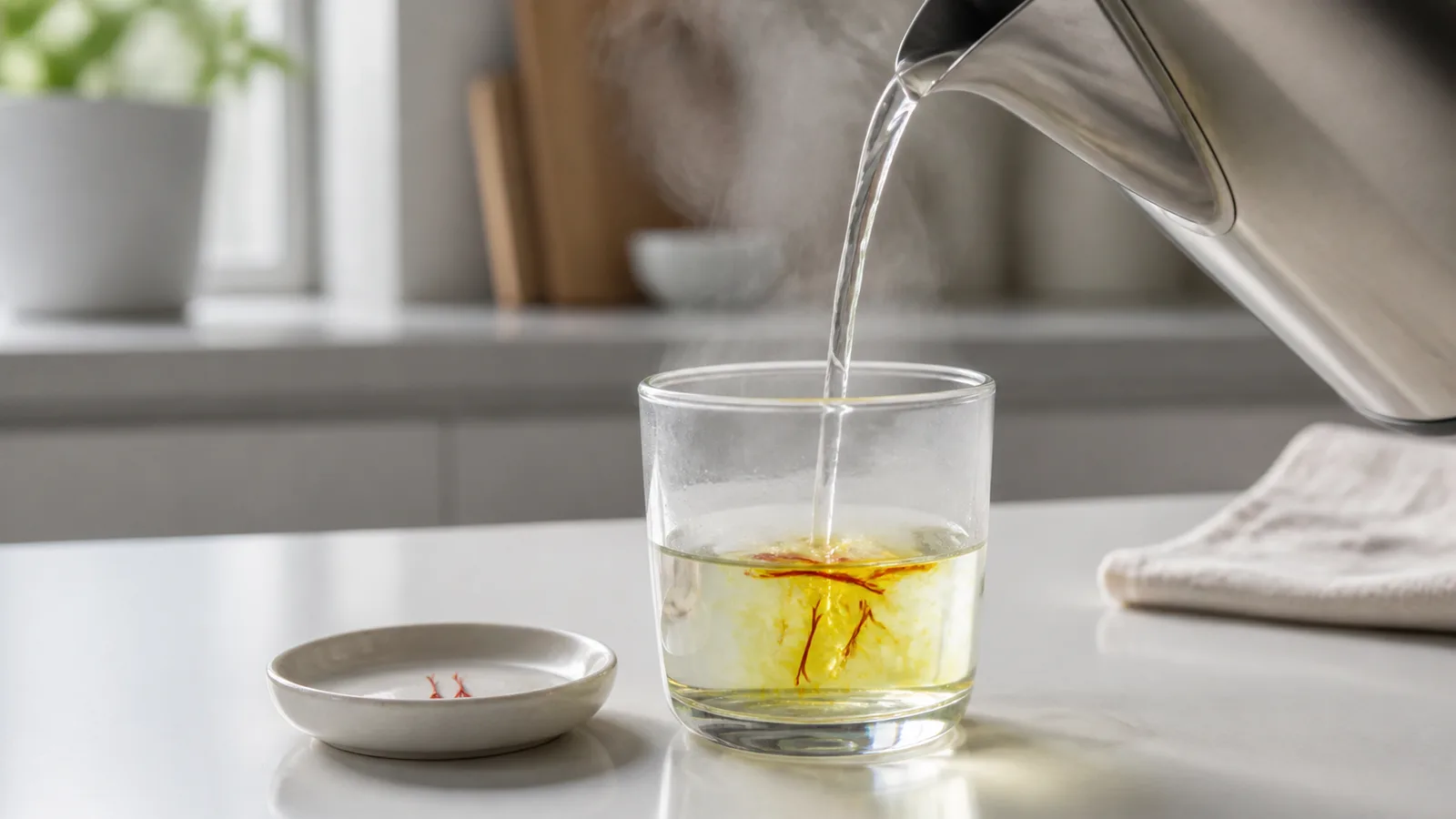
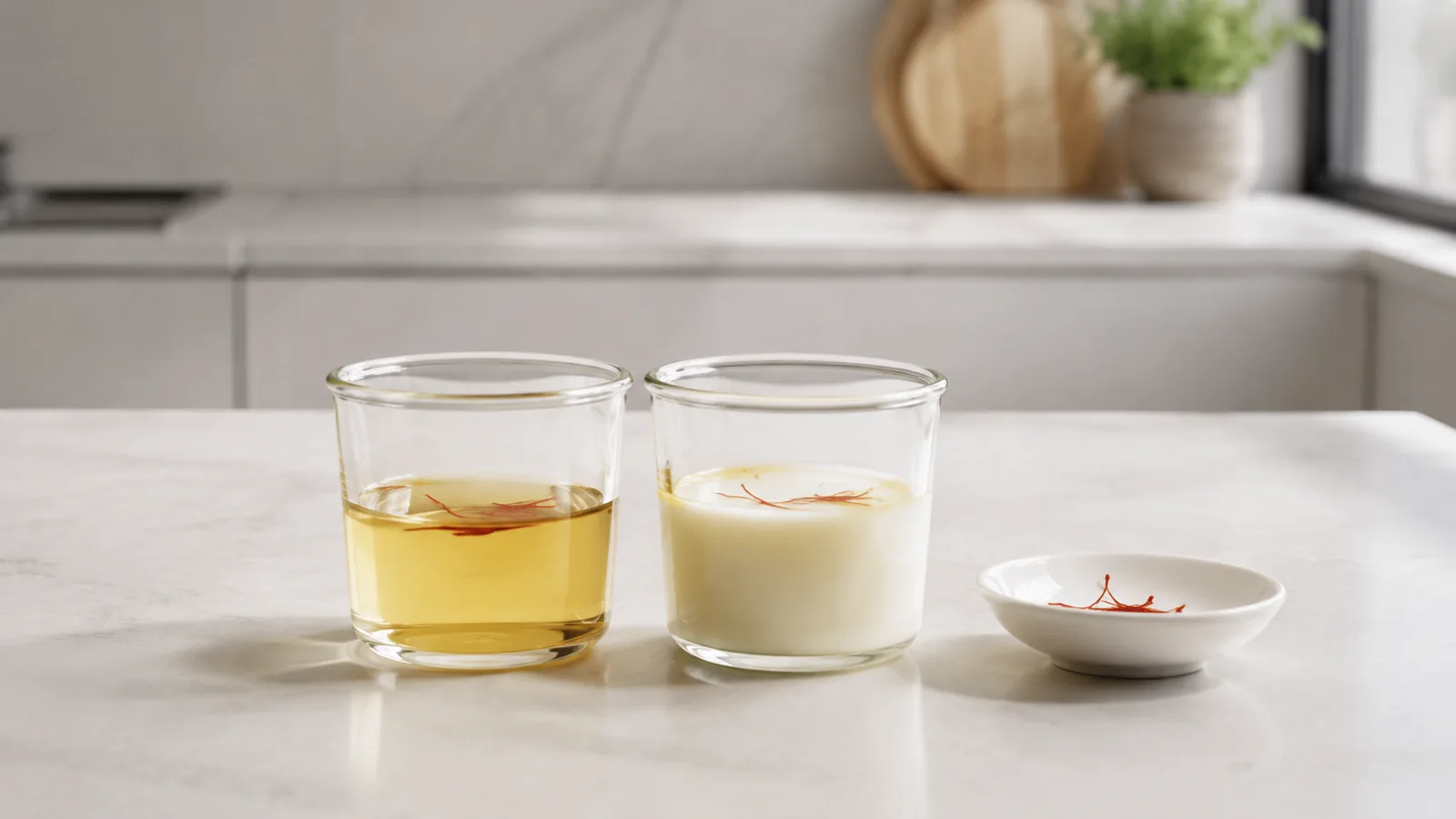
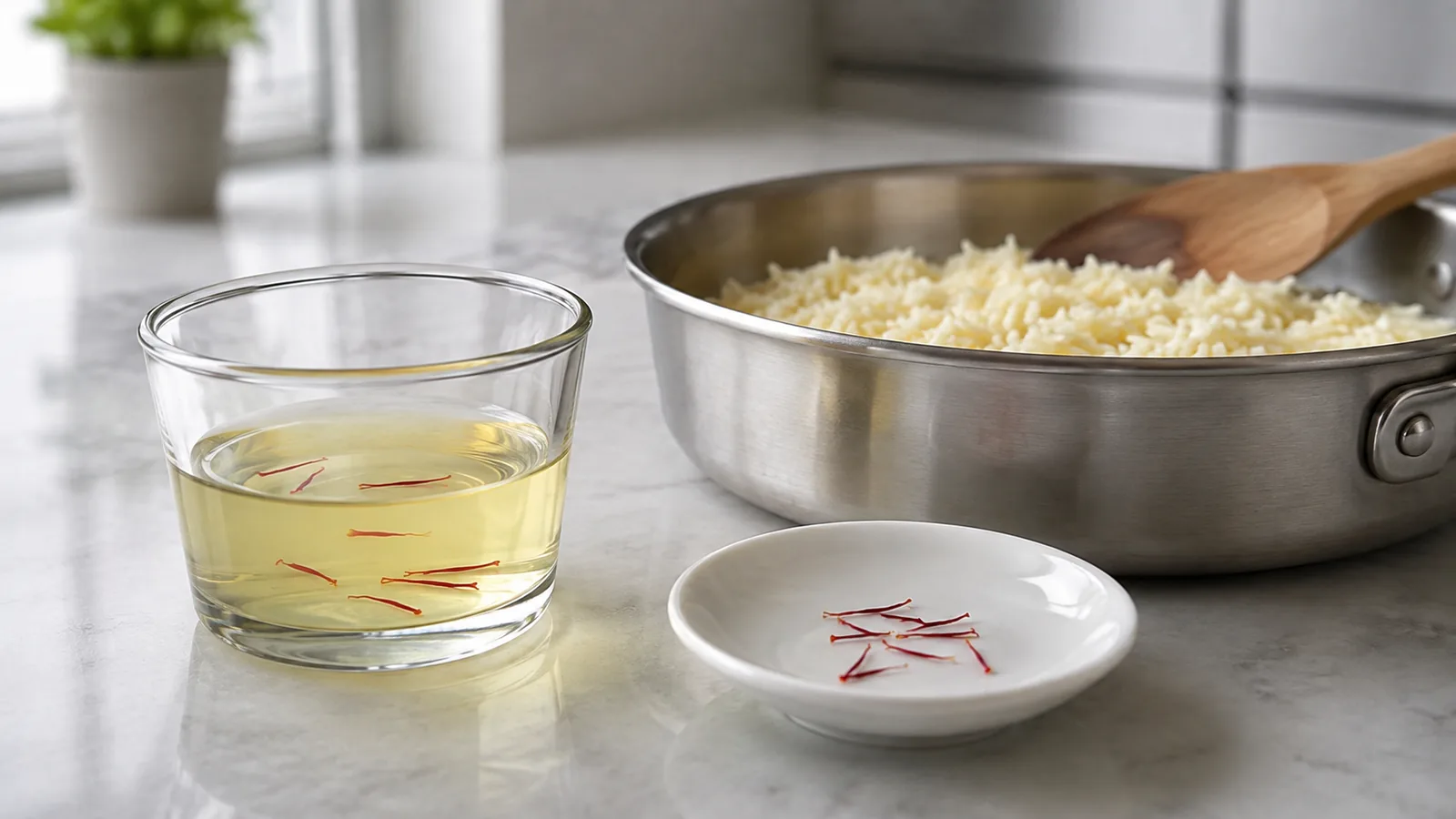
- Combine ⅔ cup water, 1½ cups sugar and the ground saffron in a second saucepan.
- Warm gently, stirring until the sugar dissolves.
- Add the ½ cup rose water and cardamom.
- Bring the mixture just to a brief boil, then remove it from the heat.
The original instructions repeated the rose-water/cardamom sentence. It is one step, not a second addition. Long boiling is unnecessary and can flatten the rose aroma.
Combine syrup and flour in stages
- Remove the toasted flour mixture from direct heat.
- Add one ladle of warm syrup and stir firmly until absorbed.
- Continue in small additions, mixing smooth after each one.
- Stop when the halva gathers into a soft, glossy mass that holds its shape.
Do not pour all the syrup in automatically. Flour and milk powder vary, and the source correctly notes that a batch may need less. Keeping the last portion back is easier than trying to repair a soup-like halva.
If the halva is too loose or too firm
If it is slightly loose after the syrup is absorbed, return the pan to very low heat for a few minutes and stir continuously until excess moisture leaves. Remember that it firms more as it cools.
If it is too stiff, work in a spoonful of the reserved warm syrup. If none remains, use a small spoonful of warm water or rose water. Add liquid slowly; the difference between pipeable and slack can be surprisingly small.
How to know it is ready
The halva should leave the sides of the pan and move as one soft mass when stirred. It should not leak a ring of oil, taste of raw flour or contain pale milk-powder lumps.
For piped portions, stop while it is still supple. For a platter that will be pressed and patterned, cook a little further so the surface holds a spoon mark.
Serving and decoration
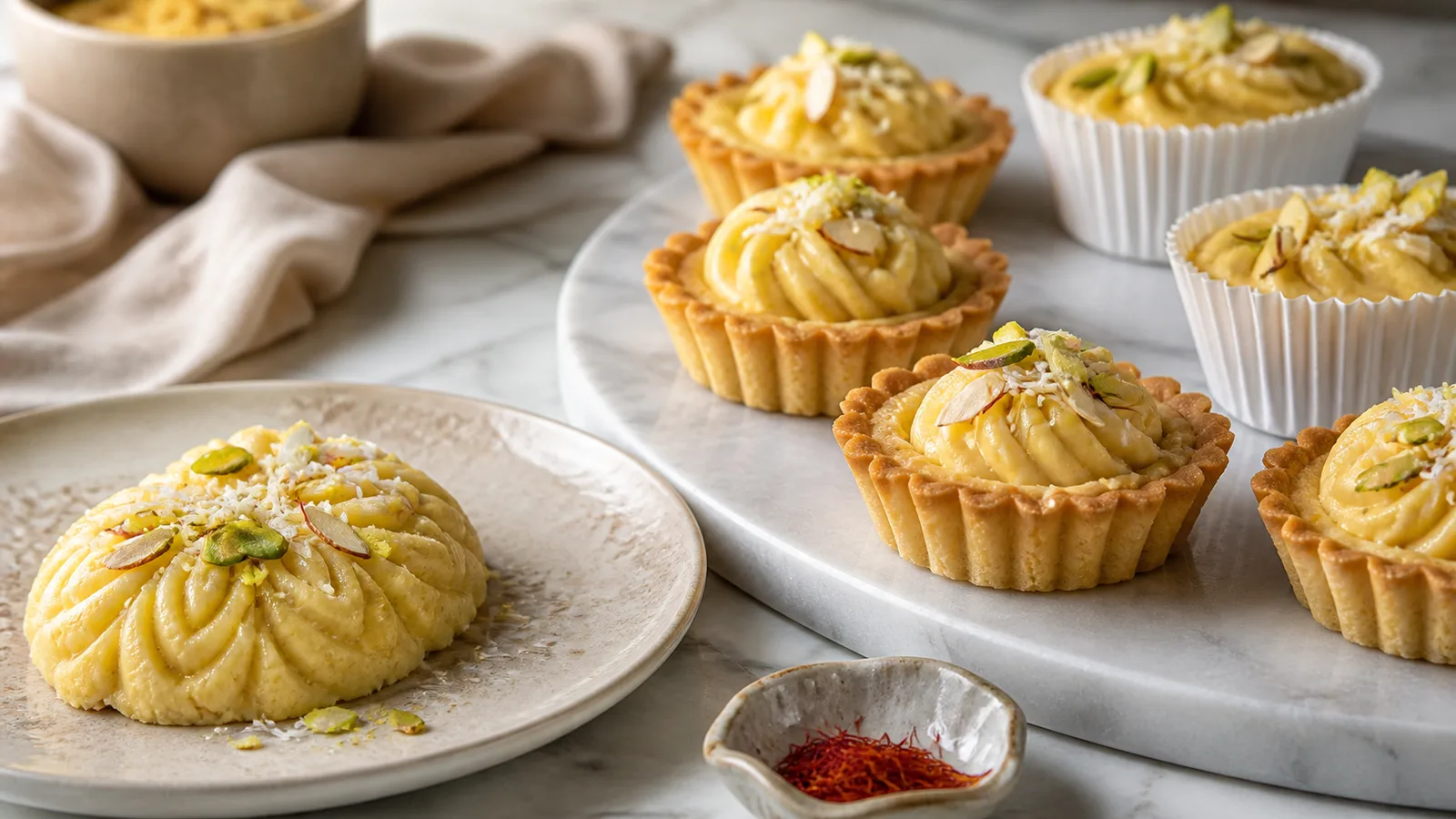
Spoon or pipe the warm halva into ready-made tart shells, traditional halva papers or small paper capsules. Alternatively, spread it on a shallow serving plate and pattern the surface with a spoon.
Garnish with sliced pistachios, almond slivers or coconut powder. Use a light hand so the topping complements the saffron and cardamom rather than burying the smooth milk halva.
Storage and serving temperature
Let the halva cool before covering it so condensation does not wet the surface. Because it contains milk powder and butter, store leftovers in a clean airtight container in the refrigerator and bring small portions toward room temperature before serving for a softer texture.
If using tart shells, fill them closer to serving when possible. Long contact with the moist halva can soften crisp pastry.
Common problems
- Bitter flavour: the flour or milk powder browned too far.
- Pale lumps: the milk powder was not sifted or evenly mixed.
- Oily surface: the emulsion has not come together; keep stirring gently before adding more fat.
- Very soft halva: too much syrup was added at once; cook briefly over low heat.
- Hard halva: too little syrup or too much final cooking; soften carefully with reserved warm syrup.
Recipe basis
The Arabic-style/Najaf context, flour, translated dry-milk measure, water, sugar, rose water, oil, 50 g butter, cardamom, saffron, staged toasting, flame spreader, colour choice, separate syrup, gradual absorption, possible reduced syrup, low-heat correction and tart/paper/nut/coconut serving options all come from the original post. The one-click title and both `milk halva` and `milk helva` query forms are retained.