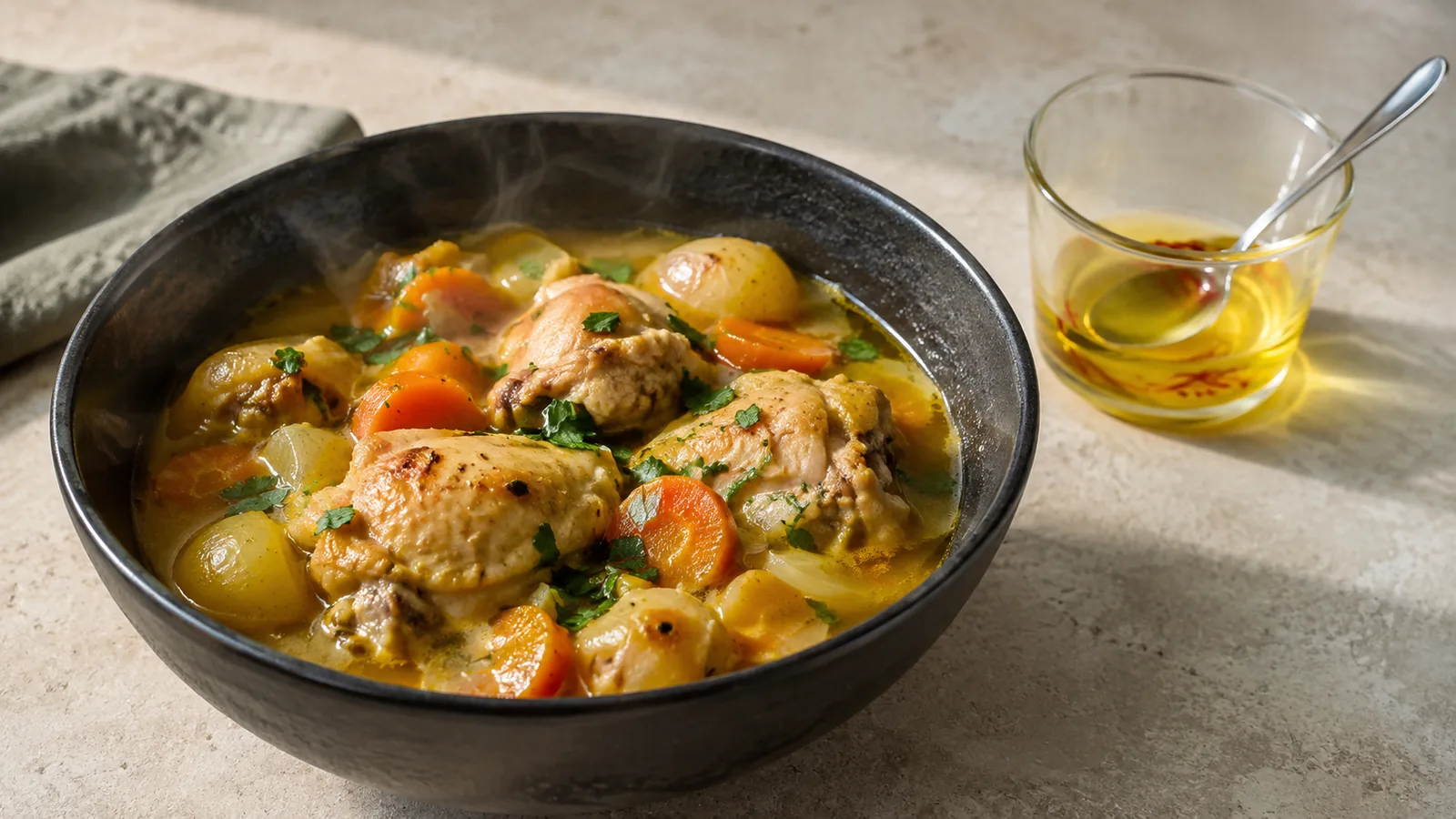
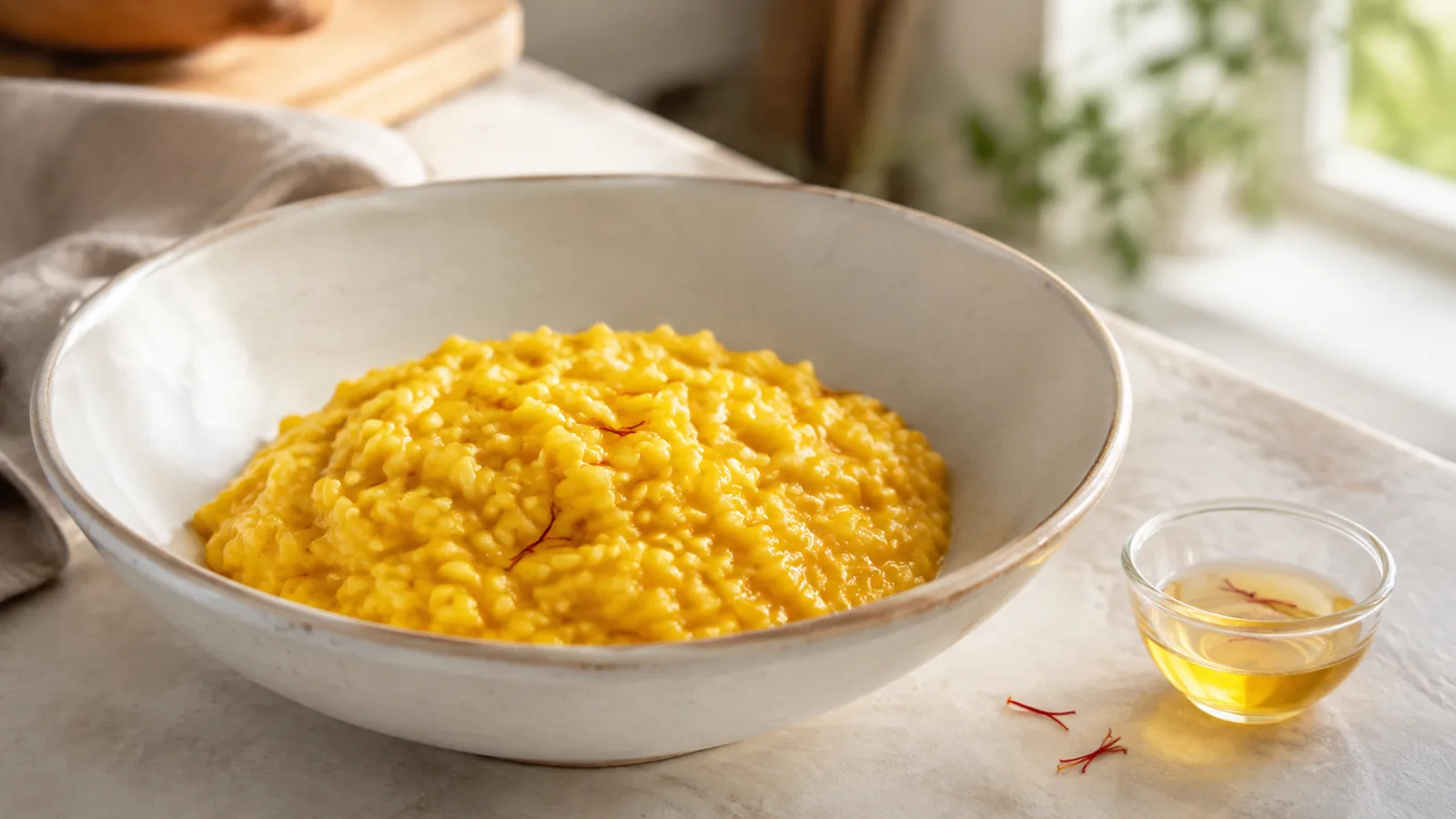
This recipe for cooking Togi Sardaghi with Iranian saffron turns peeled millet, lentils, ground meat and kashk into a thick Khorasani dish topped with fried garlic, mint, onion and saffron.
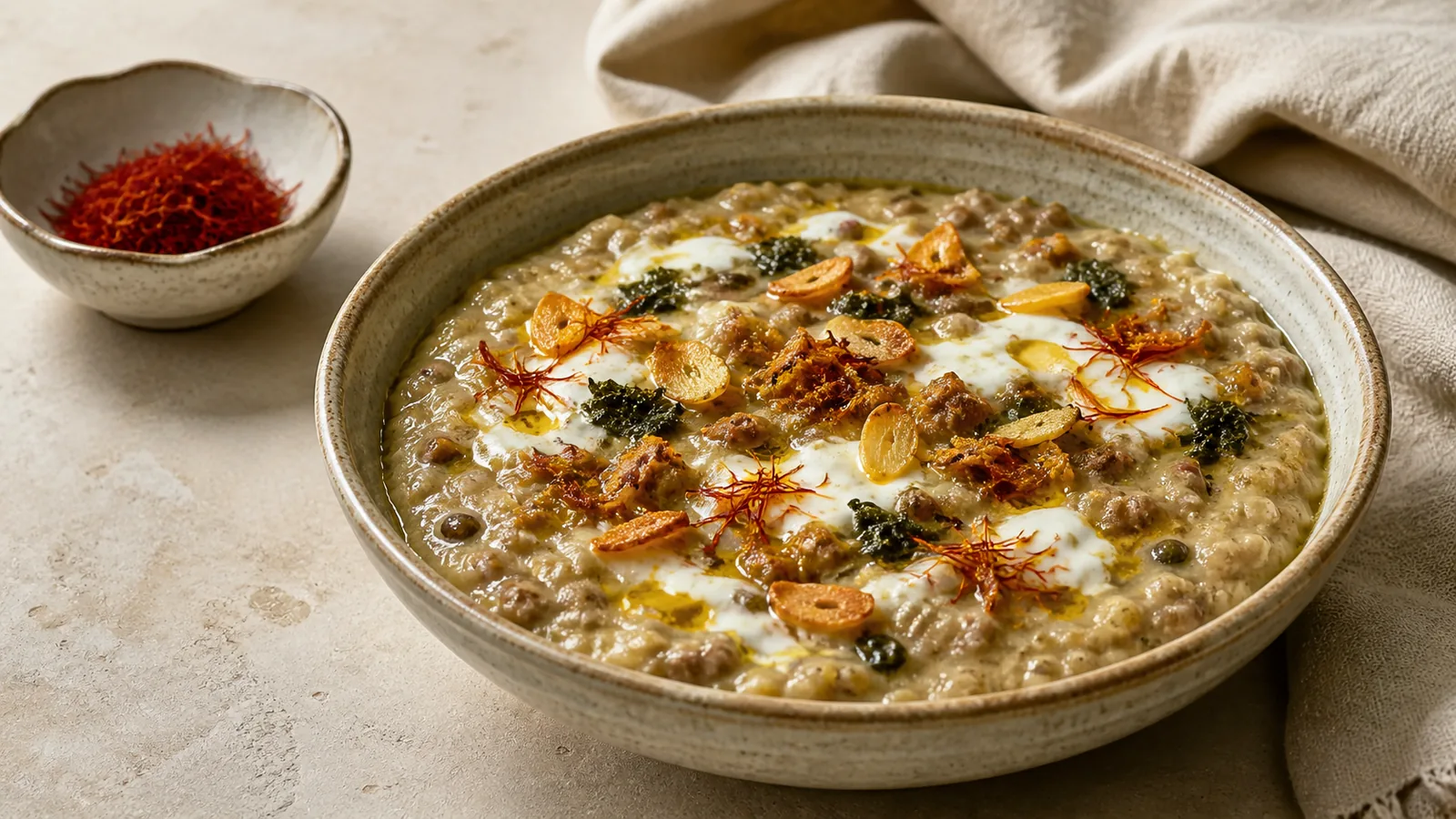
A traditional Togi recipe is closer to a hearty porridge or thick soup than a loose stew. The name is regional: the Dehkhoda dictionary entry for sardaghi describes a Gonabad dish made with millet and also called Togi Sardaghi or Sirdaghi.
Ingredients for Togi Sardaghi
- 3 teaspoons fried onion, divided between the pot and garnish
- 1 teaspoon turmeric
- Salt and black pepper, as needed
- 250 g ground lamb or beef
- 500 ml water, plus a little boiling water only if needed
- 300 g hulled edible millet
- 100 g cooked lentils
- 250 ml prepared kashk
- 3 tablespoons fried garlic
- 1 tablespoon fried dried mint
- 2 tablespoons bloomed Iranian saffron
The recipe serves four. Allow about 15 minutes to assemble the ingredients and around one hour for cooking and resting.
What the translated ingredients mean
“Edible millet without skin” means hulled millet, not millet still surrounded by a hard outer husk. The grains should be clean, pale and intended for cooking.
“Curd” refers to kashk, the tangy fermented dairy product used in many Iranian soups and ash dishes. Use commercially prepared, pasteurized kashk and follow any heating or dilution direction on its package.
“Hot garlic,” “hot onion” and “hot mint” are literal translations of sir-dagh, piyaz-dagh and na’na-dagh: garlic, onion and dried mint briefly fried in oil. They are garnishes and flavor bases, not ingredients served at a spicy temperature.
Prepare the millet, lentils and saffron
Rinse the millet in a fine sieve until the water runs mostly clear, then drain it well. Millet grains are small enough to escape through a normal colander.
The 100 g of lentils should be measured after cooking. They need to be tender but still intact; very soft lentils can disappear when the finished Togi is stirred.
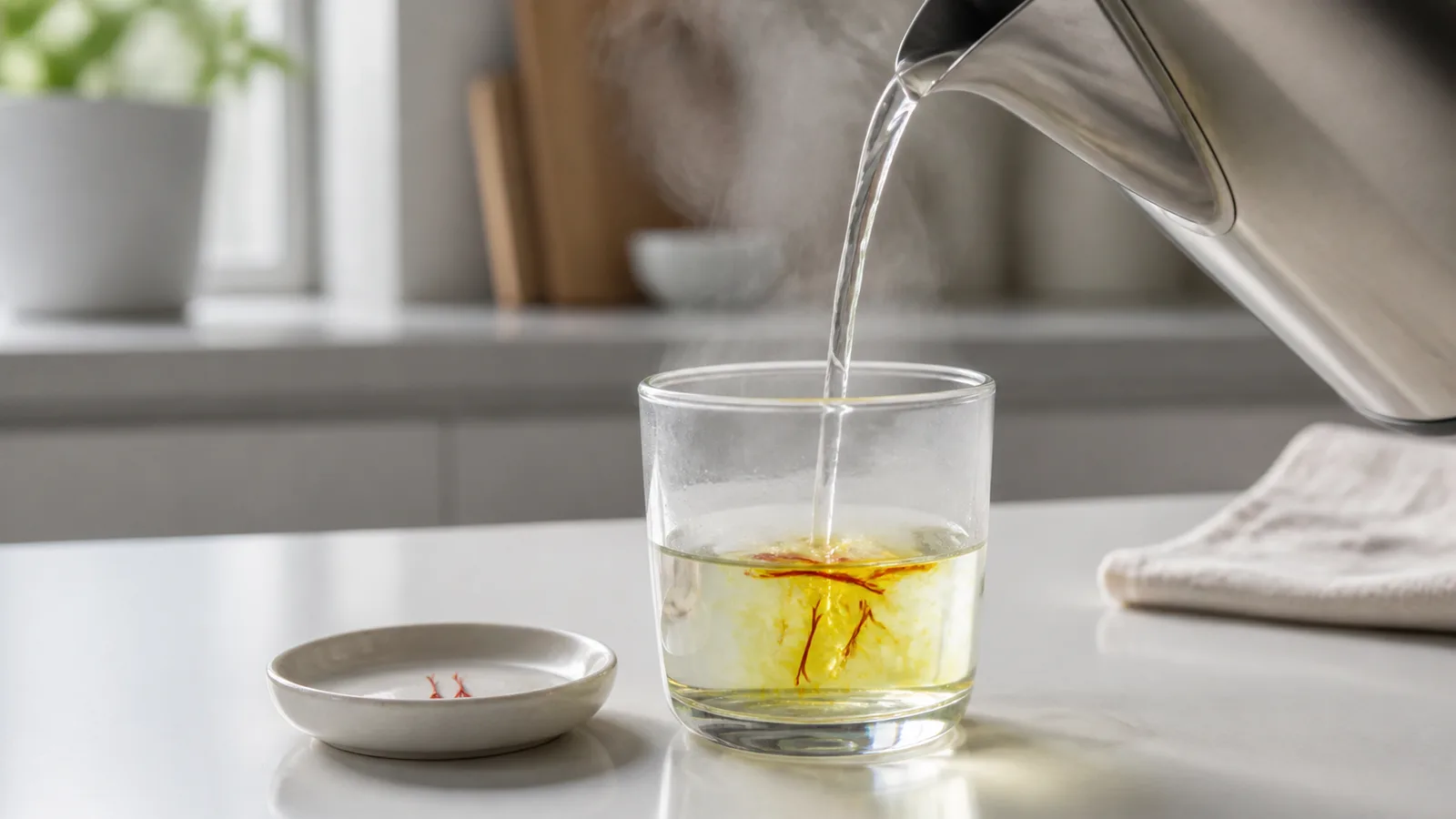
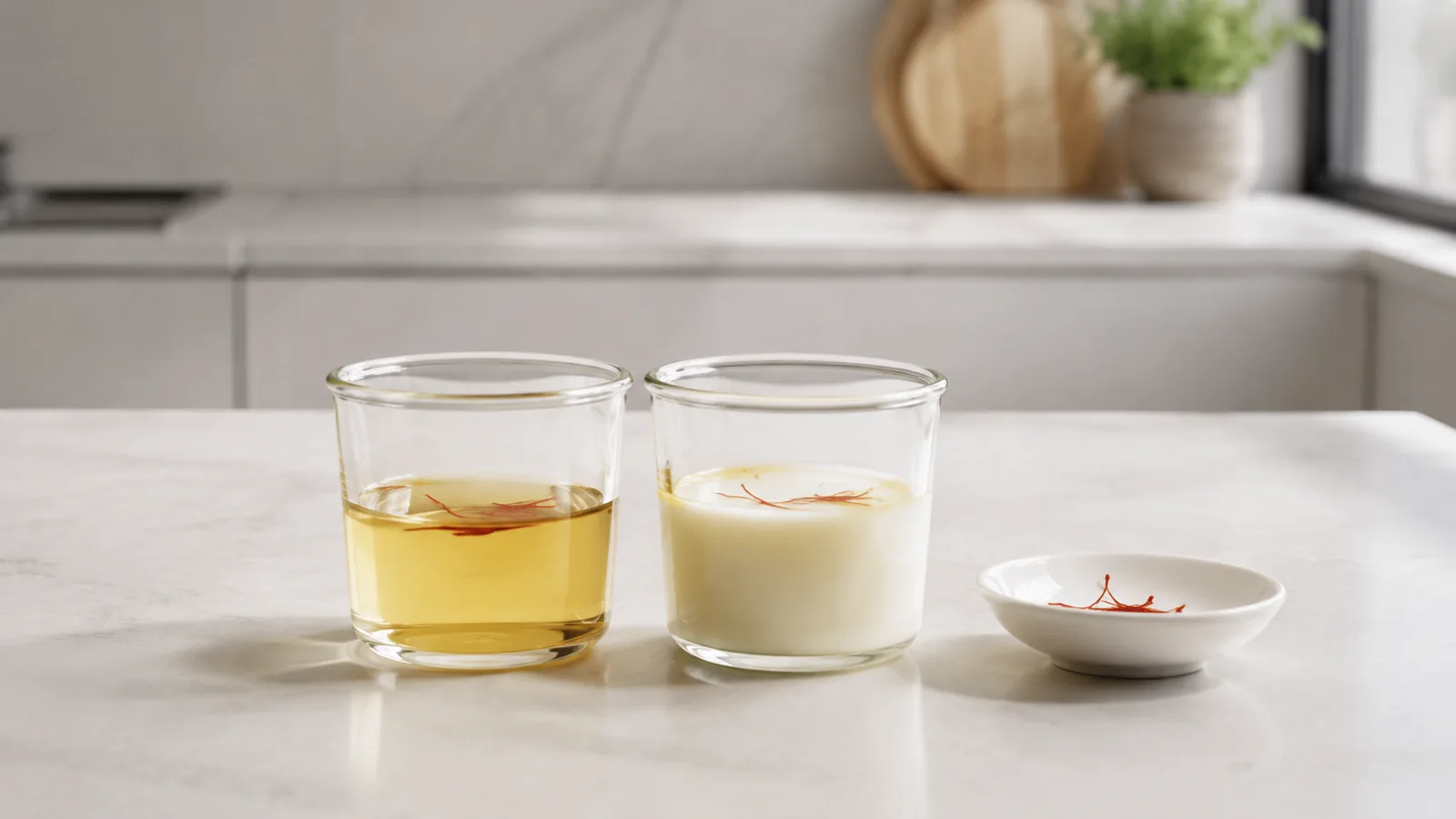
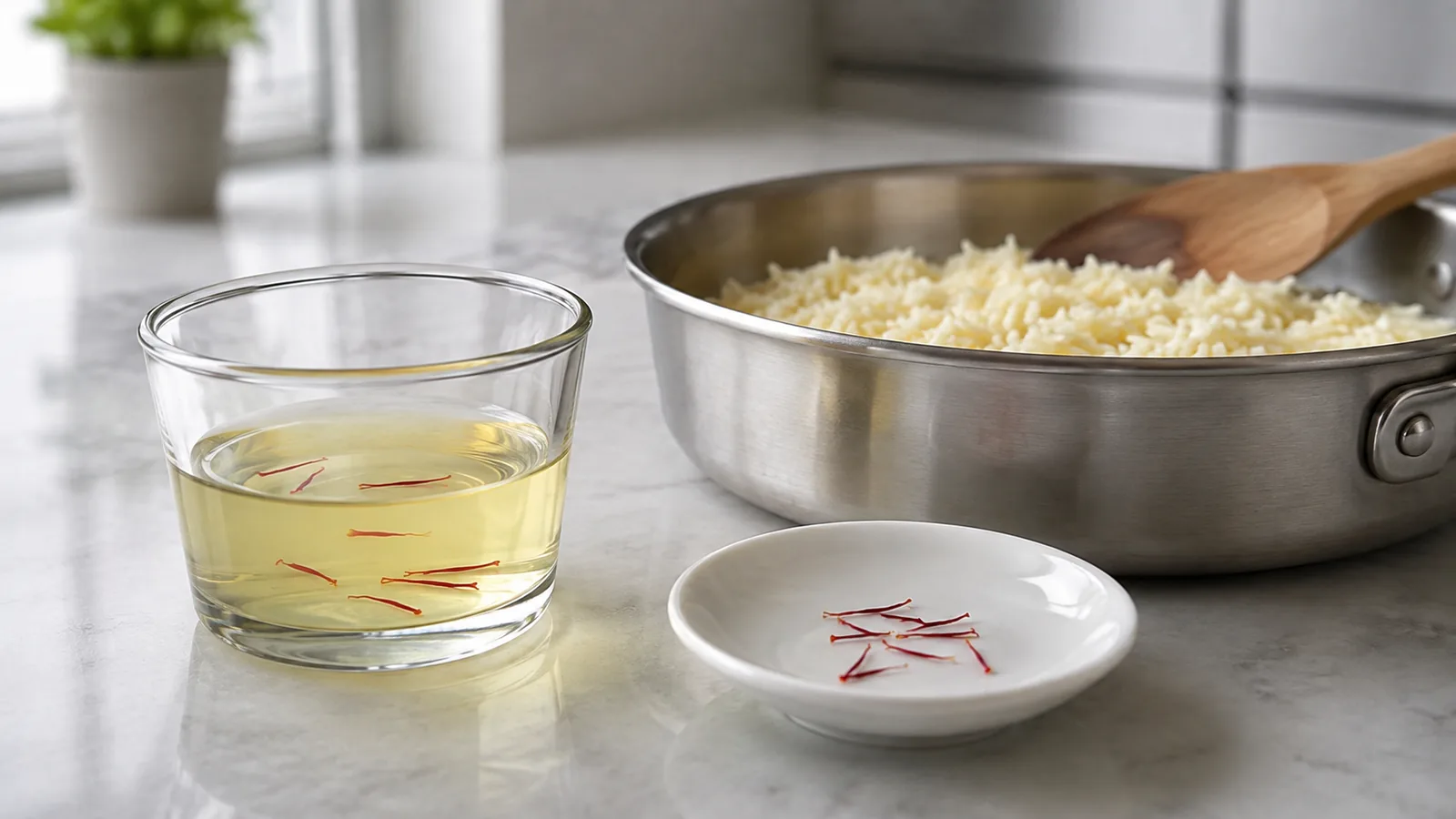
Bloom the saffron in a small amount of hot water and measure two tablespoons of the concentrated liquid. The checked method for brewing Iranian saffron keeps the aroma strong without adding unnecessary water.
Brown the meat with onion and turmeric
Set a heavy saucepan over medium-low heat. Add about two teaspoons of the fried onion, the turmeric, black pepper and the ground meat. If the onion carries very little oil, add a teaspoon of neutral oil to prevent sticking.
Break the meat into small pieces and cook until its color changes and no raw patches remain. Season lightly with salt, remembering that kashk can be salty.
Ground meat should reach 160°F (71°C). In this recipe it continues cooking after the water and millet are added, but browning it evenly at the beginning improves both safety and texture.
How much Togi water should you use?
The original Togi water measurement is 500 ml. Pour it over the browned meat and bring it to a full boil before adding the millet.
Millet absorbs liquid quickly, and brands differ. Start with the measured amount to preserve the recipe’s thick texture. Keep a kettle of boiling water nearby and add only a small splash if the grains are still firm while the bottom of the pan is becoming dry.
Cold water added halfway through cooking slows the simmer and can make the texture uneven, so any adjustment should be boiling water.
Cook the millet for 20 minutes
Pour the drained hulled millet into the boiling meat mixture. Stir well, lower the heat and cook for 20 minutes, stirring from the bottom every few minutes.
As the grains soften, the mixture becomes thicker and more likely to catch. Use a heavy pan, keep the heat low and scrape the corners. The Togi should resemble a loose porridge at this stage because the kashk and rest will thicken it further.
If the millet remains distinctly hard after 20 minutes, add a little boiling water and continue cooking until tender. Grain age and processing can change the exact time.
Add the cooked lentils
Fold in the 100 g of cooked lentils. Let the pot come back to a gentle bubble and cook for two or three minutes—just the “few boils” described in the original method.
Avoid prolonged stirring at this point. The lentils should remain visible among the millet and meat rather than turning the whole pot into a uniform puree.
Mix in the kashk gently
Remove the pan from the heat before adding the 250 ml kashk. Stir a spoonful of the hot Togi into the kashk first, then pour that warmed mixture back into the pot. This gradual step helps the dairy combine smoothly.
Return the pan to low heat and stir gently until the kashk is fully dispersed and the Togi is hot. Do not let it boil violently, which can make the dairy separate and the thick millet stick.
Taste before adding more salt. Kashk varies considerably, and the correct final seasoning depends on the product used.
Rest the Togi for 10 minutes
Turn off the heat, cover the pan and leave it undisturbed for 10 minutes. This is the setting or “glazing” stage in the old translation: the millet finishes absorbing liquid and the surface becomes smoother.
After resting, stir once. If it has become too firm to spoon, loosen it with a small amount of hot water or warm diluted kashk. It should mound in a bowl but relax around the spoon.
Make the garlic and mint garnish
If the fried garlic and mint are not prepared, warm a little oil in a small pan. Fry thin garlic slices over medium-low heat until pale gold, then remove them before they darken.
Take the pan off the heat before adding dried mint. Stir for only a few seconds; mint burns quickly and becomes bitter. The original quantities are three tablespoons fried garlic and one tablespoon fried mint.
Serve Togi Sardaghi with Iranian saffron
Spoon the Togi into a shallow bowl. Finish it with fried garlic, fried mint, the reserved fried onion, a little kashk and streaks of bloomed saffron.
Serve it warm for lunch or dinner. Some regional versions of Togi are eaten at breakfast, but this meat-and-kashk Sardaghi is substantial enough for a main meal.
The finished dish should show a creamy millet base with small pieces of meat and whole lentils. Tangy kashk provides contrast, while the saffron, garlic and mint garnish makes each spoonful aromatic without obscuring the grain at the center of this Khorasani recipe.