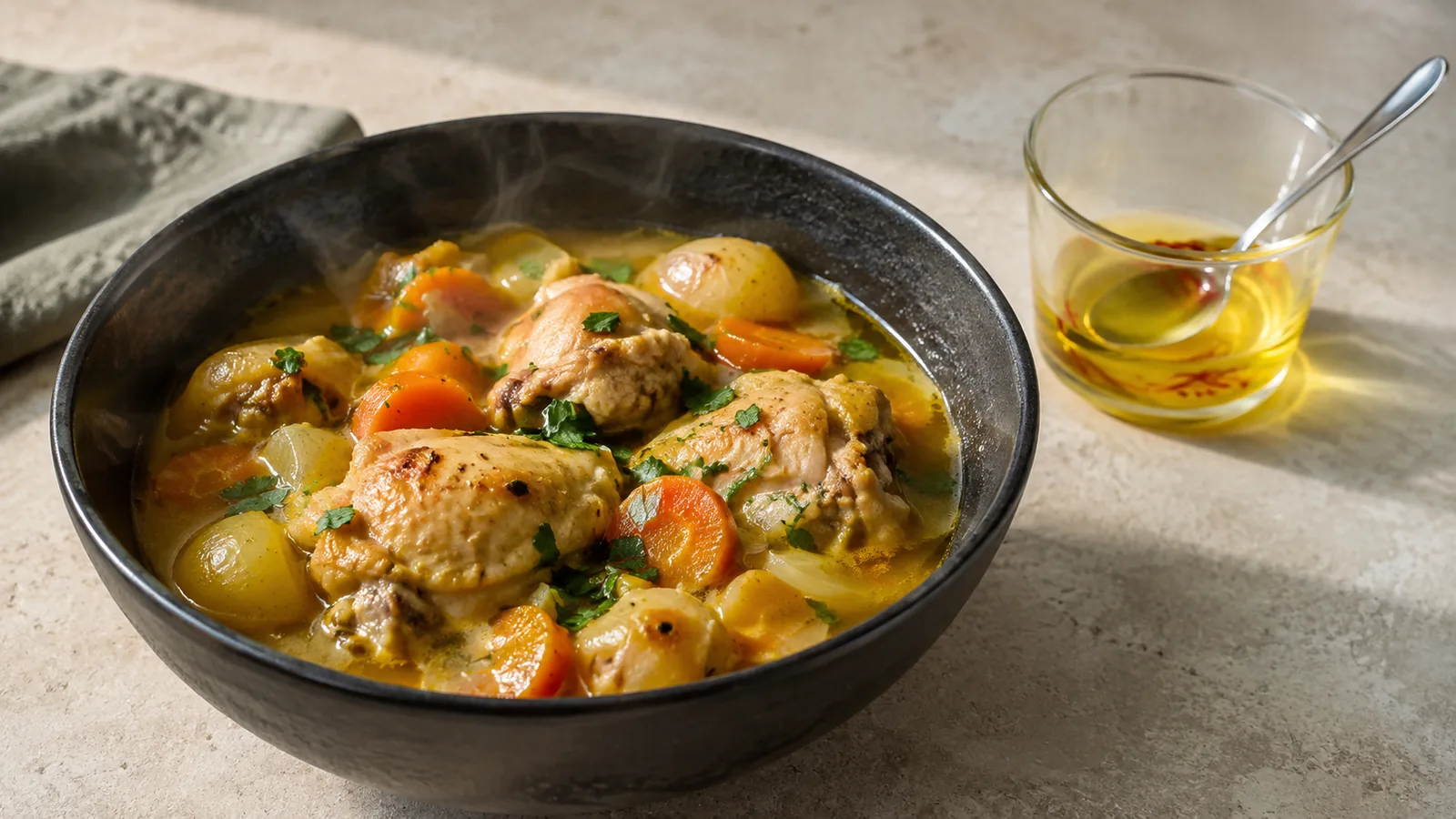
This recipe for cooking tahchin Ghormeh sabzi with Iranian saffron wraps a concentrated herb stew inside saffron-and-yogurt rice, creating a crisp golden shell around a savoury green centre.

Tahchin is also written as tachin, so this dish may appear as ghormeh tahchin or ghormeh tachin. In Turkish-language searches, it can appear as tahçine sabzi. Whatever the spelling, the method depends on thick stew, slightly undercooked rice and steady low heat.
Ingredients
- 2 1/2 cups rice
- 4 tablespoons thick yogurt
- 1 egg
- 3–4 tablespoons liquid oil, plus enough to coat the pot
- 1/2 teaspoon finely ground saffron
- Prepared Ghormeh sabzi stew, as needed for the centre
- Ghormeh sabzi herbs as used in your stew: leeks, parsley, fenugreek and coriander, with spinach or beet leaves according to your recipe
- 1 teaspoon salt for the rice water, reduced if the yogurt or stew is already salty
The original ingredient list names the herbs while the method calls for a finished “vegetable stock.” In context, the filling is prepared Ghormeh sabzi stew rather than loose raw herbs or thin stock. Use your usual version, with its meat and beans if included, but reduce its liquid before assembling the tahchin.
Reduce the Ghormeh sabzi filling
Spoon the prepared stew into a wide pan and simmer gently until it is thick enough to hold in the centre of the rice. It should remain moist and spoonable, but no watery liquid should pool around it.
This corrects a contradiction in the old translation, which describes the filling as both watery and concentrated. A runny stew seeps into the saffron rice, prevents a clean crust and can make the tahchin doughy. Let a hot filling cool slightly before it meets the egg-and-yogurt rice.
Soak and parboil the rice
- Rinse the rice, then soak it in water for 1 hour.
- Bring a saucepan of water to a boil with 1 teaspoon salt and a few drops of oil.
- Drain the soaked rice and boil it over medium heat until the surface is tender but the centre remains firm.
- Break a grain between your fingers. A very small white dot should remain in the middle.
- Drain the rice immediately so it does not continue softening.
Take the rice off the heat a little earlier than you would for ordinary steamed rice. It still has 45–60 minutes to cook inside the tahchin.
Make the Iranian saffron yogurt mixture
Put the thick yogurt in a large bowl and mix in the finely ground saffron. Allow it to stand briefly so the colour begins to spread. This preserves the original cold-yogurt technique.
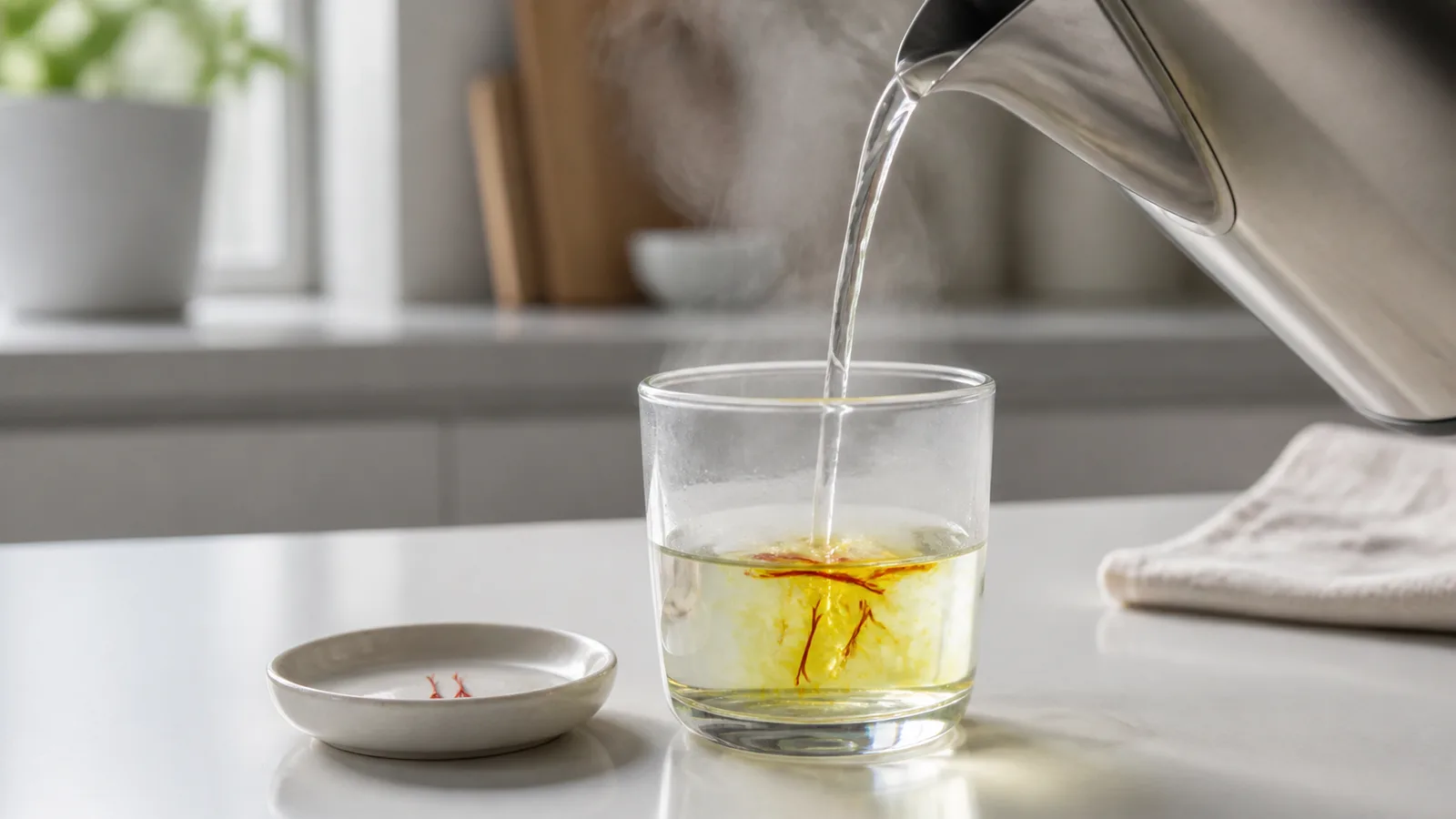
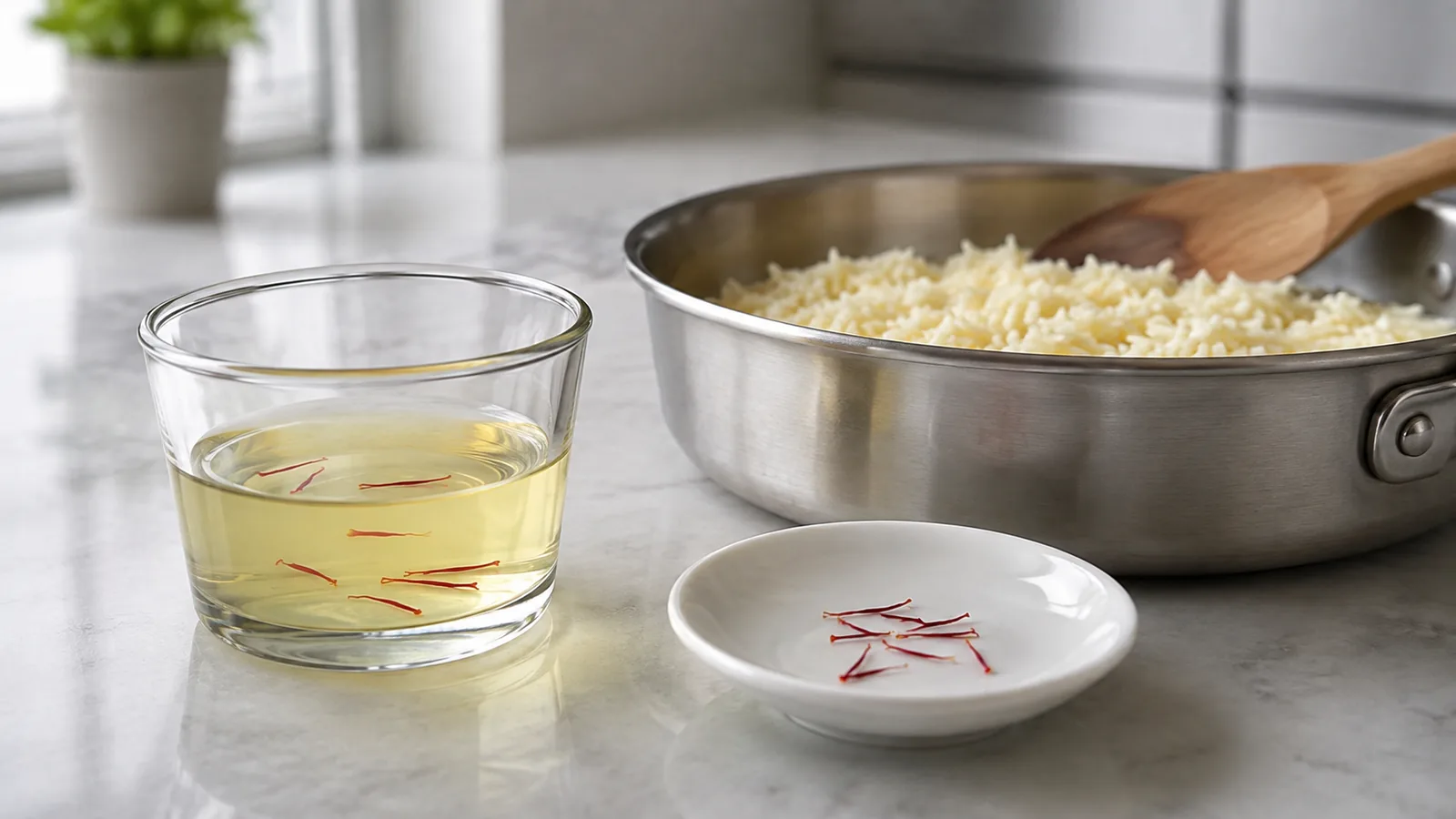
For a more even colour, you may instead bloom the ground saffron in a very small amount of hot water, let it cool, then stir the concentrated infusion into the yogurt. Do not add a thin saffron liquid; excess water works against the firm crust.
Beat the egg with a fork in the bowl, add 3–4 tablespoons oil and combine it with the saffron yogurt. Fold in the drained rice until the grains are evenly coated without being crushed.
Layer the tahchin Ghormeh sabzi
- Coat the bottom and sides of a heavy non-stick pot with oil.
- Add a little more than half of the saffron rice and press it gently into an even base.
- Make a shallow hollow in the centre, leaving a clear border of rice around the wall of the pot.
- Spoon the thick Ghormeh sabzi into the hollow. Keep it away from the sides so the rice can seal the filling.
- Cover completely with the remaining rice and smooth the top with light pressure.
The rice border is what gives this version its neat shape. It also creates the crisp exterior that may lead some cooks to search for tahdig Ghormeh sabzi, although the finished dish is a filled tahchin rather than a separate layer of tahdig.
Cook until the crust is golden
Cover the pot and place it over medium heat for about 10 minutes, just until steam builds. Reduce the heat to low and continue cooking for 45 minutes to 1 hour.
If the Ghormeh sabzi contains meat or you are using refrigerated leftovers, check the centre before serving. The USDA safe minimum temperature chart lists 165°F (74°C) for casseroles and leftovers. Continue cooking if the centre has not reached that temperature.
Listen for a quiet sizzle and watch for steam, but avoid high heat. The base should turn amber and crisp without burning before the rice and filling are hot through.
Turn out the tahchin cleanly
Remove the pot from the heat and leave it for 5–10 minutes. Loosen the edge with a flexible spatula, cover the pot with a wide serving platter and invert both together.
Slice with a sharp knife so each portion shows saffron rice, the concentrated Ghormeh sabzi centre and the golden crust. Serve promptly, while the contrast between the crisp exterior and moist filling is clearest.
Three details that protect the texture
- Use thick yogurt. Thin yogurt adds water and weakens the crust.
- Reduce the stew. The filling should be concentrated, not dry and not runny.
- Keep the filling away from the pot wall. A complete rice border helps the tahchin release as one piece.
Those details preserve what makes tahchin Ghormeh sabzi distinct: Iranian saffron rice on the outside, the familiar herb stew inside, and a crust sturdy enough to turn out without losing the filling.