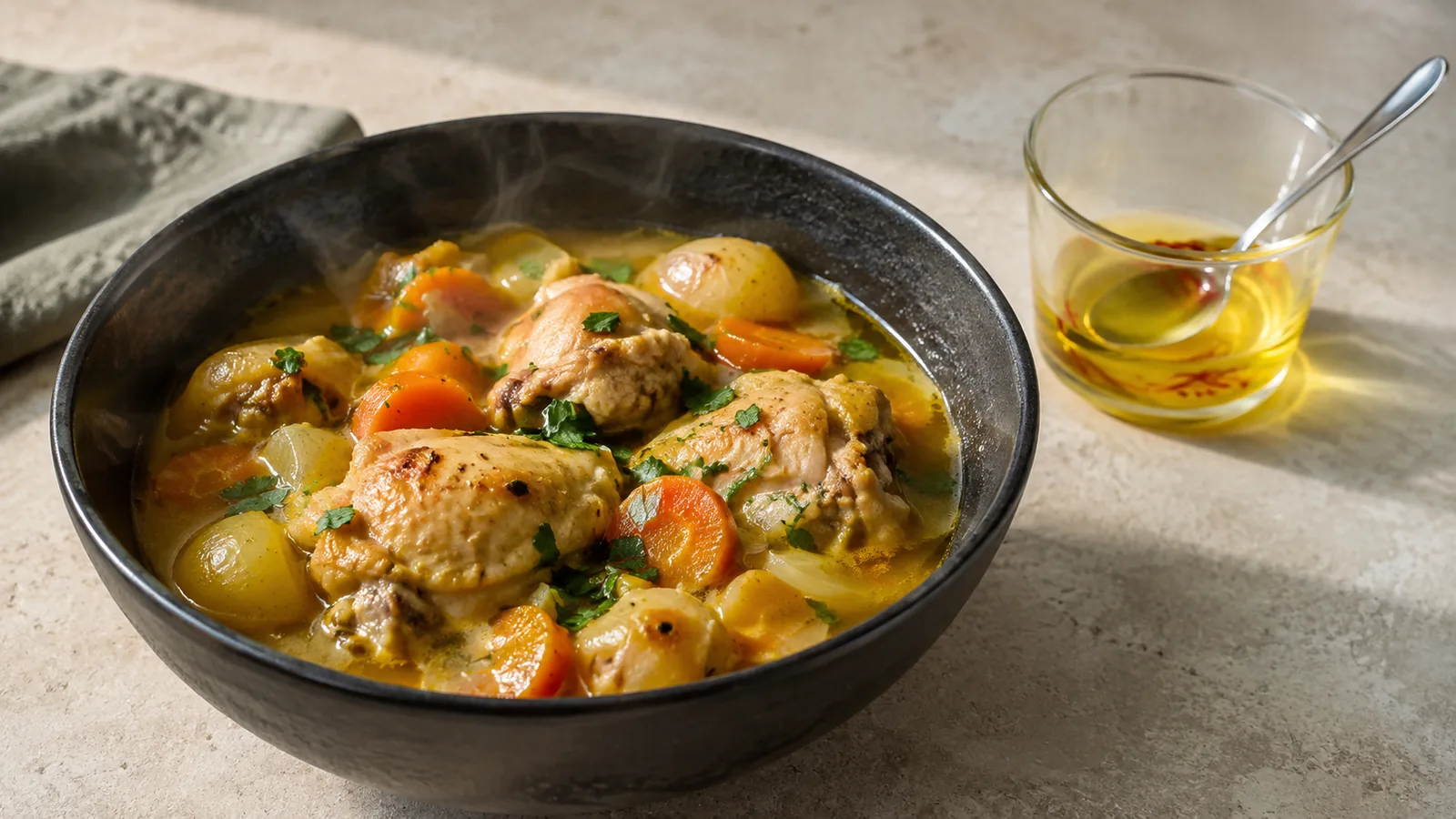
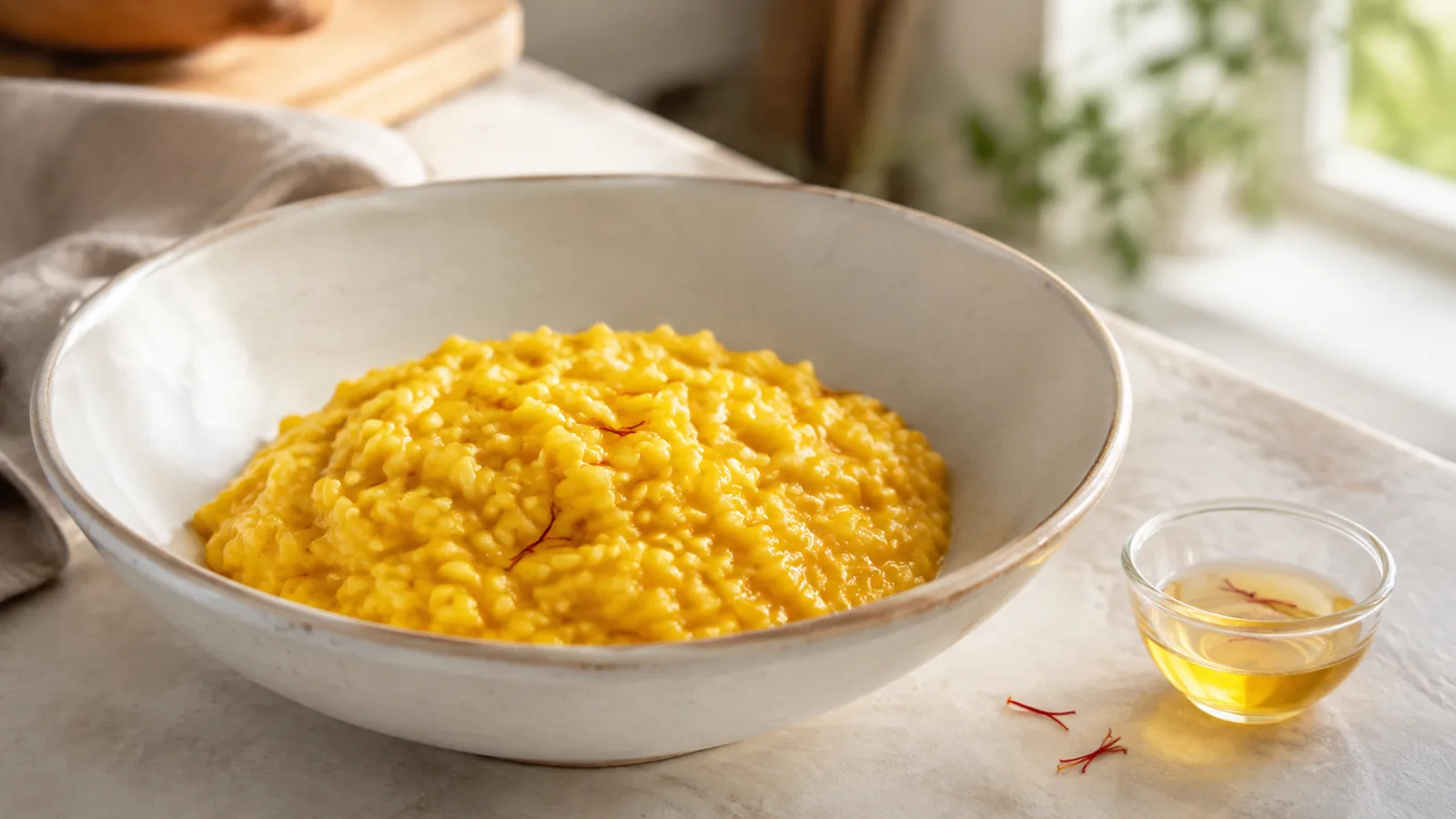
This recipe for cooking rice noodles with scorched chicken and saffron makes an Iranian-style rice-and-noodle dish with a crisp golden chicken layer, then turns it out in one piece for serving.
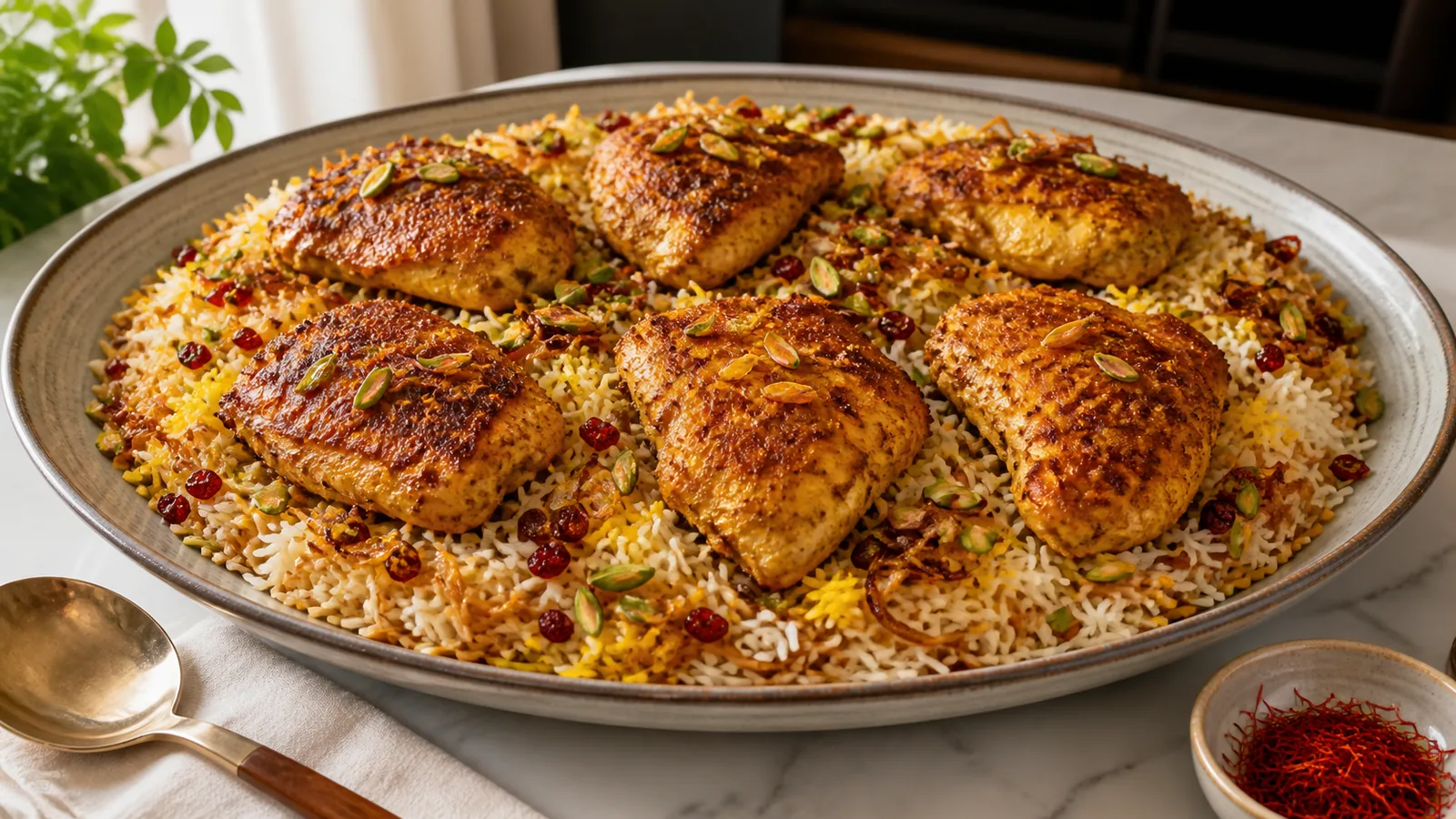
“Scorched chicken” is the wording used in the original recipe, but the aim is deeply golden, crisp-edged chicken rather than burnt meat. Saffron perfumes the fillets while barberries, onion and pistachio add a bright finish.
Ingredients
- 4 cups rice
- 1 pack rice noodles, 400 g
- 6 chicken fillets
- Oil, as needed
- 1 teaspoon turmeric
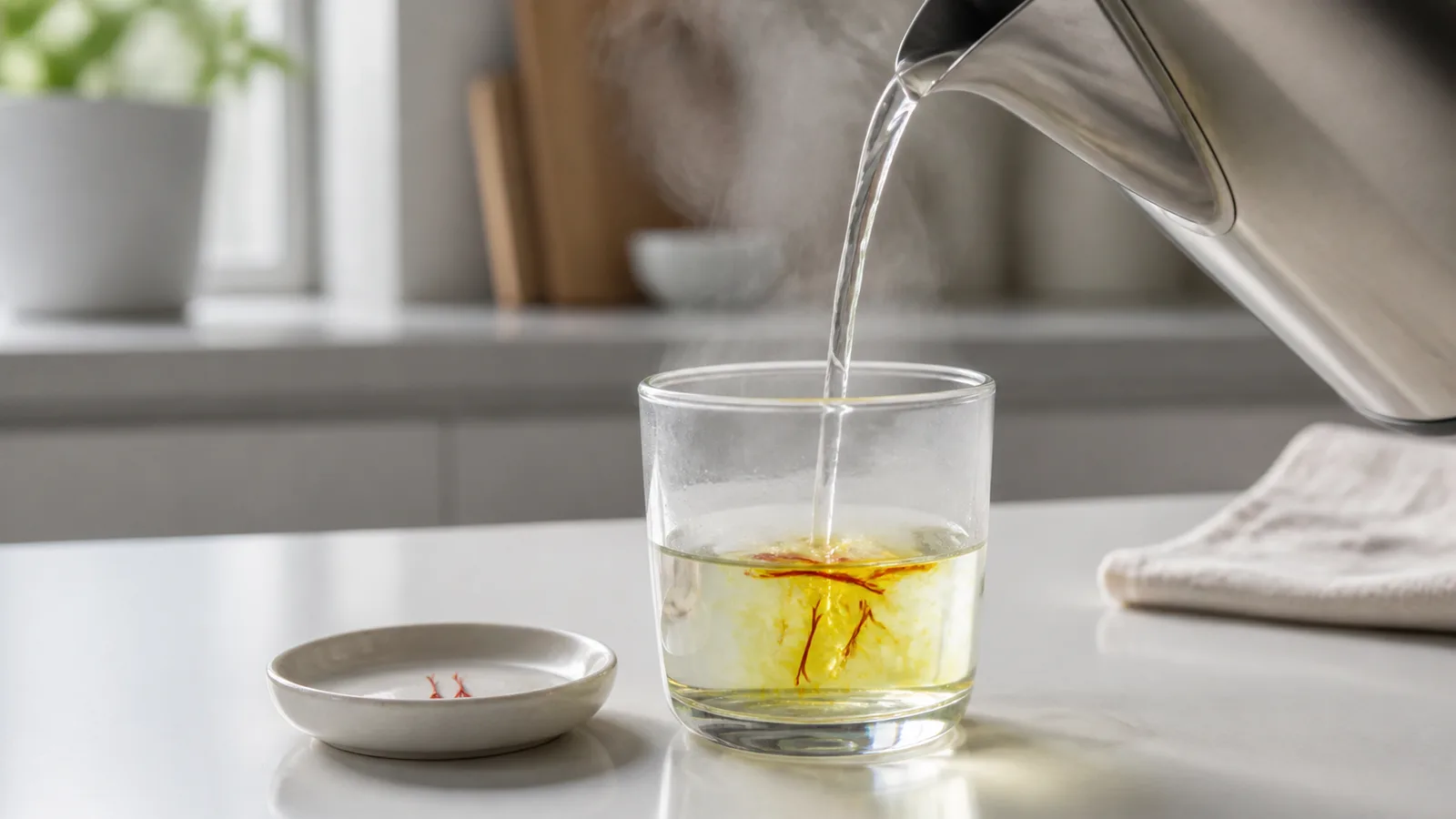
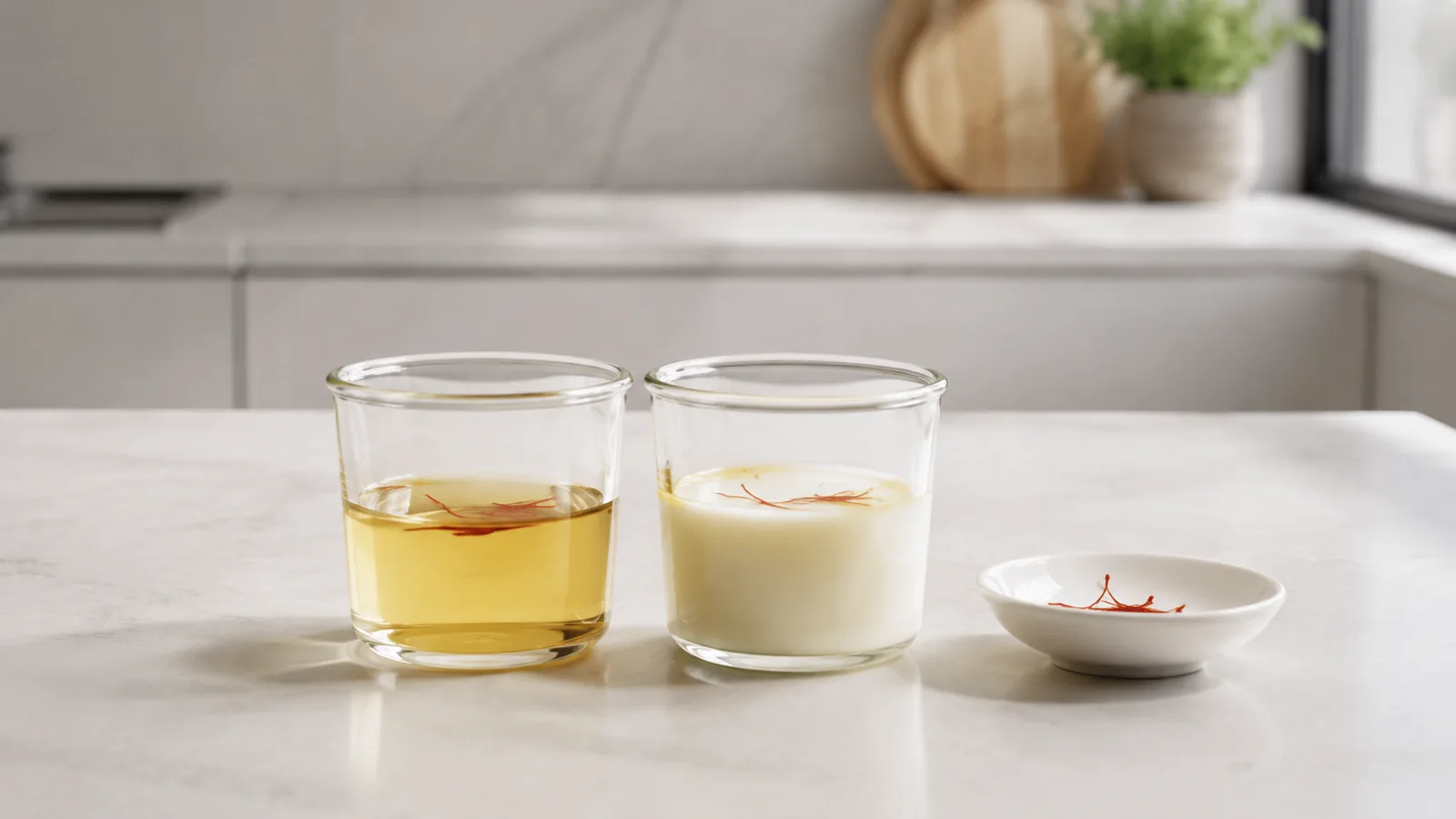
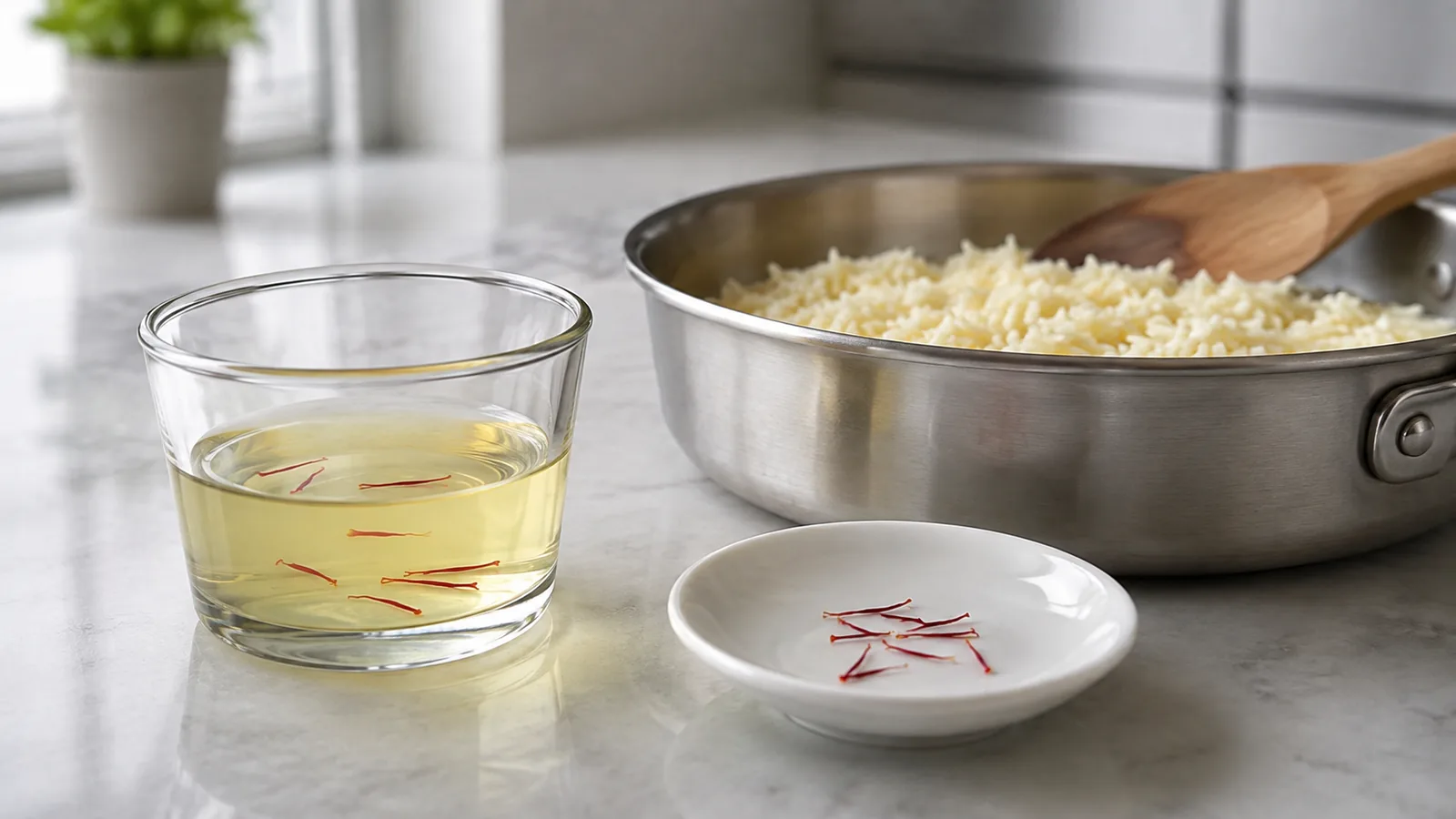
- 1/4 cup saffron infused in hot water
- Salt for the rice water and chicken
- Sliced onion, barberries and sliced pistachios, for the topping
Before you start
Choose a heavy non-stick pot that will release the rice cleanly when inverted. The chicken fillets should fit in one layer across its base. If the pieces are very thick, slice them horizontally so they cook evenly beneath the rice.
Rinse the rice until the water is less cloudy, then soak it for 30 minutes. Rinse the barberries gently and dry them. Keep the saffron infusion ready so it can be divided between the chicken and, if desired, a small portion of the rice.
Parboil the rice and noodles
- Bring a large pot of salted water to a rolling boil.
- Drain the soaked rice and add it to the boiling water. Cook for 5 minutes.
- Add the rice noodles. Continue only until the noodles are flexible and the rice is tender at the surface but still firm in the centre.
- Drain immediately. Taste a grain: it should be ready to finish cooking in steam, not fully soft.
Rice noodles soften quickly, so use their texture rather than a fixed extra cooking time. Overcooking at this stage makes the final dish compact and sticky.
Build the scorched chicken layer
Season the chicken lightly with salt. Heat enough oil to coat the base of the final pot over medium heat, add the turmeric and arrange the fillets in one layer. Sear briefly on each side so the surface is no longer raw and begins to colour.
Lower the heat, arrange the chicken neatly for the final presentation and spoon most of the saffron infusion over it. If the fillets are long, curve them gently rather than piling them on top of one another. An even layer is essential for both browning and cooking.
Steam the rice noodles with saffron chicken
- Spoon the drained rice-and-noodle mixture over the chicken without pressing it down.
- Shape the rice into a gentle mound so steam can circulate. Drizzle any remaining saffron over a small area for colour.
- Cover the pot with a lid wrapped in a clean kitchen towel, keeping the towel securely away from the flame.
- Cook over low heat for about 40 minutes. Adjust the heat if you smell scorching; the base should brown gradually rather than burn.
Cooking time alone cannot confirm that the chicken is safe. Before serving, check the thickest fillet with a food thermometer. The USDA safe minimum temperature chart specifies 165°F (74°C) for poultry. If it has not reached that temperature, cover the pot and continue cooking.
Prepare the barberry and pistachio topping
While the rice steams, cook the sliced onion in a little oil over low to medium heat. Add the turmeric as it softens. When the onion turns golden, add the rinsed barberries and sliced pistachios.
Stir for only 1–2 minutes. Barberries can darken and taste bitter if left over high heat, while the pistachios need only enough warmth to take on the flavour of the onion and turmeric.
Turn out and serve
Take the cooked pot off the heat and leave it for a few minutes. Run a flexible spatula carefully around the edge, place a wide serving platter over the pot and invert both together in one confident movement.
The chicken should appear on top as the golden base of the moulded rice noodles. Scatter the onion, barberry and pistachio mixture over and around it. Serve while the crisp chicken layer is hot and the saffron aroma is at its clearest.
How to avoid burning the base
Use steady low heat after the rice goes into the pot, and do not let the oil run dry. A pot with a thick, even base gives more control than thin cookware. If your burner runs hot, place a heat diffuser underneath.
The finished layer may be called scorched chicken in the translated recipe, but blackened patches are not the goal. A rich amber surface, fully cooked chicken and rice that releases cleanly are the signs that the dish is ready.