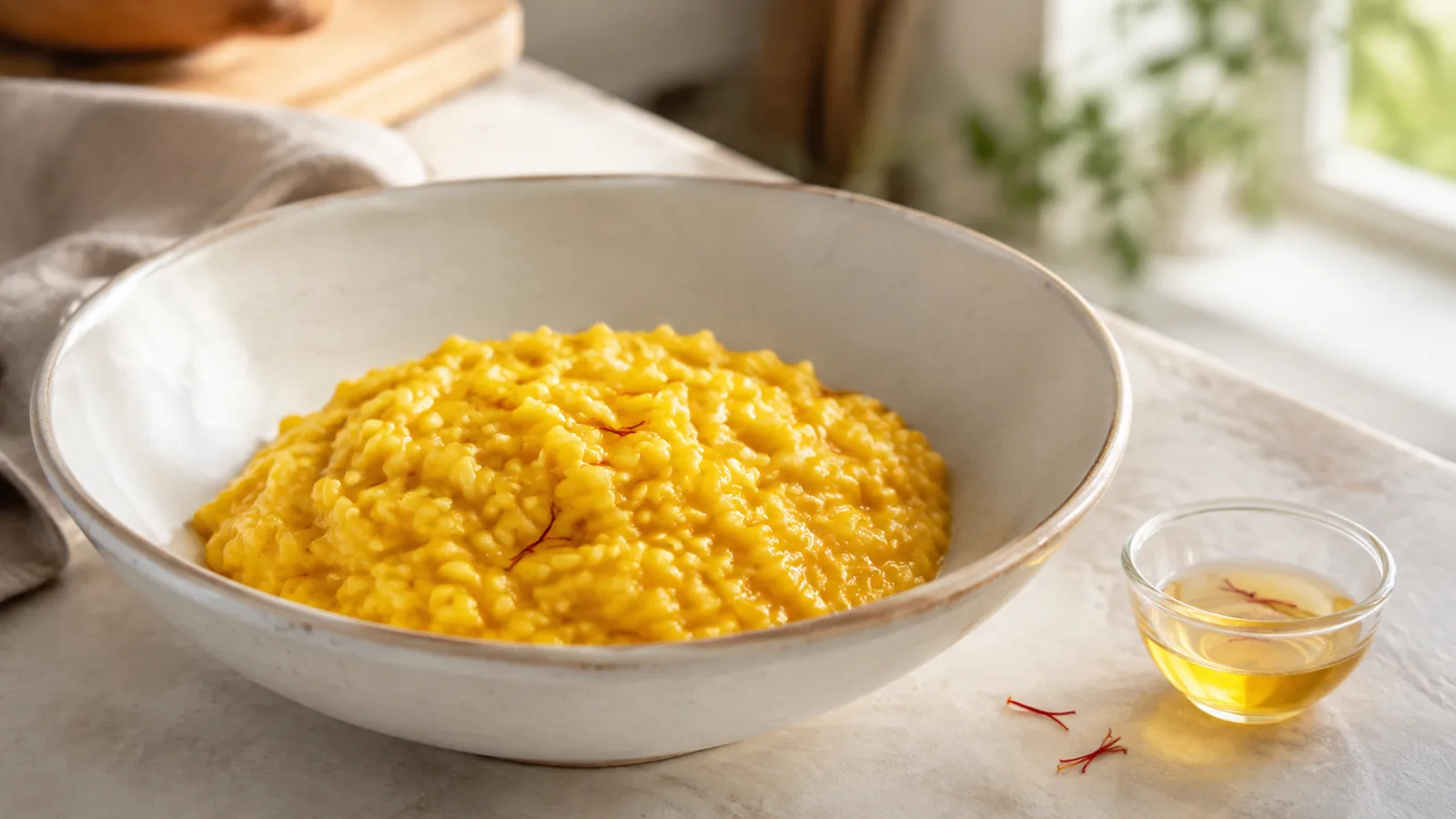
This recipe for cooking leaf kebab with Iranian saffron uses thin, broad strips of tender beef or lamb, an onion-and-saffron marinade, and saffron butter brushed on as the meat grills.
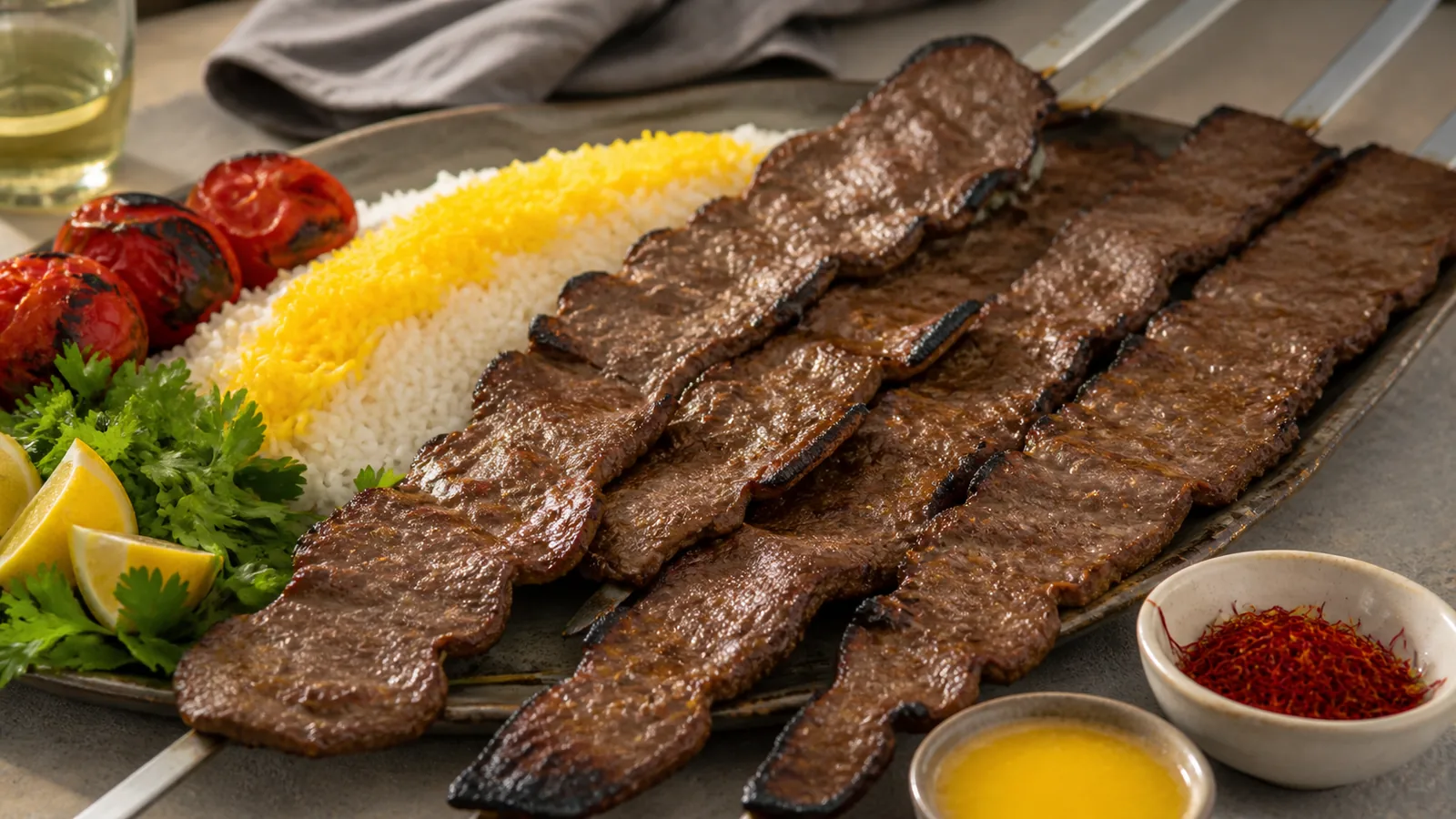
Leaf kebab takes its name from the flat shape of the meat. Unlike a minced kebab, it begins with a whole tender cut that is sliced, gently flattened and threaded onto a wide skewer so the pieces meet without bunching.
Ingredients for leaf kebab
- 500 g trimmed tender beef or lamb fillet
- 2 medium onions
- 4 tablespoons olive oil
- 50 g butter
- Finely ground saffron, as needed
- Black pepper, to taste
- Salt, added after skewering
- Optional: 1 teaspoon finely grated fresh kiwi for brief tenderising
- Optional: small pieces of lamb tail fat for a richer kebab
Choose an evenly shaped, tender cut with tough surface membrane removed. “Strained meat” in the older translation refers to trimmed meat suitable for slicing, not minced meat.
Cut and flatten the meat
Do not rinse the raw meat. The USDA guidance on washing food advises against washing raw beef, pork, lamb or veal because splashing can spread bacteria around the kitchen. Pat the meat dry with paper towel instead; a dry surface is also easier to control on the board.
Cut the meat into broad strips. Aim for pieces about four fingers wide, retaining the proportion given in the original recipe. If a strip is very thick, slice it horizontally into two thinner pieces before flattening it.
Place each piece between sheets of baking paper. Use a smooth meat mallet or the flat side of a suitable kitchen tool to pound it gently to an even thickness of about 5 mm (half a centimetre). The goal is a broad leaf-like strip, not torn or shredded meat.
Marinate with onion and saffron
- Finely chop the onions and place them in a non-reactive bowl.
- Add the olive oil, black pepper and a portion of the ground saffron.
- Add the flattened meat and turn each piece so the marinade reaches both sides.
- Cover and refrigerate for at least 8 hours.
Keep the bowl refrigerated throughout the marinating time. The original recipe leaves the quantity of saffron open; use enough to perfume the meat without making a watery marinade.
The optional kiwi needs separate care. The old note recommends one teaspoon for softer meat, but fresh kiwi tenderises much faster than onion. If you use it, add it only for a brief period near the end of marinating and watch the surface closely. Leaving it on for the full 8 hours can spoil the leaf-like texture.
Thread leaf kebab onto skewers
Lift the meat from the marinade and remove clinging onion pieces, which can burn over charcoal. Lay one strip flat on the work surface. Hold it steady with one hand and guide a wide, flat skewer through it from beneath, working slowly and keeping your fingers clear of the point.
Add the remaining pieces so their edges meet closely on the skewer. They should form a continuous strip rather than overlap in thick folds. If using lamb tail fat, add only small pieces between sections so the meat still cooks evenly.
Season the skewered meat with salt, as specified in the original method. Keep the prepared skewers refrigerated until the charcoal is ready.
Make the saffron butter
Melt the 50 g butter gently. Stir in a small amount of finely ground saffron or a few drops of concentrated brewed saffron. Set the mixture beside the grill with a clean brush; do not let that brush touch raw meat and return to the butter.
Grill over charcoal
Prepare an even bed of glowing charcoal and wait until open flames have settled. Arrange the skewers over steady heat and turn them frequently. The meat is only about half a centimetre thick, so attentive, even cooking matters more than aggressive heat.
Brush the kebab lightly with saffron butter as it grills, using a clean brush. Avoid repeated heavy coats that drip onto the charcoal and cause flare-ups.
For whole cuts of beef or lamb, the USDA safe minimum temperature chart gives 145°F (63°C), followed by a 3-minute rest. Check the thickest part without touching the skewer. Very thin sections may cook quickly, so remove the kebab before it becomes dry.
Serve the saffron leaf kebab
Slide the meat directly onto hot rice and spoon over any remaining clean saffron butter. Rice helps retain the juices; the older recipe specifically prefers it to bread because a thin kebab can dry quickly once removed from the skewer.
Serve with grilled tomatoes, sour lemon wedges and fresh parsley. Bread can still be offered at the table, but keep the kebab over the warm rice until it is divided.
Details that protect the leaf-like texture
- Flatten evenly. Thick and thin patches will finish at different times.
- Do not tear the meat. Gentle mallet work keeps each broad strip intact.
- Remove onion before grilling. Loose pieces burn long before the meat is ready.
- Use kiwi sparingly, if at all. A brief treatment is enough for an already tender cut.
- Turn frequently. Broad, thin meat cooks best over steady charcoal heat.
A well-made leaf kebab should remain recognisably broad and tender, with a light saffron aroma and browned edges rather than a hard, dry surface.