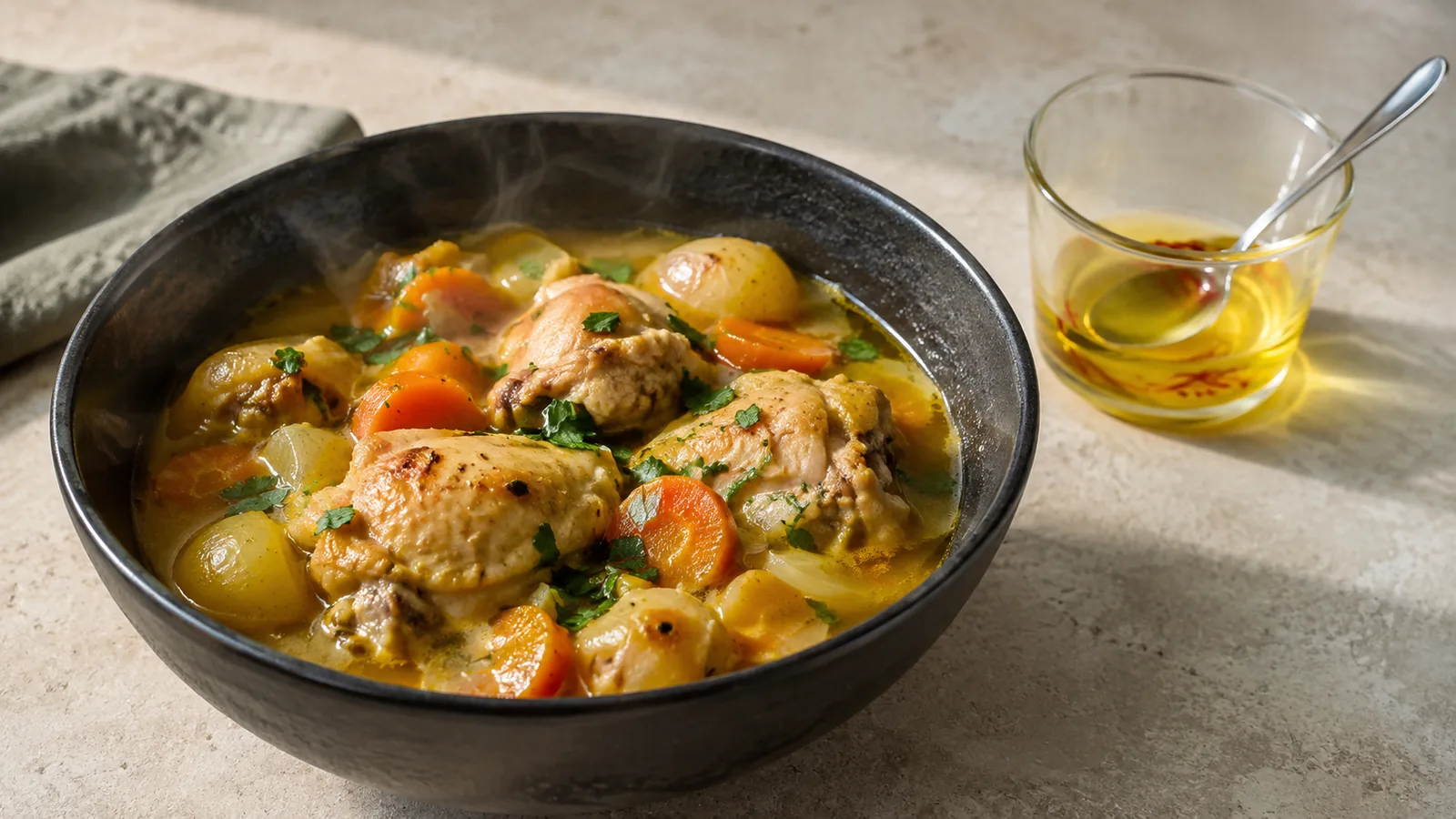
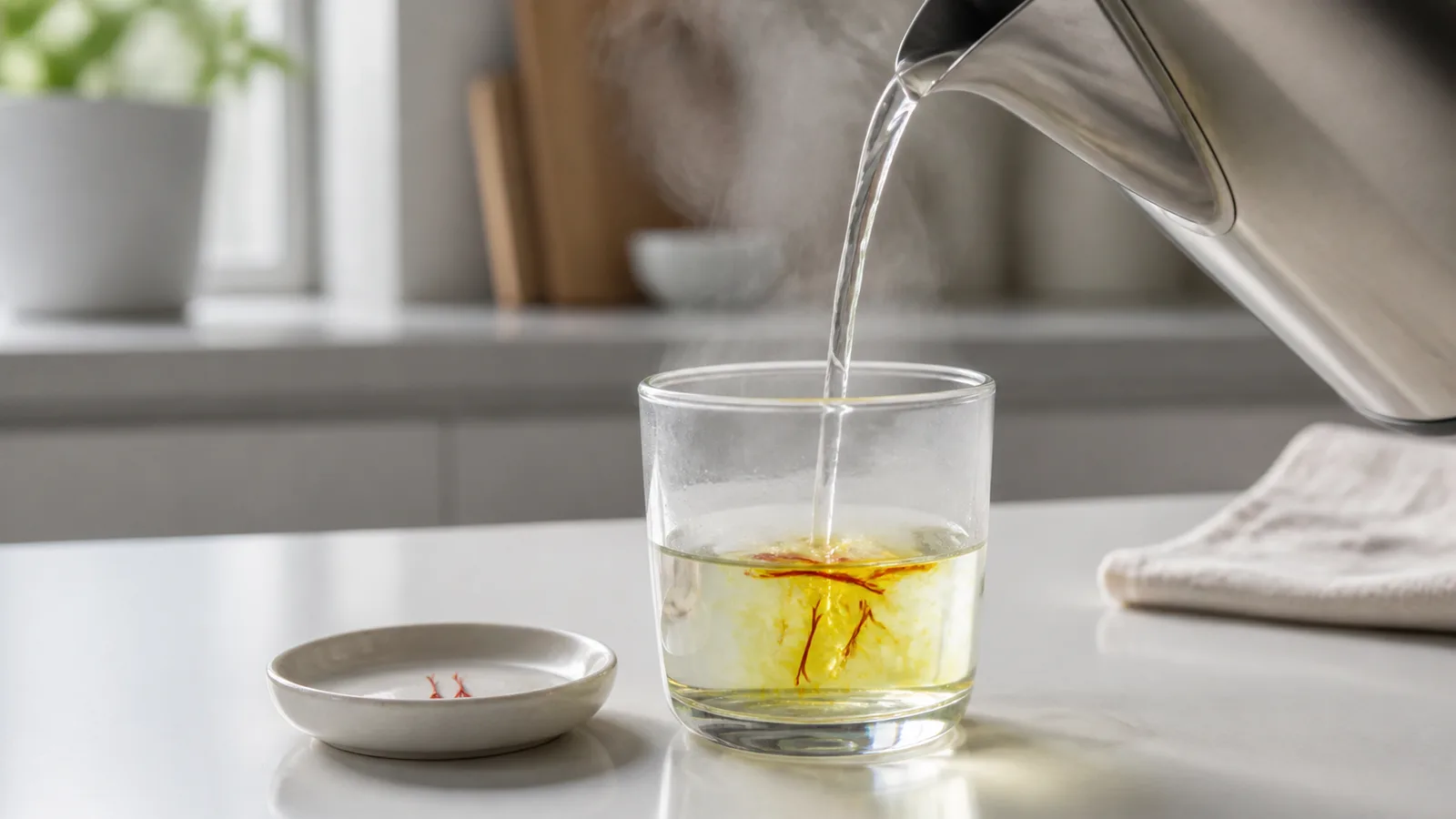
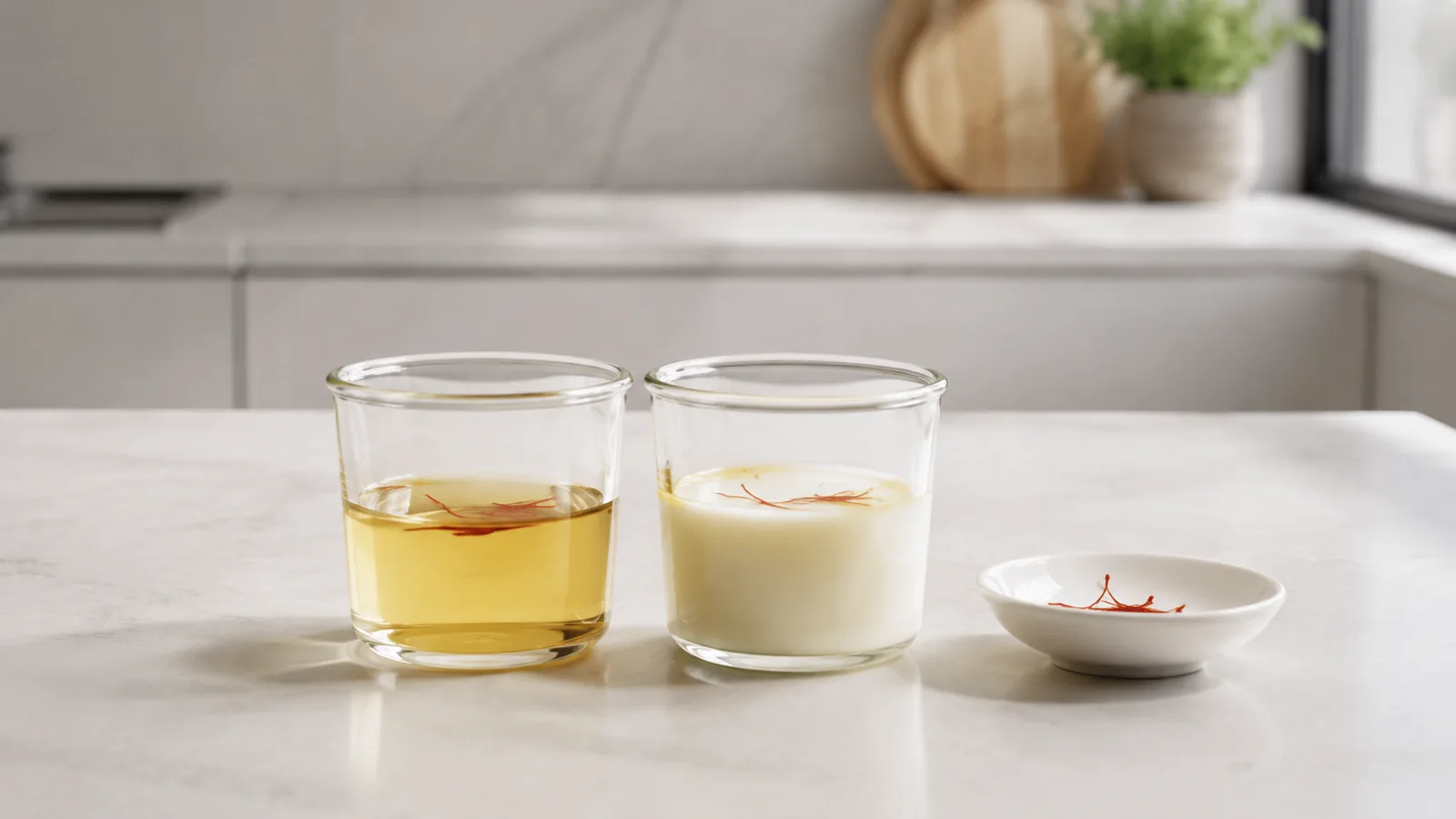
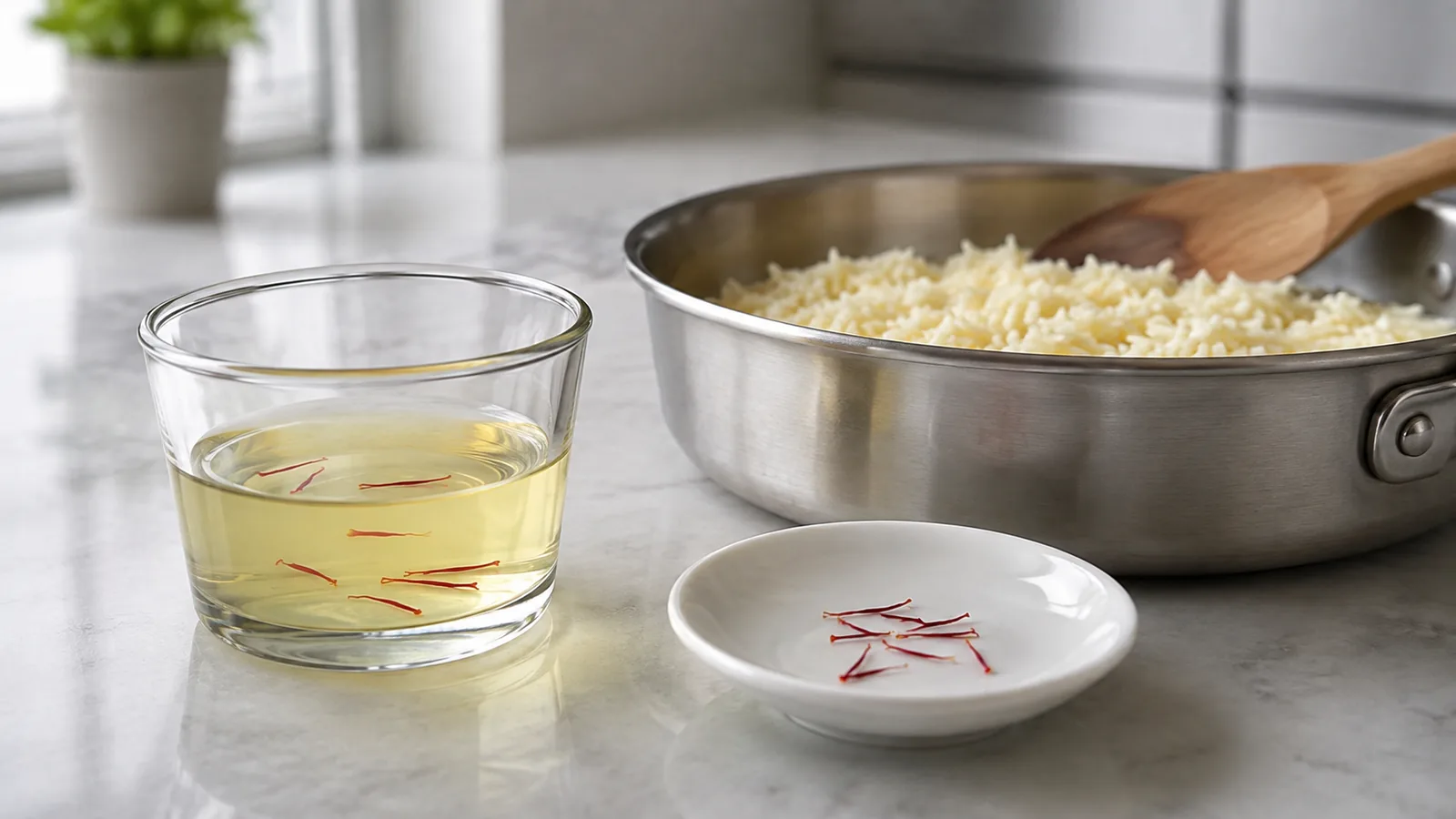
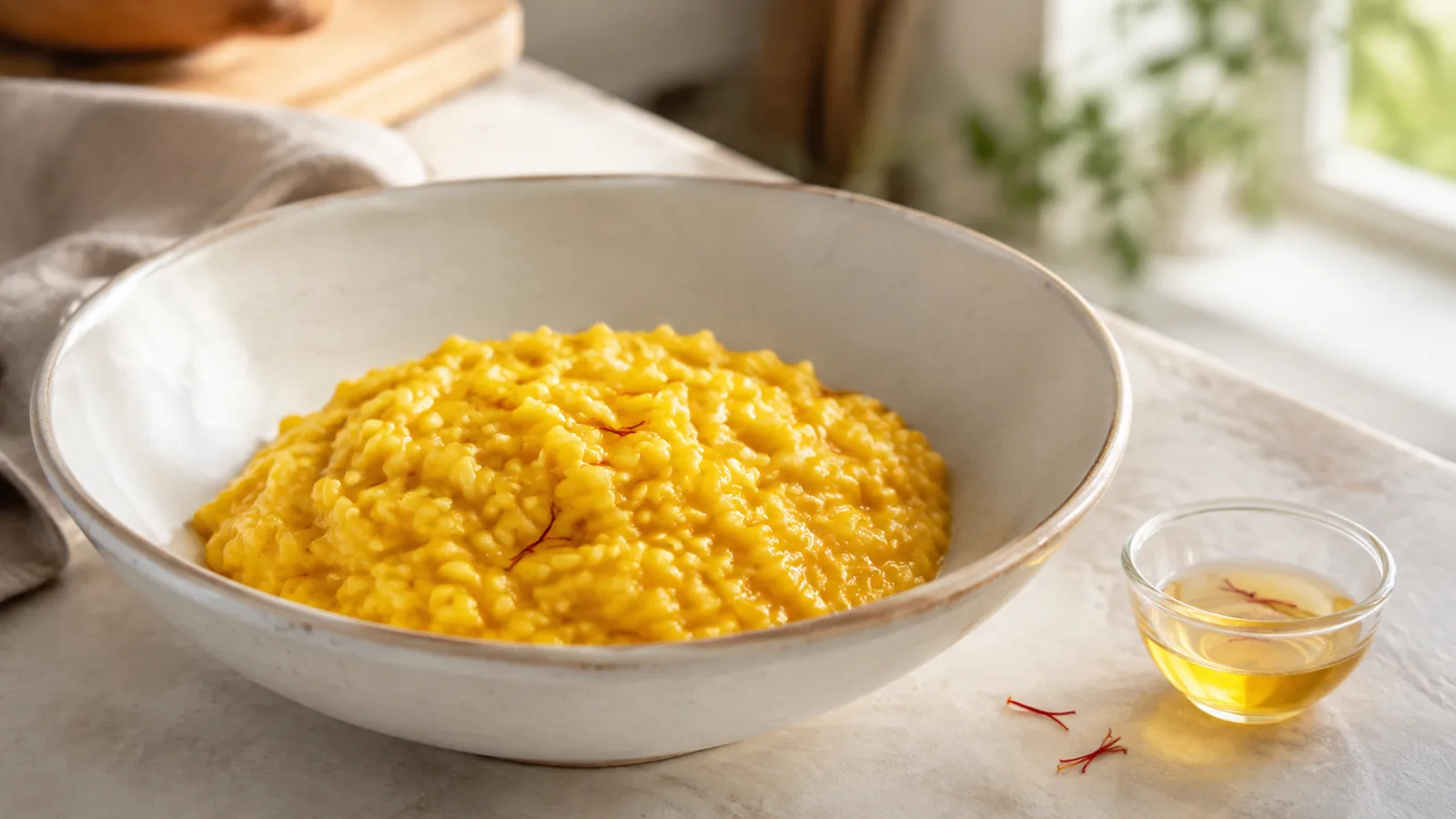
This recipe for cooking kuku two layers of potatoes and chicken with saffron pairs a crisp potato base with a saffron chicken-and-carrot layer and barberries in the middle.
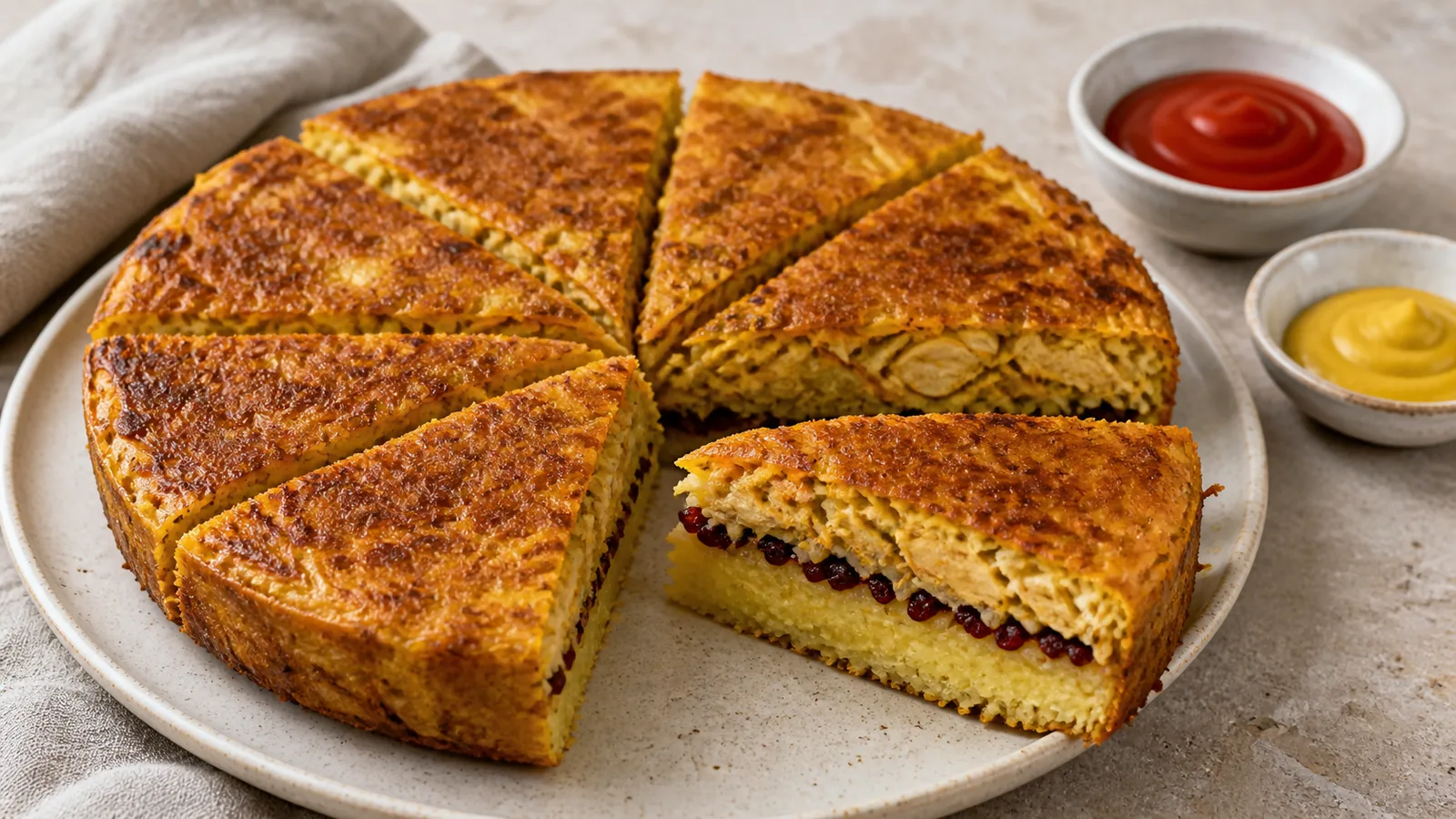
The two mixtures are prepared separately, then cooked together in one pan. Eight eggs hold the layers in place: four bind the potato kuku, while four bind the shredded chicken and carrot topping.
Ingredients for kuku two layers
- 1 chicken thigh
- 3 medium onions
- 2 medium potatoes
- 2 carrots
- 8 eggs, divided
- 2 tablespoons barberries
- ¼ teaspoon ground saffron, bloomed
- Up to 1 cup cooking oil, divided
- Salt, black pepper and turmeric, as needed
- Mustard and tomato sauce, optional, for serving
Rinse the barberries in cool water and drain them thoroughly. Grated potato, carrot and onion also need careful draining; excess liquid makes the two-layer kuku difficult to turn.
Cook and shred the chicken
Halve one onion and place it in a small saucepan with the chicken thigh, a pinch of salt and one cup of water.
Cover and simmer until the chicken is cooked through and tender. Uncover near the end so the remaining liquid can reduce rather than carrying extra moisture into the kuku.
Let the chicken cool, remove the skin and bone, then shred or chop the meat finely.
Make the potato kuku mixture
Peel the potatoes and finely grate them with one onion. Put the mixture in a clean towel or fine sieve and press out as much liquid as possible.
Transfer it to a bowl. Add four eggs, salt, black pepper and turmeric, then mix only until evenly combined.
Make the saffron chicken and carrot mixture
Finely grate the remaining onion and both carrots. Squeeze out their excess moisture before placing them in a second bowl.
Add the remaining four eggs, shredded chicken, bloomed saffron, salt and black pepper. Stir until the chicken and vegetables are evenly distributed.
Cook the first potato layer
Heat enough oil to cover the base of a wide nonstick or well-seasoned frying pan. Pour in the potato mixture and spread it to an even thickness.
Cover the pan and cook over low heat for about five minutes, until the base has begun to brown and the surface is no longer completely liquid.
Add the barberries and chicken layer
Scatter the two tablespoons of barberries over the potato layer, keeping a narrow border at the edge.
Spoon the chicken-and-carrot mixture over the barberries in small amounts, then level it gently without pressing through the potato. Cover and cook on low heat for another five minutes so the upper layer begins to set.
Continue cooking until the center is firm enough to cut cleanly. If the base colors too quickly, lower the heat rather than adding more oil all at once.
Cut and turn the two-layer kuku
Cut the kuku into four quarters while it remains in the pan. Open the cuts slightly with a spatula so heat can reach the center.
Divide each quarter once more to make eight wedges. Recut along the same lines as needed, then turn each wedge carefully and brown the second side.
Briefly place the wedges on their cut sides if any pale egg mixture remains visible. Do not keep the kuku in the pan after it is fully set, or the potato layer will become dry.
Serve the potato and chicken kuku
Move the wedges to a platter with the potato side and saffron chicken side both visible. Serve warm or at room temperature.
A little mustard or tomato sauce can be offered on the side, as in the original recipe. Keep the sauce off the top until serving so the layered surface remains clear.
Checks for clean layers
- Squeeze the grated vegetables: moisture is the main reason kuku layers slide apart.
- Let the base begin to set: adding the upper mixture too early pushes it into the potatoes.
- Spoon rather than pour: small portions distribute the chicken layer without disturbing the barberries.
- Keep the heat low: both egg mixtures need time to set before the potato base becomes dark.
- Turn wedges, not the whole pan: eight smaller pieces are easier to handle without splitting the layers.