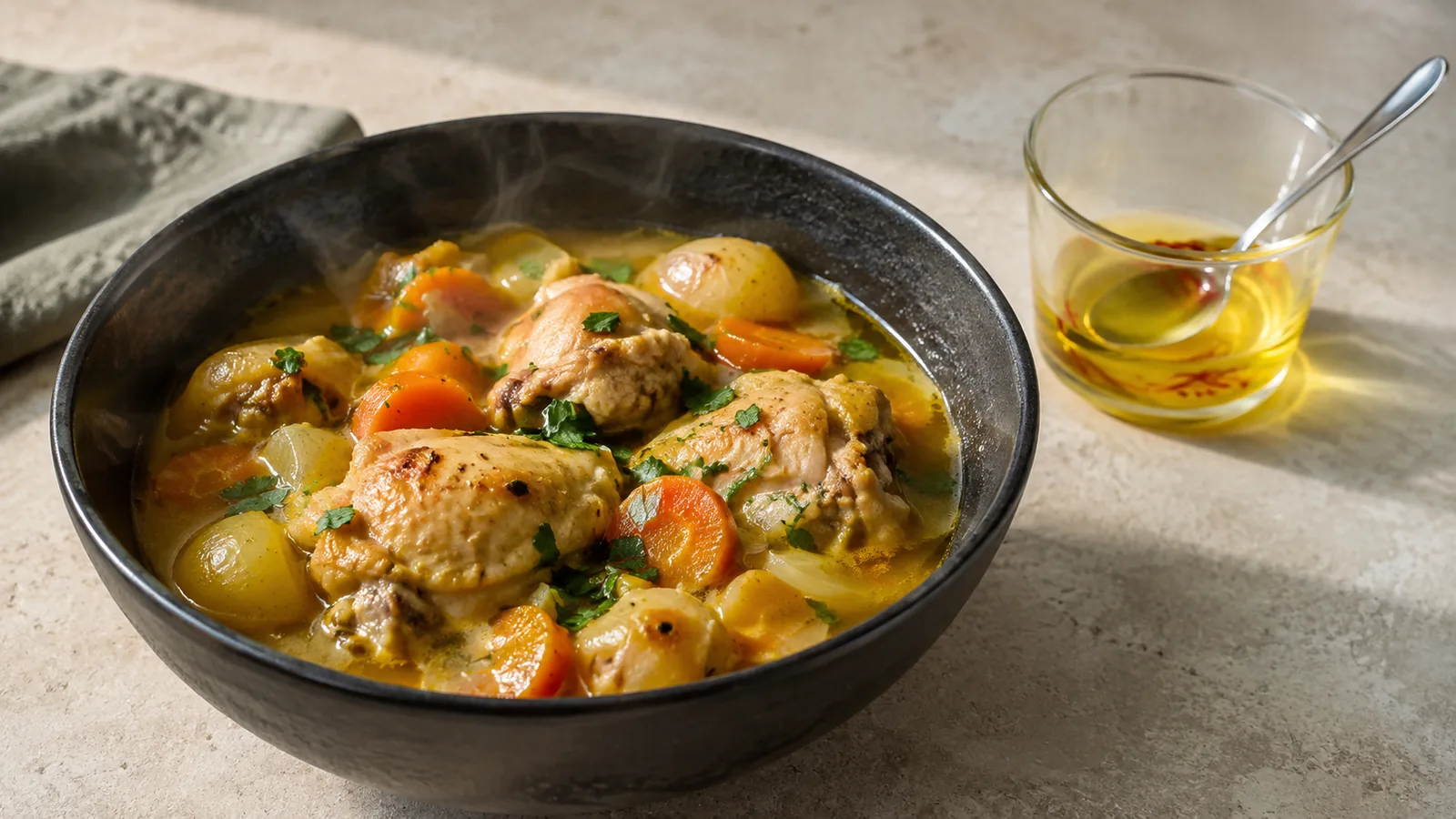
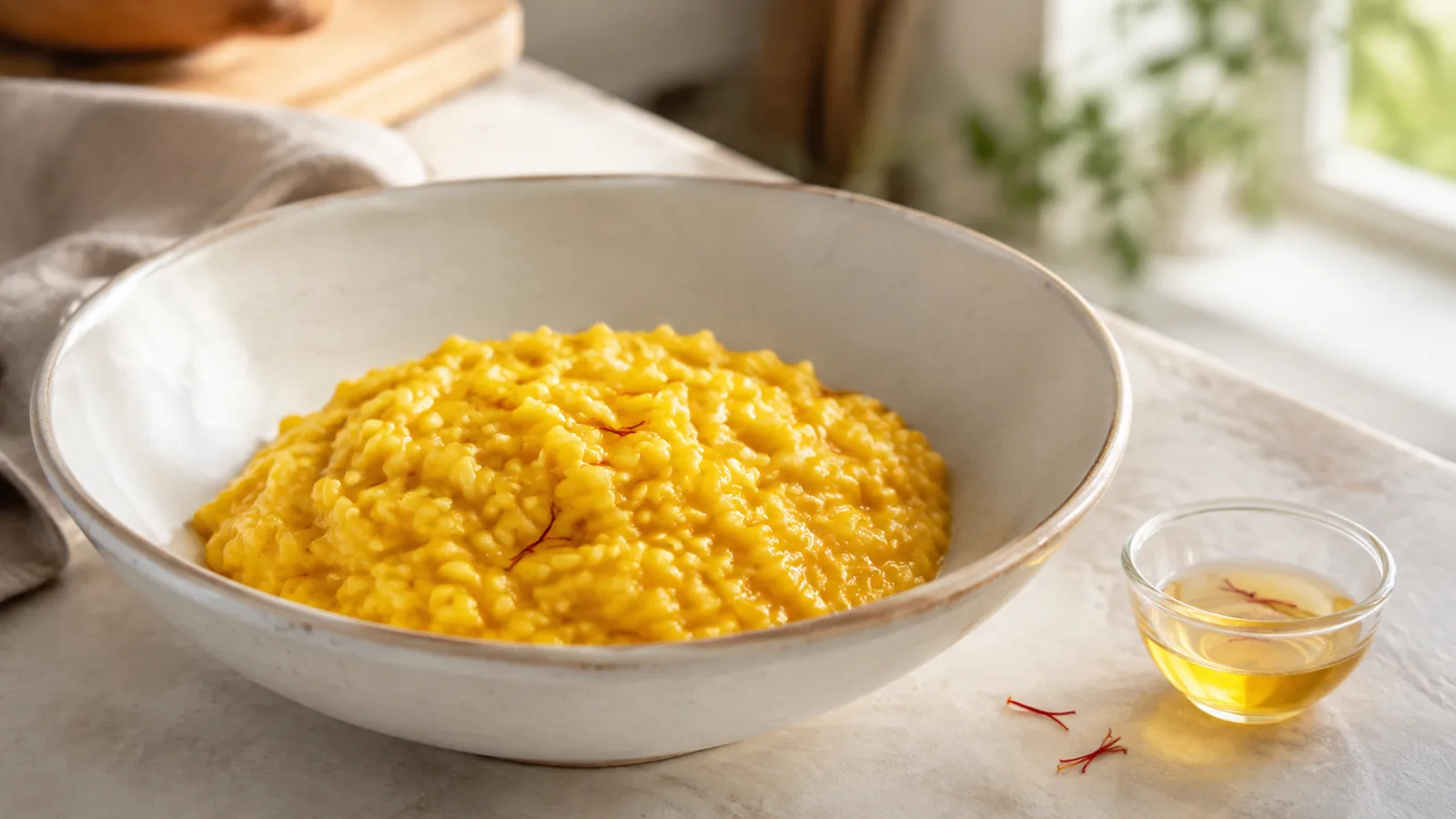
This recipe for cooking chicken steak with orange sauce and Iranian saffron pairs thin, pan-seared chicken breasts with a glossy mango-orange sauce that is tart, lightly sweet and scented with saffron.
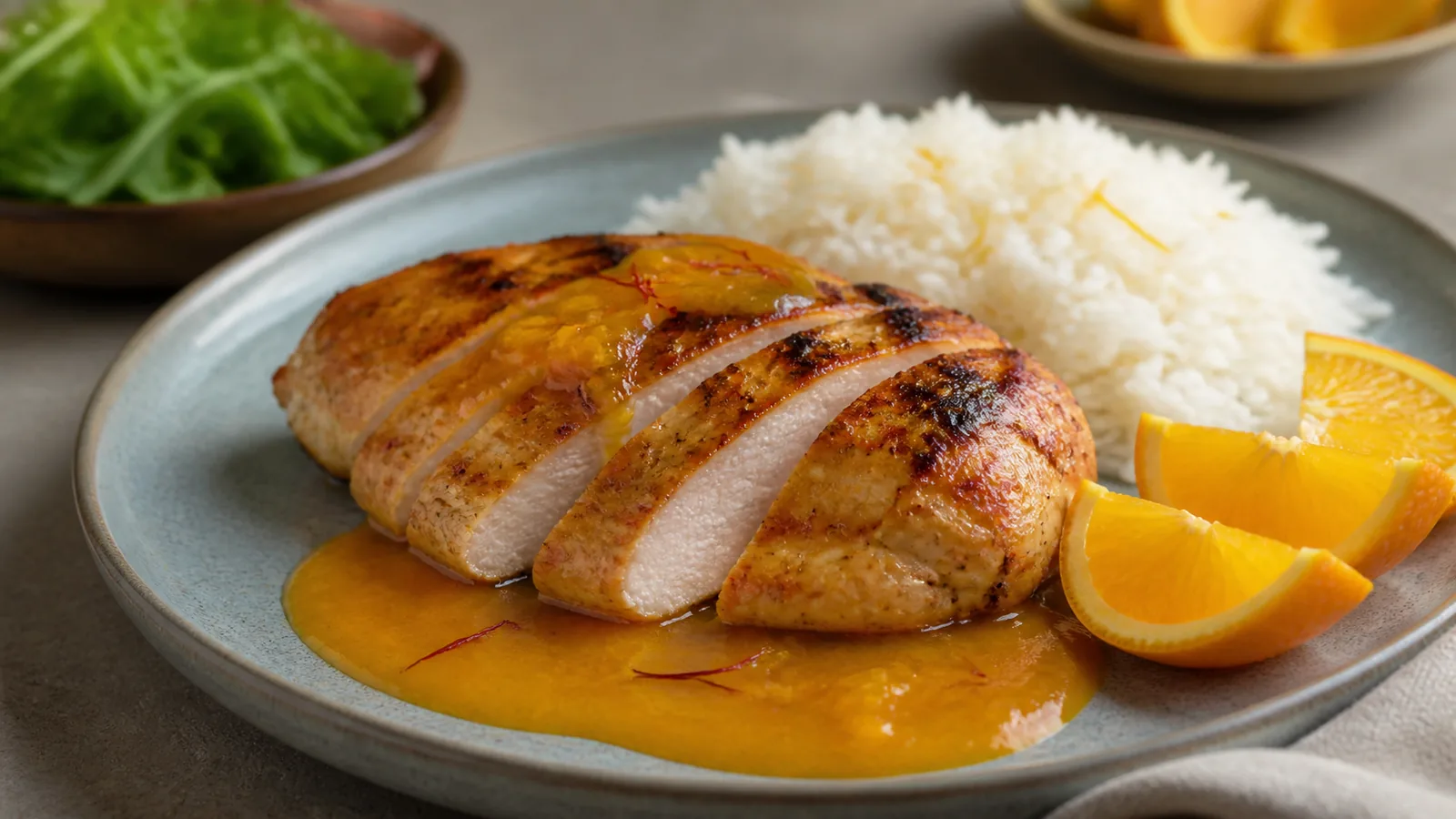
“Chicken steak” here means a boneless chicken breast flattened to an even thickness, not a cut of beef. It is a quick saffron steak recipe once the three-hour marinade is finished, and the sauce comes together in the same time the cooked chicken rests.
Ingredients for saffron chicken steak
For the chicken and marinade
- 4 boneless, skinless chicken breasts
- 1 medium onion, thinly sliced
- 2 tablespoons bloomed Iranian saffron
- 1 tablespoon fresh lemon juice
- 1–2 tablespoons olive oil, plus a little for the pan
- Salt and black pepper, as needed
- A mild poultry spice blend, as needed
For the mango-orange sauce
- 2 cups fresh orange juice
- 2 cups ripe mango cubes
- 1 tablespoon cornstarch
- 1 tablespoon vinegar
- Salt and black pepper, to taste
- 1 teaspoon bloomed saffron, optional if some remains from the measured amount
The original ingredient list used the phrase “one tablespoon of jam” beside lemon juice. That is a translation of the spoon size, not an instruction to add jam. A standard tablespoon of lemon juice gives the marinade the intended acidity.
Bloom the Iranian saffron
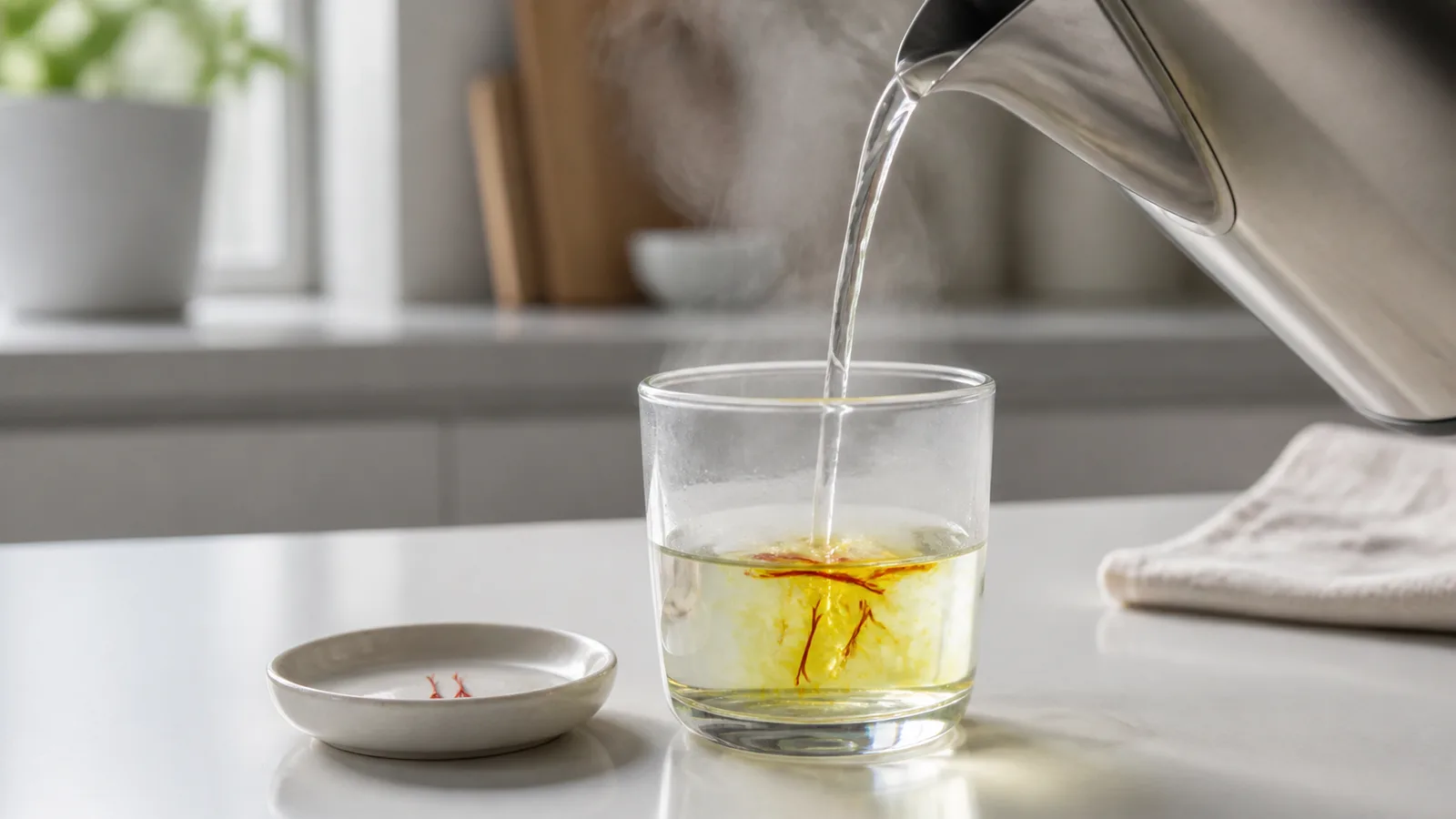
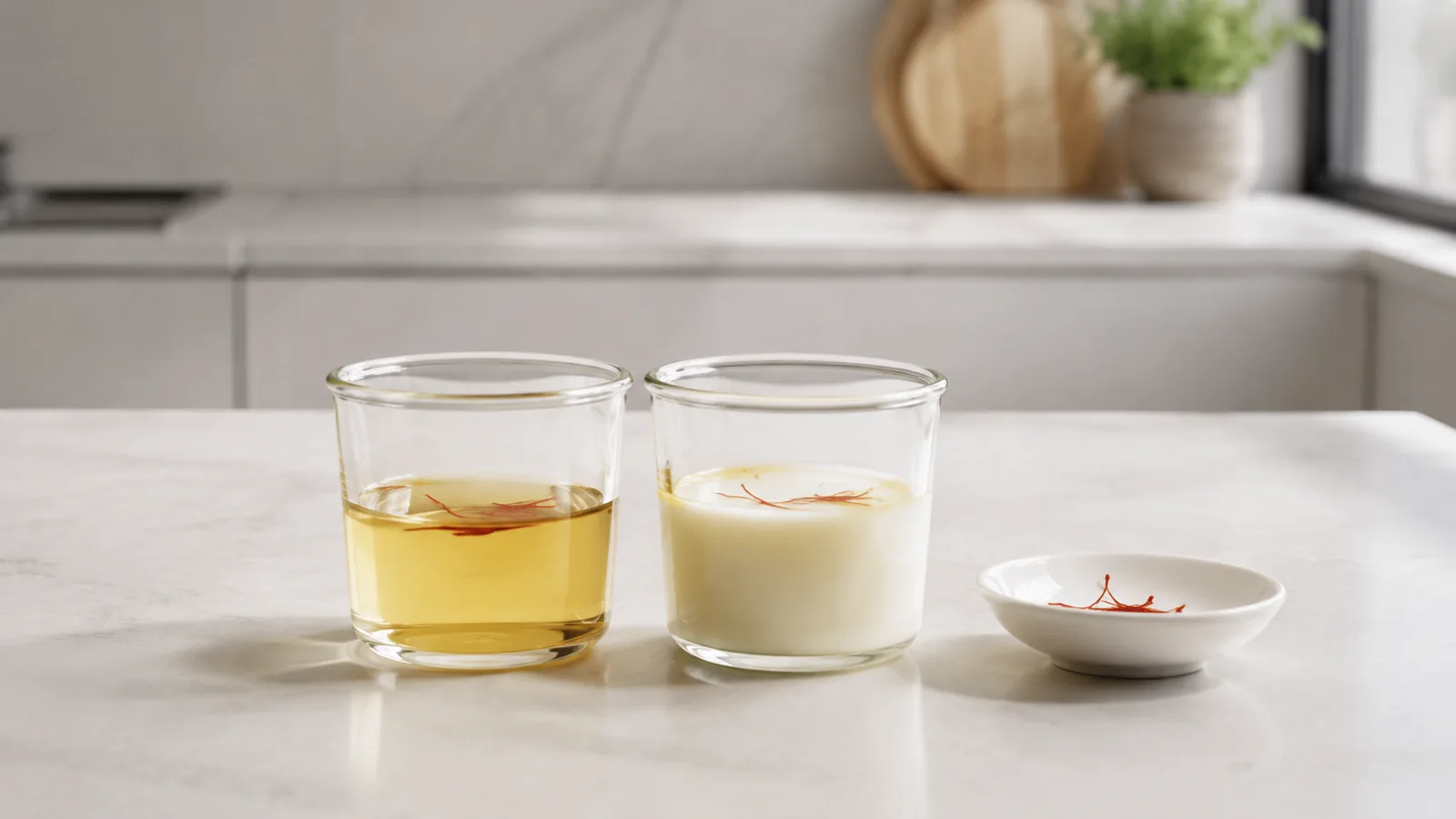
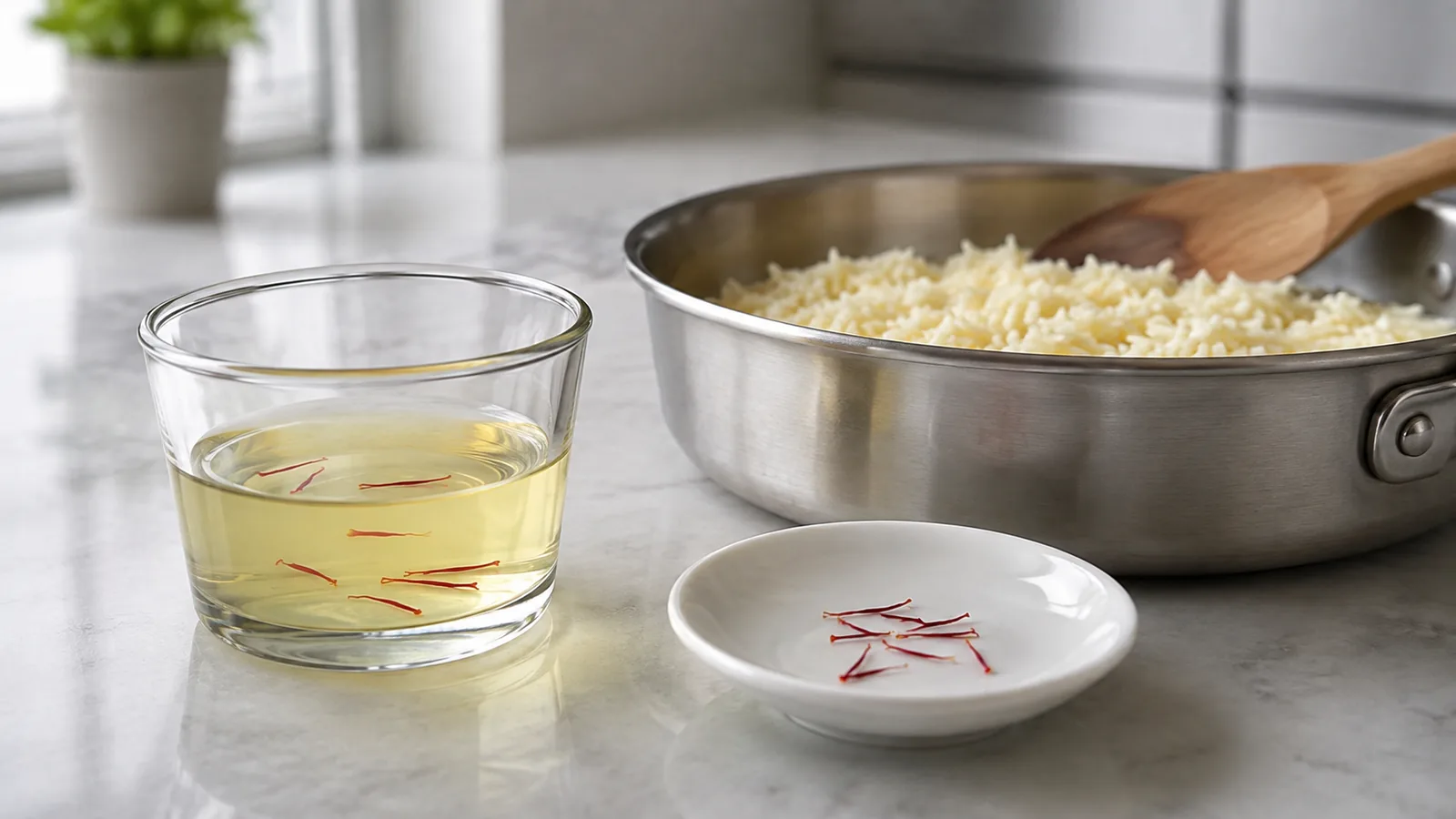
Grind the saffron threads finely, pour over a small amount of hot water and leave them for 10–15 minutes. Two tablespoons of the concentrated liquid are enough for the marinade; reserve a teaspoon for the sauce only if you have extra.
Using a small volume of water keeps the marinade from becoming thin. The checked guide to brewing saffron explains the same method in more detail.
Prepare the chicken breasts evenly
Place each chicken breast between two sheets of baking paper or reusable food-safe film. Starting at the thickest part, tap it with the flat side of a meat mallet or a heavy pan until it is an even 1.5–2 cm thick. The aim is to level the meat, not tear it.
Even thickness solves the main problem with pan-cooked chicken breast: the thin end can dry out before the thick end is safe to eat. If the breasts are especially large, slice them horizontally first and make two thinner pieces.
Marinate the saffron chicken
Put the sliced onion, bloomed saffron, lemon juice, olive oil, salt, pepper and mild spices in a non-reactive bowl. Add the chicken and turn each piece so the marinade reaches both sides.
Cover and refrigerate for three hours, as the original recipe directs. Do not leave raw chicken on the counter, and do not reuse its marinade as a finishing sauce unless it has been brought to a full boil.
About 15 minutes before cooking, remove the chicken from the refrigerator. Lift off the onion pieces and let excess marinade drip away. Wet onion and saffron sediment can burn in a very hot pan before the chicken develops an even crust.
Make the mango-orange sauce
Put the orange juice in a small saucepan. In a cup, stir the cornstarch with two tablespoons of the cold juice until completely smooth, then whisk that slurry back into the pan. Adding dry starch directly to hot liquid usually leaves lumps.
Bring the juice to a gentle simmer, stirring frequently. Add the vinegar, a small pinch of salt and the mango cubes. Reduce the heat and cook for 5–8 minutes, just until the sauce lightly coats a spoon and the mango softens around the edges.
For a smooth orange sauce, blend it carefully and return it to low heat for a minute. For more texture, leave the mango in small pieces. Stir in the optional teaspoon of saffron at the end so its aroma stays distinct.
Orange sweetness and acidity vary. Taste the finished sauce before changing it: a little more vinegar sharpens a very sweet batch, while a few spoonfuls of water can soften an overly intense one. There is no need to add sugar when ripe mango already provides enough sweetness.
Pan-sear the chicken steak
Heat a wide, heavy frying pan over medium-high heat. Add a thin film of olive oil. When the oil shimmers, lay in the chicken without crowding the pan; cook in batches if necessary.
Sear the first side without moving it for about 3–4 minutes, then turn and cook the other side. The original timing is a useful guide for evenly flattened pieces, but thickness and pan heat vary. Check the center of the thickest piece with an instant-read thermometer.
Chicken is ready when it reaches 165°F (74°C). Move it to a clean plate and rest for five minutes. Use clean tongs and a clean plate rather than equipment that touched the raw chicken.
How to serve chicken steak with orange sauce
Spoon a little warm mango-orange sauce onto each plate and set the chicken over it, or serve the sauce alongside so the seared surface stays crisp. Add the rest sparingly; the sauce should brighten the saffron chicken rather than cover it.
Plain basmati rice, roasted potatoes or a crisp green salad all work well with the fruit sauce. If serving rice, a few drops of bloomed saffron stirred through part of it connect the side dish with the chicken without making the whole plate taste the same.
Useful adjustments without changing the recipe
- For a less sweet sauce: use a firm mango, begin with half the fruit and add the rest only after tasting.
- For stronger orange flavor: add a little finely grated orange zest, avoiding the bitter white pith.
- For a thinner sauce: whisk in warm water one tablespoon at a time.
- For a thicker sauce: simmer briefly rather than adding more dry cornstarch.
- For smaller portions: halve every ingredient; the three-hour marinating time stays the same.
Keeping the chicken tender
Flattening the breasts, draining excess marinade and using a properly heated pan do more for tenderness than extending the marinade. The lemon and onion provide flavor, but leaving chicken in an acidic mixture for much longer can make its surface soft rather than juicy.
The final result should have browned edges, moist chicken and an orange sauce that falls from the spoon in a thin ribbon. Mango gives it body, vinegar keeps it lively, and Iranian saffron provides the warm aroma that holds the dish together.