


This pear cake pairs ripe fruit with brewed Iranian saffron in a small, buttery cake. The pear is arranged as a fan after the batter has begun to set, so the slices stay visible instead of sinking. A thin apricot glaze gives the finished cake a clean shine and a gentle tartness.
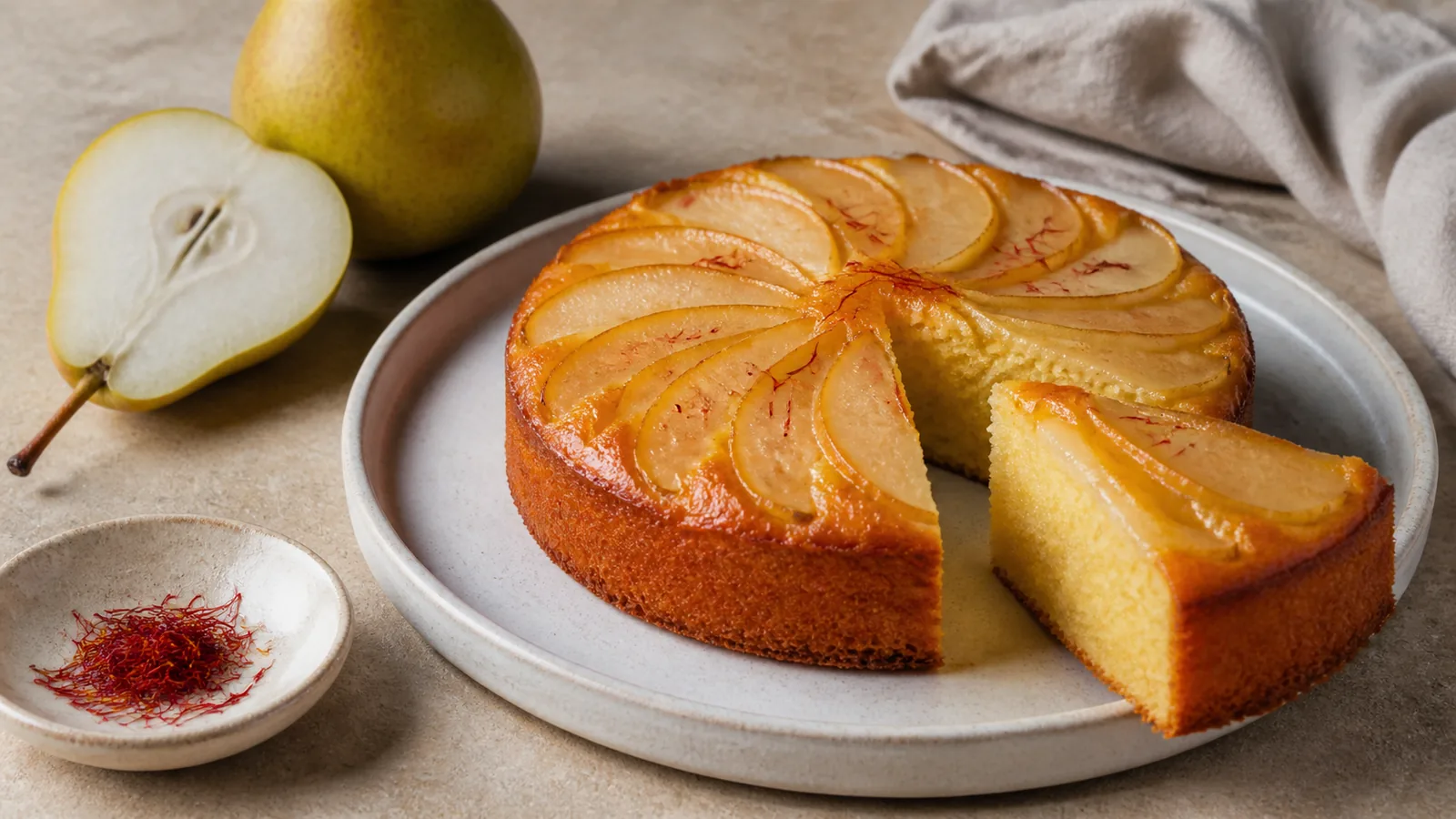
Pear cake ingredients
- ½ cup (113 g) unsalted butter, softened
- ¾ cup granulated sugar
- 1 large egg, at room temperature
- ⅓ cup milk, at room temperature
- 1 cup plain flour
- 1 teaspoon baking powder
- ⅛ teaspoon fine salt
- 1 tablespoon concentrated brewed saffron, cooled
- 1 medium ripe but firm pear
- ¼ cup smooth apricot jam or saffron syrup, for glazing
You will also need a 15 cm (6-inch) round cake tin. A larger tin spreads this modest amount of batter too thinly and changes the baking time.
How to bake pear cake with Iranian saffron
1. Prepare the tin and oven
Heat the oven to 175°C (350°F). Grease the tin, line the base with baking parchment and lightly grease the paper. Brew the saffron strongly in a small amount of hot water, then let it cool; extra liquid can make a small cake heavy.
2. Mix the batter
Beat the softened butter and sugar for 3 to 4 minutes, until paler and slightly fluffy. Add the egg and beat until smooth, scraping down the bowl. Mix in the cooled brewed saffron.
Whisk the flour, baking powder and salt together in a separate bowl. Fold half into the butter mixture, add the milk, then fold in the remaining dry ingredients. Stop as soon as the batter is even. Overmixing after the flour goes in can make the crumb firm.
3. Give the cake a head start
Spread the batter evenly in the prepared tin and bake for 10 minutes. This short first bake sets the surface just enough to support the pear while still allowing the fruit to settle into the cake.
4. Slice and arrange the pear
While the cake begins baking, halve the pear lengthwise. Peel and remove the core with a small spoon or knife. Slice one half thinly from top to bottom, keeping the slices together at the stem end if you want a fan shape. The other half can be sliced and arranged beside it, or saved for serving.
Remove the tin carefully from the oven. Fan the pear slices slightly and lay them on the partially set surface without pressing hard. Return the cake to the oven.
5. Finish baking
Bake for another 25 to 30 minutes. The cake is ready when it is golden at the edge, springs back lightly away from the fruit and a skewer inserted into the cake—not through a pear slice—comes out with a few moist crumbs but no wet batter.
Cool in the tin for 10 minutes, then loosen the edge and transfer the cake to a rack. Warm the apricot jam with a teaspoon of water, or warm the saffron syrup, and brush a thin layer over the pear and cake while both are still slightly warm.
Choosing the right pear
Use a pear that smells ripe and yields only slightly near the stem. A hard pear remains dry; a very soft one releases too much juice and loses its shape. Bosc, Conference and firm Anjou pears are all good candidates, but the condition of the fruit matters more than its name.
Keeping the saffron flavour balanced
Concentrated brewed saffron should turn the batter warm gold, not bright orange. Add the measured infusion rather than spraying or pouring in extra liquid for colour. Too much saffron can taste bitter, while too much water weakens the cake’s structure.
Serving and storage
Let the saffron pear cake cool before slicing so the crumb sets around the fruit. Serve it plain with tea, or with a spoonful of unsweetened yogurt or softly whipped cream. Keep leftovers covered in the refrigerator for up to 3 days, then bring a slice to room temperature before serving so the butter and saffron aromas return.

![Exporting Saffron to Turkey + Price Guide [Complete 0 to 100]](https://img.rowhanisaffron.com/20260827003933/saffron-export-turkey-quality-inspection.webp)



