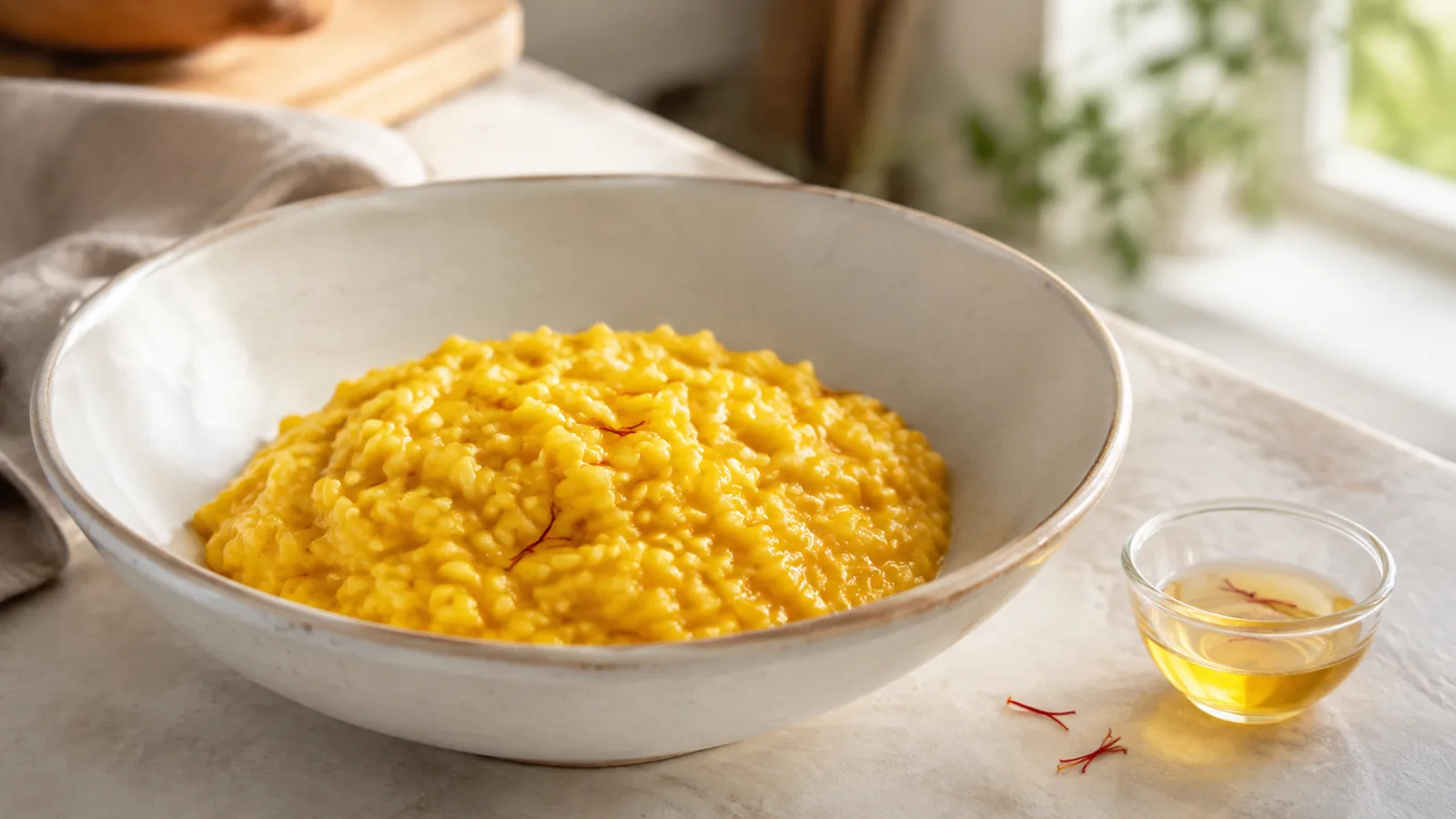
Recipe for baking chickpea sweets with saffron in the oven gives the classic Qazvin-associated Nowruz cookie a warm saffron note. These crumbly nan-e nokhodchi use chickpea flour, powdered sugar, solid pastry fat and cardamom. The dough rests before shaping and bakes at a low 150°C so the sweets stay pale and tender.
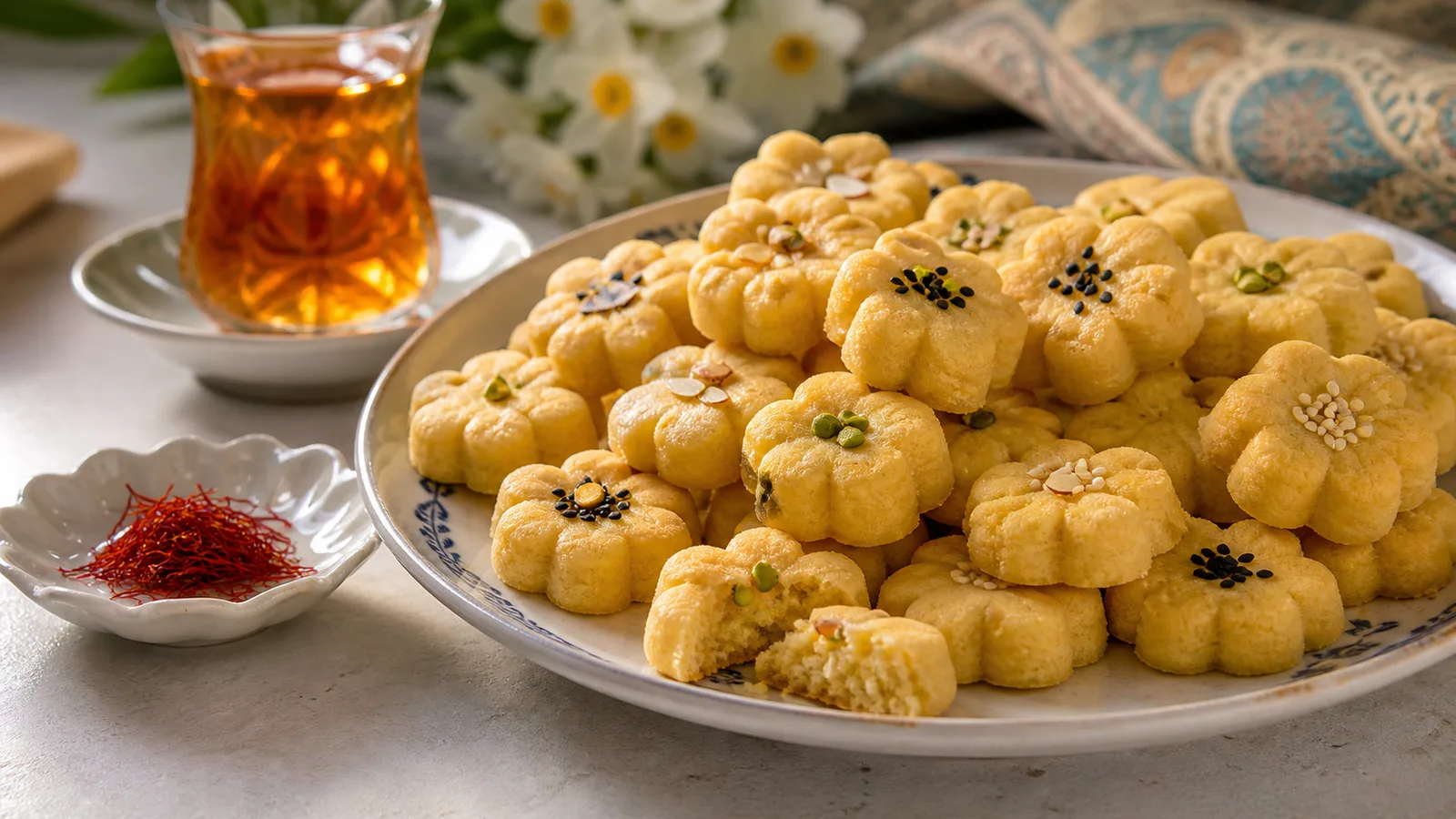
About Iranian chickpea sweets
Chickpea sweets are among the best-known Iranian sweets prepared for Nowruz. They are especially associated with Qazvin, and their defining ingredient is fine roasted chickpea flour rather than wheat flour.
The texture is short and delicate, not chewy. That depends on using powdered sugar, working the fat evenly through the flour, resting the dough and avoiding excess heat. Saffron complements the cardamom without changing the cookie’s familiar shape.
Ingredients
- 250 g fine chickpea flour, preferably made for pastry
- 125 g solid pastry fat or shortening, at cool room temperature
- 125 g powdered sugar, sifted
- ½ teaspoon finely ground cardamom
- ½ teaspoon finely ground saffron to start, with up to ½ tablespoon for a stronger traditional batch
- Sliced or ground pistachios and almonds, as needed for decoration
- Black seeds or sesame seeds, optional
The original list gave “half a tablespoon” of ground saffron. That is a strong quantity for 250 g flour, so this method starts at ½ teaspoon and leaves the old upper amount as an intentional flavour choice rather than an automatic dose.
Choose the right chickpea flour
Use a finely milled chickpea flour intended for sweets. A coarse savoury flour can leave a gritty texture and absorb fat differently. Sift it before mixing to remove lumps.
Flours vary, which is why the source warned that the dough can be difficult to mould. Hold back any extra fat until you have mixed and rested the measured ingredients; the dough often becomes more workable after it sits.
Mix the chickpea-saffron dough
- Beat the 125 g solid pastry fat, sifted powdered sugar and cardamom until smooth and evenly blended.
- Add the chickpea flour and ground saffron gradually. Mix on low speed or work by hand until the crumbs press together into a dough.
- For a particularly smooth texture, the original method suggests passing the combined dough through a meat grinder. Use a clean grinder reserved for food and work in small portions.
- Gather the dough without adding water. Cover the bowl or wrap the dough in food-safe plastic.
Do not whip after the flour enters. The goal is an even paste that holds when squeezed, not a light cake batter.
Rest for at least 1–2 hours
Leave the covered dough for 1–2 hours at a cool room temperature. If the kitchen is warm or the fat becomes soft, rest it in the refrigerator and allow it a few minutes to become rollable before shaping.
The source notes that a longer rest can improve handling and baking. Extended rest should still keep the dough clean, covered and cool; it is not a reason to leave it exposed overnight.
Preheat the oven to 150°C
Heat the oven to 150°C (about 300°F) and line a tray with greaseproof or parchment paper. A low oven helps the small sweets set without taking on too much colour.
Ovens vary, so use the first tray as a test. If the bases darken before the centres set, move the tray higher or reduce the baking time rather than raising the heat.
Shape the chickpea sweets
Roll or press the dough to the depth of your chosen small mould. Traditional clover and flower cutters work well. Cut cleanly and transfer each piece with a thin spatula.
If you do not have a mould, roll small balls and stamp or flatten them gently. Keep every piece similar in size and thickness so the tray finishes together.
Decorate before baking
Press a tiny amount of sliced almond, pistachio powder, black seed or sesame into the top of each sweet. Decoration should be light; a heavy garnish can crack the soft unbaked shape.
Saffron powder can also be used as a restrained finishing accent, but do not leave dry piles on the surface. The saffron already mixed through the dough supplies the main flavour.
Bake for 15–20 minutes
- Put the tray in the preheated 150°C oven.
- Start checking at 12–15 minutes, especially for very small moulds.
- Remove the tray when the cookies are set and the bases are only lightly coloured. They may need up to 20 minutes in a gentler oven.
- Leave them untouched on the tray until completely cool.
Hot chickpea sweets break easily. The old instruction “if they are hot, chop them” was a translation error: it meant they will crumble if handled while hot.
If the dough will not hold its shape
First squeeze a small portion firmly in your palm. If it holds, the mixture is workable even if it looks crumbly in the bowl. If it still falls apart after resting, knead in a teaspoon of softened solid fat at a time.
The source allowed up to 30–40 g extra solid fat for a powdery dough. Treat that as a maximum correction, not a routine addition; too much makes the sweets greasy and prone to spreading.
Butter and the rice-flour variation
The original recipe warns against replacing the solid oil with butter because it produces a harder result in this formula. That is a recipe-specific texture rule, not a claim that butter can never be used in chickpea cookies. For the intended crumb, use the stated solid pastry fat.
It also suggests replacing 100 g of the chickpea flour with rice flour for a crisper variation. This creates a noticeably different cookie with less chickpea flavour. If trying it, use 150 g chickpea flour plus 100 g fine rice flour and keep the total flour at 250 g.
Storage and serving
Once completely cool, store the sweets in a rigid airtight container with parchment between layers. Their crumb is too delicate for a soft bag or a crowded plate.
Serve with tea as part of a Nowruz assortment. The saffron, cardamom and nut garnish are aromatic, so the cookies need no glaze or syrup.
Recipe basis
The Qazvin/Nowruz context, 250 g chickpea flour, 125 g solid fat, 125 g powdered sugar, cardamom, original saffron measure, nut/seed decorations, optional grinder, 1–2-hour rest, 150°C oven, mould/ball methods, 15–20-minute bake, cooling warning, 30–40 g fat correction, no-butter advice and 100 g rice-flour variation all come from the original post. The exact earning title and useful internal link are retained.