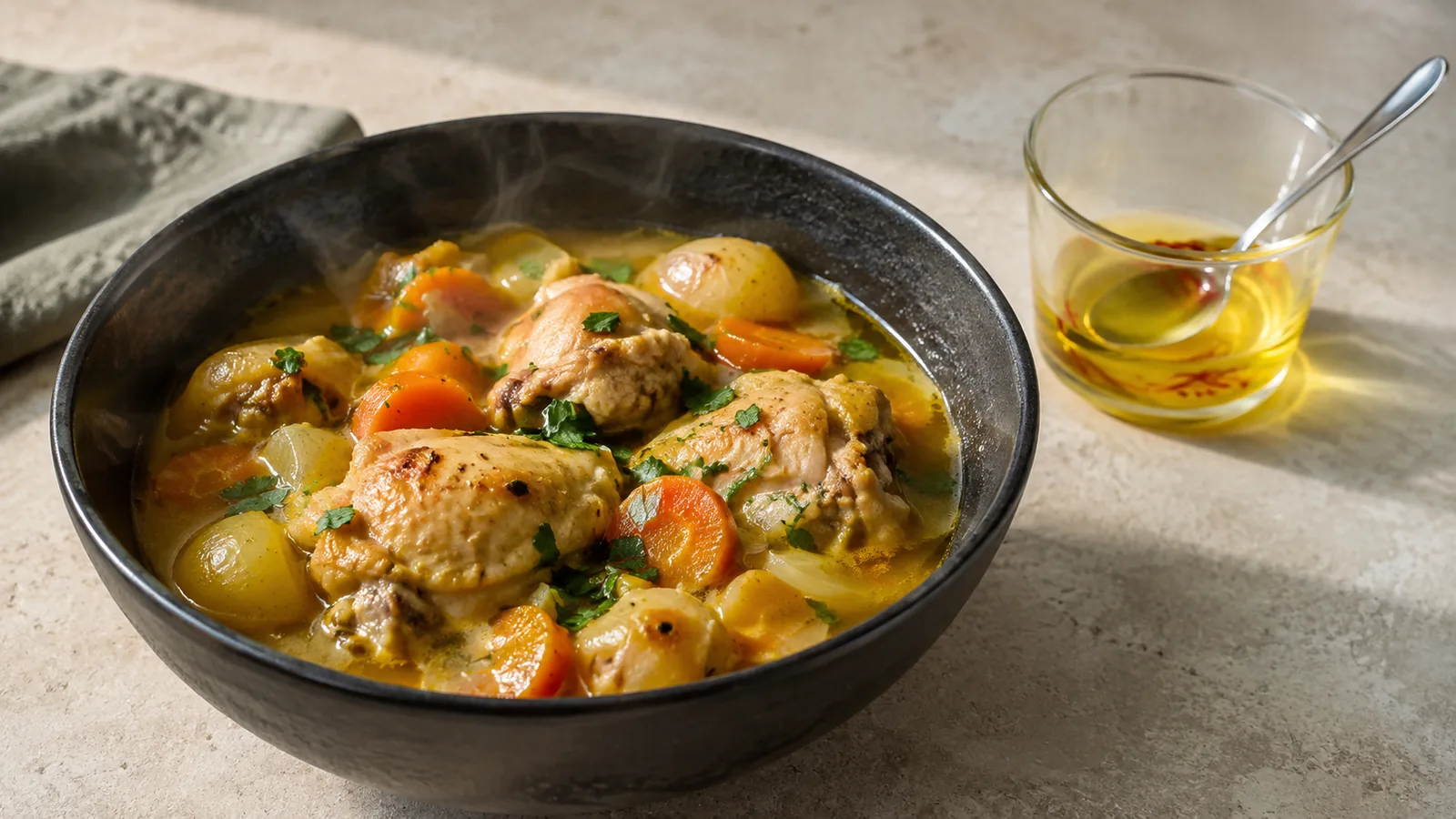
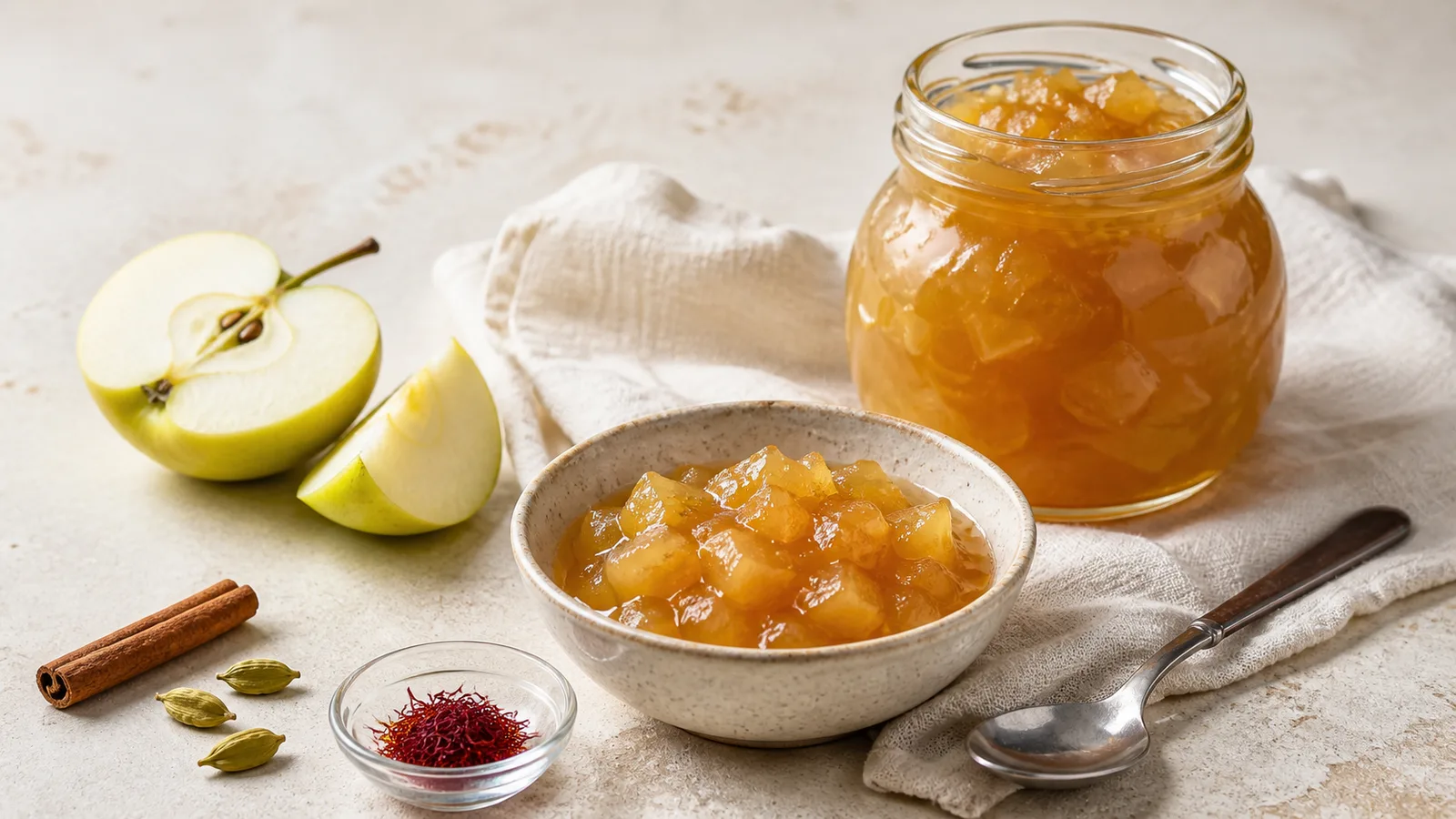
This recipe for apple jam with Iranian saffron keeps tender apple pieces in a clear, aromatic syrup scented with cardamom, cinnamon and rosewater. The method is unhurried: cut the fruit evenly, build the syrup first, cook over gentle heat and add saffron near the end so its aroma is not boiled away.
Choose the apple shape and colour
Green and yellow apples are often cut into small cubes for this style of jam. You can also grate them for a softer spread or use a small cutter for decorative pieces. Whatever shape you choose, keep it uniform so the fruit cooks at the same rate. Firm apples hold their edges better than soft, mealy fruit.
The old version of this recipe also referred to “rose apple jam” or “miniature apple jam,” made with tiny apples left whole. That is a related presentation, but it is not the same as jam made from the tropical fruit commonly called rose apple. The quantities and timing below are for ordinary apples cut into pieces.
Ingredients
- 1 kg firm apples, weighed before peeling and coring
- 800 g granulated sugar
- 480 ml water, about 2 cups
- 4 green cardamom pods, lightly cracked
- 1 cinnamon stick
- 2 tablespoons rosewater
- 2 tablespoons concentrated brewed saffron
- 120 ml white vinegar, about ½ cup, for the soaking water
- 1 tablespoon lemon juice, optional but useful for balancing sweetness
- A small knob of butter, optional, for gathering surface foam
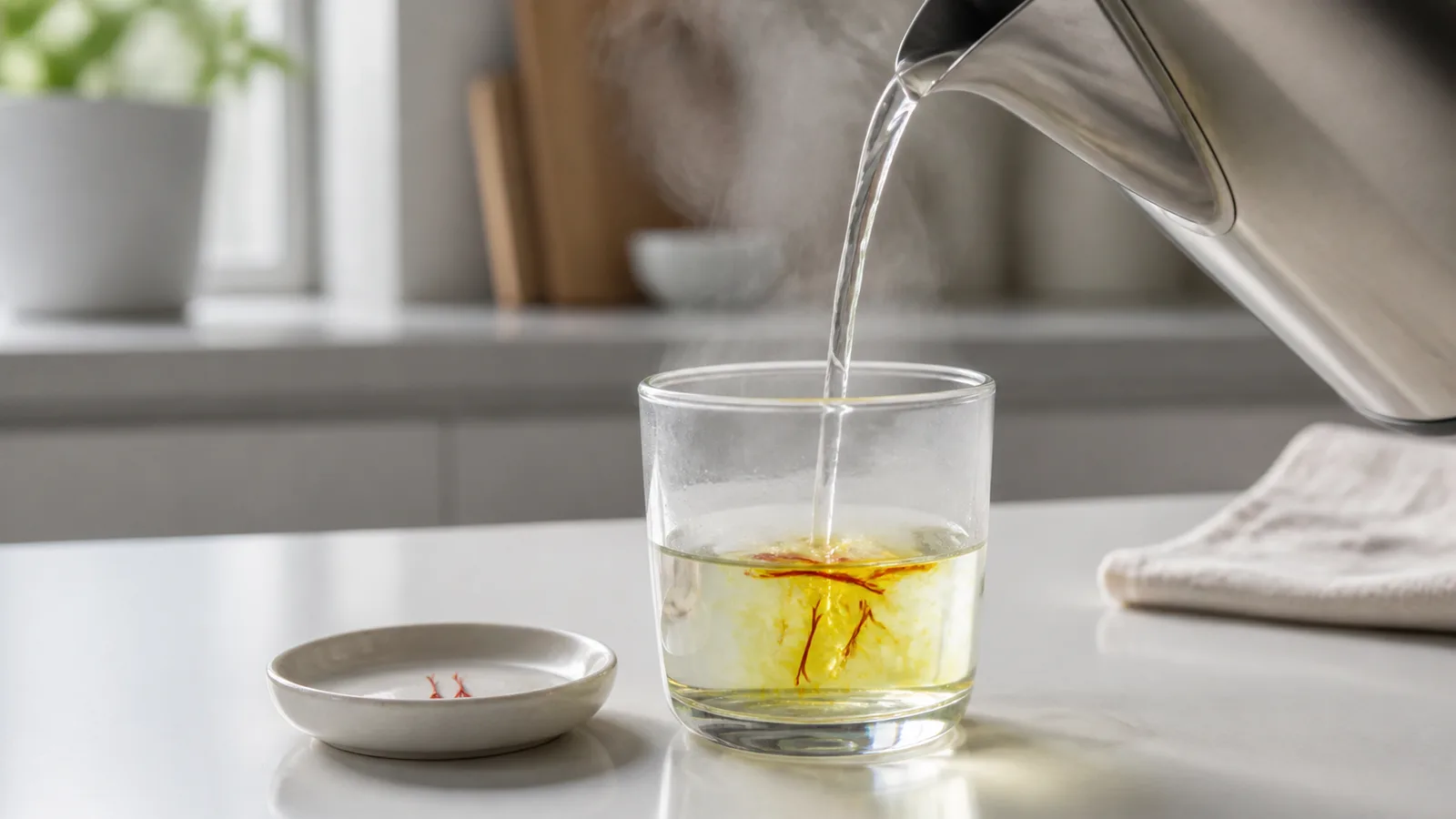
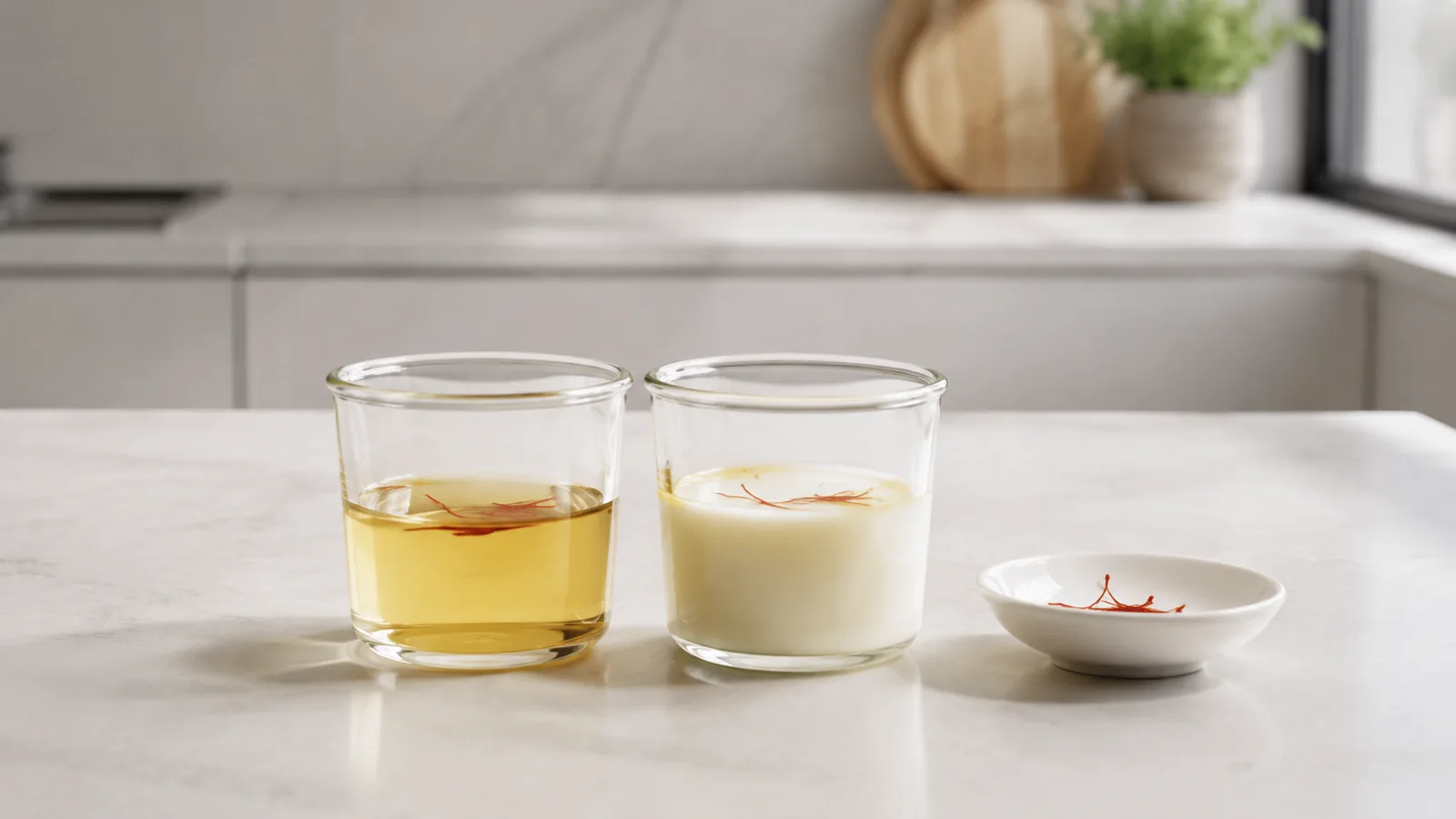
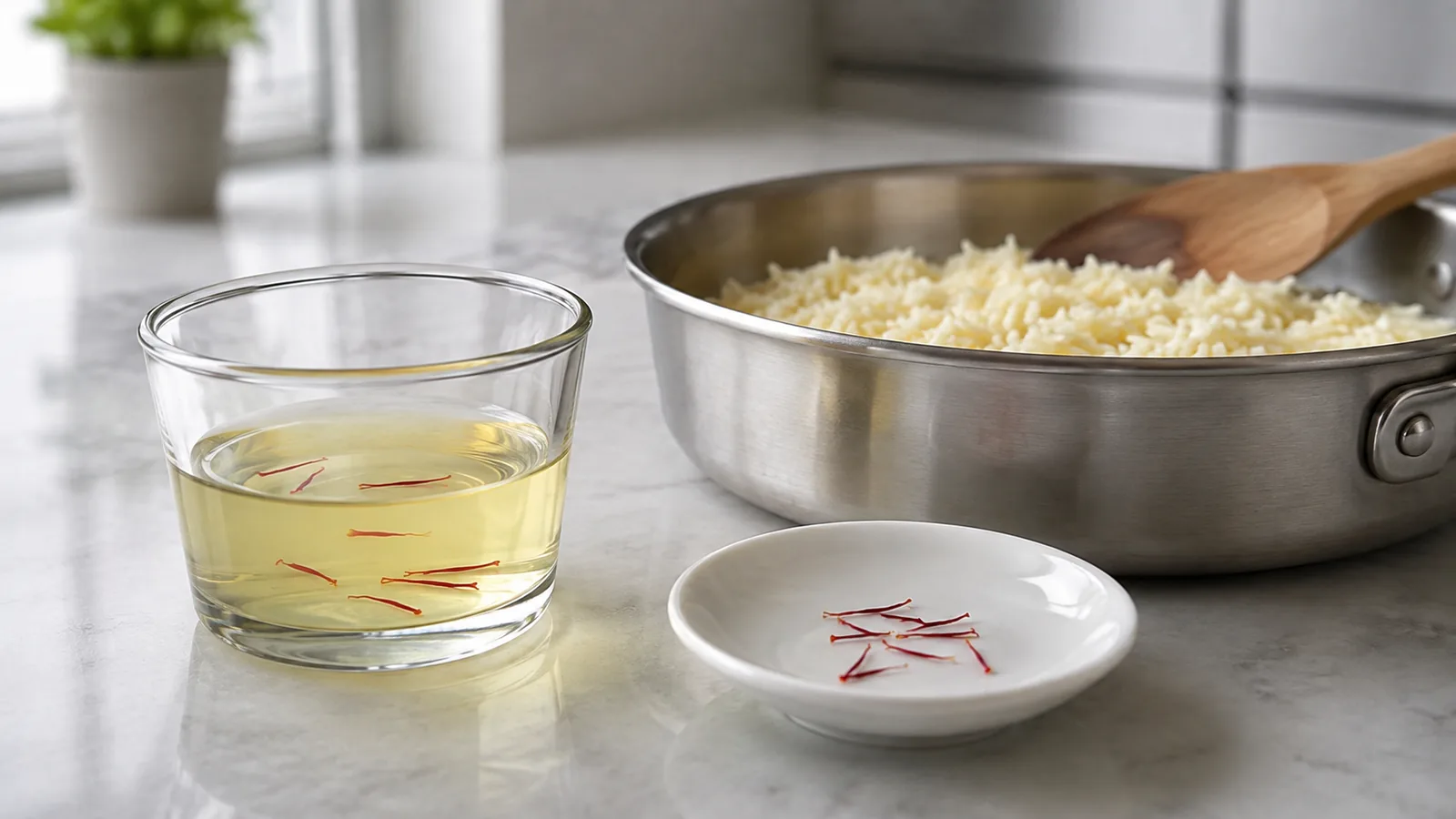
You will also need enough cool water to cover the cut apples during the vinegar soak. The 480 ml listed above is separate and becomes the jam syrup. Prepare a concentrated saffron infusion before starting; our guide to brewing saffron explains the basic method.
How to make apple jam with saffron
1. Cut and soak the apples
Wash, peel and core the apples. Cut them into even 2 cm cubes or another consistent shape. Put the fruit in a non-reactive bowl, cover it with cool water and add the white vinegar. Leave it for 1½ to 2 hours, then drain well. Do not rinse: the mild acidity helps limit browning while the fruit waits.
2. Start the spiced syrup
Use a stainless-steel or enamelled pan wide enough to hold the apples without crowding. Bring 480 ml water to a boil, add the sugar and stir gently until it dissolves. Add the cardamom and cinnamon, then simmer for about five minutes. Avoid splashing sugar crystals onto the sides of the pan.
3. Cook the apples gently
Add the drained apples to the syrup. Once the pan returns to a gentle simmer, lower the heat and cook uncovered. The original method allowed 60 to 90 minutes; begin checking earlier because apple varieties and piece sizes differ. Stir sparingly with a silicone spatula so the pieces stay intact and the base does not catch.
The mixture should bubble calmly, not race at a hard boil. High heat can thicken the syrup before the centre of each apple piece turns tender. Skim loose foam as it appears. If you use the optional butter, add only a very small amount after cooking and gather the remaining foam rather than treating butter as a preservation step.
4. Add saffron and rosewater
During the final 20 to 30 minutes, stir in the rosewater and brewed Iranian saffron. Remove the cinnamon stick and cardamom pods when the fruit is tender and the syrup has thickened. Add the optional lemon juice at the end, tasting carefully; it brightens a very sweet batch but does not turn this into a tested canning recipe.
5. Check the consistency
Put a teaspoon of syrup on a chilled plate and wait 30 seconds. It should move slowly when the plate is tilted but should not set like a firm jelly. Remember that apple jam thickens as it cools. If it runs like water, simmer a little longer; if it is already stiff in the pan, remove it from the heat.
Pale yellow or deeper red apple jam
For a light golden jam, cook without a lid and avoid prolonged heating once the apples are tender. For the deeper colour described in the original recipe, cover the pan for part of the slow cooking time, then uncover it to finish the syrup. Colour also depends on apple variety, cookware, heat and how much the sugar caramelises, so a red result is not guaranteed.
You may replace up to half the white sugar with brown sugar for a darker, more caramel-like flavour, but the syrup will no longer look clear and saffron will be less prominent. Ground cinnamon can replace the stick, although it remains visible and makes the jam cloudier.
How to prevent crystallisation
- Dissolve the sugar fully before adding the apples.
- Keep the heat steady and avoid unnecessary stirring once the syrup simmers.
- Wash any sugar crystals from the inner wall of the pan with a clean damp pastry brush.
- Add the optional lemon juice near the end for flavour balance and some protection against crystallisation.
- Do not cook until the syrup is stiff; an over-concentrated syrup is more likely to crystallise as it cools.
Cooling, jars and safe storage
Spoon the finished jam into clean, heat-safe jars, leave the lids loose until steam has escaped, then cover and refrigerate once cooled. Use clean utensils each time. It is excellent at breakfast with bread and butter, with yoghurt, or in a small serving as dessert.
This recipe does not include a validated boiling-water canning process, so its filled jars are not shelf-stable. The old article’s claim that refrigerated jam could simply be kept for a year was unsafe without a tested recipe and processing instructions. Treat it as refrigerator jam and use it within about three weeks; discard the entire jar if you see mould or notice yeast, fermentation or an off odour.
The National Center for Home Food Preservation explains the distinction: only tested recipes processed for the specified time qualify for longer sealed storage, while refrigerator and freezer jams remain cold products. For room-temperature storage, choose a tested apple preserve recipe and follow its jar size and processing time exactly rather than adapting this saffron jam.