


Raw selling of Iranian saffron is a long-standing value-chain problem when the crop leaves the country in bulk with little traceability, processing or identity and most later value is created elsewhere.
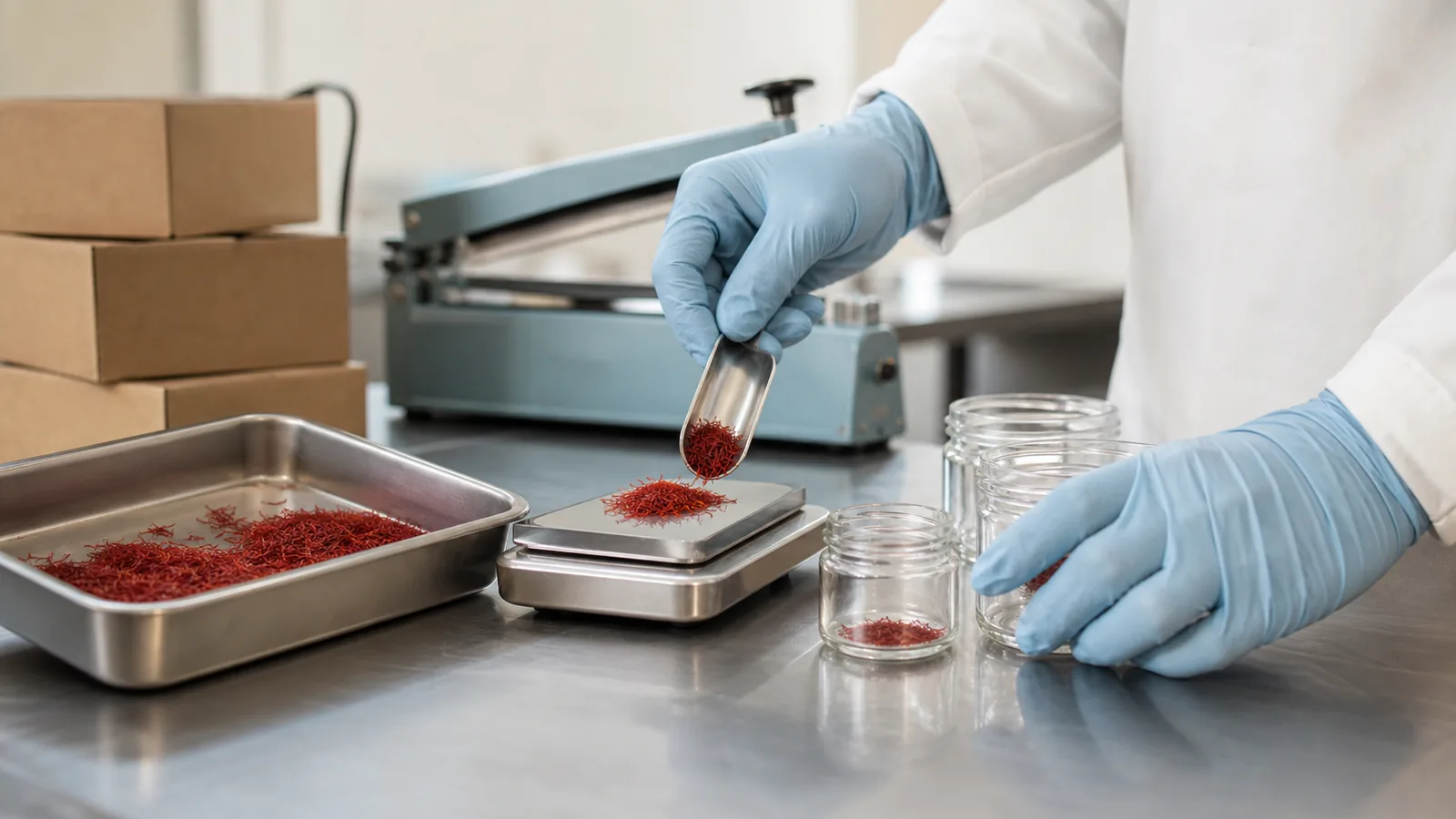
“Raw” can be misleading in English. Dried saffron threads are already a finished spice, not an uncooked food that must be made safe. In this debate, raw selling means exporting a minimally differentiated commodity instead of retaining more testing, grading, product development, packaging, branding and distribution work in Iran.
The parliamentary concern about raw selling
Nasrullah Pejmanfar, representing Mashhad and Kalat in parliament, described packaging as a major weakness for saffron across Iran and especially in Khorasan Razavi. He connected the problem to conversion industries that, in his view, had not expanded enough to send saffron to export markets in suitable, well-presented packs.
Pejmanfar said the sale of raw material had inflicted lasting damage on the saffron economy. He wanted Iran to move away from bulk sales and use more conversion capacity so growers could receive a greater benefit from a strategic crop.
He also argued that high production had not translated into a strong enough position or “basket” in the global market, while bulk selling made brokers more prominent. These are historical policy statements. The archived report does not quantify the damage, identify which markets were lost or show how margins were divided in a specific shipment.
Where value is added after harvest
Saffron gains defensible value when each stage solves a buyer’s real problem. The useful work can include:
- clean separation and controlled drying after harvest;
- grading threads consistently and documenting the criteria;
- testing for quality, moisture, contamination and authenticity;
- keeping farm, processor and batch records connected;
- packing the spice in food-safe formats suited to retail, restaurants or manufacturers;
- meeting the destination market’s labeling and import requirements; and
- building distributor relationships and a recognizable reputation for consistent supply.
An official UNIDO diagnostic of Iran’s saffron value chain mapped growers, traders, domestic processors, foreign processors, packers, distributors and retailers as distinct participants. Its analysis shows why the value seen by the final consumer does not arise at one moment or automatically return to the farm.
Bulk saffron is not automatically a bad sale
Professional food companies often need saffron in bulk because they blend, portion or manufacture products at scale. A transparent bulk contract for a verified grade can be a legitimate and efficient sale. Forcing every lot into small consumer packs would add cost without necessarily creating demand.
The risk appears when anonymous bulk material is easy to relabel, when the grower and origin disappear from the chain, or when Iranian suppliers perform the most labor-intensive work but have little bargaining power in later markets. The remedy is not packaging for its own sake. It is choosing the right sales format while preserving quality evidence, origin and a fair commercial return.
What conversion industries can realistically do
Conversion industries can create saffron extracts, measured food-service formats and ingredients for foods, drinks, confectionery or other regulated products. They can also provide drying, sorting, laboratory and packaging services to smaller producers that could not finance those capabilities alone.
Processing is only valuable when the finished product has a buyer and meets the rules for its intended use. A new package or extract does not guarantee a market. Product stability, permitted claims, safety documentation, cost, shelf life and distribution all matter.
Current institutional work follows that broader approach. FAO’s Iran saffron quality-integrity initiative brings together farmers, processors, cooperatives and traders around production practice, post-harvest handling, safety, traceability, marketing and digital branding. The combination is more meaningful than treating the box alone as the source of value.
Grower claims and the role of guaranteed purchasing
Jalil Rahimi Jahanabadi, another member of the Khorasan Razavi Assembly of Representatives, said saffron growers’ claims from the previous year remained unpaid and called for basic action to settle them.
He argued that high prices in the world market were not reaching farmers and that the principal profit went to brokers. He also pointed to guaranteed purchasing as a government measure that had helped reorganize part of growers’ livelihoods in the preceding year.
The stored account does not give the number of growers, the total unpaid amount, purchase grades, payment dates or the share delivered through the program. Those missing details prevent a current judgment about the scheme’s performance.
What guaranteed purchasing can and cannot solve
A guaranteed buyer can give farmers a floor or an outlet when private demand is weak. Clear grades, inspection rules, delivery windows and payment dates can reduce uncertainty at harvest.
It can also create problems if the announced price is disconnected from quality, payment is delayed or the purchasing body accumulates stock without a route to market. A support program works best when farmers know how their crop will be graded, how quickly they will be paid and how the inventory will be sold without destabilizing later prices.
Guaranteed purchasing addresses immediate market access. It does not replace better corms, careful drying, quality testing, traceability, exporter finance, product development or long-term customer relationships.
How more value can reach saffron growers
Growers gain more negotiating power when lots are graded consistently, sales terms are visible and cooperatives or processors can aggregate small volumes without erasing the farm record. Prompt payment matters as much as a high headline price.
Processors and exporters need repeatable quality and reliable supply. Farmers need transparent deductions, grades and payment schedules. Buyers need evidence that the contents match the origin and specification offered. A healthy value chain has to satisfy all three rather than moving margin from one intermediary to another.
Raw selling remains a problem for Iranian saffron when bulk trade strips away identity and leaves others to capture the value of testing, product design and market access. Bulk itself is not the enemy. The practical goal is to sell the right format, document what makes the saffron valuable and ensure that growers are paid fairly and on time.

![Exporting Saffron to Turkey + Price Guide [Complete 0 to 100]](https://img.rowhanisaffron.com/20260827003933/saffron-export-turkey-quality-inspection.webp)



