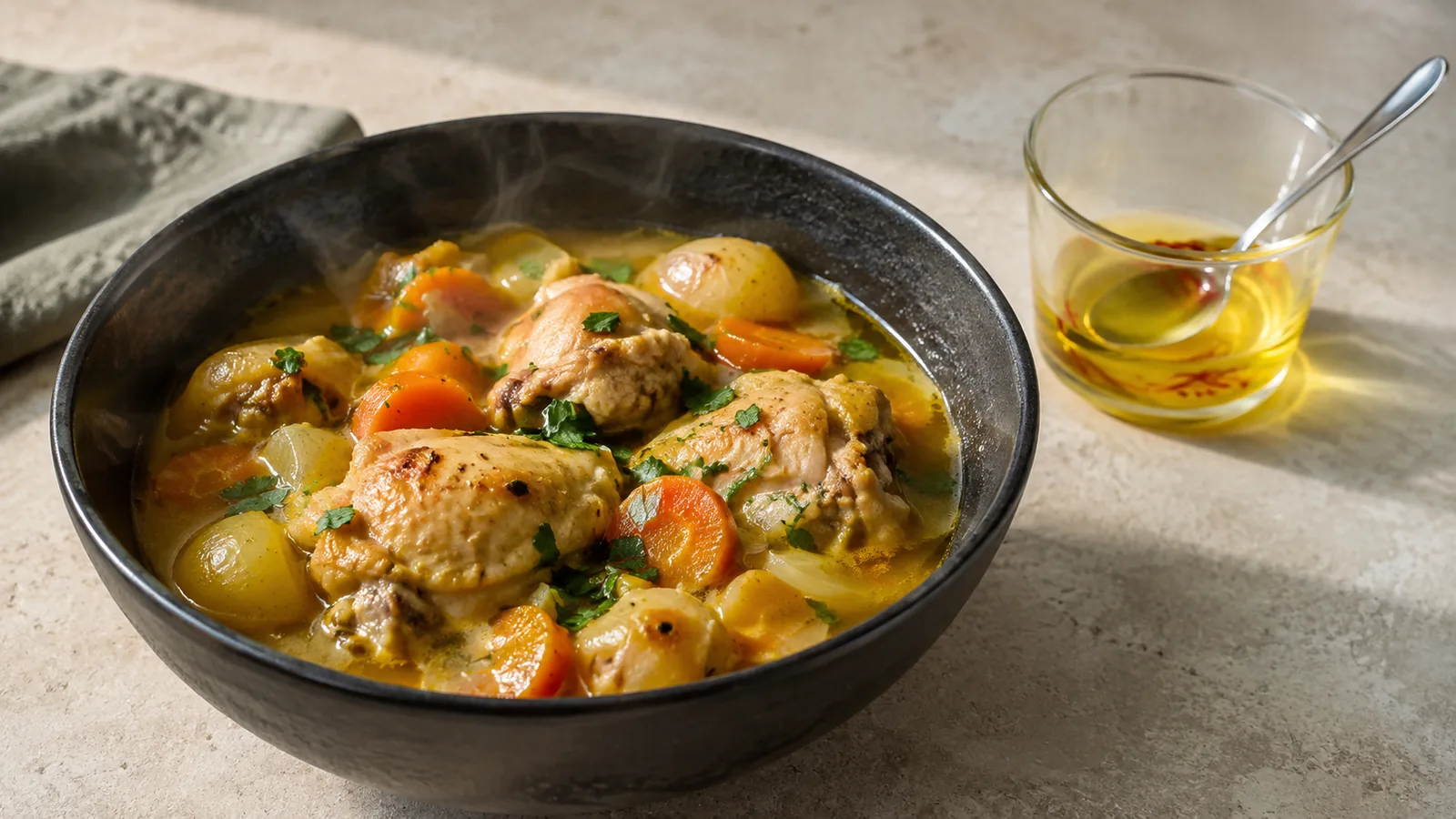
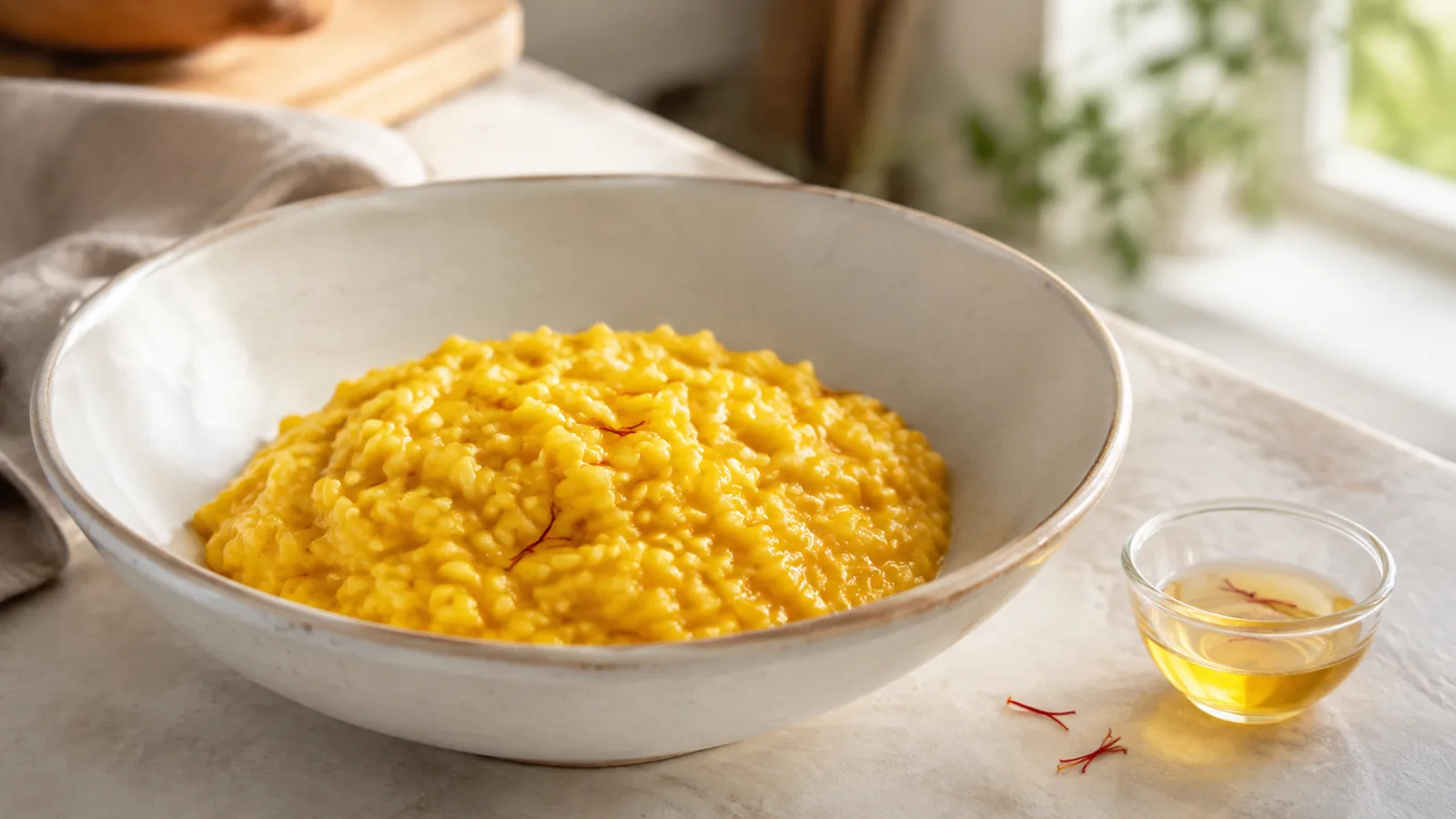
Porridge saffron—more naturally called saffron porridge or Persian saffron fereni—is a smooth milk pudding coloured and scented with brewed saffron. The starch version below takes about 15 minutes on the stove and serves four small bowls. A rice-flour variation gives a softer, more traditional texture. Both are simple, but gentle heat and steady stirring make the difference between a silky dessert and a lumpy one.
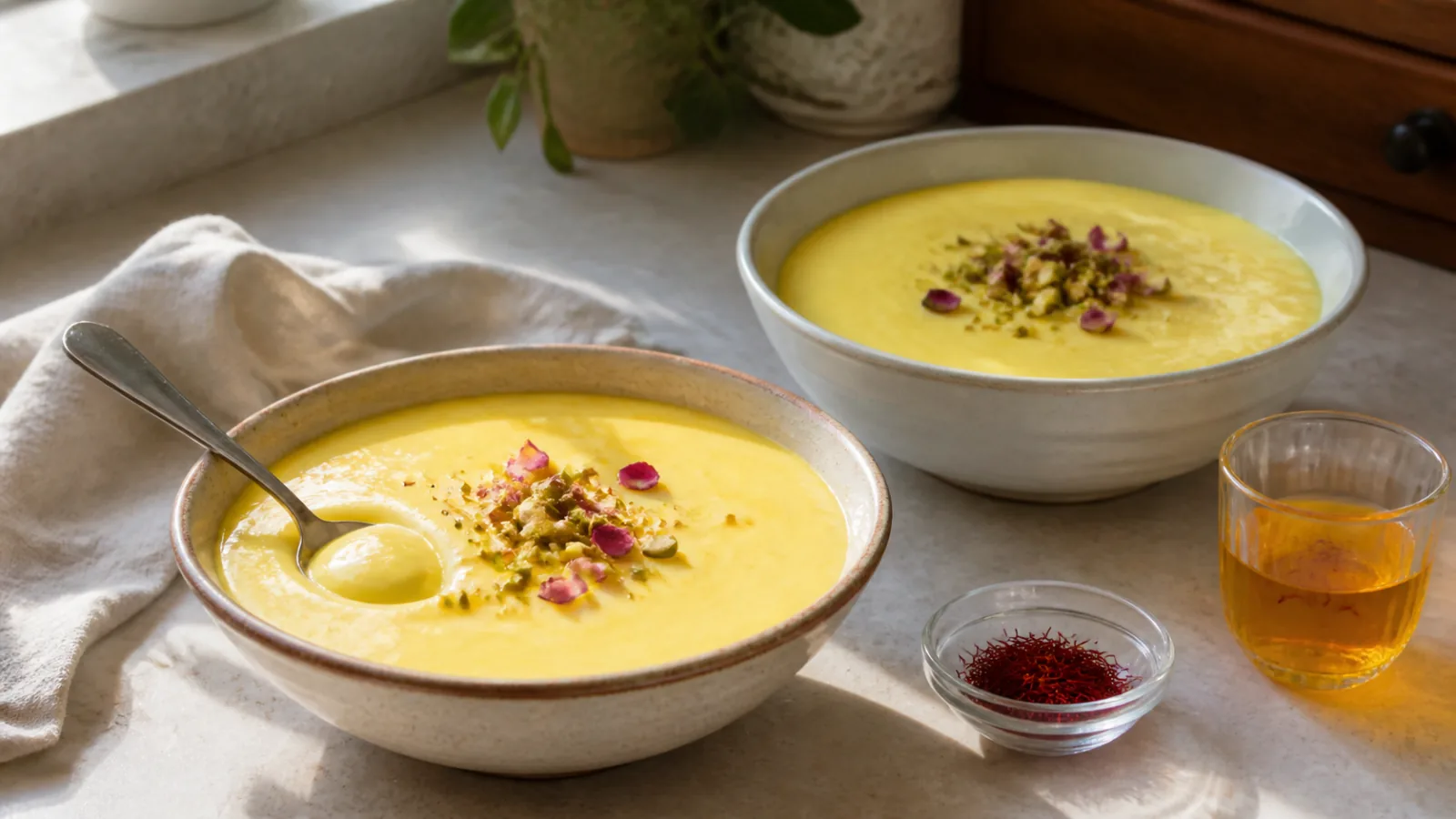
Saffron porridge ingredients
This is the starch-based formula from the original recipe, clarified and measured for a dependable result:
- 2 cups (480 ml) cold whole milk;
- 2 tablespoons cornstarch;
- 2 tablespoons sugar, plus more to taste;
- 1 tablespoon strongly brewed saffron;
- 1 tablespoon rosewater, optional;
- a small pinch of ground cardamom or 1/4 teaspoon vanilla, optional; and
- chopped pistachios, almonds, dried rose petals or cinnamon for serving, optional.
The milk must be cold when it meets the cornstarch. Warm milk causes the outside of the starch to gel before it disperses, leaving small lumps that are difficult to remove. Whole milk gives a rounder texture, although lower-fat milk will still thicken.
How to make saffron porridge with cornstarch
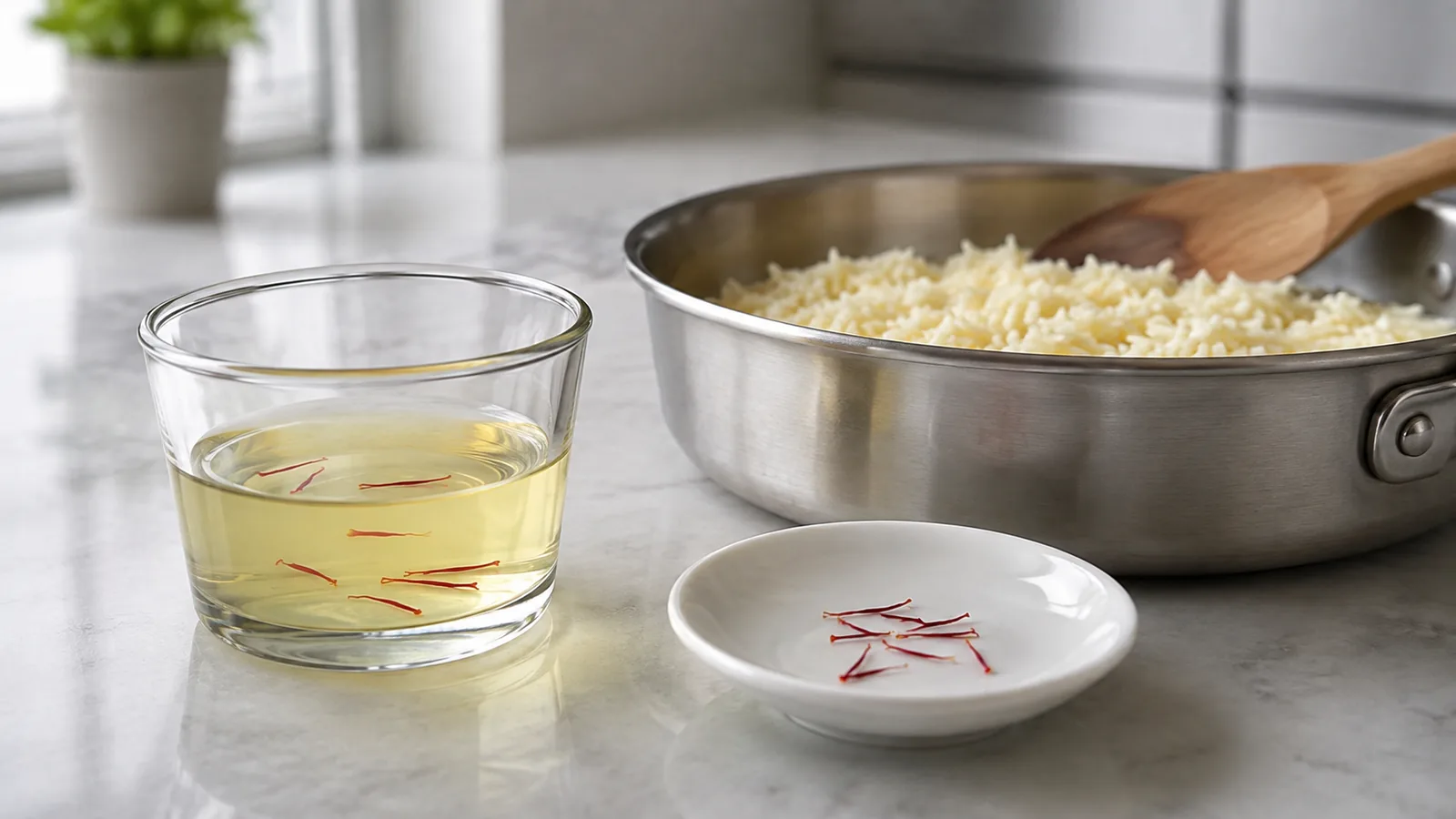
- Brew the saffron. Crush a small pinch of threads and steep it in 1 tablespoon of hot water for 10 minutes. Our guide to brewing saffron explains how to draw out its colour and aroma without scorching it.
- Make a cold slurry. Put the cornstarch in a small bowl. Whisk in about 1/2 cup of the cold milk a little at a time until completely smooth.
- Warm the base. Pour the remaining milk into a saucepan and add the sugar. Heat it over medium-low heat until warm, not boiling.
- Thicken slowly. Whisk the slurry once more, then pour it into the saucepan in a thin stream while stirring. Keep the heat gentle and stir across the bottom and into the corners for 5–8 minutes.
- Add the flavour. When the porridge coats the back of a spoon, stir in the brewed saffron. Add rosewater, cardamom or vanilla during the final minute.
- Serve or chill. Divide it among four small bowls. Eat it warm, or cool briefly and refrigerate until set. Add nuts or rose petals just before serving.
The mixture thickens a little more as it cools. Take it off the heat while it still flows from the spoon in a broad ribbon. If it becomes very stiff in the pan, whisk in cold milk one tablespoon at a time before serving.
Rice-flour saffron porridge
For a softer fereni with a faint rice character, replace the two tablespoons of cornstarch with three tablespoons of fine rice flour. Whisk the flour into the cold milk, add the sugar and bring the mixture up to heat gradually. Once it starts to thicken, cook it gently for 8–12 minutes while stirring.
Rice flour needs a little longer than cornstarch so the raw flour taste disappears. Add the saffron and other aromatics near the end. This version is best spooned into bowls rather than turned out of a mould; it sets softly and remains creamy.
How much saffron should you use?
A small pinch of good threads is enough for two cups of milk. Exact thread counts are not very useful because cut and thickness vary. Start with roughly 0.05–0.1 g, brew it separately and judge the mixture after adding half. You can add more, but you cannot take it back out.
Too much saffron can make the dessert bitter or medicinal. The finished porridge should be warm gold, not fluorescent yellow, with an aroma that remains clear beside the milk and rosewater. If you use vanilla, keep it restrained; a large amount covers saffron rather than supporting it.
How to prevent lumps and a scorched bottom
Most problems begin with high heat. Milk proteins catch easily, while starch thickens quickly once it reaches the right temperature. Use a heavy saucepan if you have one, and keep the spoon or whisk moving over the whole base.
If a few lumps appear, remove the pan from the heat and whisk firmly. For a very smooth result, pass the hot pudding through a fine sieve before adding delicate garnishes. Do not scrape a scorched layer into the dessert; transfer the unburned porridge to a clean pan and continue over lower heat.
Turning saffron porridge out of a mould
The cornstarch version can be made firm enough for small silicone moulds. Increase the cornstarch to 2 1/2 or 3 level tablespoons, cook until clearly thick and spoon the hot mixture into clean moulds. Let it stop steaming, cover and chill until fully set.
Do not grease silicone. Oil leaves a film on this delicate milk dessert and can make the surface patchy. To release it, loosen the edge gently with a fingertip and invert the mould close to the serving plate. A soft pudding may still spread slightly; that is a texture issue, not a reason to keep cooking until rubbery.
Chocolate and other variations
The old recipe suggests chocolate as an option. For a chocolate version, divide the thickened plain base before adding saffron. Stir 1 teaspoon of unsweetened cocoa into one half and the brewed saffron into the other, then layer the two in glasses. Mixing a large amount of cocoa directly into the saffron portion tends to hide its aroma and colour.
A spoonful of cream added off the heat makes the texture richer. Orange-blossom water can replace rosewater, but it should be used lightly. For a vegan version, use an unsweetened plant milk that tolerates heating; flavour and thickness will vary, so treat the first batch as a test rather than assuming a direct match for dairy milk.
Serving and storage
Serve saffron porridge warm for a comforting breakfast-style bowl, or chilled as a light dessert. Chopped pistachios give contrast. A few rose petals look attractive, but only use petals sold for food.
Milk pudding is perishable. Cover it and refrigerate within two hours; a shallow container helps it cool more quickly. The USDA leftovers guidance recommends keeping the refrigerator at 40°F/4°C or below and using most cooked leftovers within three to four days. For the best texture, this dessert is usually nicest within two days.
If liquid appears on the surface after chilling, stir a bowl-style pudding gently before serving. Weeping can come from an undercooked starch mixture, repeated temperature changes or keeping it too long. A clean method, moderate heat and prompt chilling produce a much better saffron porridge than simply adding more starch.