


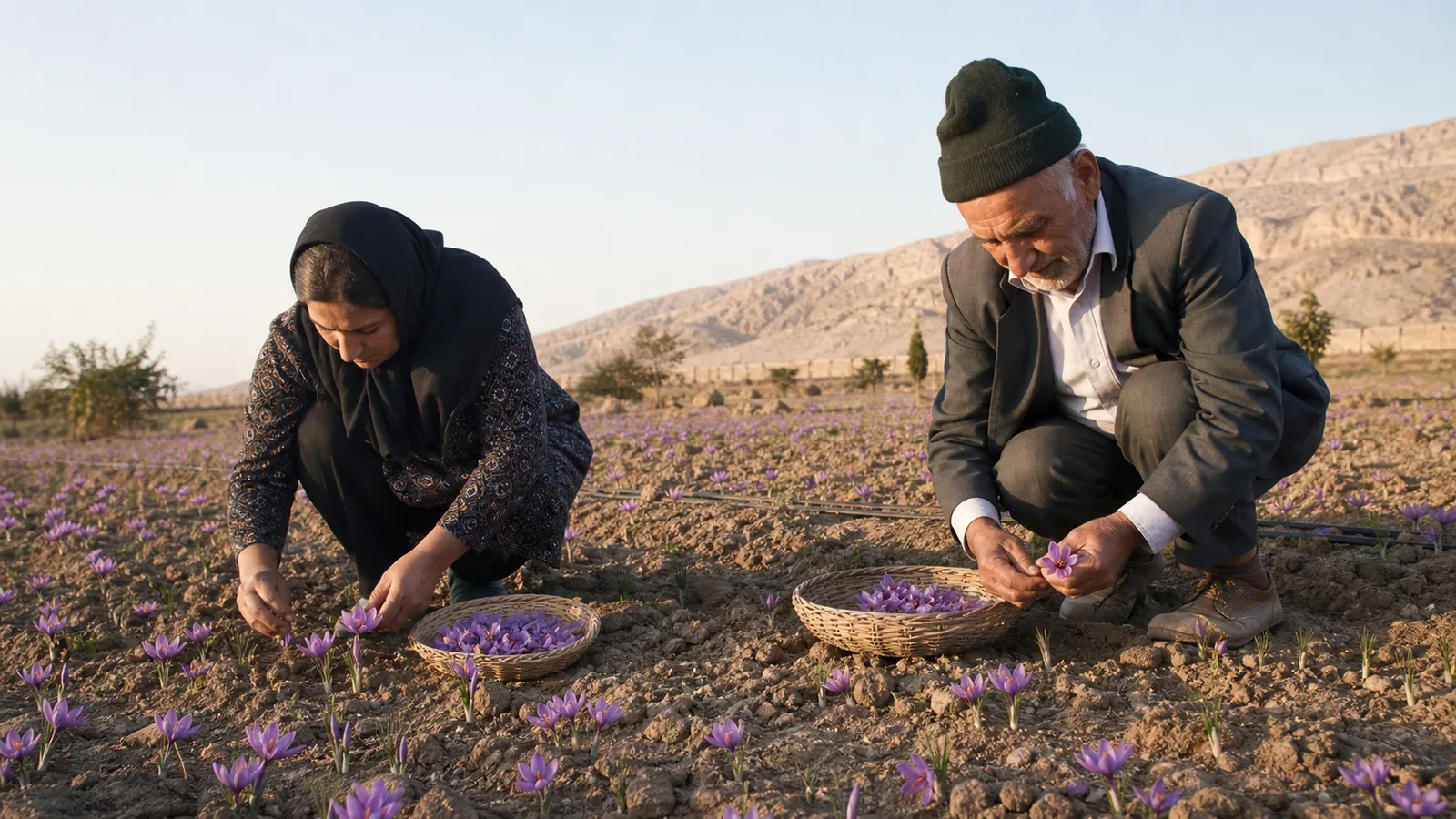
Saffron cultivation around Neyriz expanded by six hectares after standing at about 18 hectares in previous years, according to the historical report behind this article. The growth was centred on farmer interest, pressure on local water resources, and the search for lower-water medicinal crops that could earn a viable return.
Masih Esmaeili, then responsible for plant-production improvement in Neyriz County, also reported average yields of roughly 500 kilograms of fresh flowers and five kilograms of dry saffron per hectare. Those are dated local figures, not a guarantee for a new field.
How saffron cultivation developed in Neyriz
Esmaeili said serious saffron cultivation began in the Meshkan area of Neyriz County in the Iranian year 1379, corresponding roughly to 2000–2001. The old translation shortened this to “the year 79,” which could easily be mistaken for 1979.
The county had cultivated about 18 hectares in preceding years, then added six hectares during the reported season. That implies an area of around 24 hectares at that point. Esmaeili expected further growth as farmers responded to the market and the economics of the crop.
Neyriz was repeatedly mistranslated as “Nerizz” and even “Nairobi” in the earlier English text. The location is Neyriz County in Fars Province, and Meshkan is the local area identified as the early centre of cultivation.
Understanding the reported yields
The report gave two different weights for an average hectare: 500 kilograms of fresh saffron material and 5,000 grams of dry saffron. The first figure refers to harvested flowers; the second is five kilograms of the separated, dried spice.
Esmaeili said the county had produced about 50 kilograms of dry saffron in the previous year, supplying domestic use as well as neighbouring provinces and foreign markets.
Flower-to-dry conversion varies with flower size, the grade separated, harvest timing, handling losses, and final moisture. Reliable records should therefore name the dry grade and keep each field or batch separate. A round county average is useful context, but it should not be used as a promise of what every hectare will deliver.
Water scarcity shaped the crop choice
Esmaeili placed saffron within Neyriz’s water crisis and the need to use water resources more efficiently. He called for well-planned alternatives in suitable areas, particularly medicinal and lower-water crops.
Saffron can fit that strategy, but it does not grow without water. A farm still needs to assess supply and quality, soil drainage, salinity, irrigation timing, rainfall, and the demands of a stand that remains in the ground for several years.
Before planting, a small trial can answer practical local questions:
- Does the field drain properly after irrigation or rain?
- Are the planting corms healthy, traceable, and suited to the intended density?
- Can water be delivered evenly at the necessary times?
- Is labour available during the short flower harvest?
- Can flowers be separated and dried cleanly on the day they are picked?
- Is there a buyer for the planned grade and package?
That evidence is more valuable than adopting a crop merely because it is described as economical or drought-tolerant.
Packaging and finance were the main constraints
The Neyriz report identified the absence of packaging industries as one obstacle. Without suitable local processing and packing, growers may have to sell a less differentiated product or send it elsewhere, leaving part of the value and regional identity outside the county.
Good packaging begins with good handling. Flowers should not sit in deep, warm piles. Stigmas need clean separation and consistent drying, followed by storage in food-suitable containers that protect the spice from moisture, light, odours, crushing, and contamination. A decorative box cannot repair a poorly dried batch.
Esmaeili also described farmers’ lack of liquidity to buy saffron corms from distant cities and provinces. Finance can help with establishment, but repayment needs to reflect the field’s gradual development, variable yields, labour, irrigation, processing, and the price actually available to the grower.
The old report called the crop “organic,” yet it did not provide certification evidence. Saffron should only be marketed as organic when the relevant production, inspection, and certification requirements have been met.
Picking saffron in Neyriz is only the first step
Picking saffron in Niriz, the spelling preserved in this page’s title and URL, describes a harvest rooted in Meshkan and shaped by water scarcity, farm economics, and market access. The historical anchors are clear: 18 hectares, a six-hectare expansion, five kilograms of dry saffron per hectare, and about 50 kilograms produced in the previous year.
The stronger long-term opportunity lies beyond expanding acreage. Healthy corms, measured water use, prompt picking, careful drying, honest grade descriptions, local packaging, and realistic finance determine whether Neyriz growers keep the value their crop creates.

![Exporting Saffron to Turkey + Price Guide [Complete 0 to 100]](https://img.rowhanisaffron.com/20260827003933/saffron-export-turkey-quality-inspection.webp)



