


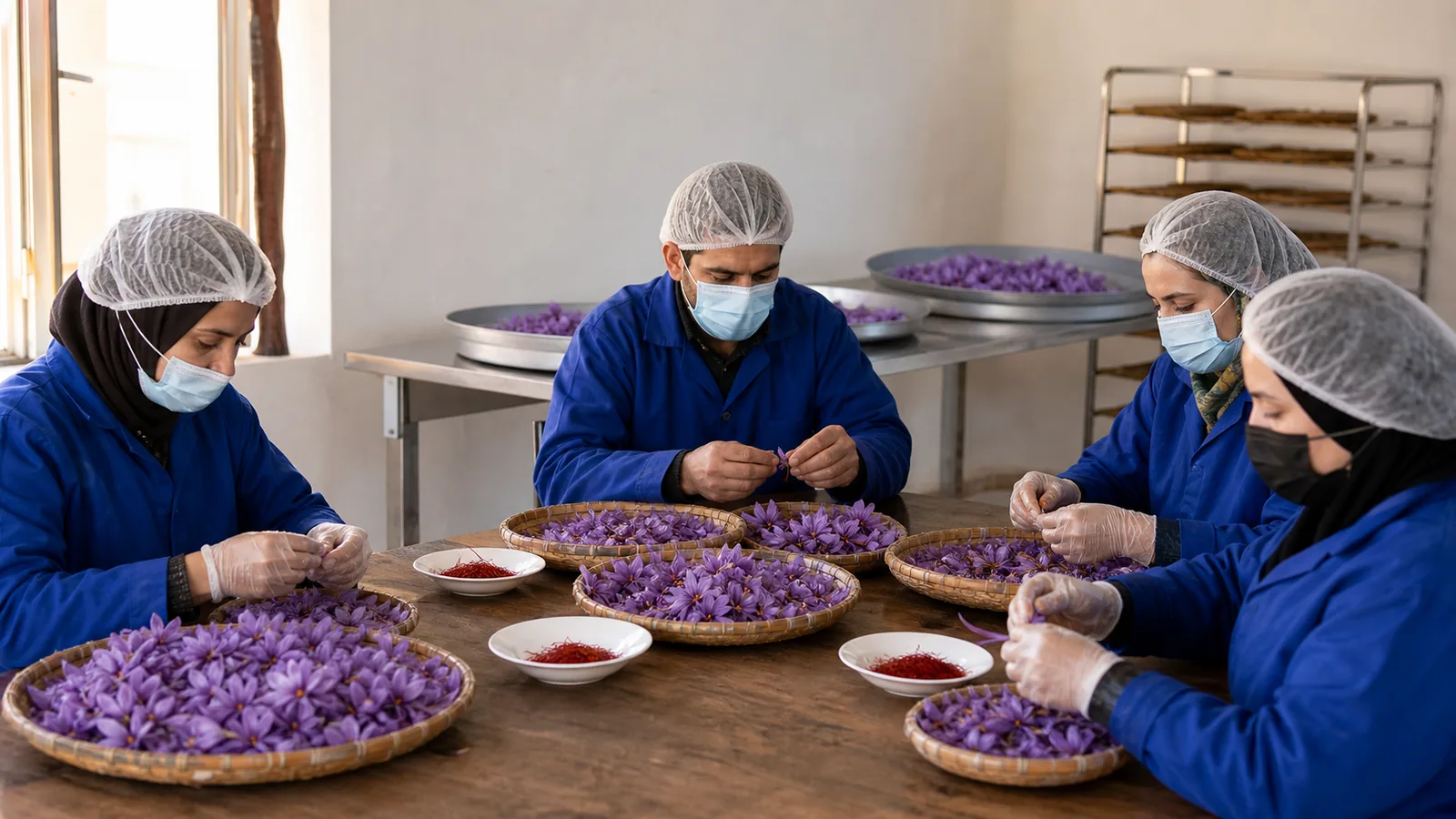
This saffron workshop photo story follows the flower from the sorting table to separated red stigmas, then places that village-scale work beside a separate historical report about mechanized saffron production in South Khorasan. The photographs were taken at the Hatiteh village workshop near Kashmar. They show the careful handwork behind a spice that is often seen only after it has been dried and packed.
Inside the Hatiteh village saffron workshop
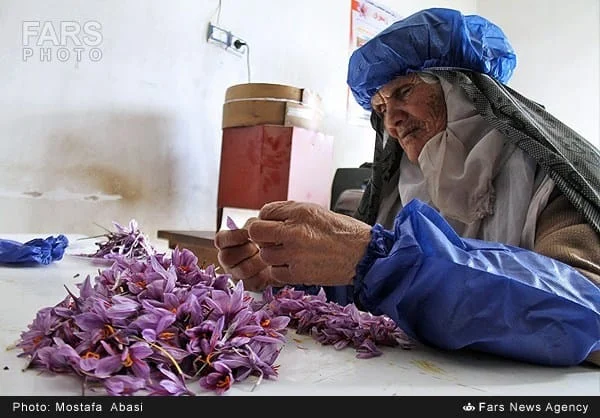
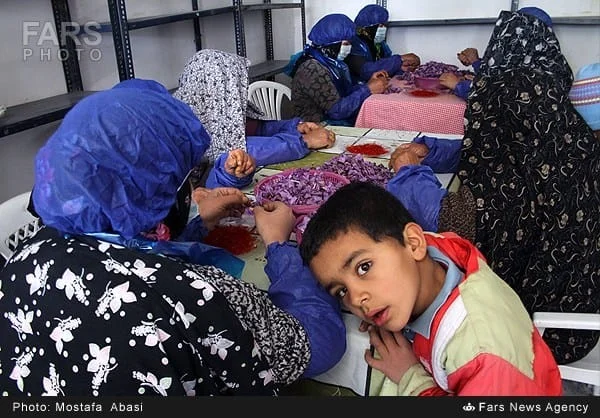
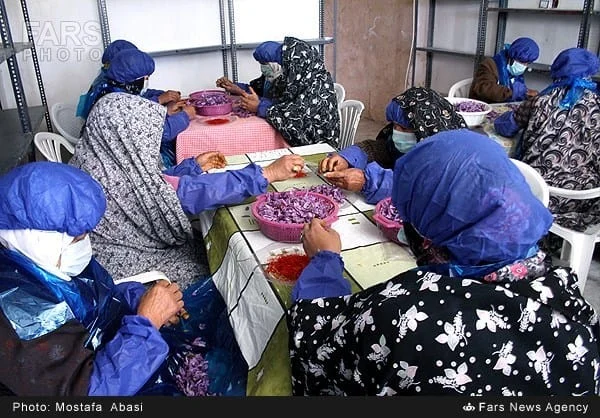
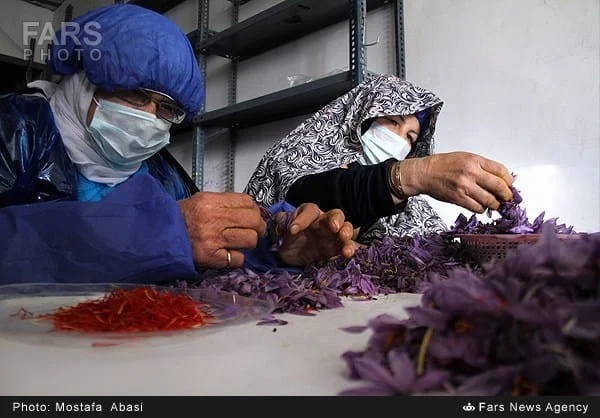
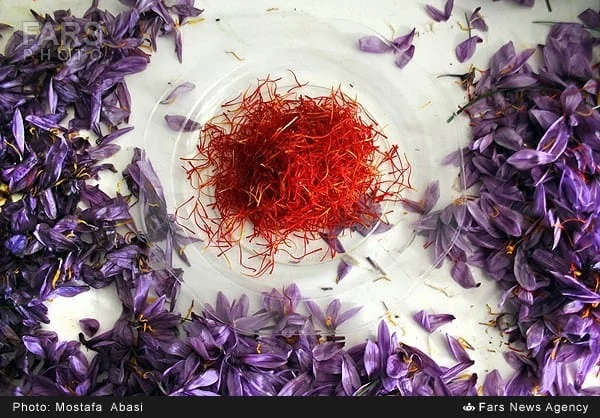
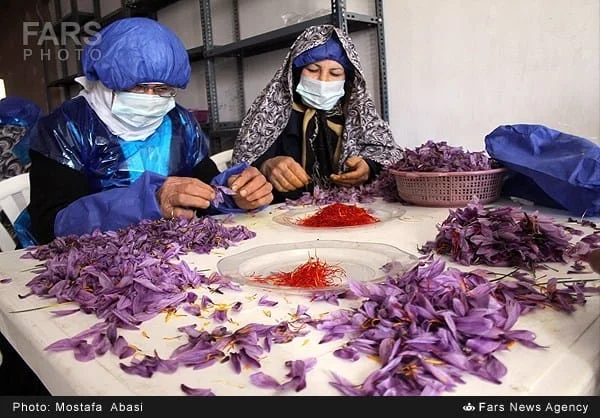
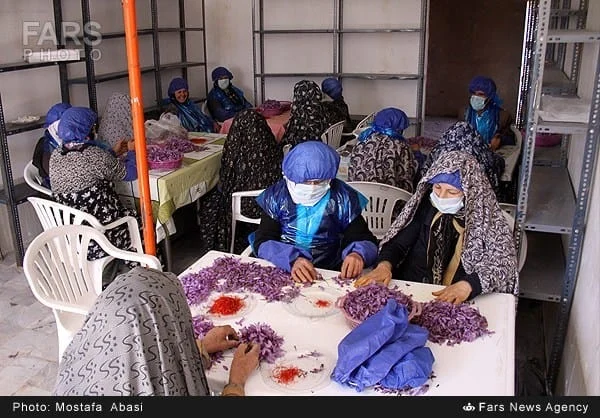
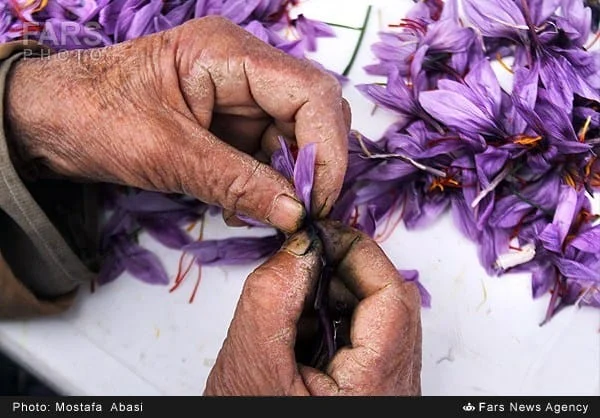
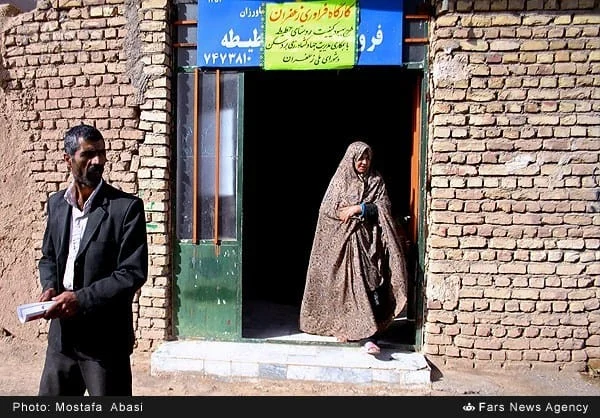
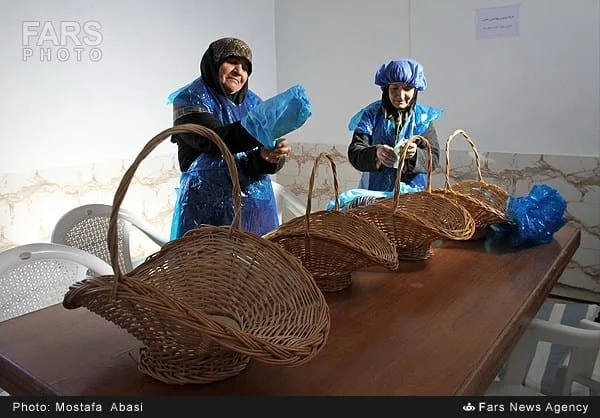
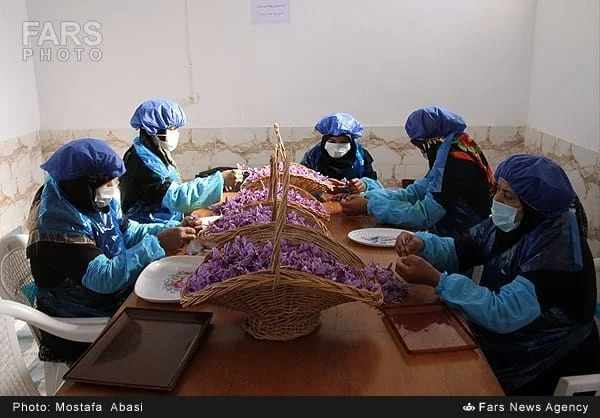
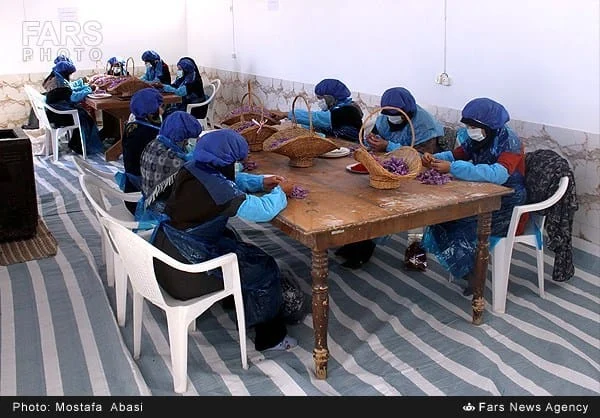
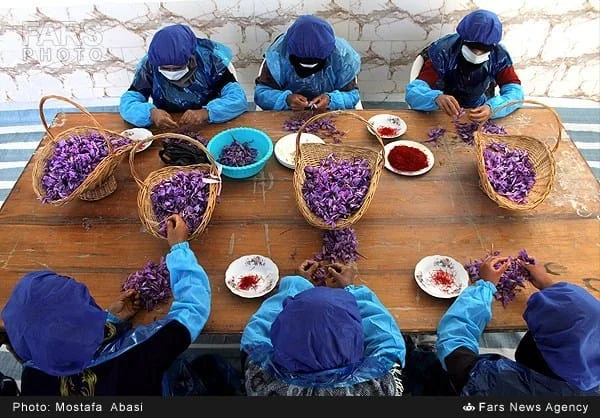
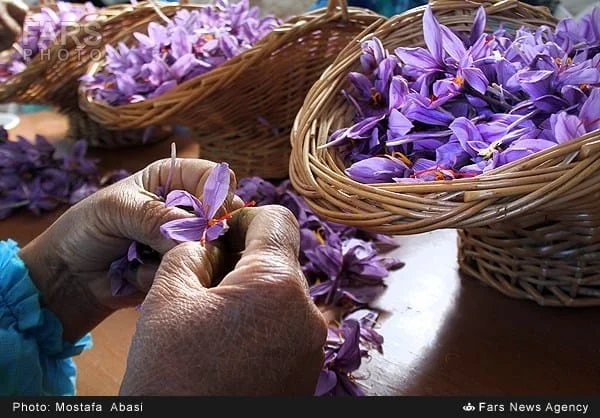
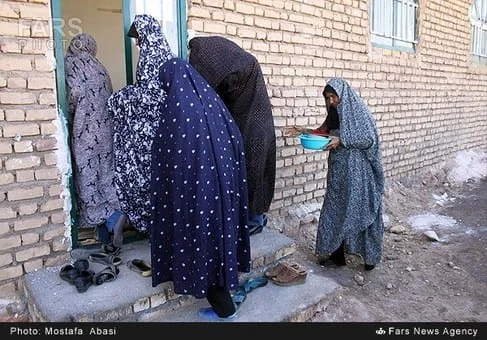
Fresh saffron flowers arrive as purple blossoms, not as ready-to-use red threads. In the gallery below, workers sit around tables and open the flowers by hand. The red stigmas are placed separately while petals and other flower parts remain on the table. Other frames show baskets of incoming flowers, trays prepared for the separated threads, protective clothing, and the small rooms in which the work took place.
The sequence matters because the usable spice is only a small part of each flower. Sorting therefore requires patience and good visibility. Clean surfaces, clean hands, suitable clothing, and protection from contamination matter throughout the process. The Codex General Principles of Food Hygiene apply food-hygiene controls across production, processing, storage, and distribution rather than treating safety as a final packaging check.
What happens after the stigmas are separated
The photographs end before every commercial step is visible. Once separated, saffron must be dried under controlled conditions, checked, sorted, and protected from moisture and contamination. Drying is not simply a cosmetic step: it produces the dried saffron that reaches the buyer and affects how well the threads keep their aroma, colour, and physical condition.
The current ISO 3632-1:2025 saffron specification covers dried saffron made from Crocus sativus pistils in filament, cut-filament, and powder forms. It also includes recommendations for storage and transport. Laboratory testing and traceable handling are what allow a processor to support a quality claim; an attractive photograph or vivid colour alone cannot do that. Buyers who want practical checks can also read our guide to identifying high-quality saffron.
From a village workshop to a regional factory
A related archived report described another point in Iran’s saffron value chain: a factory in Khusf Industrial Town, near Birjand in South Khorasan. This was a different site from the Hatiteh workshop shown here. The report said the facility covered 700 square metres, used machinery and equipment purchased for 4 billion rials, and created 35 direct jobs.
The old report called the facility the Middle East’s first “saffron pill” production unit and listed Germany, China, Malaysia, India, Turkey, Armenia, Azerbaijan, the United Arab Emirates, Saudi Arabia, and Lebanon as export destinations. Those details are preserved here as claims made in that historical news item, not as a current factory directory or proof of present export activity.
A production figure that should not be repeated as fact
The archived English text also said the unit produced “5,000,000 pounds of saffron per day each year.” That wording is internally impossible and almost certainly reflects a translation or unit error. The underlying source unit is not available in the saved article, so a reliable production volume cannot be recovered from it. Rather than turn a doubtful number into a new claim, the honest record is that the factory’s exact daily output remains unverified.
The same caution applies to superlatives such as “first” or “largest.” They can describe what the report said at the time, but they require dated, independent evidence before being presented as established facts today. Recent work on saffron quality in Iran likewise emphasizes testing and authenticity methods: the FAO and Ferdowsi University of Mashhad agreement focuses on scientifically supported authenticity testing rather than appearance or marketing language.
What the two production settings have in common
The Hatiteh photographs capture manual separation at village scale. The Khusf report describes investment, employment, packaging or processing capacity, and access to export markets. They are not the same operation, but they meet at the same quality chain. A larger factory cannot recover quality lost through poor handling at the flower stage, while careful hand separation still needs sound drying, testing, packaging, storage, and traceability before the product is ready for trade.
That is why the strongest reading of this saffron workshop is neither romantic nor industrial. The people at the tables are doing the precise first-stage work. Later equipment and controls make that work consistent, measurable, and suitable for a wider market.
Photo gallery: saffron processing in Hatiteh
The following historical photographs document the workshop itself. The gallery moves from close views of separating stigmas to wider views of the workers, baskets, tables, and building.

![Exporting Saffron to Turkey + Price Guide [Complete 0 to 100]](https://img.rowhanisaffron.com/20260827003933/saffron-export-turkey-quality-inspection.webp)



