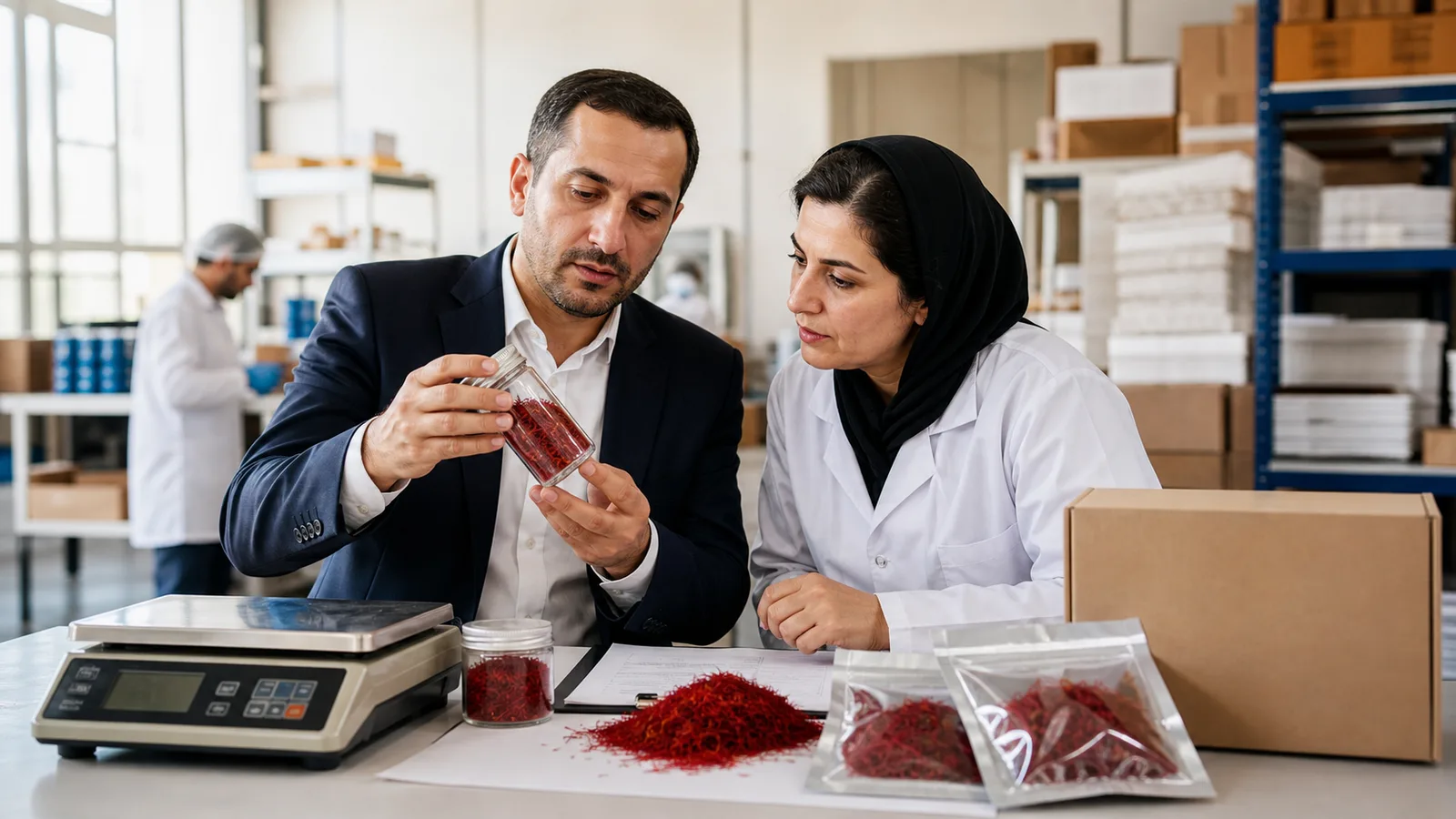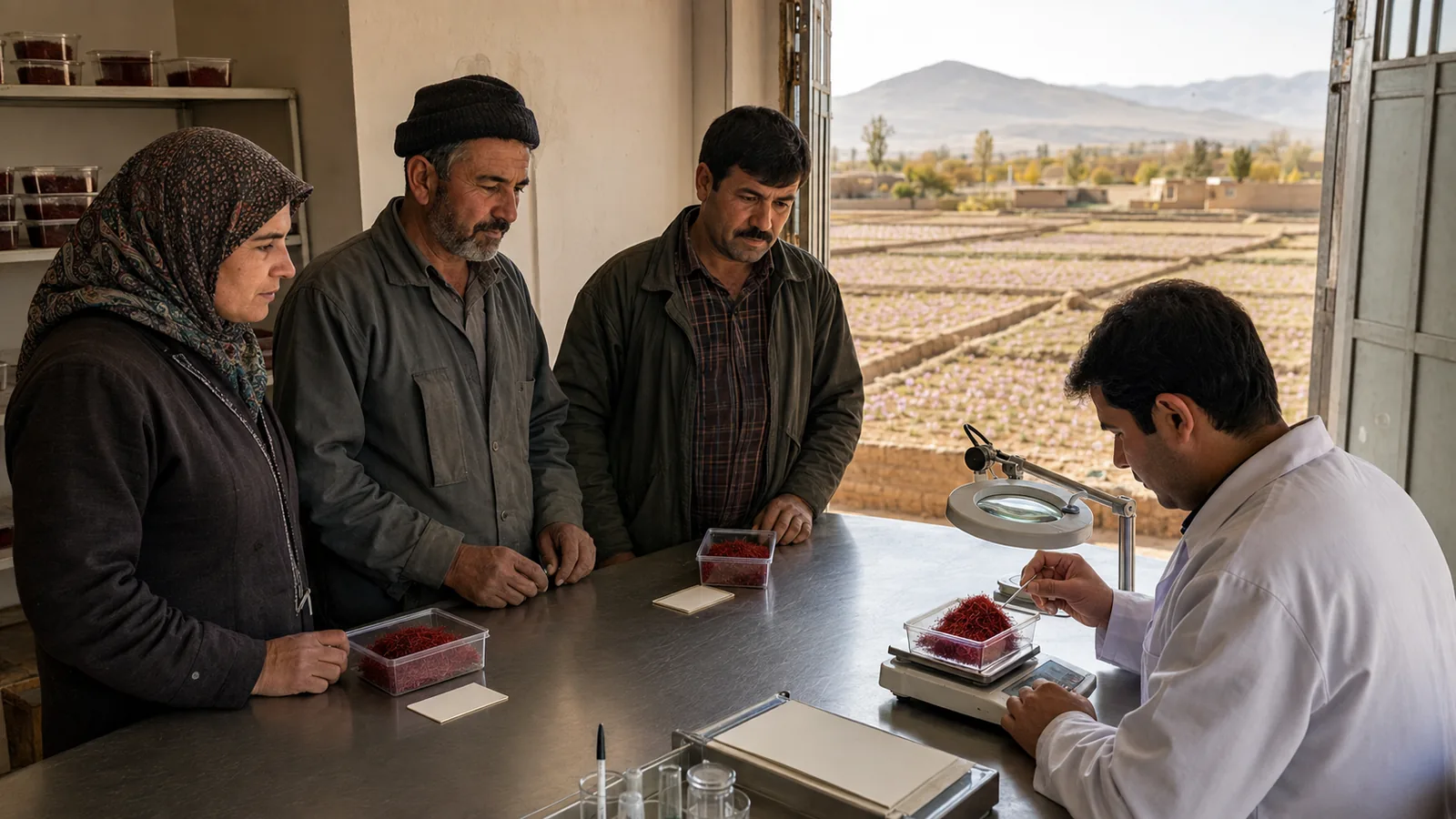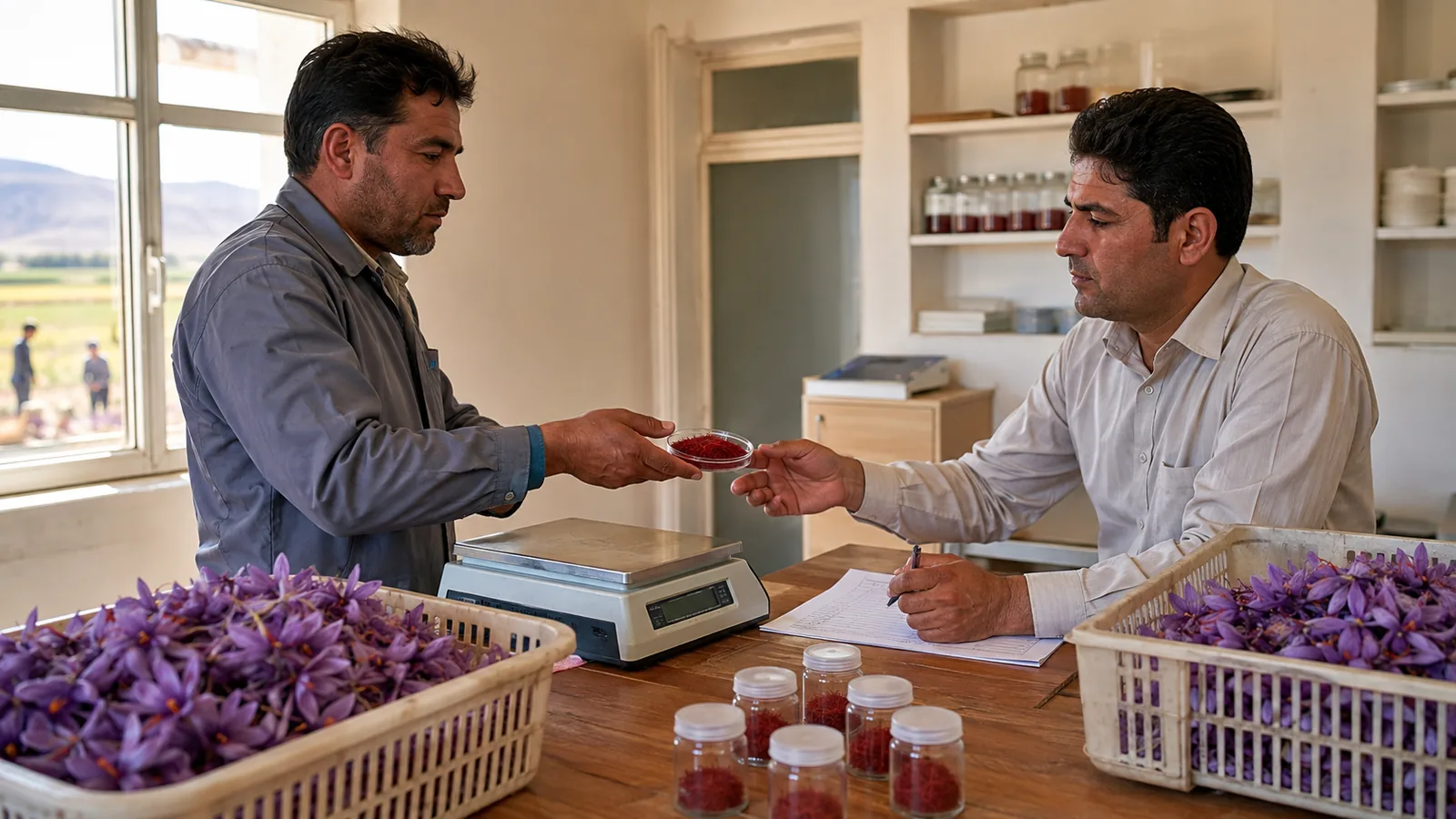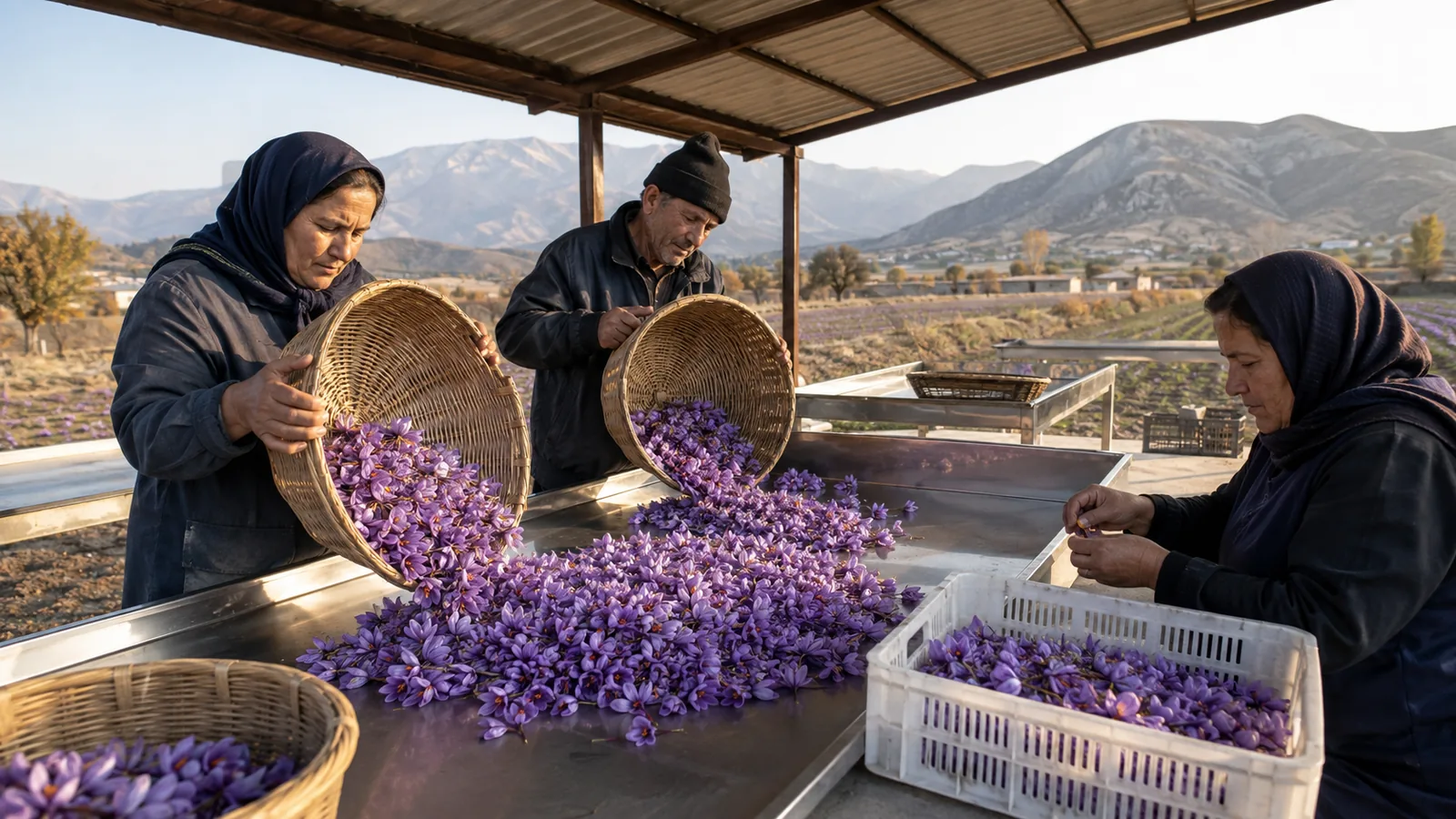


This October 2013 report recorded a nine-month snapshot of Khorasan Razavi customs trade, with saffron listed among the province’s principal exports. Its published headline, “1819 tons of freight and customs Saffron Khorasan Razavi issued,” is an awkward translation and the surviving body does not repeat or define the 1,819-ton figure. We have kept that historical title, but we do not present the number as saffron tonnage.
The report is broader than saffron alone. It covers changes in export weight and value, the province’s main traded goods and partners, imports, passenger movements through Mashhad airport customs, and anti-smuggling cases. Those figures describe the nine-month reporting period available in 2013; they are not current trade statistics.
What the Khorasan Razavi customs report said
The statement was attributed to Masoud Etemadi, identified in the translated copy as the customs supervisor in Khorasan Razavi. His name and title are imperfectly rendered in the source, so this article does not expand the attribution beyond the information preserved there.
For exports, the report gave two year-on-year changes: 12% for one measure and 9% for the other, referring respectively to value and weight. A verb indicating whether those measures rose or fell is missing from the English text. It would be misleading to supply the direction from guesswork, so the percentages remain recorded without calling them increases or decreases.
Saffron appeared in a mixed list of goods cleared through the province’s customs offices. Other items named in the report included packaged goods, Portland cement, potato sticks, iron and steel products, paint, resin, sugar, tomato paste, fresh apples, refined sugar and bitumen. The wording does not give a separate weight or customs value for saffron.
Was the 1,819-ton figure all saffron?
No such conclusion can be supported by the surviving article. The number appears in the title as “1819 tons of freight,” while the body discusses total provincial trade and several unrelated commodities. It does not say that Khorasan Razavi exported 1,819 tonnes of saffron.
The phrase could have lost punctuation, a scale word or context during translation. Without the underlying customs bulletin, turning it into 1,819 tonnes, 1.819 million tonnes or a saffron-only total would create a fact that the page cannot verify. For current comparisons, use a dataset that identifies the period, commodity code, trade flow, weight unit and customs value. Our saffron production statistics guide also explains why production and customs-export figures should not be treated as the same measure.
Export destinations named in the report
The principal destinations listed for Khorasan Razavi exports were Afghanistan, Turkmenistan, the United Arab Emirates, Tajikistan, Spain, Iraq, China, Kazakhstan, Kyrgyzstan, Saudi Arabia, Uzbekistan, India and Italy. Together, they were said to receive 98% of the province’s exports, with the remaining 2% going to other countries.
This is a destination list for the province’s overall exports in the period, not a saffron-only market ranking. A country’s presence in the list does not show how much saffron it bought or whether the goods were consumed there, repacked or re-exported.
Imports through Khorasan Razavi customs
The report also recorded 409,000 tonnes of imported goods with a stated value of US$332 million during the nine months. The original English says only “409 tons,” but its surrounding construction contains a missing scale word; for that reason, even the 409,000-tonne reading should be treated as a likely translation, not a newly verified customs total.
Two further changes, 21% by weight and 6% by value, were quoted for imports. Again, the direction is absent. The imported categories named were food products, rice, barley, vehicle parts, engines and pumps, railway or tram passenger coaches, wheat, coffee, raw silk, yarn and fibre.
The countries of origin listed were Turkmenistan, the United Arab Emirates, China, Pakistan, Ireland, Turkey, South Korea, Tajikistan, Germany, Armenia, the Netherlands, Japan and Russia. These details are retained as a record of the 2013 statement, not offered as the province’s present supplier mix.
Passenger traffic through Mashhad airport customs
According to the same report, about 1.603 million passengers passed through customs at Shahid Hasheminejad International Airport in Mashhad during the nine-month period. It separately lists approximately 813,000 arrivals and 789,000 departures.
Those two rounded components total about 1.602 million, leaving a difference of roughly 1,000 from the headline total. That small gap may reflect rounding or a damaged numeral in the translation. It should not be “corrected” without the original table.
Anti-smuggling cases
The final sentence refers to more than 1,711 smuggling or trafficking cases handled by the province’s customs offices, with a stated value of “530 billion and 755 million.” The currency unit is missing. We therefore preserve the scale of the reported case count but do not convert the value into rials, tomans or US dollars.
The statement also does not say that these cases involved saffron. They belong to the wider customs summary and should not be used as evidence of a saffron-smuggling rate.
How to read customs weight and value
Customs weight and customs value answer different questions. Weight records a physical quantity under a declared unit; value records the amount used for trade reporting and, for imports, may also form the basis for duties. A change in one does not require the same change in the other because product mix, unit prices, exchange rates and shipment terms can differ.
The World Customs Organization explains that customs valuation is important both for duty assessment and for trade statistics. It also notes that the transaction value of imported goods is generally the starting point, subject to specified adjustments. That framework helps explain why an old provincial value total cannot be converted into a modern retail saffron price.
Commodity classification matters as well. The WCO’s Harmonized System groups traded goods under standard codes used for customs tariffs and international trade statistics. A reliable saffron-only comparison should use the relevant code and state whether the number is gross weight, net weight, declared quantity or value.
What can safely be taken from this 2013 record
The article supports a limited but useful conclusion: saffron was one of the important goods moving through Khorasan Razavi customs, alongside a much broader provincial trade basket. It also preserves the countries and headline customs measures cited by the official at the time.
It does not establish that 1,819 tonnes of saffron were exported. Nor does it show a current export volume, a current destination ranking or a present customs valuation. Those questions require a dated, commodity-level customs dataset rather than repairs to a translated news brief.
Source and review note
We reviewed this historical article on 28 August 2026. The 2013 figures remain attributed to the original Khorasan Razavi customs report and all visible translation gaps are disclosed. For present-day methodology, see the World Customs Organization’s official explanations of customs valuation and the Harmonized System.