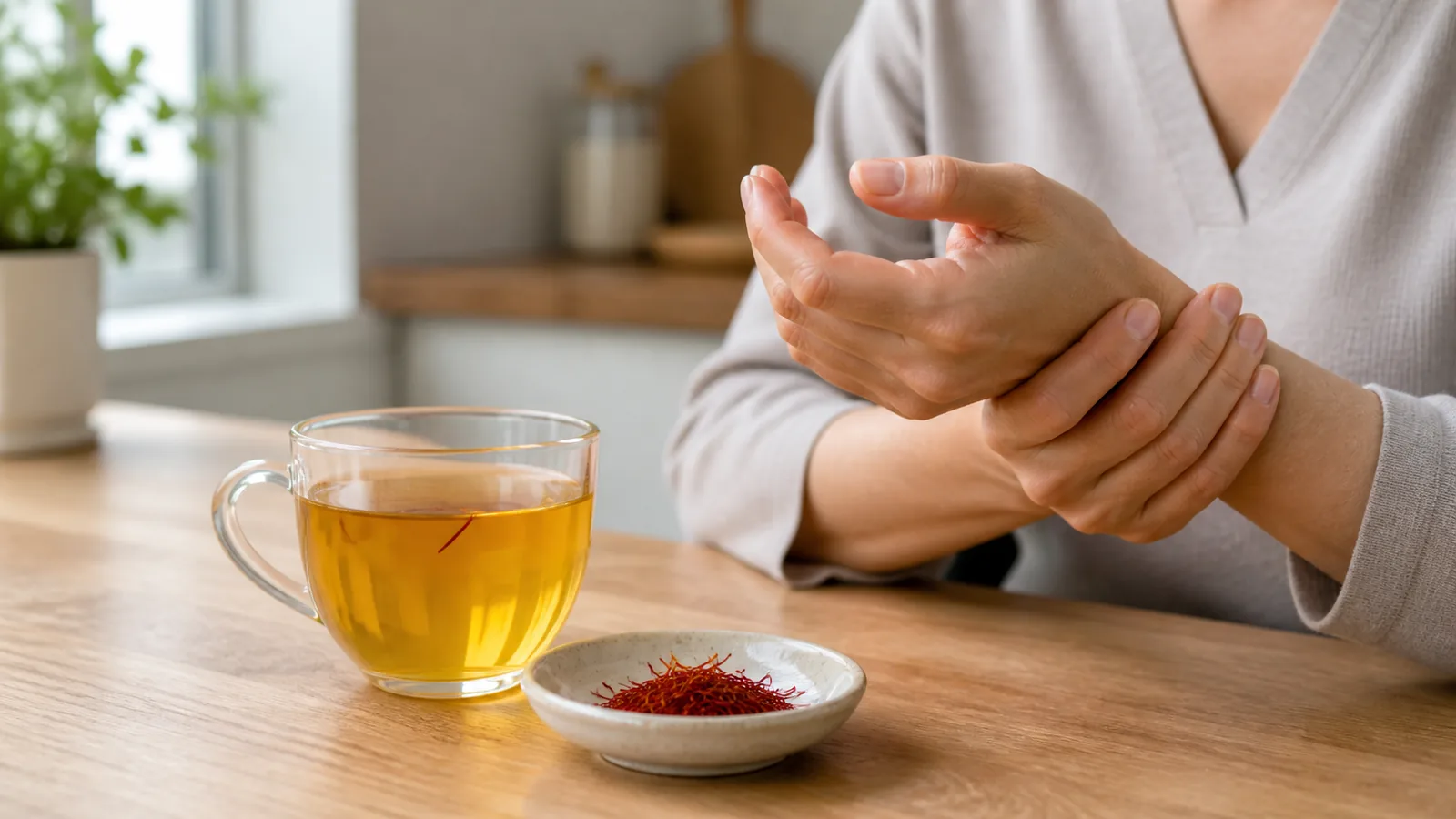
The medicinal properties of saffron are being studied most seriously for mood symptoms, but saffron is not a proven cure for depression or the long list of conditions claimed in traditional accounts. Small clinical trials and meta-analyses report a promising effect on depressive symptoms, while reviewers continue to call for larger, independent trials with standardized preparations and stronger methods.
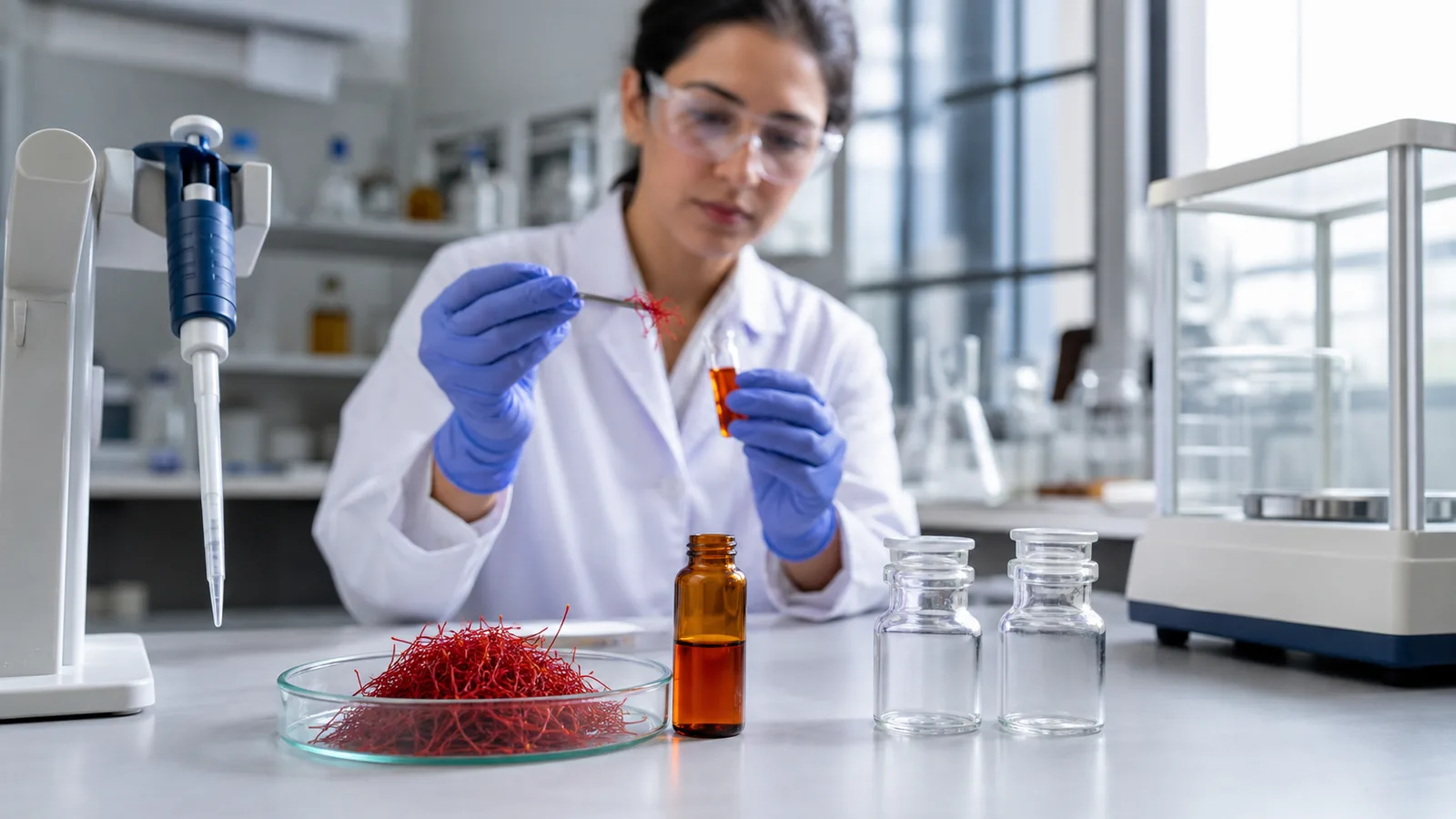
This distinction matters. A pinch used in food is not the same as a measured extract in a trial, and neither should replace diagnosis, prescribed treatment or urgent care. The older articles consolidated here mixed traditional Persian medicine, preliminary research and unsupported treatment claims; this version separates them.
What saffron contains
Saffron is the dried stigma of Crocus sativus. Its best-known constituents include crocins, which contribute colour; picrocrocin, associated with taste; and safranal, important to aroma. Researchers study these compounds and standardized stigma extracts, but the composition of a supplement can differ from culinary threads or tea.
The original article also promoted saffron as a source of vitamins B1, B2, B6 and C. Saffron may contain nutrients when analysed by weight, yet people eat only a tiny quantity as a spice. It should not be presented as a meaningful replacement for ordinary dietary sources of those vitamins.
Saffron and depression: what the clinical evidence says
Depression is the best-developed part of the clinical saffron literature. Meta-analyses of randomized trials have found improvements in symptom scores compared with placebo, and some small trials reported results similar to antidepressant comparators. That is a signal worth investigating, not a basis for saying the plant “treats depression” for everyone.
The limitations are substantial. Trials have often been small and short, many were conducted in one country, preparations and doses differed, and publication or sponsorship bias cannot be excluded. A broad evidence-mapping review of saffron meta-analyses concluded that the quality of the reviews and underlying evidence needed improvement and called for larger randomized trials in multiple countries.
Someone with persistent low mood, loss of interest, sleep or appetite change, impaired daily function, or thoughts of self-harm needs professional assessment. Do not stop an antidepressant, combine it with a saffron supplement or change its dose without the clinician who manages the treatment.
Other claimed medicinal properties
The stored destination attributed many effects to saffron: pain relief, better digestion, improved circulation and memory, lower blood pressure and blood fat, kidney and bladder “cleansing,” liver strengthening, sedation, anticonvulsant action and sexual benefits. Some of these areas have early human research; others are based mainly on traditional use, laboratory work or animal studies.
An umbrella review found signals across several outcomes, including depressive symptoms, cognition and some metabolic measures, but also found heterogeneous results and weak review quality. It is therefore more accurate to say that saffron has been studied for these outcomes than to say it has demonstrated all of these medicinal properties in routine care.
The following claims are not retained as treatment advice:
- saffron “purifies” or strengthens the liver;
- it cleans the kidneys or bladder;
- it treats postpartum haemorrhage;
- it can replace anticonvulsant medicine;
- it reliably lowers blood pressure or cholesterol for an individual; or
- eating it will keep a person continuously happy.
Postpartum bleeding and seizures are medical emergencies. They require urgent evidence-based care, not a home saffron preparation.
What about cough and bronchitis?
The absorbed source said saffron relieved cough and helped treat bronchitis. This is preserved as a traditional claim, not a clinical recommendation. The review for this article did not identify reliable human trial evidence establishing saffron as a treatment for acute cough, bronchitis, asthma or a lung infection.
A cough can have many causes, and antibiotics are not appropriate for every case either. Seek medical advice for breathing difficulty, chest pain, blue lips, coughing blood, severe weakness, dehydration, a persistent high fever or symptoms that are worsening rather than improving.
Safety: food use and medicinal use are different
Culinary saffron is normally used by the pinch. Supplements and therapeutic preparations deliver measured extracts repeatedly, so their safety cannot be inferred from the spice jar alone.
A 2026 systematic review examined 102 human trials and one case report involving saffron-only preparations. About 56% of trials reported at least one adverse effect during intervention, and the reviewers estimated an adverse-event incidence around 17.5%. Gastrointestinal problems were the most common and were usually minor and self-limiting, but the authors advised clinical monitoring for higher doses or prolonged medicinal use.
Other reported effects in the literature include nausea, dry mouth, reduced appetite and headache. Product identity also matters: adulterated or poorly standardized supplements may not contain the preparation studied in a trial.
Pregnancy, medicines and higher-risk use
The old article warned that high amounts could stimulate the uterus and increase miscarriage risk. Evidence in pregnancy remains limited and dose-dependent, so a blanket statement about every culinary use would be misleading. The safer rule is that pregnant or breastfeeding people should not use saffron medicinally or take concentrated saffron supplements unless their obstetric clinician specifically approves the product and dose.
That caution also applies to people taking prescription medicines, preparing for surgery, managing a bleeding disorder, or treating a serious psychiatric, neurological, kidney or liver condition. A supplement should be discussed with a pharmacist or clinician who can check the actual label and medication list.
The source quoted a threshold of more than 5 g at one meal and listed severe toxicity. Five grams is far above normal culinary use, but a single number should not be treated as a safe/unsafe switch. Concentration, product purity, body size, repeated dosing and health status all affect risk. If a large amount is swallowed or severe symptoms develop, contact local emergency or poison-control services.
Traditional Persian medicine and cultural history
Both archived articles describe saffron as warm and dry in traditional Persian medicine and identify mood as its most celebrated historical use. That classification belongs to a traditional medical framework. It can explain cultural practice, but it is not equivalent to a modern diagnosis, mechanism or clinical-trial result.
The absorbed source also cited Iranian researcher Mohammad-Hassan Abrishami and his book on saffron’s historical, cultural and agricultural identity. It described poems and stories arranged across centuries, illustrating how deeply saffron is rooted in Persian literature and mythology. Cultural importance can coexist with scientific caution; one does not prove the other.
Growing conditions mentioned in the historical source
The source shifted from medicine to cultivation, describing saffron as suited to sunny, treeless land with relatively mild winters, hot dry summers and protection from cold winds. It also recommended deep ploughing during autumn or winter, with later land preparation where machinery access was limited.
Modern agronomy supports the importance of climate, friable well-drained soil, corm condition and field management, but no one calendar fits every region. Planting depth, soil texture, drainage, salinity, irrigation timing and local temperature must be evaluated together. A cultivation plan should follow regional extension guidance and soil/water testing rather than a medicinal article’s generic schedule.
How to use this evidence responsibly
- Use saffron as a culinary spice for flavour, aroma and colour without expecting a therapeutic dose.
- Treat historical health claims as cultural context unless supported by good human evidence.
- Choose supplements only with professional guidance, a defined extract, dose and independent quality controls.
- Do not substitute saffron for urgent care or an established treatment.
- Report adverse effects and stop a supplement while seeking clinical advice when appropriate.
What is the most credible medicinal property of saffron?
Mood and depressive symptoms have the strongest clinical signal, but saffron is still better described as a promising research subject than a stand-alone depression treatment. The evidence does not validate every traditional claim, and results from standardized extracts cannot be transferred automatically to tea, food or an unknown supplement.
Saffron’s responsible place is between two extremes: it is more than folklore, because human trials exist, and less than a cure, because the evidence base still has important limits. Clear labelling, cautious language and professional care protect both the reader and the value of the research that has been done.