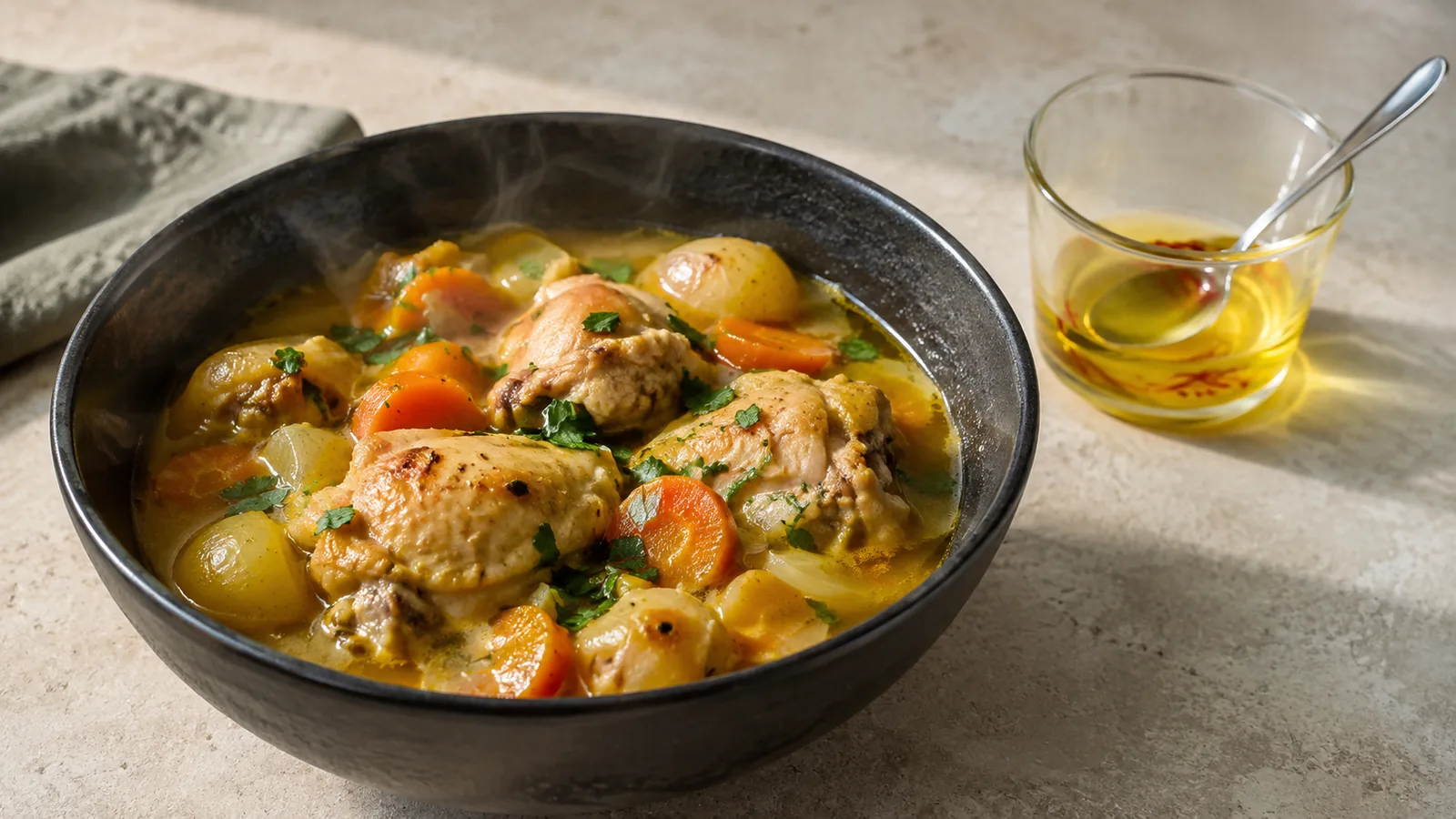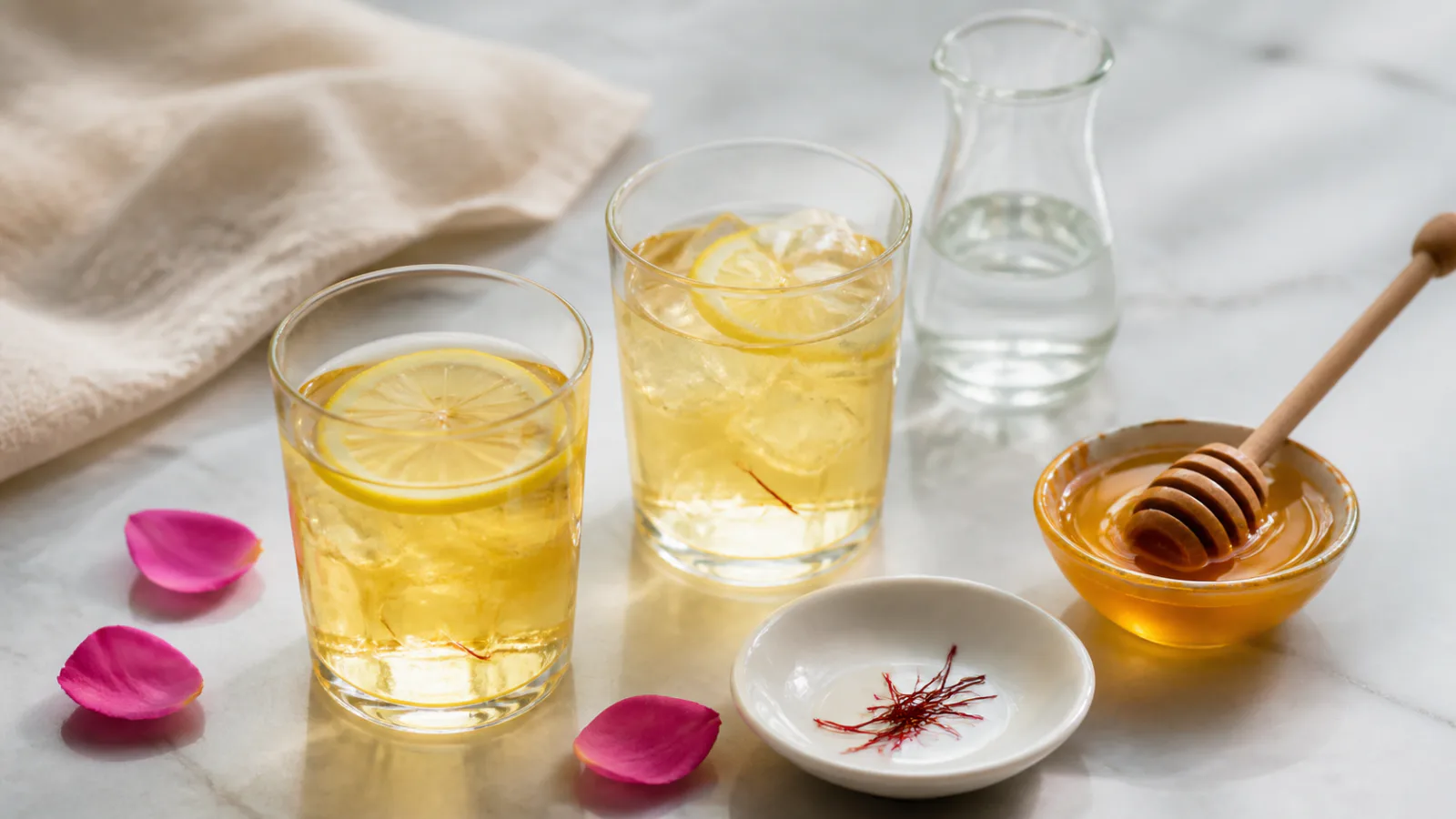
How to make saffron water: bloom a small pinch of saffron in warm water, dissolve in honey, add food-grade rose water and dilute with cool water. The finished honey, rose water and saffron syrup is really a lightly sweetened drink rather than a thick bottled syrup, and it takes about 15 minutes.
Rose water varies greatly in strength. Start with one tablespoon, taste and add more only if needed. The old recipe used half a glass, but neither the glass size nor the concentration was defined; with a strong rose water, that quantity can overwhelm the saffron.
Honey, rose water and saffron syrup ingredients
Makes two small glasses.
- 10–15 saffron threads
- 2 tablespoons warm water, for blooming
- 1–2 tablespoons honey, to taste
- 1 tablespoon food-grade rose water, then more to taste
- 350 ml (about 1½ cups) cool still or sparkling water
- Ice and a thin lemon slice, optional
Use rose water labelled for food or drink, not a cosmetic product. Intact saffron threads are easier to inspect than unidentified powder and give you better control over the amount.
How to make saffron water with honey and rose water
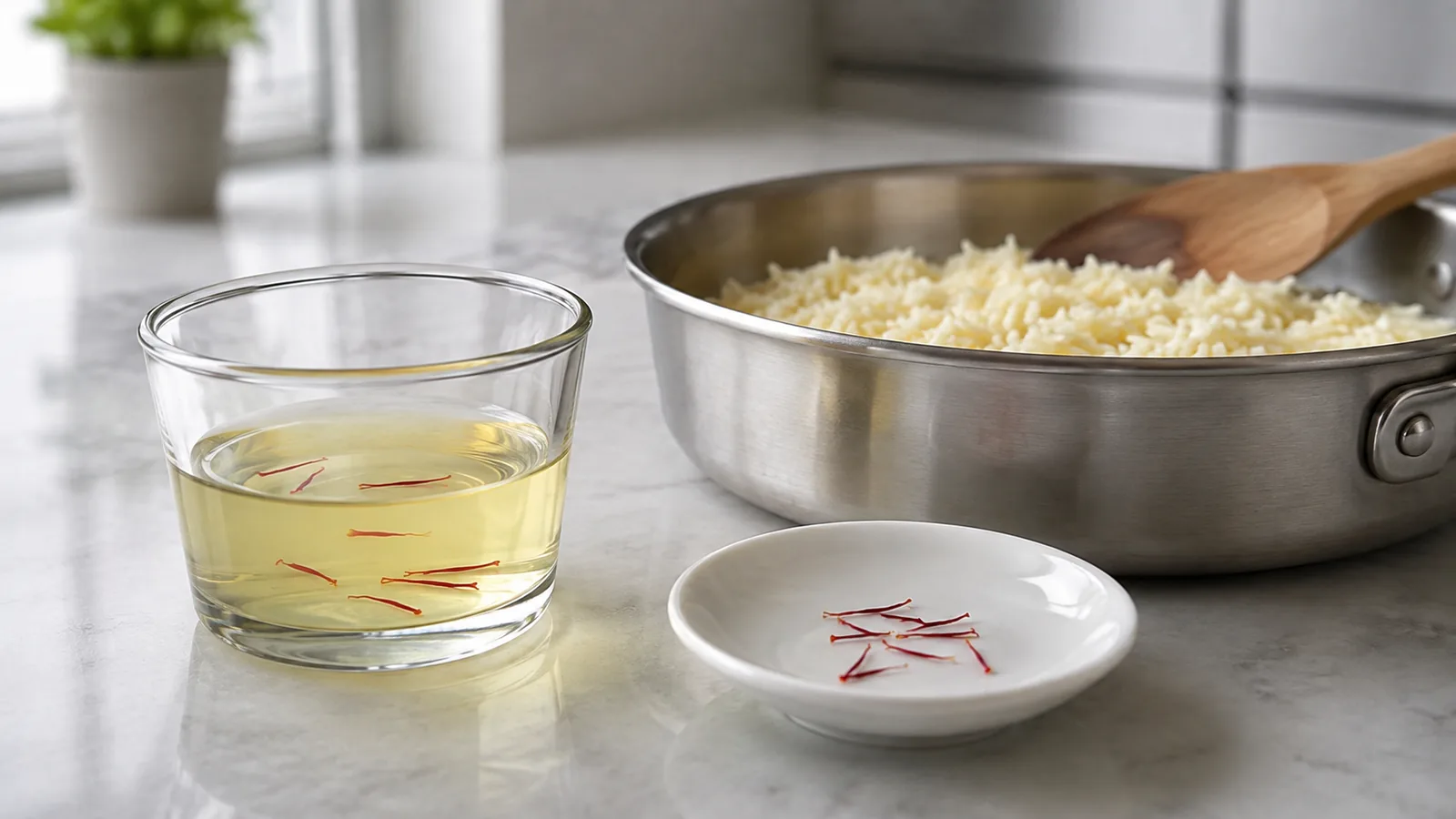
- Lightly crush the saffron threads on a clean saucer with the back of a spoon.
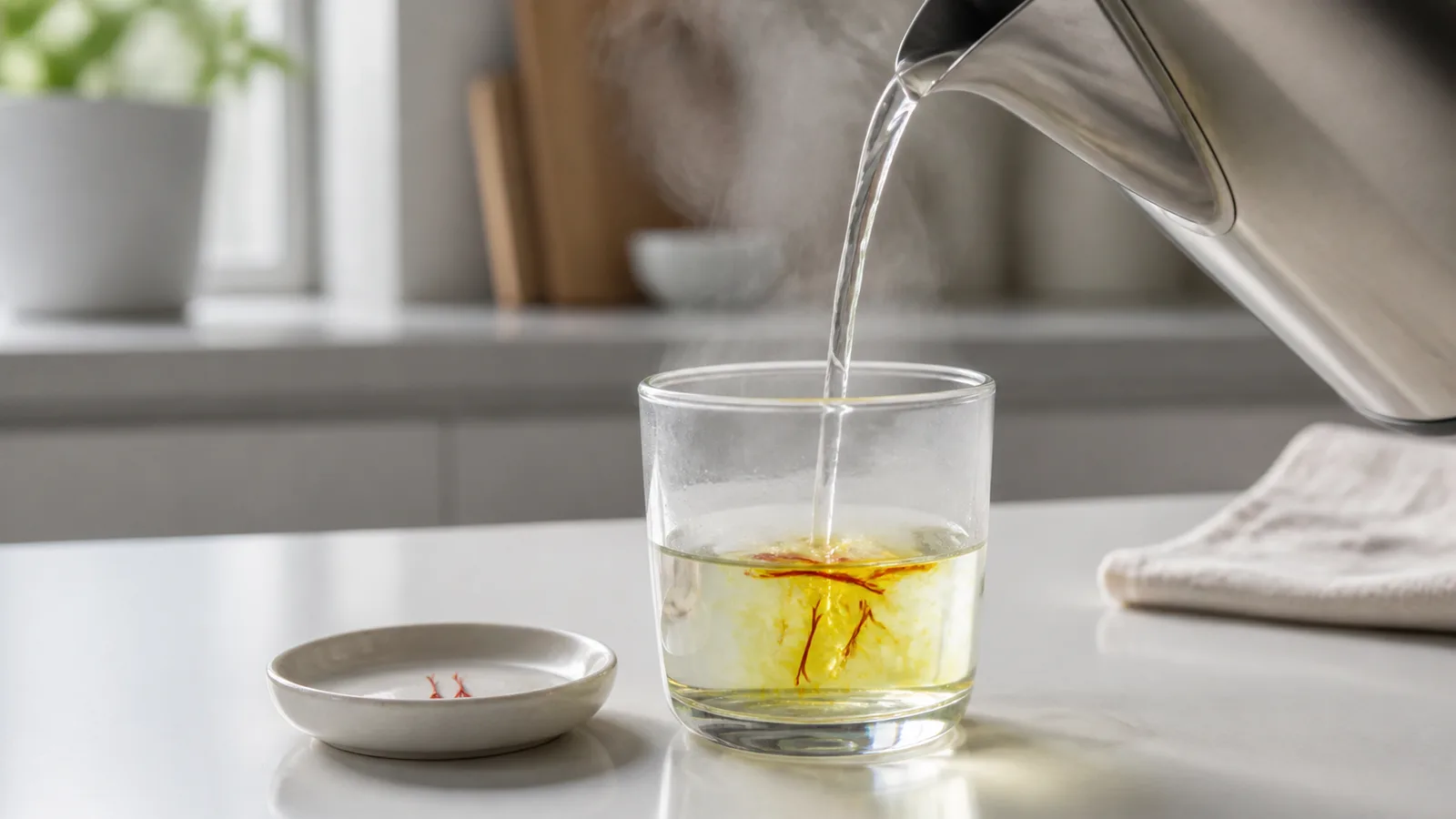
- Put them in a small cup, add two tablespoons of warm water and cover for 10 minutes.
- Add the honey to the warm saffron liquid and stir until it dissolves.
- Pour the mixture into a jug. Add one tablespoon of rose water and the cool water.
- Stir, taste and adjust with a little more honey or rose water if needed.
- Pour over ice and serve promptly. Add lemon only after tasting; too much will hide the floral aroma.
No cooking is required. Blooming uses warmth to open the saffron, while cool dilution keeps the drink fresh. If you use sparkling water, add it last and stir once, gently.
Is it a syrup or a drink?
In English, syrup usually means a concentrated sugar solution used in small quantities. This recipe contains enough water to drink by the glass. Calling it saffron water or a honey-and-rose-water drink sets the right expectation.
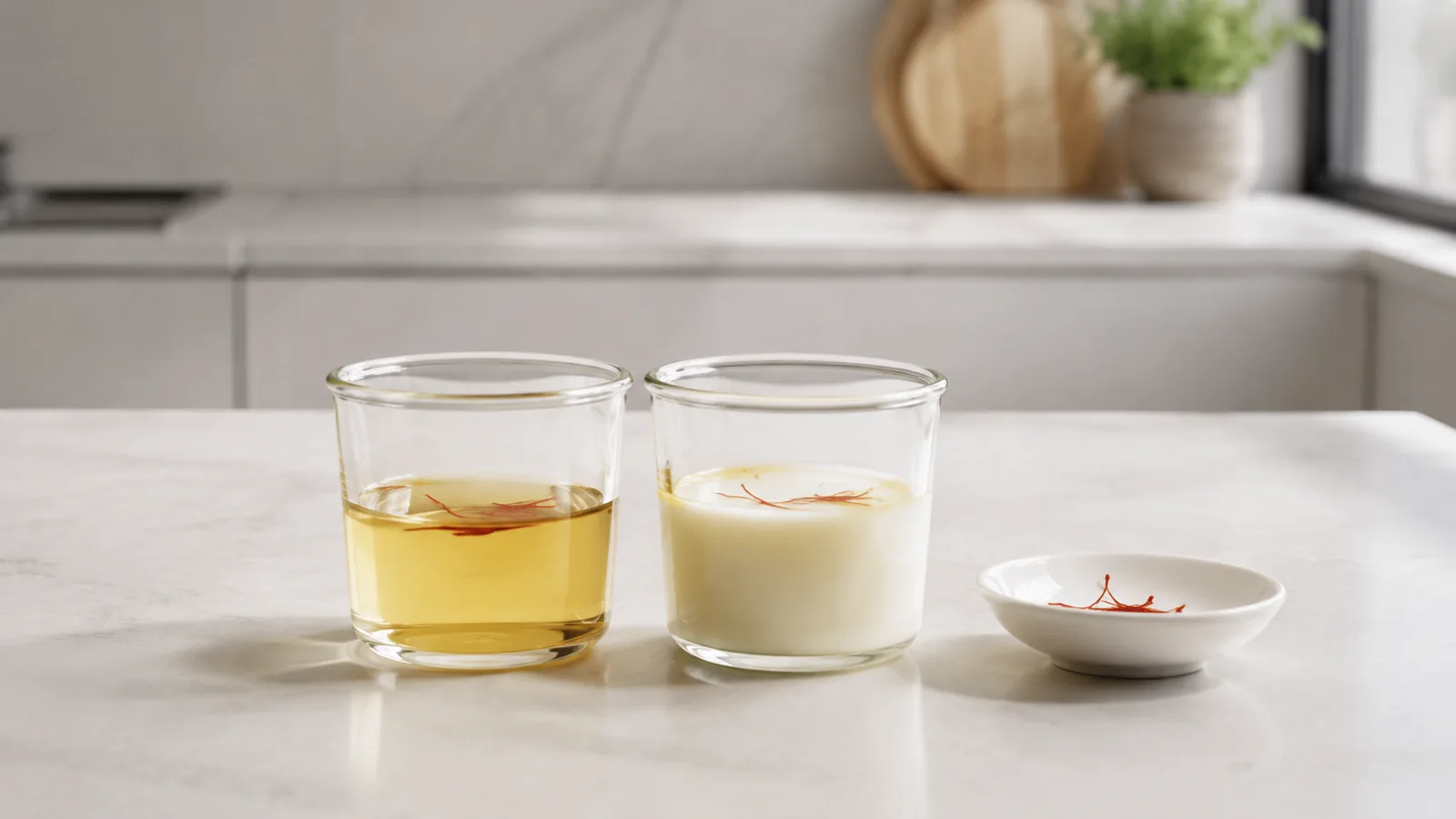
To make a small concentrate instead, bloom the saffron, mix it with honey and rose water, then refrigerate it in a clean covered container. Dilute one tablespoon in a glass of cold water and make only a quantity you will use promptly. This is a fresh beverage concentrate, not a shelf-stable preserve.
Traditional Iranian medicine context
The original page described honey and rose water as “hot and dry” and saffron as “warm and dry.” These are classifications from traditional Iranian medicine. They are part of a historical medical framework, not measurements of food temperature, moisture or a proven physiological effect.
Traditional use can explain why ingredients are paired, but it does not establish that the drink treats disease. Its immediate qualities are sensory: sweetness from honey, a rose aroma, saffron’s colour and a gently bitter finish.
What the ingredients actually contribute
Honey
Honey dissolves readily in the warm saffron infusion and supplies sweetness and carbohydrate. That can feel energising because it is sugar, not because the drink has been proved to increase overall vitality. Use less honey if you prefer a drier drink or monitor sugar intake.
Rose water
Food-grade rose water contributes aroma. A pleasant scent may make the drink feel relaxing, but that experience should not be presented as treatment for anxiety, sleep problems or another condition.
Saffron
Saffron contains crocin, crocetin and safranal, compounds studied for antioxidant and neurological effects. A systematic map of saffron clinical evidence found a varied research base using defined preparations. It does not show that this homemade drink prevents cancer, slows skin ageing or acts as an antidepressant.
Safety and sensible portions
This recipe uses saffron as a flavouring. Do not make it stronger in the belief that more will produce a medical effect. Concentrated products and gram-level amounts are different from ordinary food use.
Pregnant people should avoid extracts and medicinal amounts unless their obstetric clinician specifically recommends them. A 2026 review of saffron in pregnancy found limited and inconclusive evidence, with reasons for caution around higher exposure. Individual advice takes priority for a high-risk pregnancy.
Honey must not be given to children under 12 months because of infant botulism risk; the CDC’s infant-feeding guidance is explicit on this point. People with an allergy to any ingredient should not drink it. Ask a clinician or pharmacist before using concentrated saffron regularly with prescription medicines.
Flavour variations
- Cardamom: lightly crush one green pod and bloom it with the saffron, then strain.
- Mint: bruise two or three leaves and add them to the finished drink.
- Ginger: add one thin slice to the warm bloom for a sharper finish.
- Unsweetened: omit honey and increase cool water to taste.
- Warm version: dilute with hot water and serve like a light tea; our saffron tea guide has measured steeping variations.
Change one element at a time. Rose, cardamom, ginger and mint can all dominate saffron when used together.
A balanced glass
The clearest formula is a small pinch of bloomed saffron, one to two tablespoons of honey, one tablespoon of food-grade rose water and enough cool water for two small glasses. It preserves the traditional combination while giving each ingredient room to be noticed.
Enjoy the drink for its flavour and aroma. Its tradition is worth explaining, but antioxidant language and preliminary saffron research should not be turned into anti-ageing, cancer-prevention, mood-treatment or pregnancy claims.