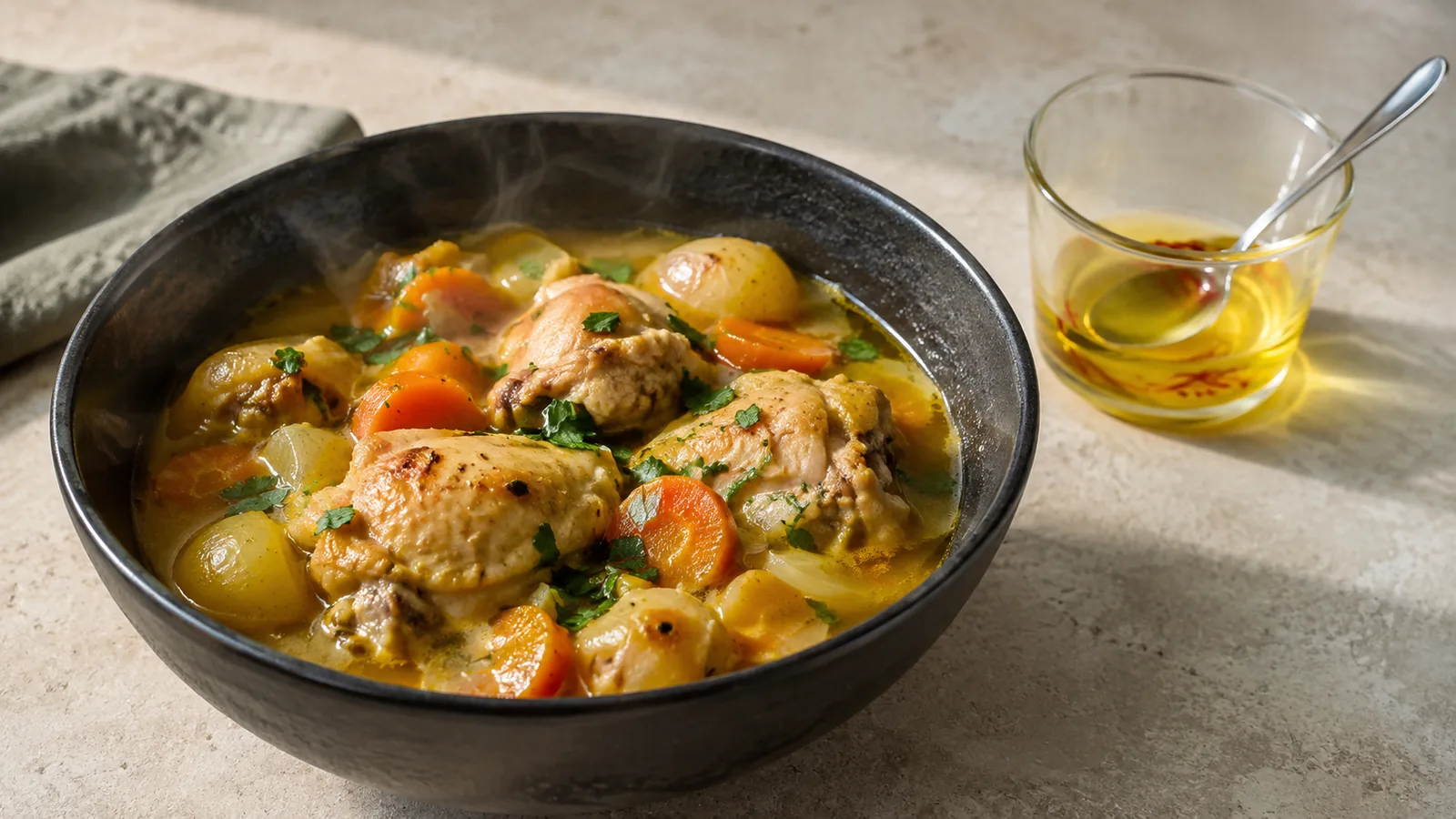
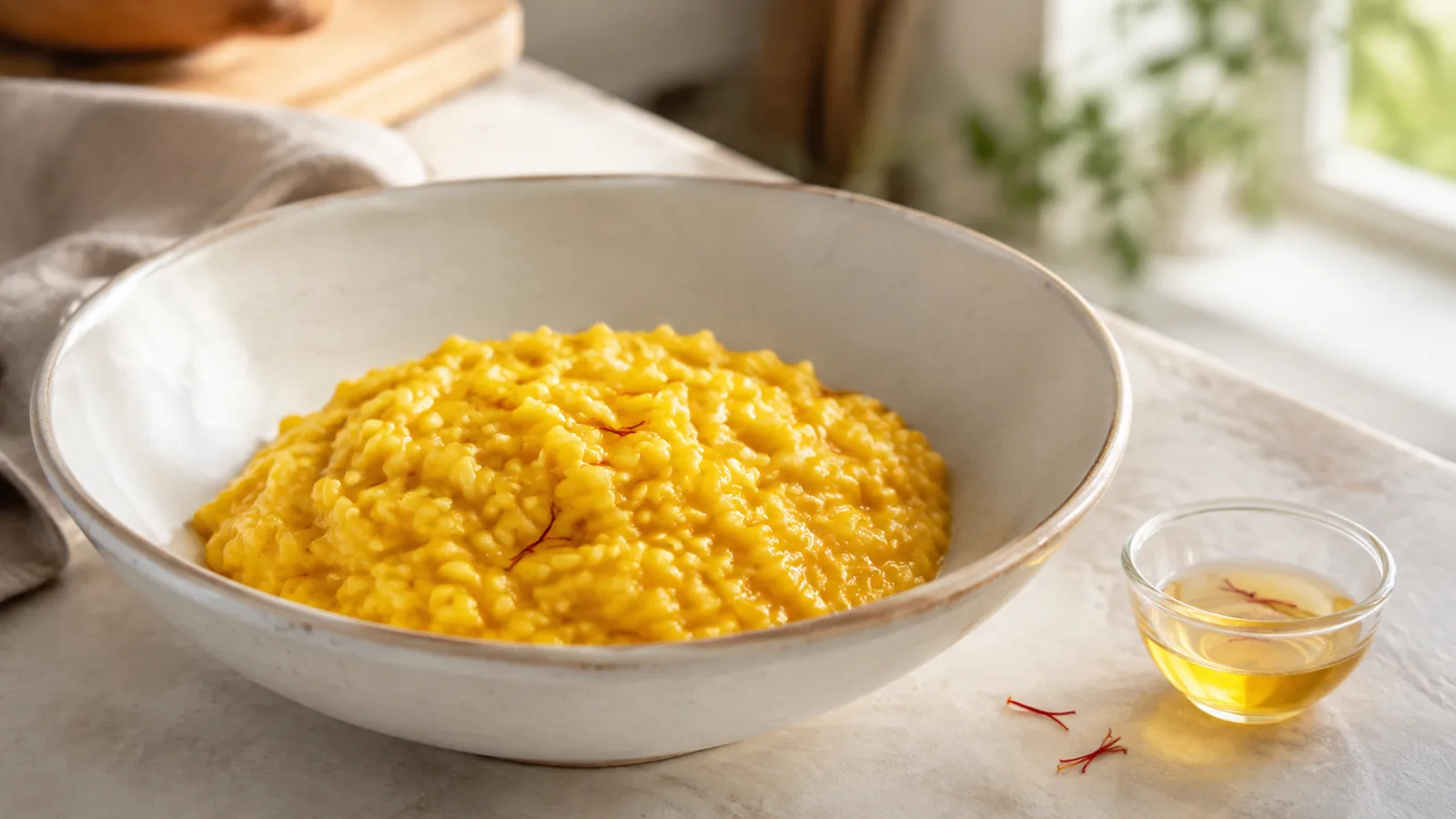
Isfahan kebab Briyani is a rich, crisp-edged lamb dish served on warm Sangak bread. Despite its name, this Isfahani speciality is not a rice biryani: the meat is simmered until tender, finely minced, seasoned with saffron and mint, then browned in a small shallow pan.
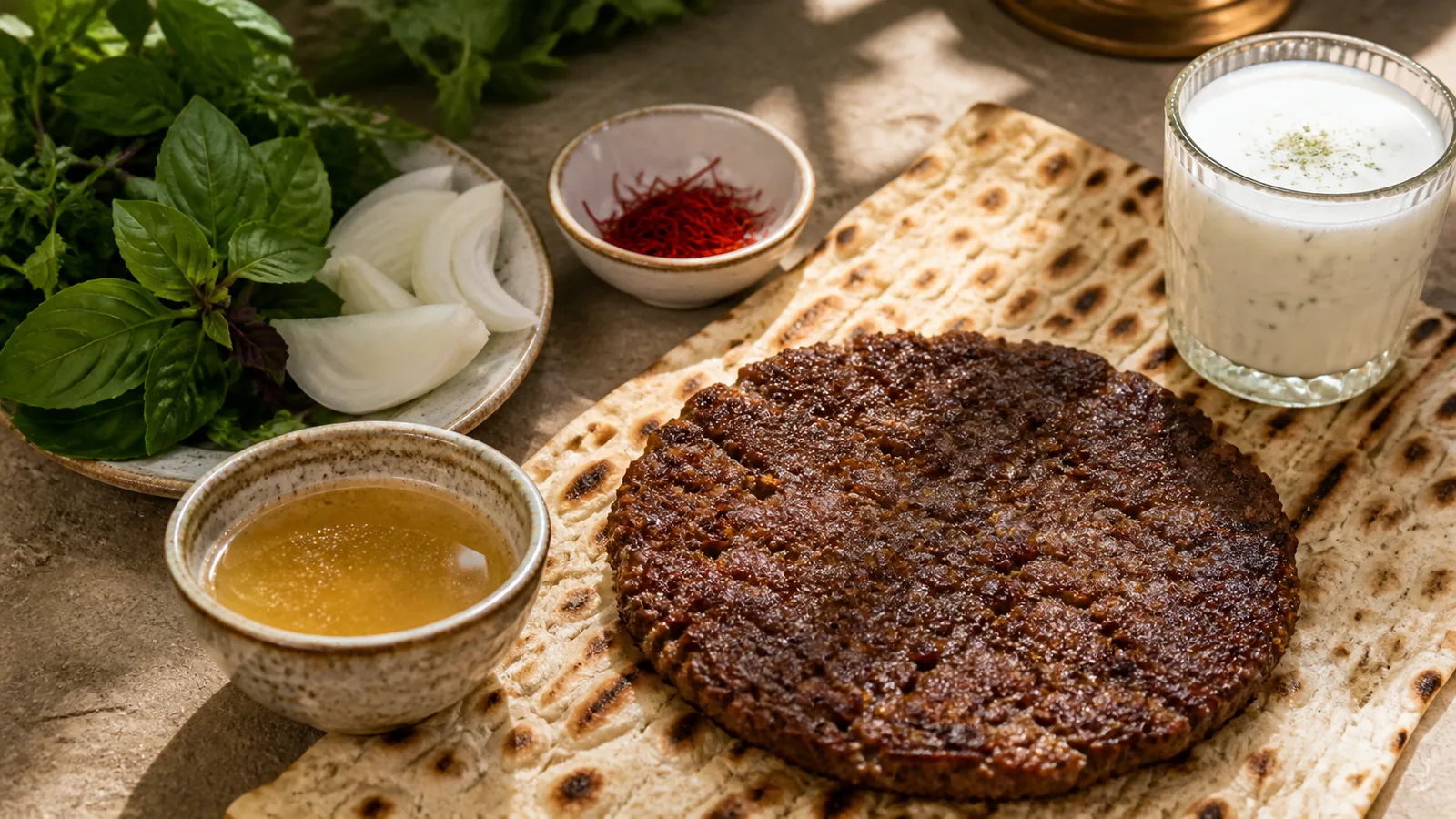
You may also see the dish written as Isfahan biryani, beryani Esfahan, Isfahani biryani or simply bryoon. Those spellings refer to the same local dish. Traditional shops in Isfahan often specialise in it, serving the browned lamb with a little broth-soaked bread, onion, fresh herbs and doogh.
What makes Isfahan Briyani different?
The familiar South Asian biryani is built around seasoned rice. Isfahan Briyani contains no rice at all. Its centre is cooked lamb, traditionally enriched with tail fat and pressed into a round patty. Cinnamon, dried mint and saffron give it a warm fragrance, while the hot pan creates the browned surface that distinguishes it from ordinary minced meat.
Some traditional versions are accompanied by minced sheep lung. That ingredient is optional here because availability and local food rules vary. If you use it, buy it from a regulated butcher, handle it separately from ready-to-eat food and cook it thoroughly. The lamb patty remains the main part of the meal.
Ingredients
- 500 g lamb shoulder, cut into large pieces
- 50 g lamb tail fat or 2 tablespoons neutral oil
- 2 medium onions
- 4 cups water, plus more if needed
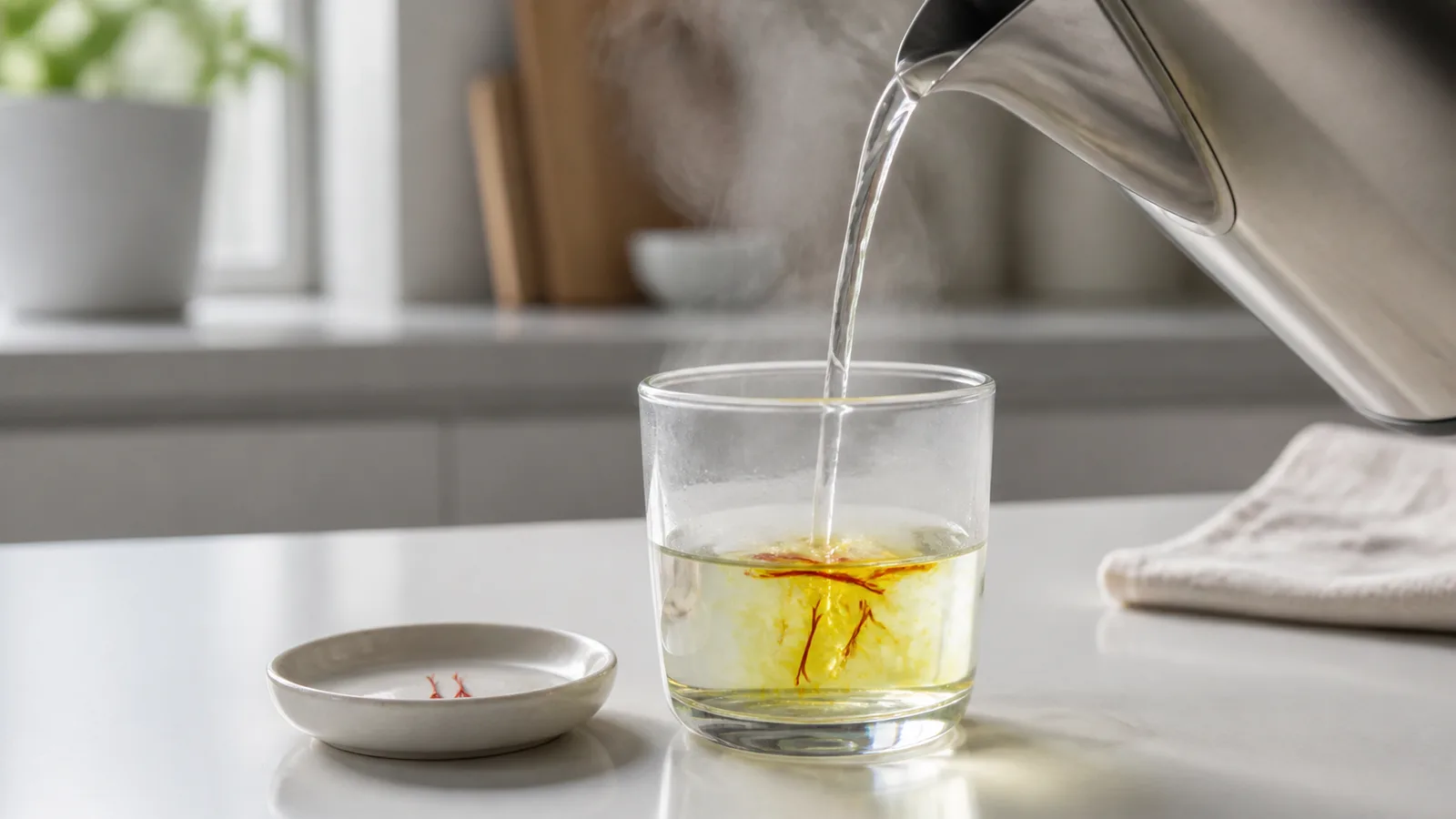
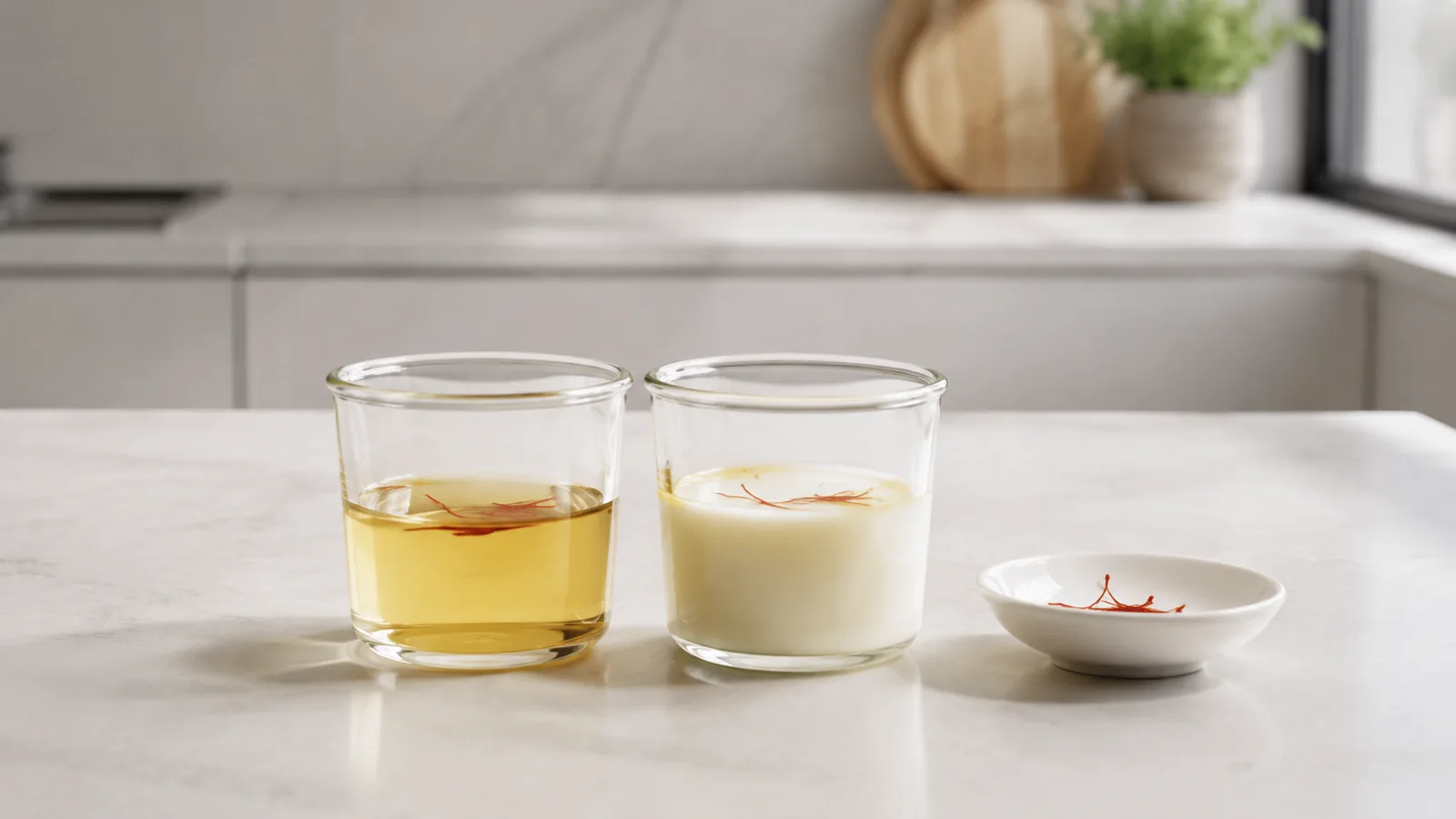
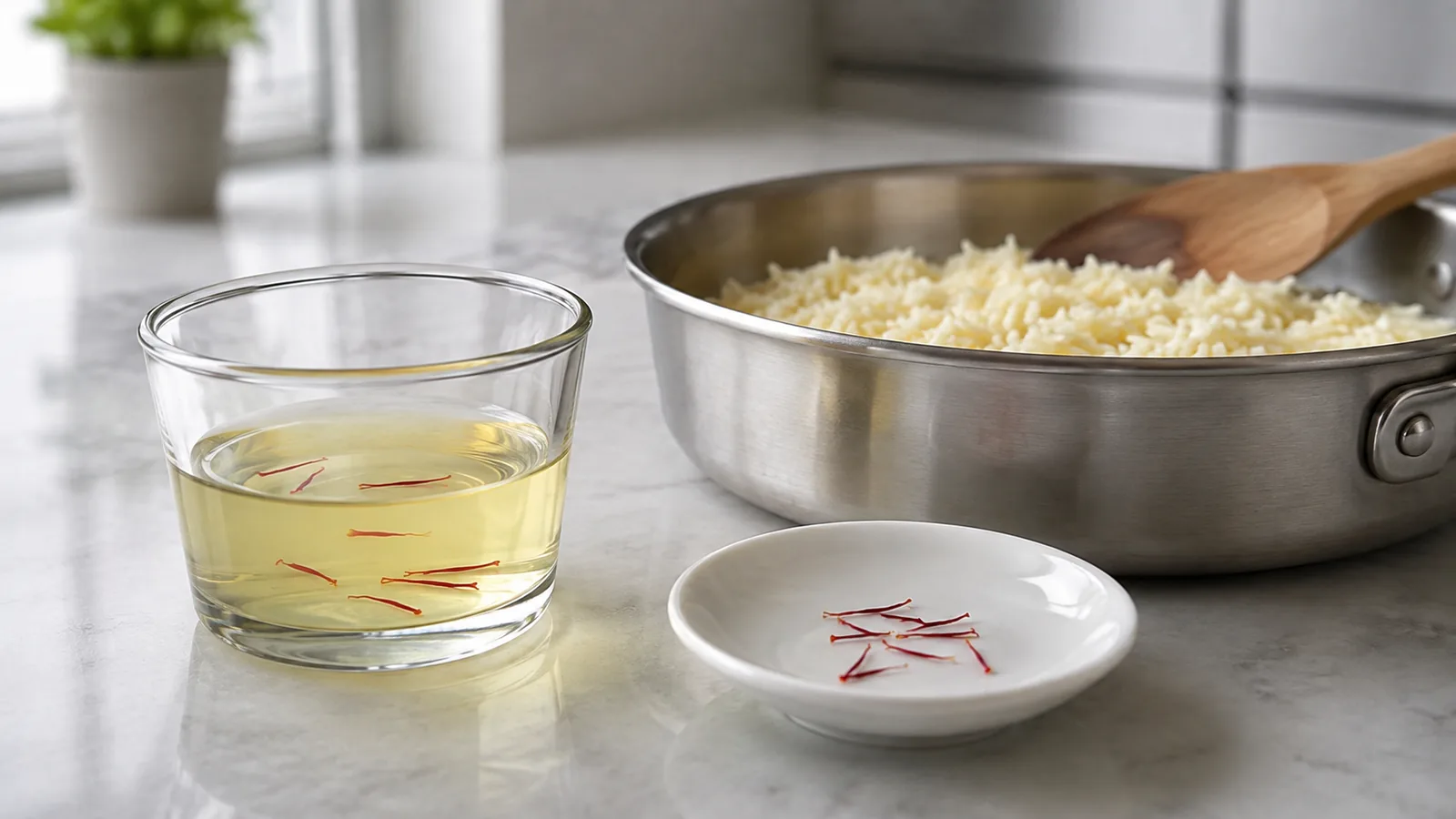
- 1 teaspoon brewed saffron
- 1 teaspoon dried mint
- 1 teaspoon ground cinnamon, divided
- Salt and black pepper
- Sangak or another sturdy flatbread, for serving
- Walnuts and slivered pistachios or almonds, optional
- Fresh herbs, raw onion and doogh, optional accompaniments
Optional traditional lung accompaniment
- 100 g sheep lung, purchased from a regulated butcher
- 1 small onion, chopped
- 2 cups water
- 1 tablespoon neutral oil
- Salt and black pepper
How to make Isfahan Kebab Briyani
1. Simmer the lamb
Put the lamb, tail fat, one halved onion and the water in a heavy saucepan. Bring it to a gentle boil, skim the surface, then lower the heat and cover partly. Simmer until the lamb is very tender, usually 1½ to 2 hours. Do not let the pan run dry; you want roughly a cup of concentrated cooking liquid left at the end.
Lift out the lamb and fat, reserving the broth. Let the meat cool just enough to handle, then mince it finely in a food processor or pass it through a grinder. Mix in the brewed saffron, dried mint, half the cinnamon, black pepper and enough salt to season it. Add one or two spoonfuls of broth if the mixture seems crumbly. It should hold together when pressed without becoming wet.
2. Prepare the optional accompaniment
If you are using sheep lung, simmer it with the chopped onion and two cups of water until fully cooked. Drain it, mince it and fry it briefly with the oil, salt and pepper until no liquid remains. Follow the butcher’s instructions and current food-safety guidance for organ meat; do not judge doneness by colour alone.
3. Brown the lamb patty
Heat a small heavy frying pan over medium heat. Spoon in a little fat skimmed from the broth, or use neutral oil. Dust the base lightly with the remaining cinnamon. Press the lamb mixture into an even patty about 1.5 cm thick. Cook until the underside is deeply golden and the centre is piping hot, then invert it carefully onto a plate. Work in two batches if your pan is crowded.
A traditional Briyani ladle makes a neat individual round, but a small frying pan gives the same useful contact with the heat. The important point is to press the meat evenly and leave it alone long enough to form a crust.
How to serve it
Lay a piece of Sangak bread on each plate and moisten it with a small spoonful of the hot lamb broth. Place the browned patty on top. Add the optional minced accompaniment to one side, then finish with walnuts or slivered nuts if you like. Serve immediately with raw onion, fresh herbs and doogh.
Keep the broth light on the bread. Too much will hide the crisp surface you worked to create. Extra broth can be served separately with torn dry bread, which is closer to the way many Isfahan Briyani shops present the meal.
Practical cooking tips
- Use shoulder rather than a very lean cut. The collagen becomes tender during the slow simmer and helps the minced meat bind.
- Cool the meat briefly before grinding. Very hot meat can turn pasty in a food processor.
- Brew the saffron before mixing it through the lamb so its colour and aroma spread evenly.
- Keep some cooking liquid. It corrects a dry mixture and gives the serving bread the characteristic savoury flavour.
- For leftovers, refrigerate the meat promptly and reheat it until steaming throughout. Re-crisp it in a pan rather than warming it only in a microwave.
Isfahan kebab, Isfahan biryani and Briyani Isfahan are useful search names, but the plate itself is wonderfully specific: tender saffron-scented lamb, a cinnamon-browned crust and bread that catches just enough of the broth beneath it.