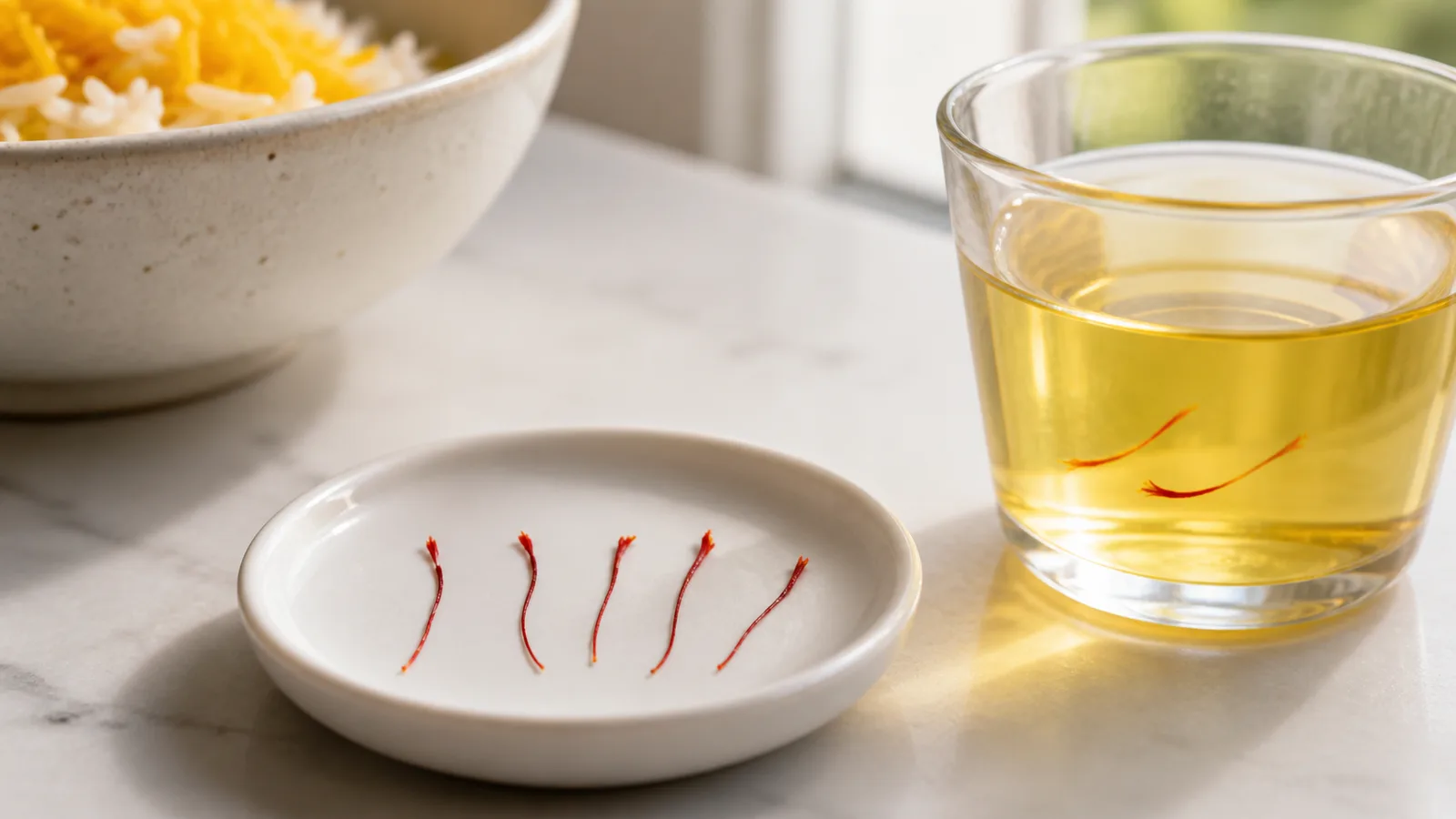
Saffron is usually more expensive by weight than vanilla, cardamom, cinnamon, black pepper, cloves and nutmeg. It is often described as the world’s most expensive spice. It is not normally more expensive than gold when both are compared at the same weight, and the price of either product changes with grade, market and date.
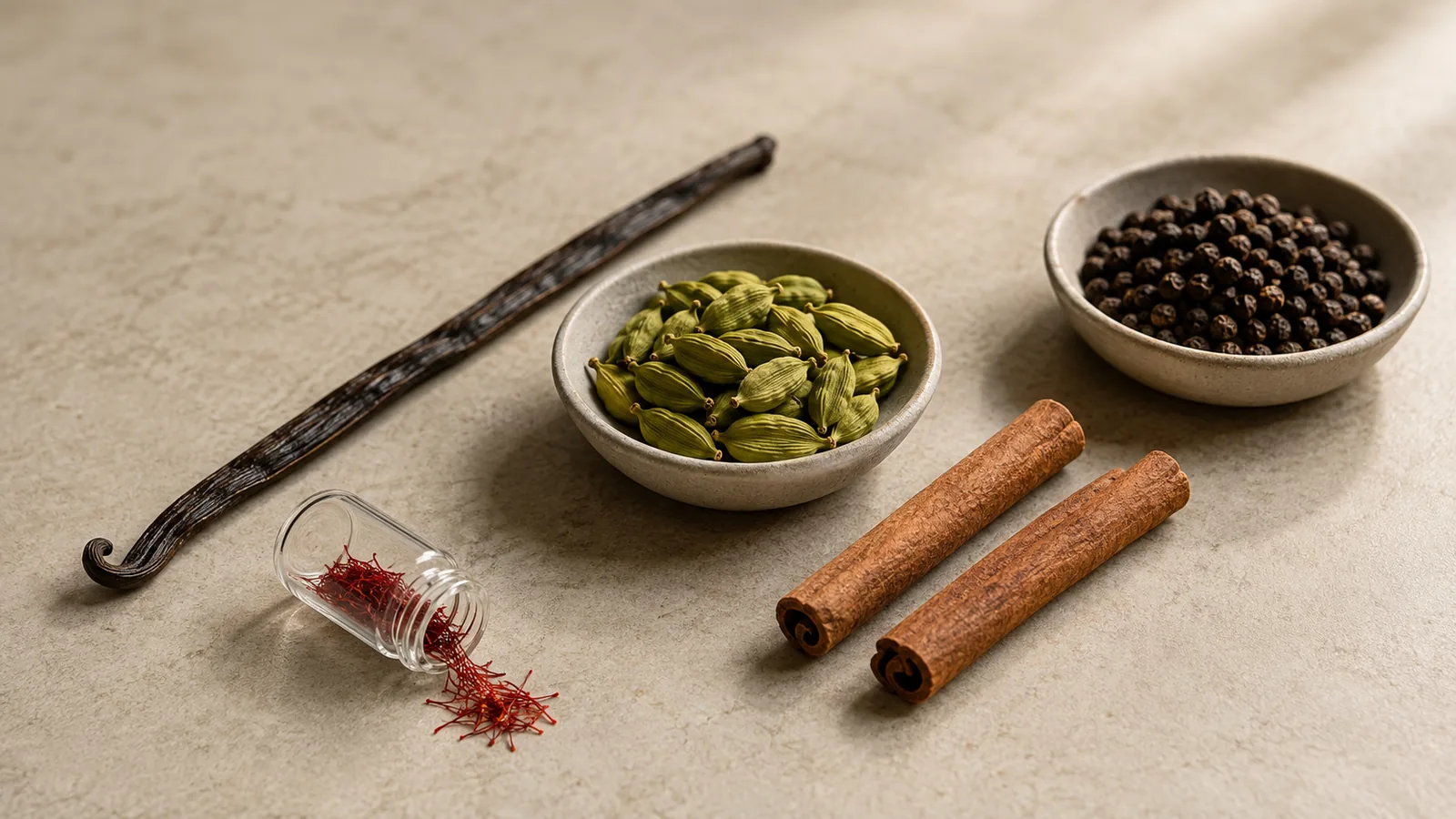
A useful saffron price comparison starts with the same unit
Price comparisons become misleading when one figure is for a gram, another for an ounce and a third for a retail packet. Saffron is commonly sold to households in fractions of a gram or small gram packs, while everyday spices may be sold in 30–100 g jars. A saffron packet can therefore cost less at the checkout even though its price per kilogram is much higher.
Compare like with like:
- convert both prices to the same weight;
- compare retail with retail or wholesale with wholesale;
- use the same country, currency and tax basis;
- check the quote date;
- note the product form, grade, origin and pack size.
A one-gram retail jar with protective packaging, testing and international delivery cannot fairly be compared with a bulk crop price at the farm gate.
Is saffron expensive compared with other spices?
Yes. Saffron generally sits above familiar premium spices on a weight-for-weight retail basis. Vanilla beans and green cardamom can be costly, especially after a poor harvest, yet genuine saffron usually remains in a separate price range. Cinnamon, black pepper, cloves and nutmeg are harvested in far larger quantities and are normally much cheaper per gram.
That does not mean saffron makes every recipe expensive. A dish often needs only a small pinch. The cost per serving can be modest when the threads are measured, infused well and distributed through the food.
Why saffron costs more than most seasonings
Each flower yields only three stigmas
Culinary saffron is the dried red stigma of Crocus sativus. Each bloom carries three, so a useful amount requires many flowers. Tens of thousands of blossoms are commonly needed for a kilogram of dried saffron; the exact count varies with flower and stigma size.
The harvest window is short
Flowers open during a concentrated autumn season and need prompt collection. A farm cannot spread this work evenly across the year. Labour, transport and processing capacity must be ready when the field blooms.
Most handling is delicate and manual
Flowers are gathered and the stigmas separated without mixing in excessive yellow style or damaged plant material. The fresh stigmas must then be dried to a stable condition without destroying the aroma. Sorting, testing and packing add more work after the field harvest.
The crop needs land and time
Corms occupy a bed through their annual cycle, and growers manage irrigation, weeds, disease and periodic lifting or replanting. Saffron’s lower water needs in suitable regions do not make the crop labour-free.
How saffron compares with vanilla and cardamom
Vanilla is also labour-intensive. Its orchids may require hand pollination, and the harvested beans undergo a lengthy curing process. Cardamom demands careful picking and drying. Both can become expensive when supply is tight.
Saffron still tends to cost more by weight because the saleable spice is only three slender stigmas from each flower and because picking, separation and drying happen during a narrow period. “More expensive” should not be read as “better” or more useful; the spices perform different jobs.
Is saffron more expensive than gold?
Usually no. The phrase “worth more than gold” is a historical or promotional comparison, not a reliable current price statement. At normal modern market prices, investment gold is far more expensive per gram than culinary saffron. A saffron vs gold price comparison must use the same weight and the same day’s prices.
The confusion persists because saffron is extraordinarily expensive for an agricultural product and has long been called “red gold.” Gold and saffron markets also quote different forms: bullion purity and live metal prices on one side, origin, thread cut, quality, pack size and freshness on the other.
For a fuller explanation of the units and the old saying, read whether saffron is actually worth more than gold.
Does Iranian saffron cost less?
Iran is the dominant producing country, not a single price category. The FAO stated in September 2025 that Iran produces more than 90% of the world’s saffron. Large output can create competitive supply, but the price of Iranian saffron still varies with harvest, cut, quality, testing, packaging, order size, exchange rate and sales channel.
Spain, India and Greece produce smaller but respected harvests. Crocus sativus is well suited to growing areas with dry summers and cold winters, although cultivation also depends on drainage and local practice. This geographic concentration contributes to rarity, but it does not make every lot from one country equally valuable.
The same FAO account of Iran’s saffron sector describes authenticity and post-harvest handling as continuing value-chain concerns. A low price is not automatically a bargain if the product is old, diluted, damp or mislabelled.
Anyone checking the saffron price in Iran should also ask what stage the number represents. A farm-gate quote, exporter offer and small retail jar include different services and costs.
Grade and cut affect the price
Mostly red stigma material often commands more than saffron that retains a longer yellow style. However, commercial grade names are not perfectly standardised between sellers and countries. Names such as Negin, Sargol, Pushal or coupe describe a style or cut; they do not replace lot-level evidence.
Laboratory results, clean sorting, recent harvest information, origin traceability and appropriate storage can justify a higher price. A grand label without those basics cannot.
Retail pack size changes the apparent cost
Small packs have a higher price per gram because the container, label, handling and transaction cost are spread over less saffron. Larger packs may lower the unit price, but they are poor value if the buyer cannot use the threads while the aroma is fresh.
Compare the displayed net weight and calculate the price per gram. Then consider delivery, taxes and whether the seller provides useful batch information. Our unchanged saffron price page provides the site’s current pricing context; this article deliberately avoids a fixed number that will become stale.
Very cheap saffron deserves a closer look
Adulterated or diluted material can be presented as a bargain. Warning signs include a price far below comparable genuine threads, vague origin, unexplained powder, colour that rushes off instantly in cold water and a seller who cannot identify the pack weight or lot.
Price alone cannot authenticate saffron. Expensive packaging can still contain poor material, while a direct and efficient supply chain may offer a fair lower price. Use cost as one signal alongside appearance, aroma, traceability and seller accountability.
How to spend less without replacing saffron
- Buy the smallest pack you can use while it remains aromatic.
- Compare price per gram rather than packet price.
- Bloom measured threads in warm water so the infusion spreads evenly.
- Store the remainder airtight, dark, cool and dry.
- Choose the thread cut your recipe needs instead of paying for a name alone.
If you want the complete field-to-pack cost explanation, see why saffron is so expensive.
The short answer
Saffron is more expensive by weight than almost every culinary spice, including vanilla and cardamom in ordinary comparisons. It costs so much because each flower provides three stigmas and the short harvest, separation and drying require extensive skilled labour. Gold is normally much more expensive per gram. A sound saffron price comparison always uses the same unit, market level, date and product quality.