


Iranian saffron can reach a consumer under another country’s brand name because harvest origin, export destination and place of packing are different facts. A legitimate importer may buy bulk saffron, test it, pack it and sell it under its own brand. The problem begins when the label or marketing leads buyers to believe the crop was grown somewhere it was not.
An archived customs article used shipments to the United Arab Emirates, Spain, Saudi Arabia, Hong Kong and India to illustrate how much Iranian saffron moved through overseas trading and packing markets. It also raised concerns about false saffron, speculative price claims and Iranian product allegedly represented as Afghan.
The report’s allegations and figures are historical. They do not prove wrongdoing by every trader in any named country. The practical response is product-level traceability.
The old export snapshot
The source said Iran exported 137 tonnes of saffron to 53 destinations in the reported year, worth more than $200 million. It then said nearly 85% went to five markets and listed approximately:
- 54 tonnes to the United Arab Emirates;
- 35 tonnes to Spain;
- 12 tonnes to Saudi Arabia;
- 6 tonnes to Hong Kong; and
- 5 tonnes to India.
Those quantities total 112 tonnes, about 82% of 137 tonnes rather than 85%. The discrepancy may reflect rounding, a mistranslated quantity or coverage not visible in the article. It is preserved rather than silently corrected.
The source also printed average per-gram export values for the five destinations, but punctuation damage makes the sequence unreliable. The values appear to range from roughly $1 to $6 per gram. They are not suitable as current quotations or as evidence of quality.
Brand country, packing country and crop origin
A brand identifies the business responsible for the product. It does not necessarily identify the farm. “Packed in Spain,” for example, can truthfully describe where bulk saffron entered consumer jars while the crop itself was harvested in Iran.
Three statements should therefore be kept separate:
- harvest origin: where the saffron flowers were grown and picked;
- processing or packing place: where threads were cleaned, tested, blended or packed; and
- brand owner: the company placing the finished pack on the market.
A package can mention all three without confusing the customer. The exact wording must meet the destination market’s origin and food-labelling rules.
How an Iranian origin claim should be supported
Origin should follow the lot, not depend on a decorative image or a seller’s assurance. Useful records include the grower or collector, field or locality, harvest period, processor, incoming weight, separation and drying batch, test sample, packing run and shipping documents.
When bulk lots are combined, the traceability system should show which inputs entered the blend and in what quantities. If the business cannot reconstruct that path, a precise regional claim becomes difficult to defend.
The UN Food and Agriculture Organization has described a joint project with Iran focused on saffron authenticity, traceability and food-supply-chain management. That work reflects the commercial importance of evidence-backed identity.
Henna is not saffron
The archived article attributed to council member Ali Hosseini a warning that some sellers offered henna or mixtures as saffron. Henna and saffron are different plants. Substitution is fraud and can also create safety and allergen questions that the buyer did not agree to accept.
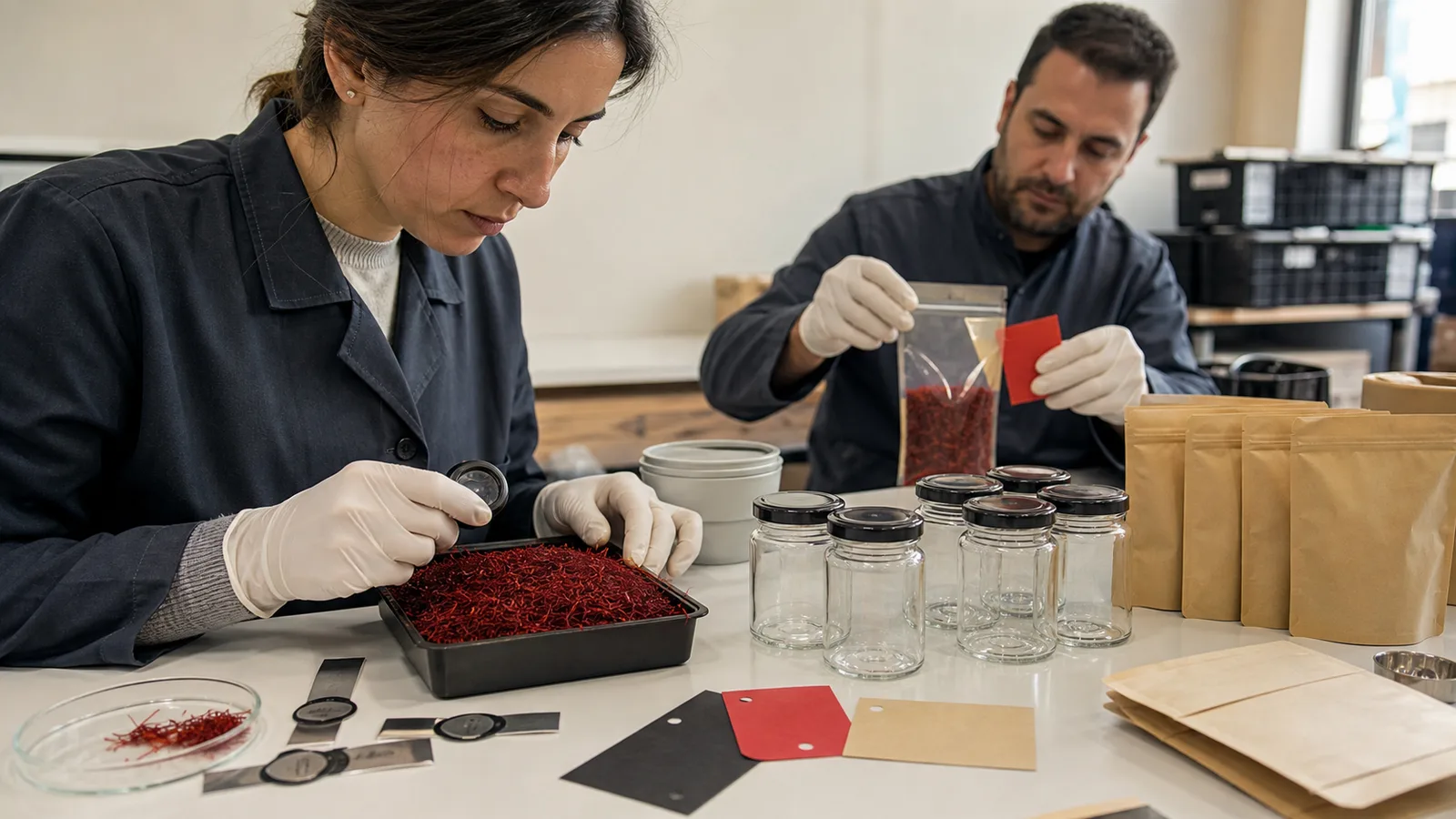
Visual checks can identify obvious problems, but colour alone is weak evidence. Dyed fibres and other plant material can resemble threads, while powder hides structure entirely. A commercial buyer needs a representative sample, chain of custody and appropriate identity and purity testing.
A suspiciously low price, intense instant colour in cool water or uniform non-saffron fibres warrants investigation, not an automatic conclusion based on one home test.
The Afghanistan claim needs restraint
The source said Iranian saffron corms had moved to Afghanistan and alleged that some Iranian saffron was packed there and sold as Afghan. It presented Hosseini’s view that this weakened Iran’s market position.
The article supplied no shipment records, named companies, laboratory evidence or case decisions. The allegation must not be generalised to Afghan saffron or Afghan traders. Afghanistan has its own farms and saffron industry, and a genuine Afghan lot should be judged on its records and quality.
If origin fraud is suspected, the correct response is to test the lot, audit the supply chain and use the responsible regulatory or contractual process. Nationality is not evidence.
Why anonymous bulk trade loses visibility
Bulk export is not inherently harmful. It can be the efficient format a food manufacturer or established packer needs. The risk is anonymous trade with weak specifications and no durable connection between the farm and finished product.
In that situation, downstream businesses control the consumer story. Iranian growers may receive the commodity price while other firms receive payment for testing, brand trust, packaging, distribution and service.
Iranian suppliers can retain more value by providing consistent lots, dependable documents, buyer-suitable packaging where justified and origin language supported by traceability. A country slogan cannot replace those capabilities.
A buyer’s label and document check
Before purchasing a pack or commercial lot, compare the front label, back label, invoice and test report. The product name, net weight, lot code, responsible business and origin statement should not contradict each other. The tested sample should belong to the lot being sold.
For bulk orders, ask whether the saffron was blended and where each component originated. Confirm what “Iranian saffron” means in the contract and how a mismatch will be handled. Keep retained samples from both sides in case of dispute.
The old article was right that other countries’ brand names can hide the crop’s journey. It was too broad when it treated that outcome as proof of deception. The reliable distinction is simple: overseas packing and branding can be legitimate; a false harvest-origin claim is not. Traceability is what lets a buyer tell the difference.

![Exporting Saffron to Turkey + Price Guide [Complete 0 to 100]](https://img.rowhanisaffron.com/20260827003933/saffron-export-turkey-quality-inspection.webp)



