


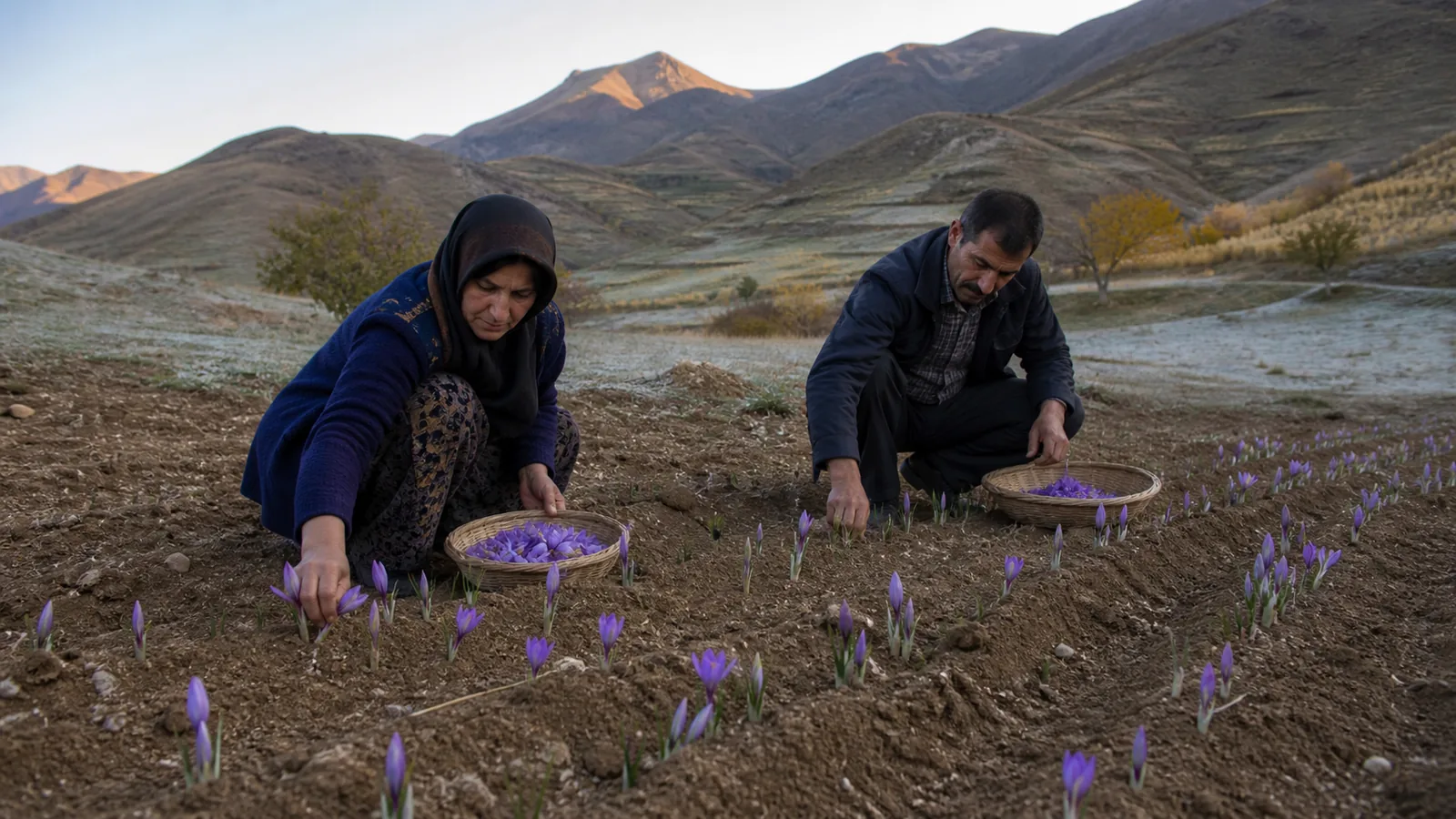
The plan to increase planting saffron in Khalkhal was part of a wider attempt to match crops to the county’s varied climate and water limits. In the historical announcement behind this article, local officials proposed putting 30 hectares under saffron. The same programme discussed expanding peanuts in Barandaq and establishing olives on national land, so the saffron figure should be read as a dated land-use target rather than proof of the area eventually planted.
Khalkhal has genuine local saffron experience, including harvesting around Kolur, but the county is not one uniform growing zone. A field in a cold highland location does not behave like land in the milder Khursh Rostam valleys. The case for saffron must therefore be made plot by plot, with attention to drainage, winter conditions, irrigation and harvest capacity.
What the Khalkhal cultivation plan said
Ali Nazari Sheikh Ahmad, then governor of Khalkhal, presented the plan at the fourth meeting of the county’s Economic Resistance Working Group. He said the area under saffron and peanuts would increase because local conditions were considered favourable. For saffron specifically, the announced target was 30 hectares during that year.
The report placed saffron inside a broader crop-diversification programme:
- peanut cultivation in Barandaq, in Khursh Rostam District, was planned to rise from 60 to 100 hectares after an earlier crop was described as successful;
- 50 hectares of national land were proposed for a privately financed olive planting; and
- saffron and Damask rose were identified as crops that could suit parts of the county.
These were announcements and plans from a particular period. The article did not publish completion figures, saffron yield or a present-day planted area, so none should be inferred. The useful point is the decision-making approach: different parts of Khalkhal were being considered for different crops rather than treated as one agricultural block.
Why location matters so much in Khalkhal
Khalkhal County includes cold uplands, mountain villages and lower, warmer areas toward the Qezel Owzan basin. An Agricultural Jihad report on Khalkhal describes a mix of cold-temperate and semi-warm environments and unusually varied plant life. That diversity is an asset, but it also makes a county-wide statement such as “the climate is suitable” too broad for a planting decision.
Saffron needs a well-drained root zone and a seasonal pattern that supports autumn flowering, winter leaf growth and summer dormancy. Snow and cold are not automatically disqualifying, but local frost timing, soil temperature and the length of the growing period matter. In lower locations, the question may instead be whether excessive moisture or poorly drained soil threatens the corms.
How to assess a field before planting
A prospective grower should begin with the exact parcel, not the 30-hectare headline. Check whether rain or irrigation water pools after a storm. Dig below the prepared layer to look for compaction. Test the soil for texture, salinity, pH and nutrient status, and ask what diseases affected previous bulb or corm crops.
It is also worth comparing the site with a successful nearby saffron field at the same elevation. That gives a more useful reference for emergence and flowering dates than advice imported from a warmer province. A small pilot area can reveal drainage and timing problems before expensive corms are committed at scale.
Healthy planting material is essential. Corms should be firm, graded and traceable, without cuts or visible rot. The planting density and depth should be chosen with local agricultural guidance and a realistic plan for the number of years the field will remain in place.
Water saving is only one part of the decision
The working group described durable, productive and lower-water crops as a way to create more value for farmers, support rural employment and reduce pressure to migrate. Those were policy aims, not measured outcomes. Saffron can require less water than many alternatives because its active season falls in cooler months, but it still needs timely moisture. A poorly timed first irrigation can disrupt flowering, while insufficient water during leaf growth can weaken the next generation of corms.
Economics also depend on labour and post-harvest control. Flowers arrive in a compressed period and must be picked promptly. The red stigmas then need clean separation, careful drying and protected storage. Expanding planted area before arranging those steps can create a bottleneck precisely when quality is most vulnerable.
What responsible expansion would look like
Increasing the planting of saffron in Khalkhal makes sense where a field has demonstrated the right soil, seasonal climate and management support. It does not follow that all 30 proposed hectares were equivalent or that saffron should displace another crop solely because it has a high selling price.
A sound expansion programme would record planted and bearing area separately, track dry yield by field age, document irrigation, and connect growers with trained picking and drying teams. It would also report whether the earlier targets were actually completed. Until those current figures are available, the 30-hectare announcement remains an important piece of Khalkhal’s saffron history, while each new planting still requires a fresh farm-level assessment.

![Exporting Saffron to Turkey + Price Guide [Complete 0 to 100]](https://img.rowhanisaffron.com/20260827003933/saffron-export-turkey-quality-inspection.webp)



