


The “increase of 20 hectares of saffron cultivation area in Sarein city” was a development target, not a documented 20-hectare increase. Mohammad Ibrahim Mohammadi described a project that began with 200 kilograms of corms, reached 4.5 hectares and aimed eventually to bring Sarein’s saffron area to 20 hectares.
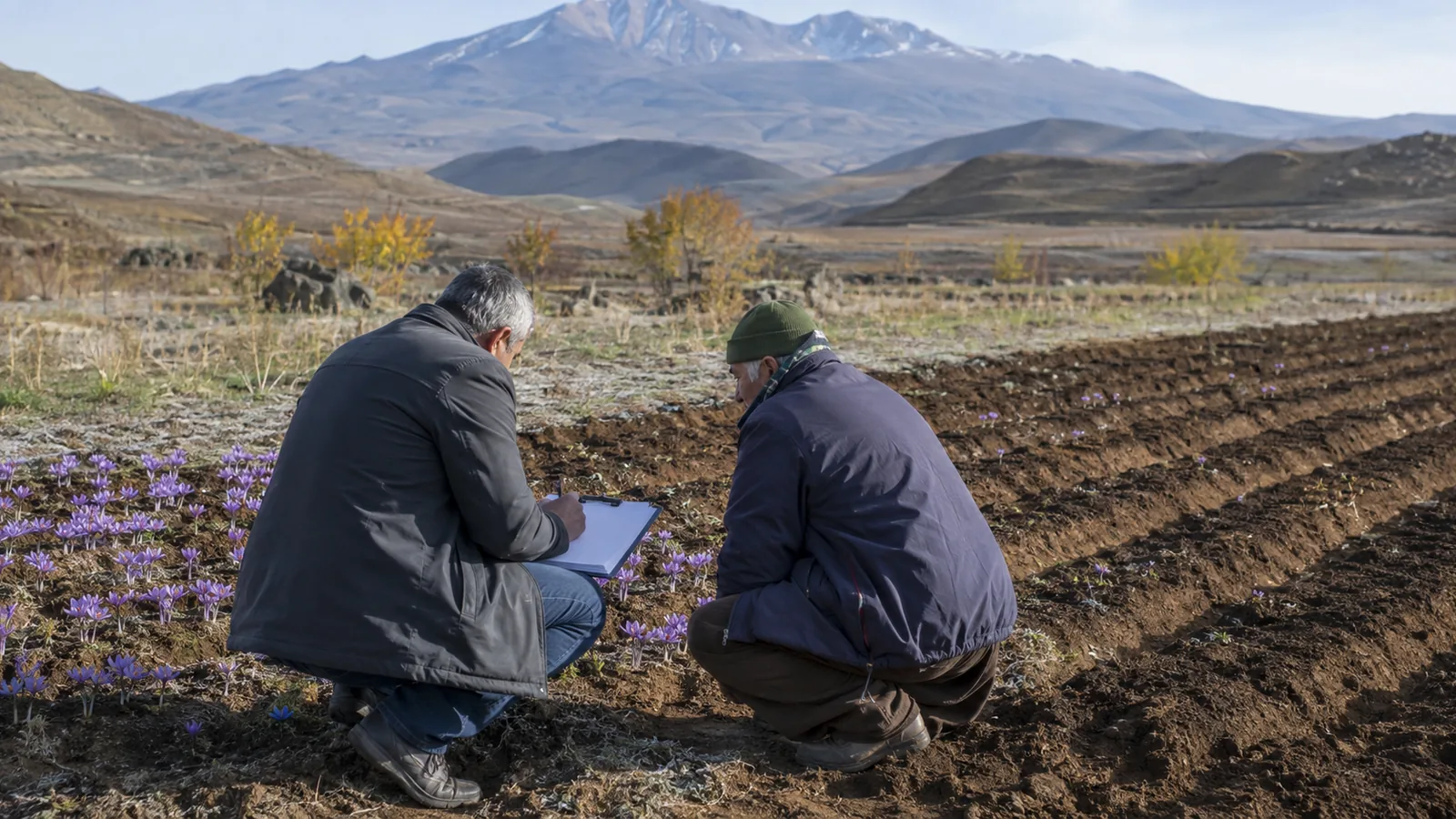
How saffron cultivation started in Sarein
Mohammadi, identified as the director of Sarein’s Agricultural Jihad office, said the local project began in Iranian year 1392, which spans 2013–14. Two hundred kilograms of saffron corms—called “onions” in the earlier translation—were distributed for the first planting.
By 1394 (2015–16), he said the cultivated area had grown to 4.5 hectares. In 1395 (2016–17), Sarein growers reportedly produced about 12 kilograms of saffron. These are historical programme figures, not current acreage or production data.
What the 20-hectare figure actually meant
The official hoped continuing support and action on growers’ problems would raise the area under cultivation to 20 hectares. The title’s wording can sound as though 20 hectares had already been added, but the source text presents it as the intended destination.
A target is useful only when progress is measured against a clear baseline. Later reporting would need to state the year, total planted area, bearing area and newly planted area before anyone could calculate the actual increase.
An unresolved unit error in the source
One sentence says the area under cultivation “is 8 kg this year.” Kilograms measure corm or saffron weight, not land area. In context, “eight hectares” may have been intended, but the retained text supplies no original table or document that confirms it.
The safest interpretation is to mark the field as unclear. This article does not convert eight kilograms into eight hectares as if the correction were proven. The figures that are internally clear—200 kilograms of corms, 4.5 hectares, 12 kilograms of product and a 20-hectare target—remain separate.
Production and area should not be confused
The reported 12-kilogram harvest cannot be divided confidently by 4.5 hectares because the source does not say whether all planted land was bearing in 1395 or whether the product weight was dried saffron. New fields normally perform differently from established beds.
A useful Sarein record would identify dry stigma weight, measured bearing hectares and field age. It would also show flower weight and drying recovery, making changes in farm production easier to distinguish from changes in processing.
Why Sarein was changing its crop pattern
Mohammadi placed saffron development within a policy of reforming the local cultivation pattern. The crop was promoted for income and work opportunities, but the article did not compare water, cost or returns with the crops it might replace.
Sarein’s elevation and cold-season conditions make local trials particularly important. Field selection, summer soil temperature, planting time, drainage, corm size and water access should be assessed together rather than treating a high-value crop as automatically suitable.
The market claim needs a dated reading
Mohammadi said growers had no problem selling the product. That is a positive report from the project’s early period, not a permanent guarantee. The source did not name buyers, grade, form sold, price or volume purchased.
Market evidence should follow each lot from field to buyer. Dried weight, quality result, packaging, sale price, buyer location and payment terms show whether demand is repeatable and whether growers capture enough value to justify expansion.
Employment was part of the policy case
The official said cultivation would employ more workers in the region. Saffron does create concentrated hand work when flowers must be picked and stigmas separated, while field care and processing add work at other stages.
The number of jobs cannot be inferred from planted hectares alone. Records should distinguish permanent positions, seasonal workdays and unpaid family labour. That prevents a short harvest peak from being described as year-round employment.
The reverse-migration claim
Mohammadi said villages where saffron had become popular were seeing residents return from large cities such as Tehran. He hoped further extension work would encourage more farmers to plant in later years.
An official agricultural report on saffron and rural migration shows that similar hopes appeared in other provinces. It described reverse migration as an expectation connected with broader agricultural support, not as an effect that saffron alone had already proven. Sarein’s claim likewise needs household, employment and income evidence.
What extension support should cover
Encouraging farmers is not enough. Extension work should cover soil and water testing, healthy corm selection, planting density and depth, drainage, irrigation timing, pest and disease monitoring, rapid flower handling, hygienic drying, storage and sales records.
Research catalogued by the FAO AGRIS database on irrigation and soil texture found that both factors affected flower and replacement-corm yield. That makes local measurement essential before the project scales from a few hectares toward its target.
How to judge future growth in Sarein
The programme’s early sequence is clear: corm distribution in 1392, 4.5 hectares by 1394, roughly 12 kilograms reported in 1395, then an ambition to reach 20 hectares. The unclear “8 kg” acreage line should stay unresolved until a primary record confirms the unit.
Success should be judged through healthy fields, dry yield, quality, paid work and repeat sales—not the target number alone. That approach preserves the original optimism while giving farmers and readers a reliable way to understand the increase in Sarein’s saffron cultivation.

![Exporting Saffron to Turkey + Price Guide [Complete 0 to 100]](https://img.rowhanisaffron.com/20260827003933/saffron-export-turkey-quality-inspection.webp)



