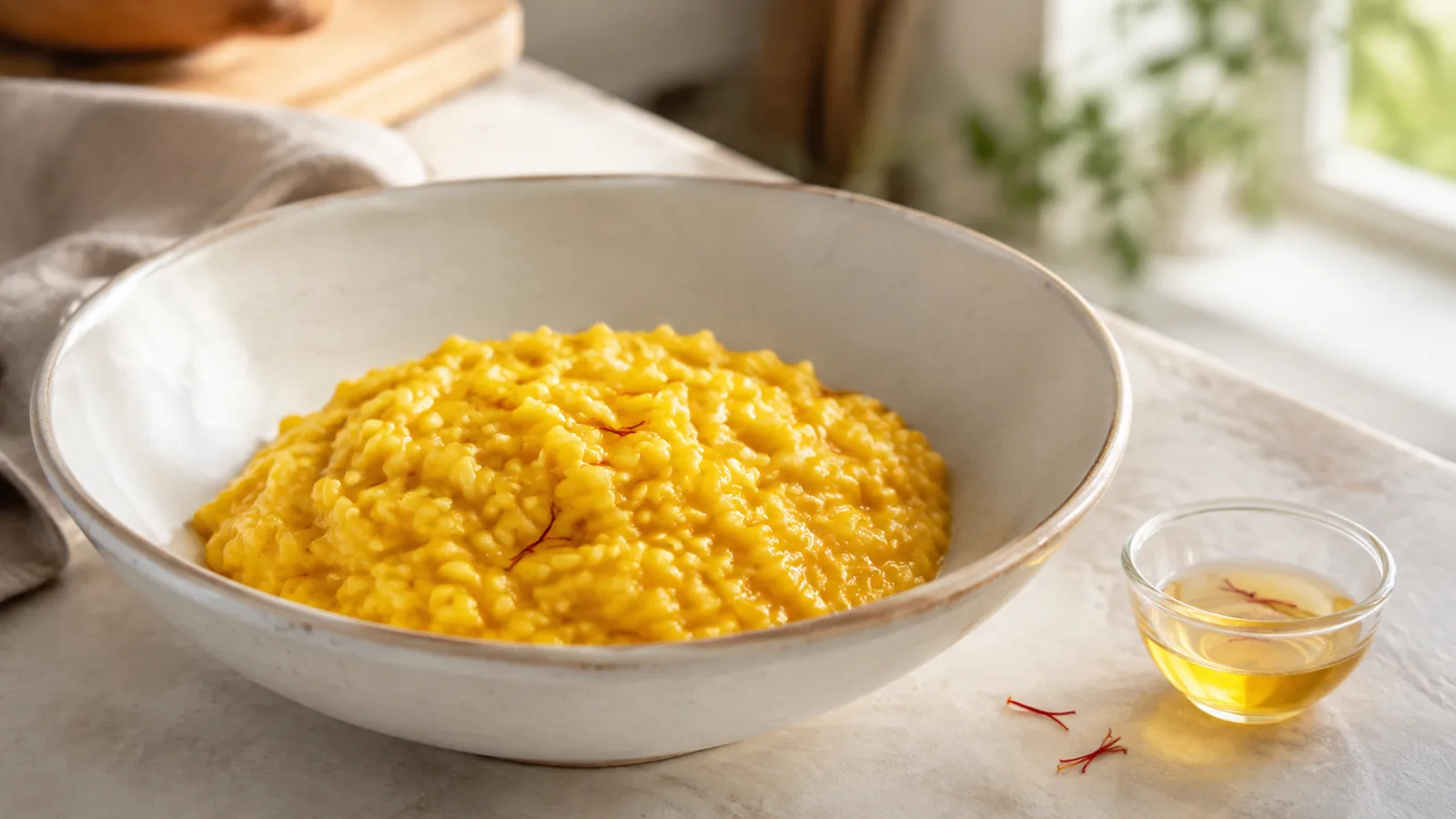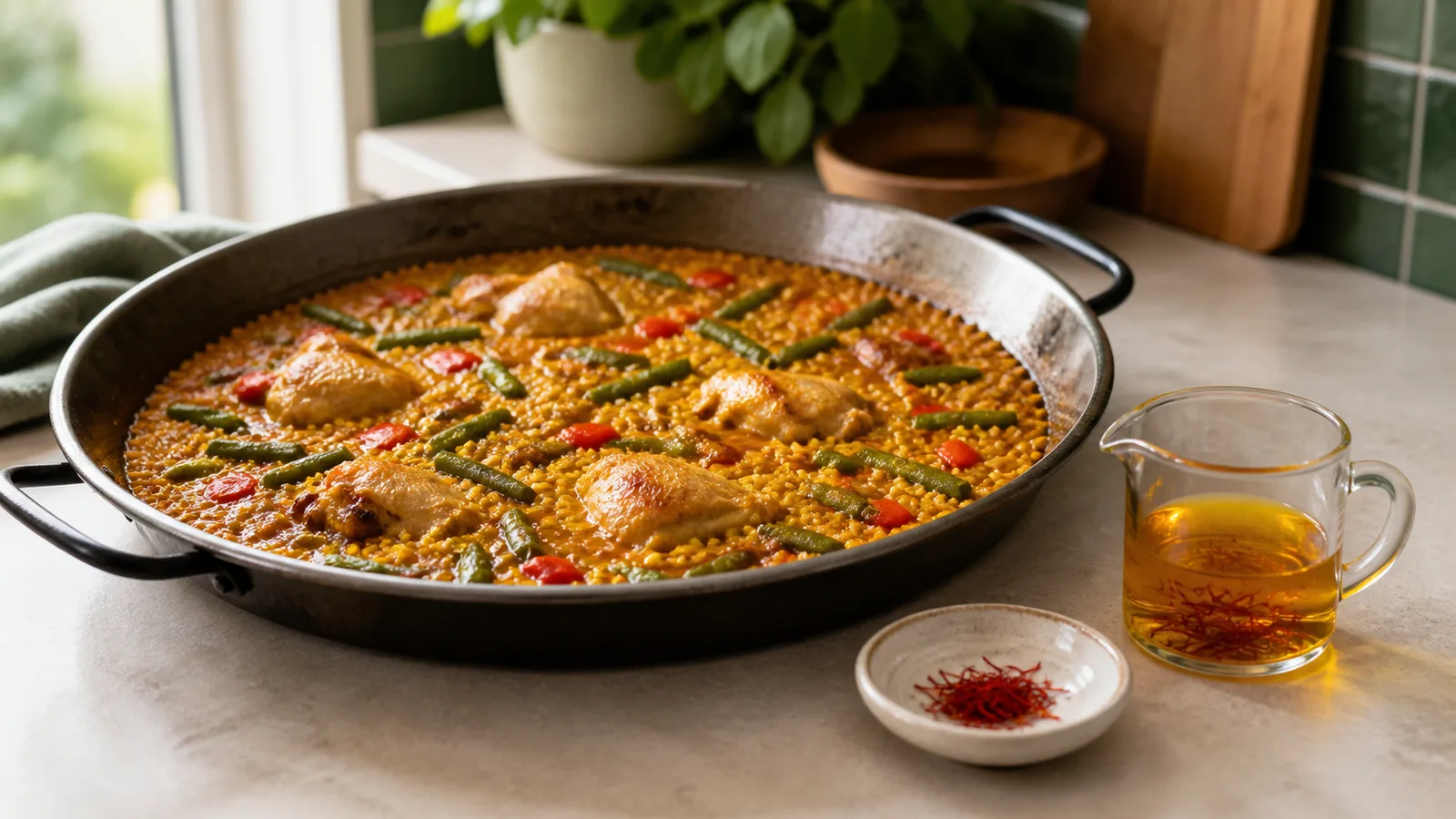
Preparing saffron for paella is simple: lightly crush the threads, steep them in warm stock for 10 to 15 minutes, and add that golden infusion with the rest of the cooking liquid. Blooming the saffron before it reaches the pan spreads its aroma and color more evenly than scattering dry threads over the rice.
The important details are gentle heat, enough steeping time, and a restrained amount. Saffron should give paella a fragrant, rounded background; it should not make the rice bitter or cover the flavor of the stock.
How much saffron for paella?
For a home paella serving four to six people, begin with a generous pinch of threads. Saffron varies in strength and thread size, so a fixed strand count is less useful than aroma and taste. If you cook paella often, weigh the amount that works in your own pan and keep that measurement with the recipe.
Search for “how much saffron in paella” and you will find a wide range of answers. A blanket recommendation such as 0.3 grams can be too strong for a small pan and too weak for a very large one. The amount of rice, the volume and character of the stock, and the saffron itself all matter. When uncertain, start modestly. Better preparation extracts more flavor without requiring more spice.
How do you prepare saffron for paella?
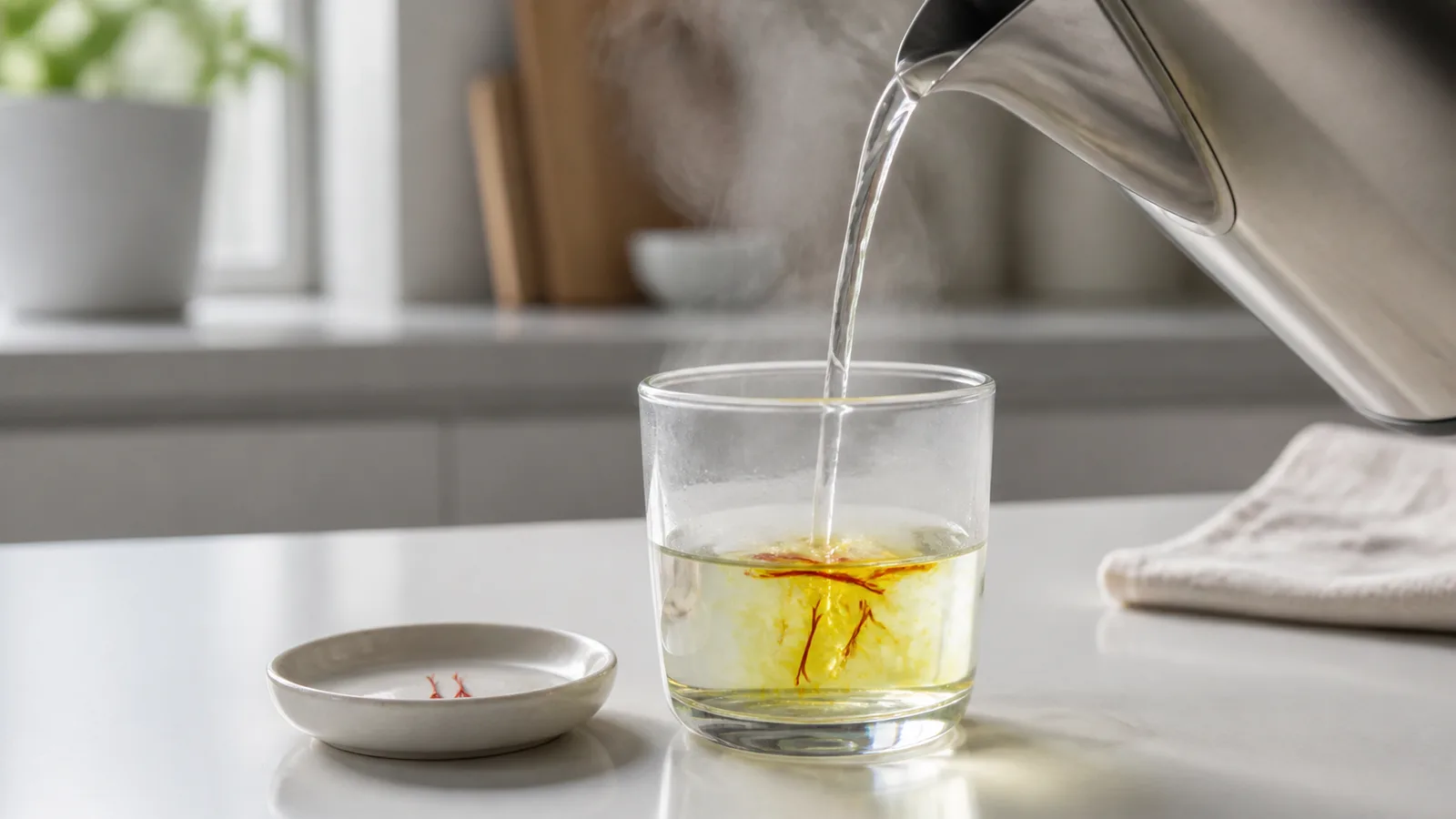
- Warm a little stock. Take about 60 ml (¼ cup) from the stock measured for the recipe. It should be hot enough to steam but not boiling aggressively.
- Crush the threads lightly. Rub part of the pinch between clean fingers or press it gently with the back of a spoon. Leave some threads whole; the aim is to open them, not make a fine powder.
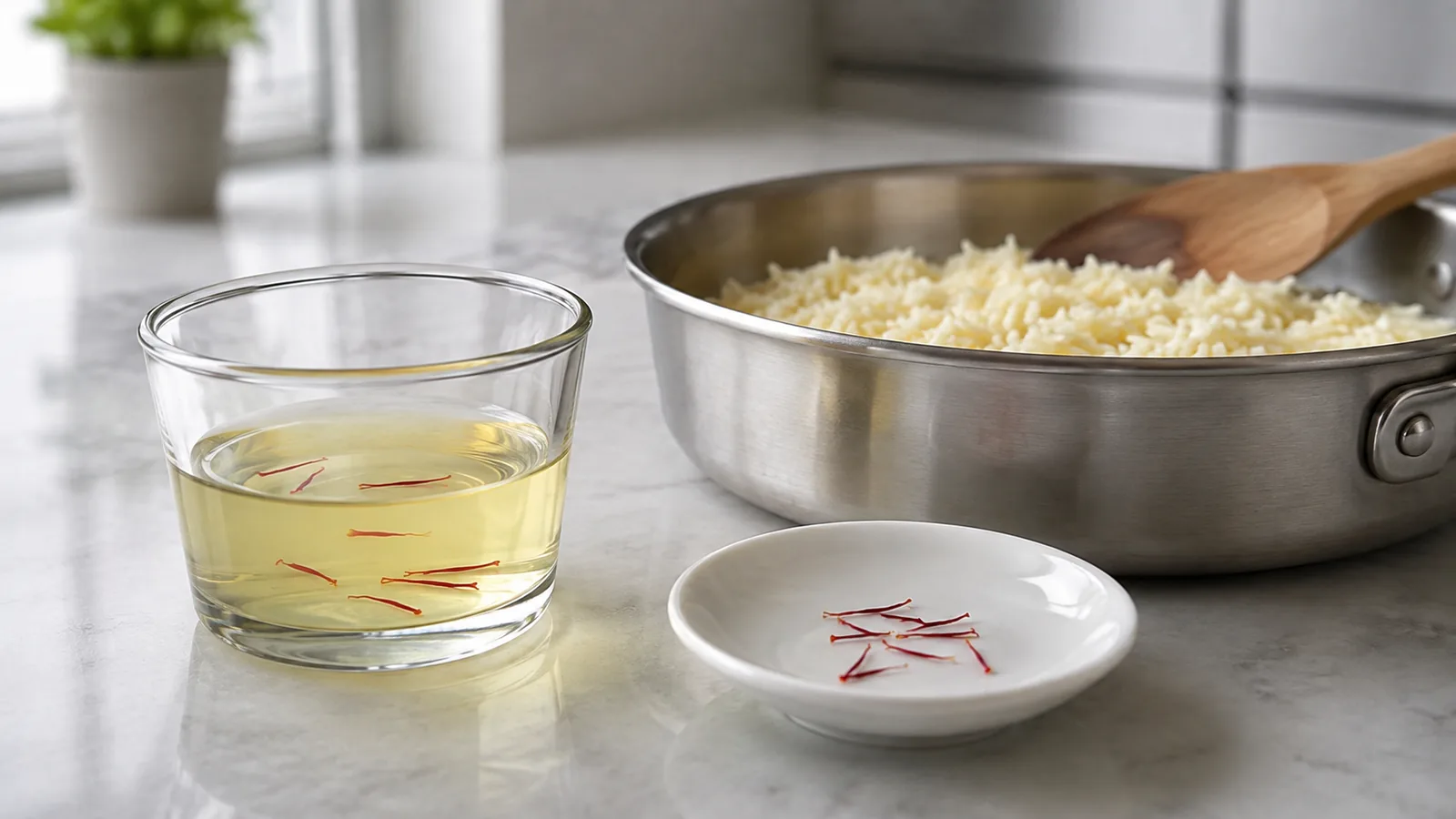
- Steep for 10 to 15 minutes. Put the saffron in the warm stock and cover the cup while it infuses. The liquid will turn yellow to deep gold and become distinctly aromatic.
- Add the entire infusion. Pour both the liquid and the threads into the paella with the main stock. Account for this ¼ cup when measuring the total liquid so the rice ratio does not change.
You can make the infusion while the sofrito cooks. If your recipe calls for warmed stock, another option is to steep the saffron in a small portion first, then return that portion to the stock pot before it goes into the pan.
When to add saffron to paella
Add the saffron infusion with the cooking liquid, after the sofrito and other ingredients have developed their flavor and around the point when the rice is distributed in the pan. Give the liquid and rice one deliberate, even mix at this stage.
Once the rice settles into a level layer, avoid repeated stirring. Paella is not risotto: constant movement releases starch, disturbs the grain structure, and makes it harder for the bottom crust to form. Instead, manage the heat and rotate the pan if your burner heats unevenly.
Should you toast saffron first?
Some cooks briefly warm the threads before steeping them, but this is optional. If you do it, use a dry pan over very low heat for only a few seconds and remove the saffron as soon as its aroma strengthens. Delicate threads can burn quickly. Blooming without toasting is the easier, more forgiving method.
Do not fry saffron in oil with the sofrito. Direct, sustained heat makes it difficult to control, while a stock infusion carries the flavor throughout the rice.
What is the best saffron for paella?
The best saffron for paella is fresh-smelling culinary saffron made up of identifiable red threads. Look for dry threads, protective packaging, and clear information about origin or testing. Powder is harder to judge visually and may lose aroma faster once opened.
Color alone is not a quality test. A good infusion should smell floral and hay-like as well as tinting the liquid. Store unused saffron tightly closed, away from steam, direct light, and the heat of the stove. If you need threads for your next pan, browse our saffron selection.
Is there a saffron substitute for paella?
There is no substitute that reproduces saffron’s aroma. Turmeric or a Spanish coloring blend can make the rice yellow, but the flavor will be different; use them because you want their result, not as a like-for-like replacement. If saffron is unavailable, a well-made paella without it is preferable to adding so much turmeric that the stock and sofrito disappear underneath it.
Common preparation mistakes
- Using boiling liquid: warm stock is sufficient for blooming and is easier to control.
- Discarding the threads: pour the whole infusion into the pan.
- Adding extra liquid: subtract the blooming stock from the recipe’s total.
- Chasing a darker color: strength varies; too much saffron can become bitter.
- Stirring throughout cooking: distribute the rice once, then let it cook undisturbed.
That is the dependable method for how to prepare saffron for paella: a modest pinch, gently bloomed in part of the stock, added before the rice cooks undisturbed. It protects the texture of the paella while giving the whole pan an even saffron aroma and golden color.