Fake saffron can imitate colour and shape, so no single home trick proves authenticity. Start with whole threads from a traceable seller, inspect the product and packaging, and treat an accredited laboratory test as the dependable answer when authenticity truly matters.
What is fake saffron? It may be genuine saffron bulked out with other plant material, dyed fibres sold as saffron, or a lower-quality product presented as a better grade. The US Food and Drug Administration gives saffron as an example of an expensive spice that may be extended with non-spice plant material such as stems in its food-fraud guidance.
What the original Iranian report warned about
In the archived report, Ali Hosseini of Iran’s National Saffron Council said rising prices had encouraged fraudsters to colour similar plant materials and sell them as saffron. He advised customers not to trust an unusually low price and to buy from established sellers.
Gholamreza Miri, then quoted as vice president of the council, said the relevant union had removed 7,000 counterfeit or poor-quality packs from the market during a five-to-six-month period. The article also referred to sales by informal vendors in metro stations, requests for product-identification and tracking codes, and enforcement against some alleged offenders.
Those figures and actions belong to the historical news report. The page does not have enough evidence to turn them into present-day market totals or claim a current arrest outcome.
Begin with the seller and the pack
A buyer can reduce risk before opening the container. Look for a responsible business name, contact details, net weight, lot or batch information, origin and the date or storage information required in the seller’s market. The seal should be intact, and the amount inside should match what the package promises.
Price is a warning sign, not a test. An offer far below comparable genuine saffron deserves scrutiny, but a high price does not prove authenticity. Counterfeit goods can be expensive too.
Inspect whole saffron threads carefully
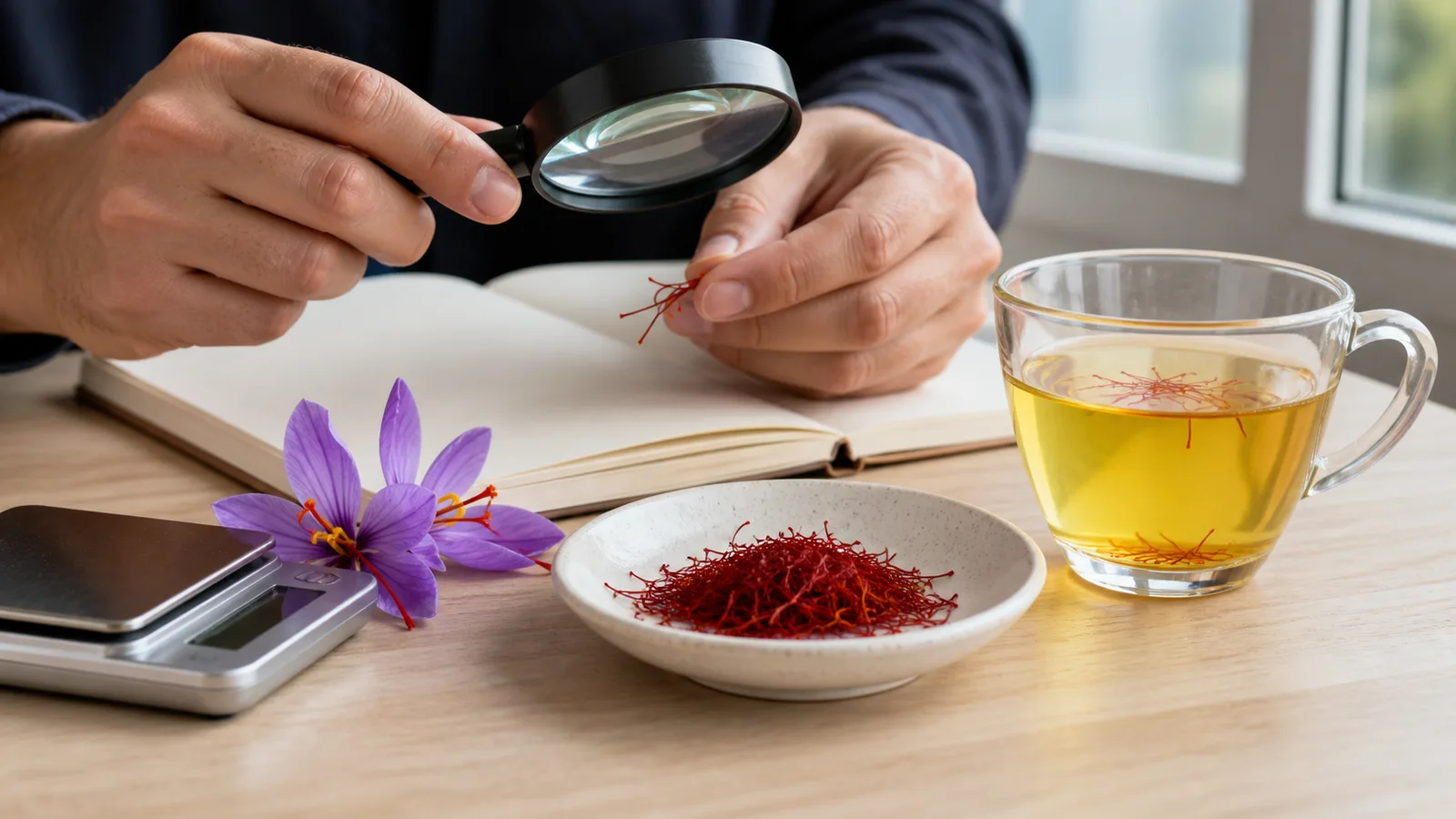
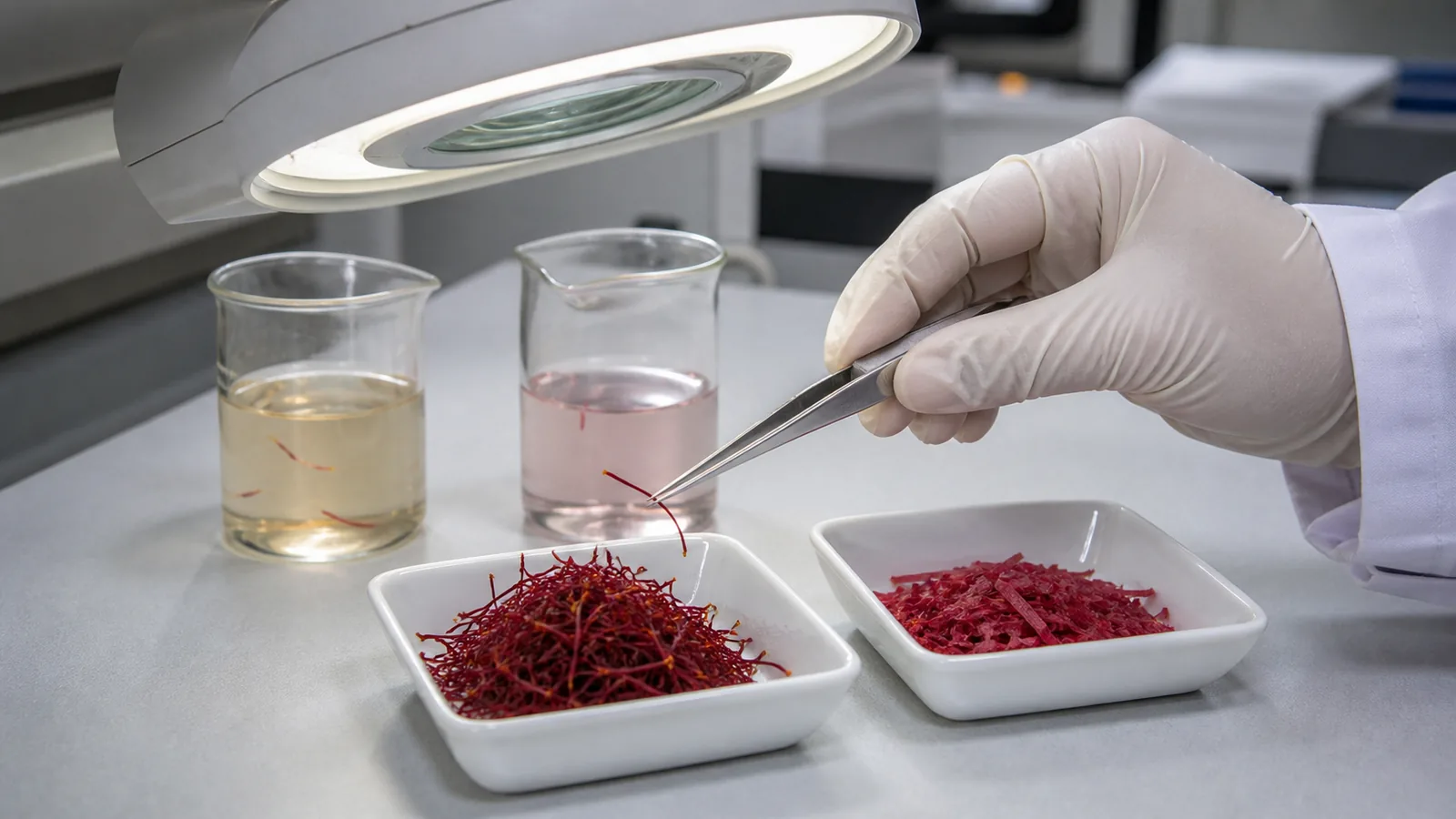
Whole threads reveal more than powder. Genuine saffron comes from the dried stigmas of Crocus sativus. Threads are not perfectly uniform, but they should have recognisable botanical form rather than looking like identical plastic fibres, flat paper strips or chopped petals.
Colour can range through deep red tones, with some orange or yellow style material depending on grade. A suspiciously uniform coat of vivid dye, colour rubbing off immediately on dry fingers, unrelated fibres or gritty filler are reasons not to use the product. Visual inspection can reject obvious problems; it cannot certify a sophisticated substitute.
Why water, smell and taste are only screening checks
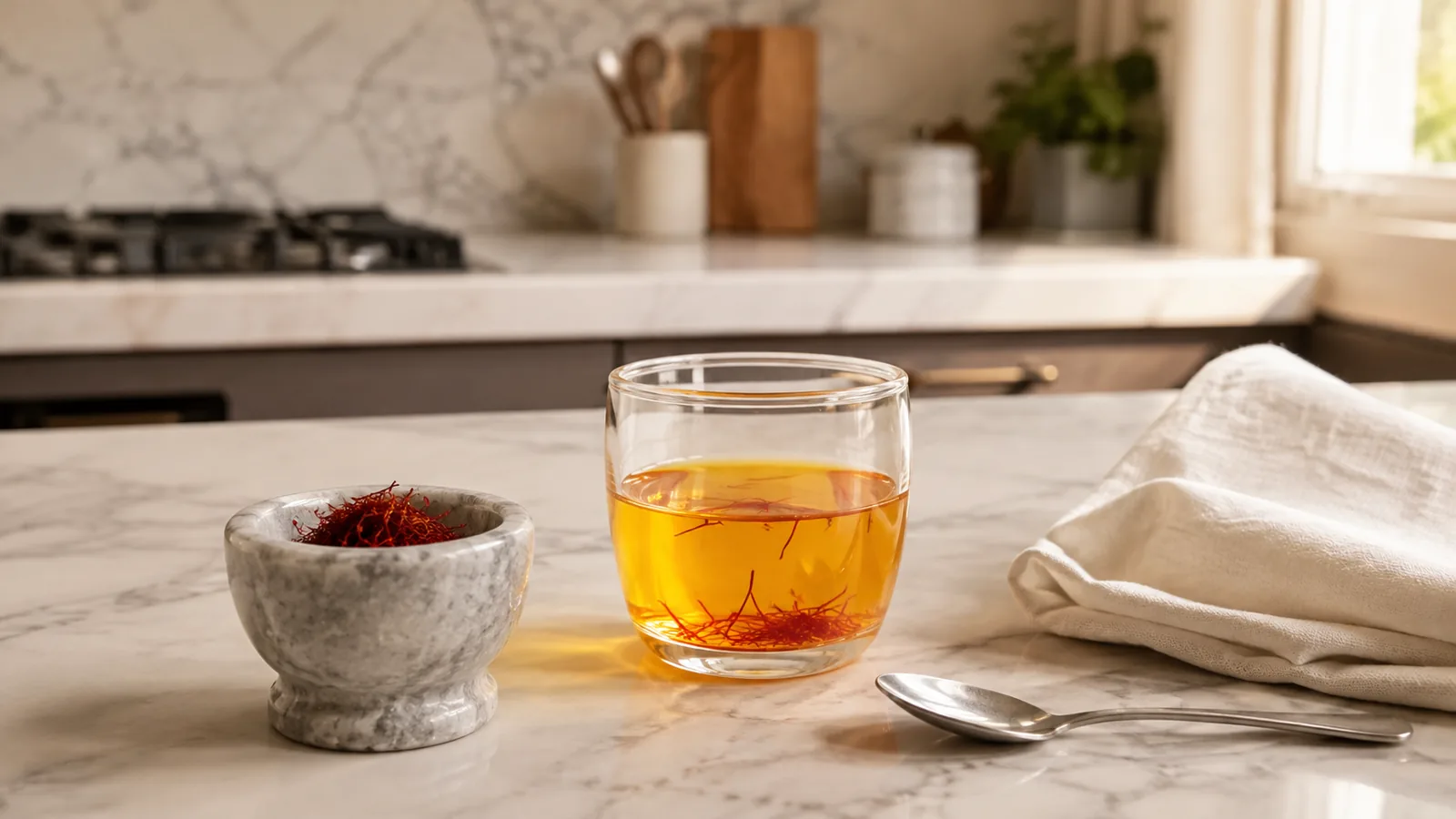
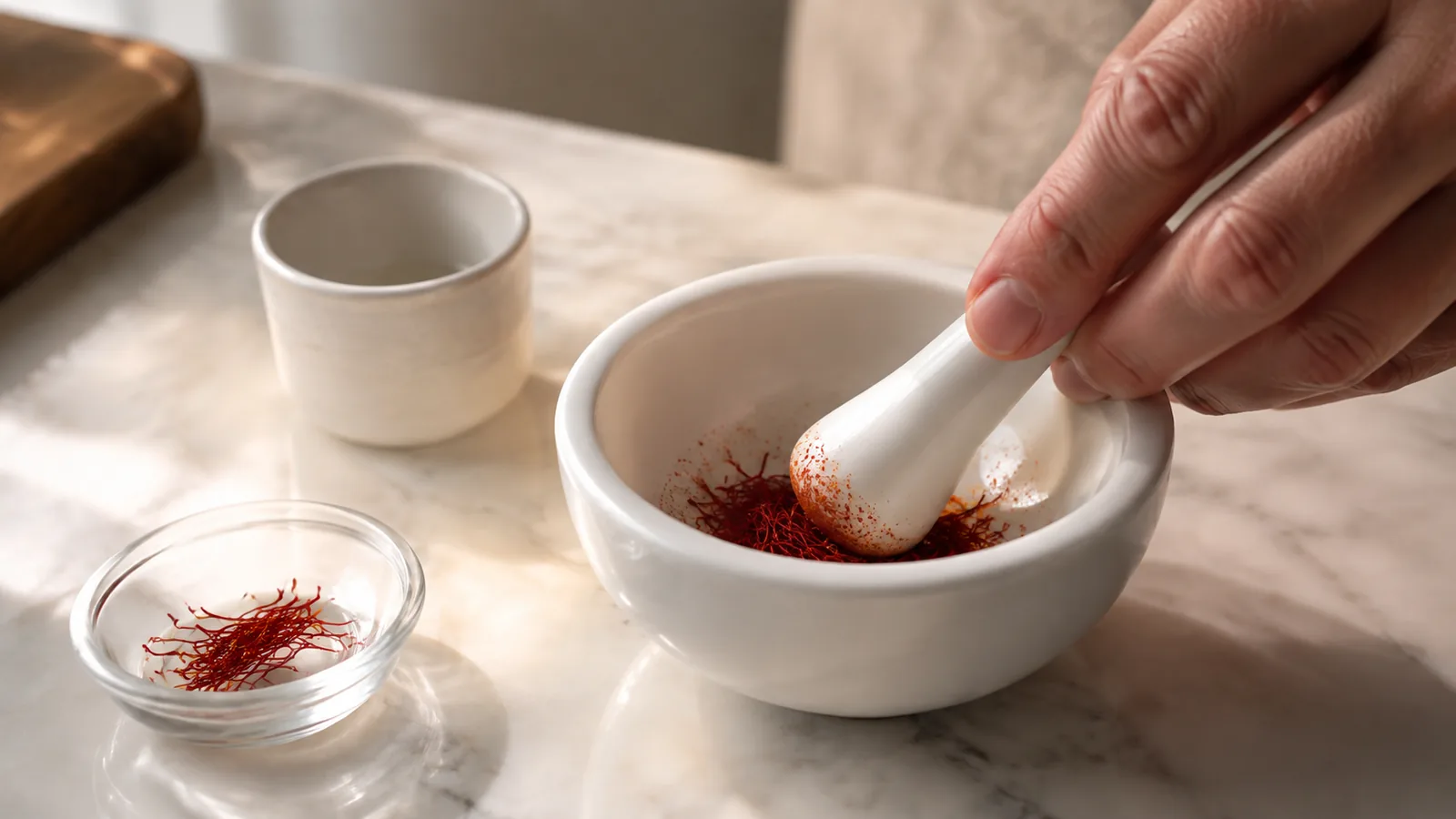
Genuine saffron releases colour into warm water, and its aroma and flavour are distinctive. Fraudulent material can also be coloured or scented. The speed of colour release changes with water temperature, thread condition, quantity and handling, so viral “instant tests” are easy to overinterpret.
A cup test may reveal an obvious dye cloud or material that falls apart unnaturally. It still cannot establish purity, grade, absence of undeclared colourants or the percentage of genuine saffron in a mixture. Do not taste a product that has an unusual chemical smell, leaves unexplained residue or comes from an untraceable source.
Laboratory testing is the reliable distinction
The original report concluded that a laboratory was the only reliable way to separate genuine and counterfeit saffron. Current official methods support that caution. ISO 3632-2 specifies test methods for dried saffron threads, cut threads and powder. The FDA’s laboratory manual includes a supplemental macroanalytical method specifically for Crocus sativus.
Modern authenticity work may combine botanical examination with chemical and DNA-based methods. The exact panel should match the suspected adulterant and the commercial decision. A laboratory report is useful only when the sample is representative and its chain of custody is clear.
Fake saffron remains a documented problem
This is not merely an old local concern. In a coordinated European control project, the European Commission reported that 11 percent of saffron samples were considered at risk of adulteration. That survey does not mean 11 percent of every market is fake; it shows why official sampling and multiple analytical techniques are necessary.
What to do if saffron looks suspicious
- Stop using it and keep the pack, receipt and lot information.
- Photograph the product and the full label under neutral light.
- Contact the seller with a specific description of the concern.
- For a commercial lot, preserve a sealed sample and use an accredited laboratory.
- Report suspected food fraud to the relevant food-safety or trading authority in your country.
The safest buying habit is simple: prefer whole saffron threads in a sealed, traceable pack from a seller that can answer questions about origin, lot and testing. Visual and water checks can help you notice warning signs; they should never be presented as a guarantee.
Historical source: Young Journalists Club/Farda News report cited by the archived post. Current official references reviewed 30 August 2026: FDA, ISO and European Commission.