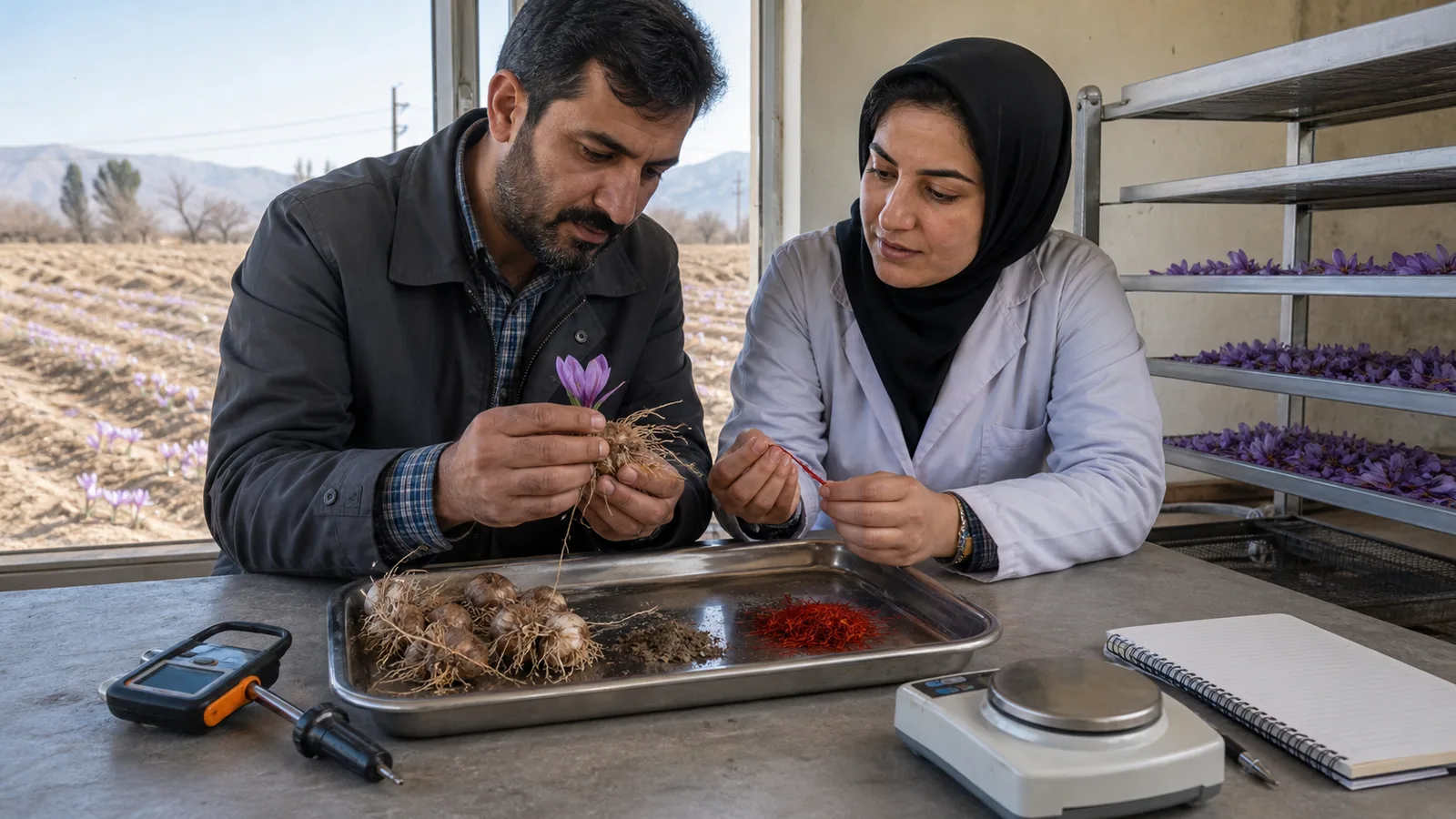


An old Iranian saffron market report predicted growth, but “several percent” referred to more than one measure. It mentioned a possible 30% production increase and 20%–25% export growth, while also discussing farm-gate prices, rainfall, cultivation and the timing of supply.
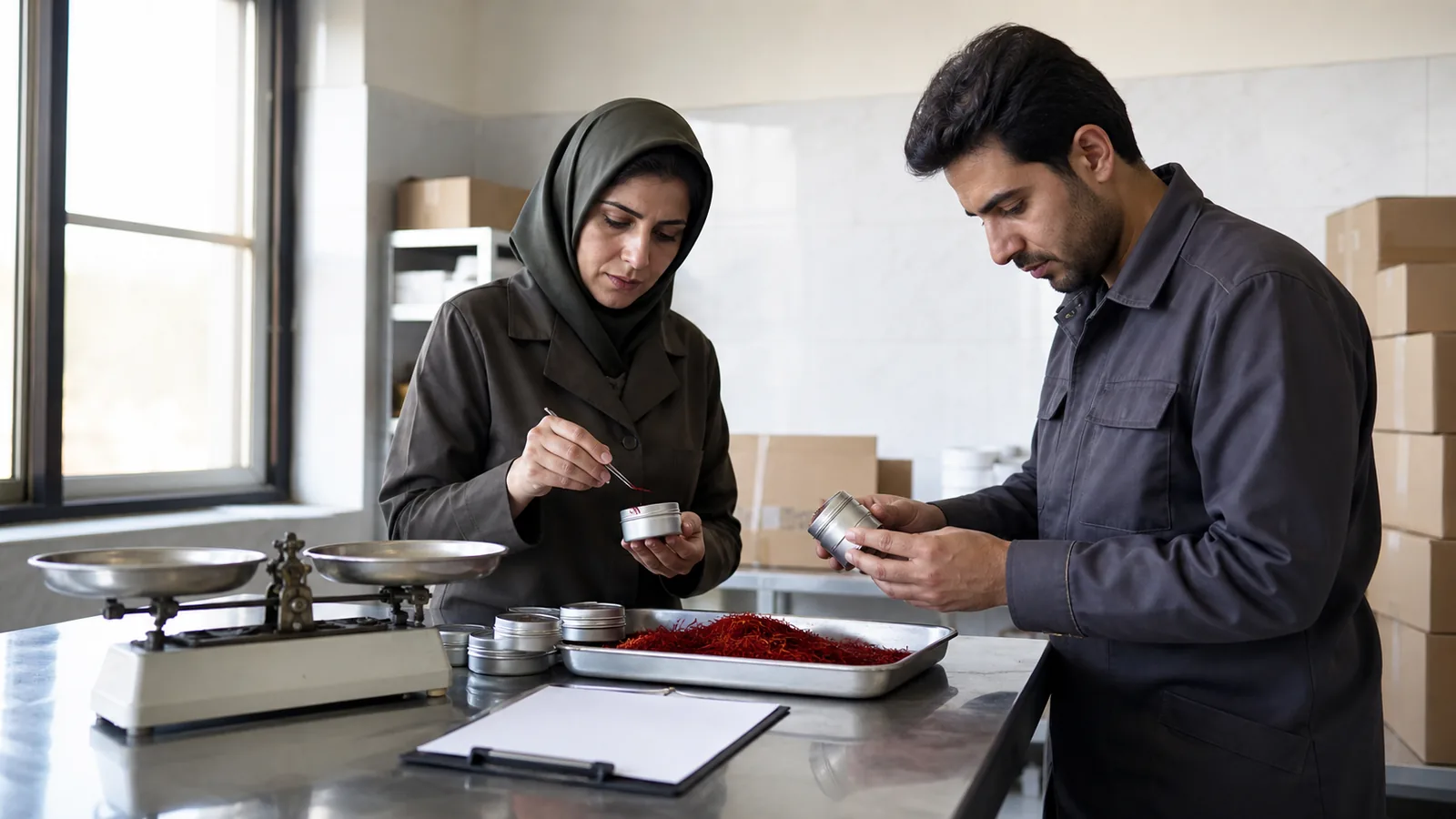
The comments were attributed to Miri, identified in the source as vice president of the National Saffron Council. The report belongs to the Iranian year 1397 and should be read as a dated market snapshot, not a forecast for today’s crop or price.
What the original Iranian saffron forecast said
Miri referred to saffron exports worth about $354 million in 1397. He expected good rainfall and a larger cultivation base to support higher production, with the translated report attaching a figure of about 30% to that outlook.
He separately forecast that total saffron exports could grow by 20% to 25% compared with the previous year. The source also contains an incomplete sentence saying “about 90%” of the country’s saffron exports. It does not identify the missing object or denominator, so that fragment cannot responsibly be expanded into a market-share claim.
These percentages describe different things. Production growth is a change in the dry saffron harvested. Export growth can refer to weight, customs value or both. Cultivated-area growth measures land. None should be substituted for another without the underlying dates and units.
How the $354 million statement compares with trade data
World Bank WITS data drawn from UN Comtrade record Iranian saffron exports of $351.13 million and 279,608 kilograms in 2018. The customs value is close to the $354 million quoted in the article, allowing for calendar coverage, rounding and later revisions.
The corresponding 2017 record is $325.65 million and 235,900 kilograms. On those calendar-year figures, export value increased by about 7.8%, while quantity increased by about 18.5%.
Neither result is exactly the forecast 20%–25%. That does not by itself prove the speaker was wrong: the prediction may have used the Iranian calendar, partial-year customs data or a later period. It does show why an export-growth percentage needs to say whether it measures money or weight and which two dates it compares.
Why a 30% production forecast needs caution
Rainfall can affect saffron fields, and more bearing land can increase total output. Yet a favourable season does not turn either input into a guaranteed percentage. Field age, corm health, irrigation timing, temperature during flower initiation, harvest labour and drying losses can all change saleable yield.
The translated sentence is also compressed: it is not fully clear whether the expected 30% applied to production, cultivated area or the combined effect of both. The safest reading is that Miri expected a substantial production increase because rainfall and cultivation conditions appeared favourable. The exact 30% remains his forecast, not a verified final harvest figure in this article.
The reported farm-gate saffron price
Miri said farmers were then receiving between 8 million and 13 million tomans per kilogram. He described those as purchase prices from growers, not retail prices. The article does not specify grade, moisture, lot size, location or transaction date beyond its historical market period.
That missing context matters. A kilogram of one grade cannot be compared directly with a cleaner or more strongly coloured grade, and a quoted asking price may differ from the completed sale price. Historic toman figures should never be presented as a current buying guide without a fresh dated market source.
The report said the red-gold price had been relatively stable during the preceding month. One stable month, however, is not the same as a stable season. It only describes the narrow window observed by the speaker.
Why Miri expected limited supply
Miri attributed the high price partly to low supply. According to his account, farmers saw other goods becoming more expensive and questioned why the price of an export crop should remain unchanged. Some therefore waited before bringing their saffron to market.
This is an explanation offered by a market representative, not proof that all growers behaved alike. A farmer may hold inventory because of price expectations, but may also sell quickly to cover labour, debt or household expenses. Storage conditions and the risk of quality loss can limit how long a lot can sensibly be held.
The article also blamed part of the high price on non-professional entrants and brokers. Intermediaries can influence the route and timing of a sale, but “brokers” is too broad to serve as a complete cause. Exchange rates, export restrictions, buyer demand, grading, finance and available stock can move at the same time.
Why exports may slow after June
Miri said saffron exports usually decline from June onward. A seasonal slowdown can reflect the distance from the autumn harvest, stock already committed, buyer purchasing cycles or expectations about the next crop. It does not mean exports stop, and the pattern should be checked against customs data for the year being discussed.
Monthly weight and monthly customs value may also move in different directions. Fewer kilograms of a higher-priced grade can raise value, while a larger low-priced shipment can increase volume without producing the same rise in revenue. This is the same reason the annual 7.8% value change and 18.5% quantity change above are both correct for their respective measures.
How to read an Iranian saffron growth report
Before using a headline percentage, identify five pieces of information:
- the calendar and exact start and end dates;
- whether growth refers to production, planted area, export weight or export value;
- whether a number is a forecast, preliminary estimate or final customs record;
- the currency unit and whether the price is farm-gate, wholesale, export or retail;
- the product grade, lot conditions and source of the data.
The difference between a forecast and an outcome is especially important. Rainfall and area can support a forecast before flowering, while weather, labour and market access determine what is finally harvested and sold.
What “growth of several percent” ultimately means
The original headline is vague, but the article contains two clear expectations: production might rise about 30%, and exports might grow 20%–25%. It also records a historic farmer purchase range of 8–13 million tomans per kilogram, a period of roughly stable prices, delayed farmer selling, lower exports after June and concern about non-professional market activity.
Trade data support the general scale of the $354 million export statement, while showing that value and quantity grew at different rates in calendar 2018. The responsible conclusion is not one timeless growth percentage. It is a dated account of optimism about the Iranian saffron crop, tested against clearly labelled production, price and customs measures.