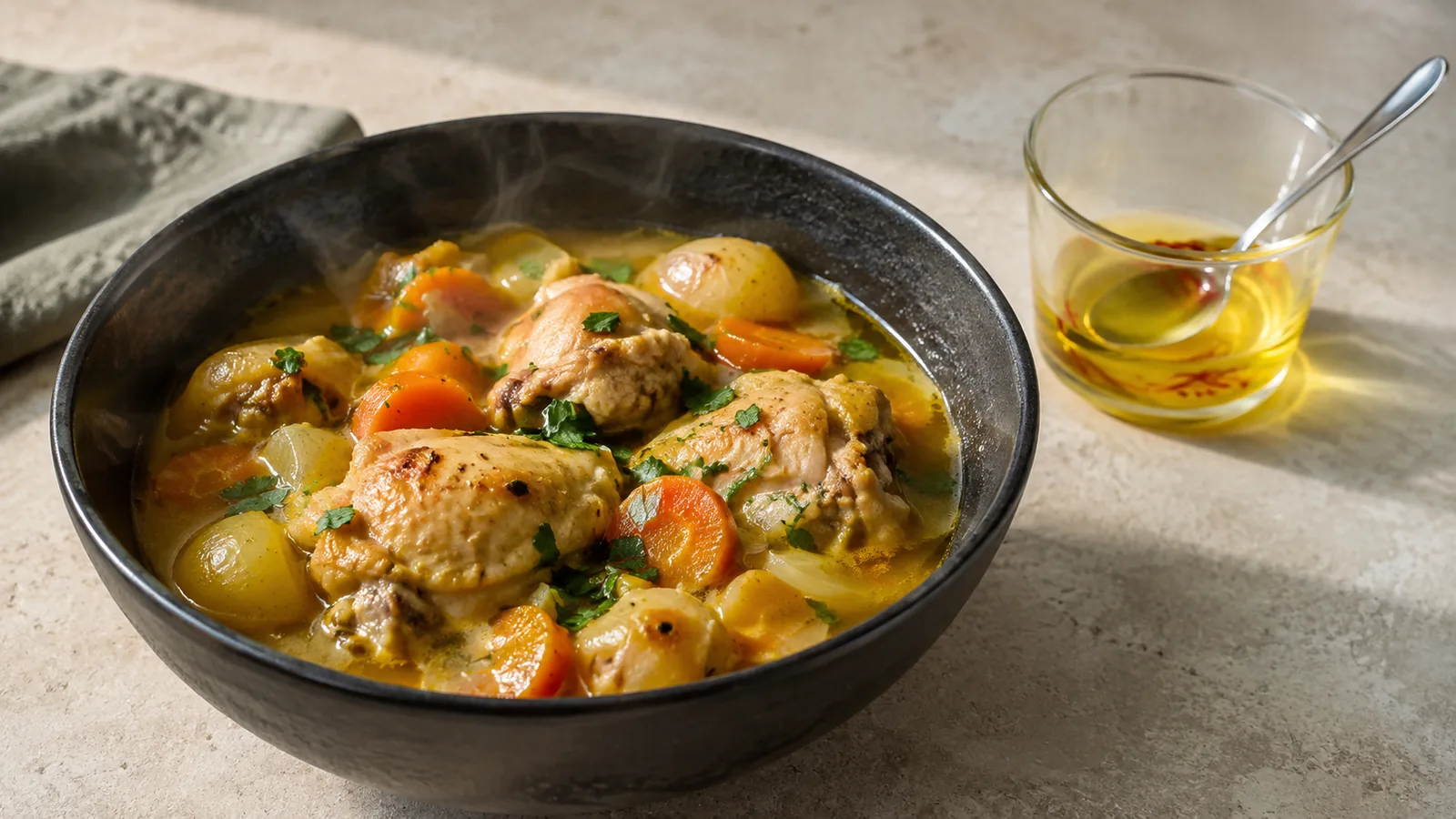
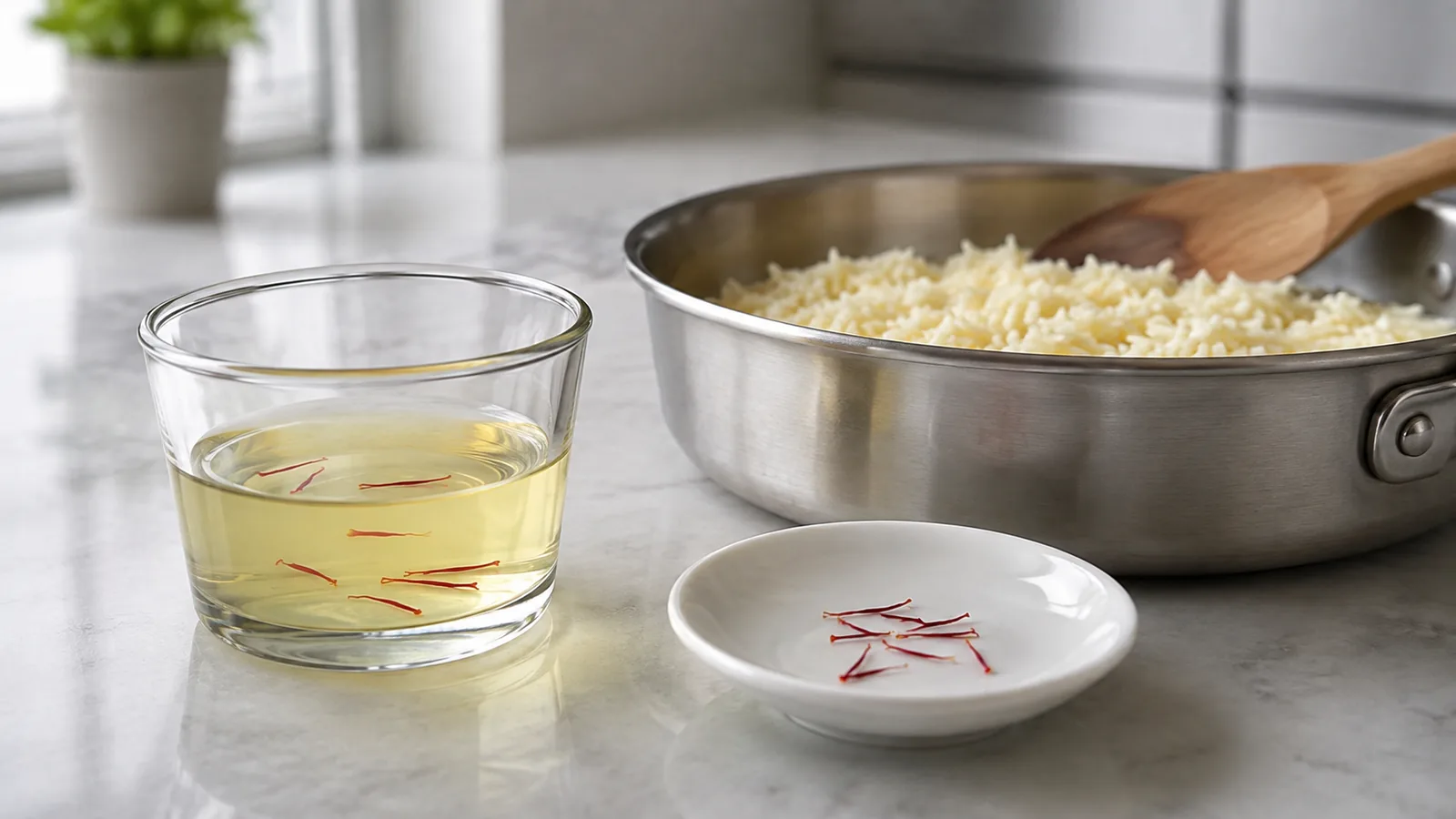
Persian green almond stew is a spring dish with a flavour that is hard to reproduce at any other time of year. Young almonds bring a fresh tartness, mint and parsley make the broth fragrant, and brewed saffron rounds out the sour notes. Slow cooking gives the meat time to become tender while the green almonds soften and absorb the sauce.
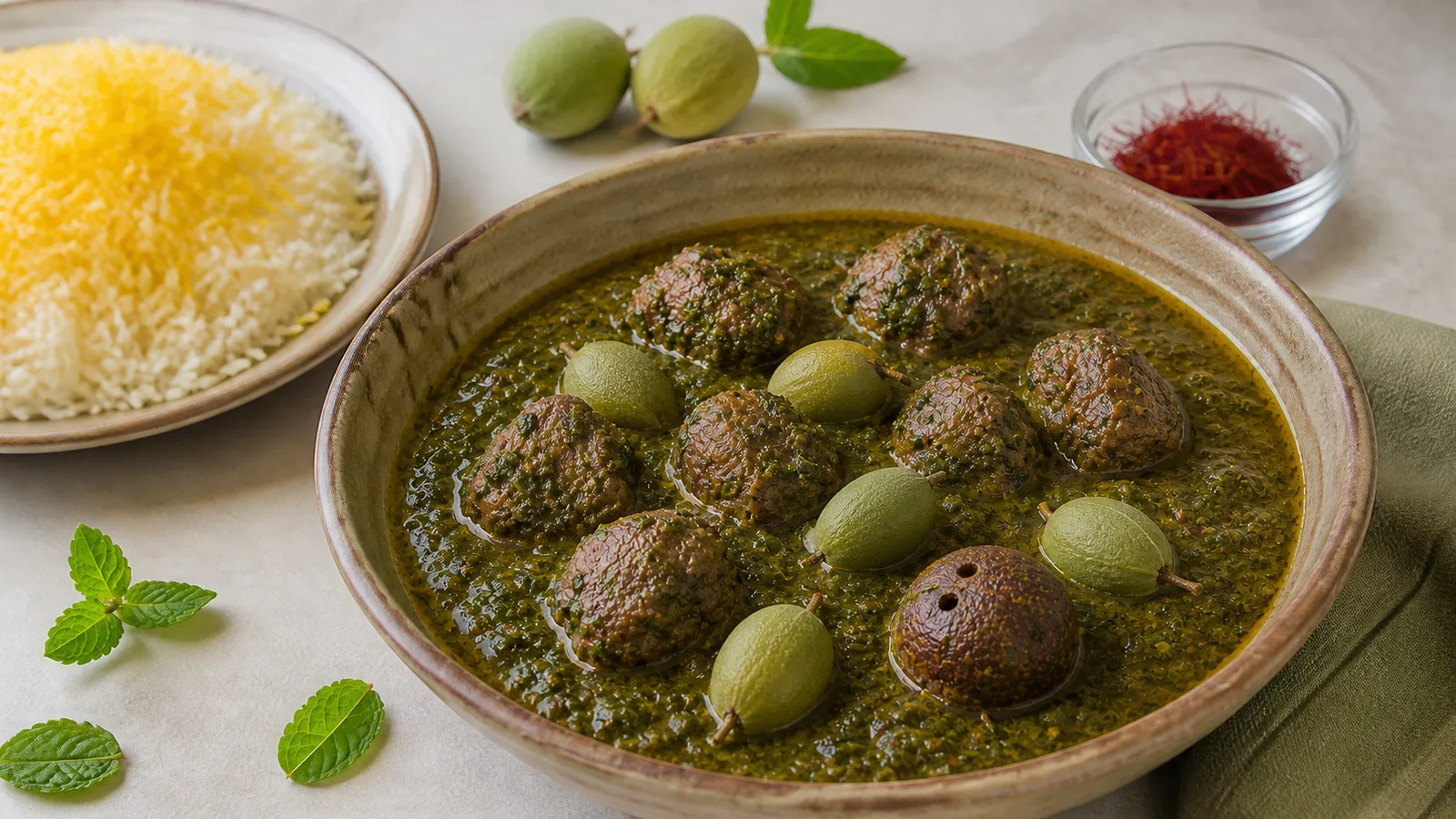
What is Persian green almond stew?
Known as khoresh chaghaleh badam, this almond stew is made with the immature fruit harvested before the shell hardens. The youngest green almonds are small enough to cook whole. Their pale green covering and developing kernel become tender in the pot, giving the sauce a gentle almond character and an acidity that suits herbs and saffron.
Searches for “Persian green almond” can also lead to the raw spring fruit, pickles and snacks. For this recipe, look for firm, unblemished almonds that are still tender when cut. If a knife meets a hard woody shell, the fruit is too mature to cook whole comfortably; halve it and assess the centre, or choose a younger batch.
Ingredients
- 400 g lean lamb or beef stew meat, cut into 3 cm pieces
- 300 g finely chopped fresh parsley and mint, using more parsley than mint
- 300 g young green almonds
- 4 onions
- 4 bay leaves
- 2 tablespoons strongly brewed saffron water
- 2 dried Omani limes
- Fresh sour grapes (ghooreh), to taste
- Ground turmeric and black pepper, to taste
- Salt, to taste
- Neutral cooking oil, as needed
- Hot water, as needed
The old recipe lists four onions and four bay leaves. That makes a strongly aromatic broth, so use small onions and remove the bay leaves before serving. If your bay leaves are very large or intense, use fewer while keeping the rest of the method unchanged.
Prepare the green almonds and herbs
Wash the green almonds thoroughly and trim the stem ends. Very small, tender fruit can remain whole; cut larger ones in half so they cook evenly. Do not confuse these with mature almonds in a fully hardened shell—the seasonal texture is central to the stew.
Wash and dry the parsley and mint before chopping. Keep parsley as the larger share of the 300 g mixture. Too much mint can become dominant or slightly bitter during a long simmer.
Start the meat broth
- Pat the meat dry. Heat a little oil in a heavy pot and brown the pieces in batches so they colour instead of steaming.
- Peel two onions, cut each into quarters and add them to the pot. Fry briefly with the meat.
- Add turmeric, black pepper and the bay leaves. Pour in enough hot water to cover the meat by about 2 cm.
- Bring to a gentle simmer, skim any foam and cover partly. Cook until the meat is about halfway tender—usually 45–60 minutes for small lamb pieces and longer for many beef cuts.
Keep the simmer calm. Hard boiling tightens the meat and breaks down the onion before the broth has developed. Do not add much salt at this stage because the liquid will reduce later.
Cook the onion, herbs and green almonds
- Peel the remaining two onions and grate or finely chop them. Fry in a separate pan with a little oil until soft and golden.
- Add the chopped parsley and mint. Cook over medium-low heat just until the excess moisture leaves and the herbs smell fragrant. Do not let them turn brown.
- Add the prepared green almonds to the herb pan and fry for three to four minutes, turning them through the onion and herbs.
- Remove the bay leaves from the meat pot. The quartered cooked onions may be mashed back into the broth for body or removed for a clearer sauce.
- Add the fried herb, onion and almond mixture to the meat. If the broth contains fragments you do not want in the finished stew, strain it first and return the clear liquid to the pot.
Slow-simmer the stew
Cover partly and simmer gently until both meat and green almonds are tender. Green almond cooking time is often compared with celery stew: allow enough time for the fruit to soften, but check it rather than relying only on the clock. Depending on maturity, 35–60 minutes after it joins the pot is a useful range.
Add small amounts of hot water only when necessary. The finished khoresh should have a concentrated, spoonable sauce rather than a thin soup.
Add saffron and sour ingredients
- Rinse and pierce the two dried Omani limes so the broth can enter them. Add them during the final 30 minutes.
- Add a small handful of washed sour grapes. Their strength varies, so begin modestly.
- Stir in the two tablespoons of brewed saffron water.
- Season with salt and pepper, then let the pot settle over low heat until a light sheen of oil appears and the sauce coats the ingredients.
Taste after the sour grapes and dried lime have had time to infuse. If fresh ghooreh is unavailable, add lemon juice near the end, one spoonful at a time. Lemon juice is the substitution preserved from the original recipe; adding it late keeps its flavour fresh and gives you control over the acidity.
How to keep the flavour balanced
- Too bitter: remove the dried limes. Next time, soak them first and discard the soaking water.
- Too sour: dilute with a little hot water and simmer briefly. Do not add more ghooreh until the green almonds themselves are tender enough to taste accurately.
- Too minty: keep parsley as the larger share of the herb blend and fry the herbs gently.
- Thin sauce: simmer uncovered at low heat. Mashing the cooked quartered onions into the broth also adds body.
- Tough almonds: the fruit may be mature. Continue simmering, but a fully hardened inner shell will not become pleasantly edible.
Serve and store
Serve green almond stew with steamed Persian rice, adding a little saffron rice on top if you like. Place the meat and almonds where they remain visible and spoon the herb-rich sauce around them. Remove every bay leaf before the pot reaches the table.
Cool leftovers promptly and refrigerate in a covered container. The flavour often settles by the next day, although very tender green almonds may soften further when reheated. Warm the stew gently and add a splash of water only if the sauce has become too thick.
The previous version associated this dish with gum strength, blood sugar, blood pressure and weight loss without supporting clinical evidence. Those claims have been removed. Green almond stew is a seasonal food, not a treatment for a medical condition.