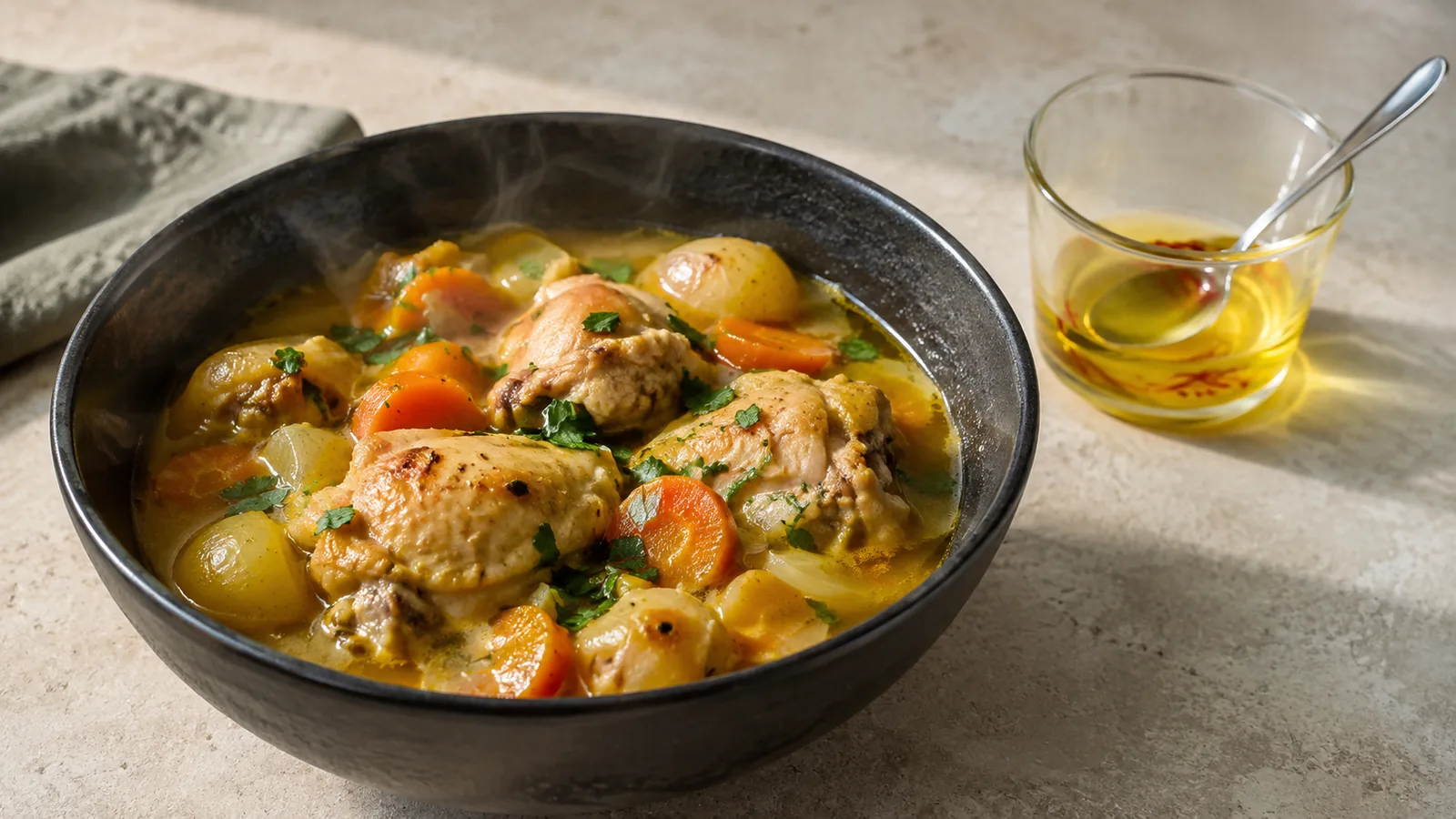
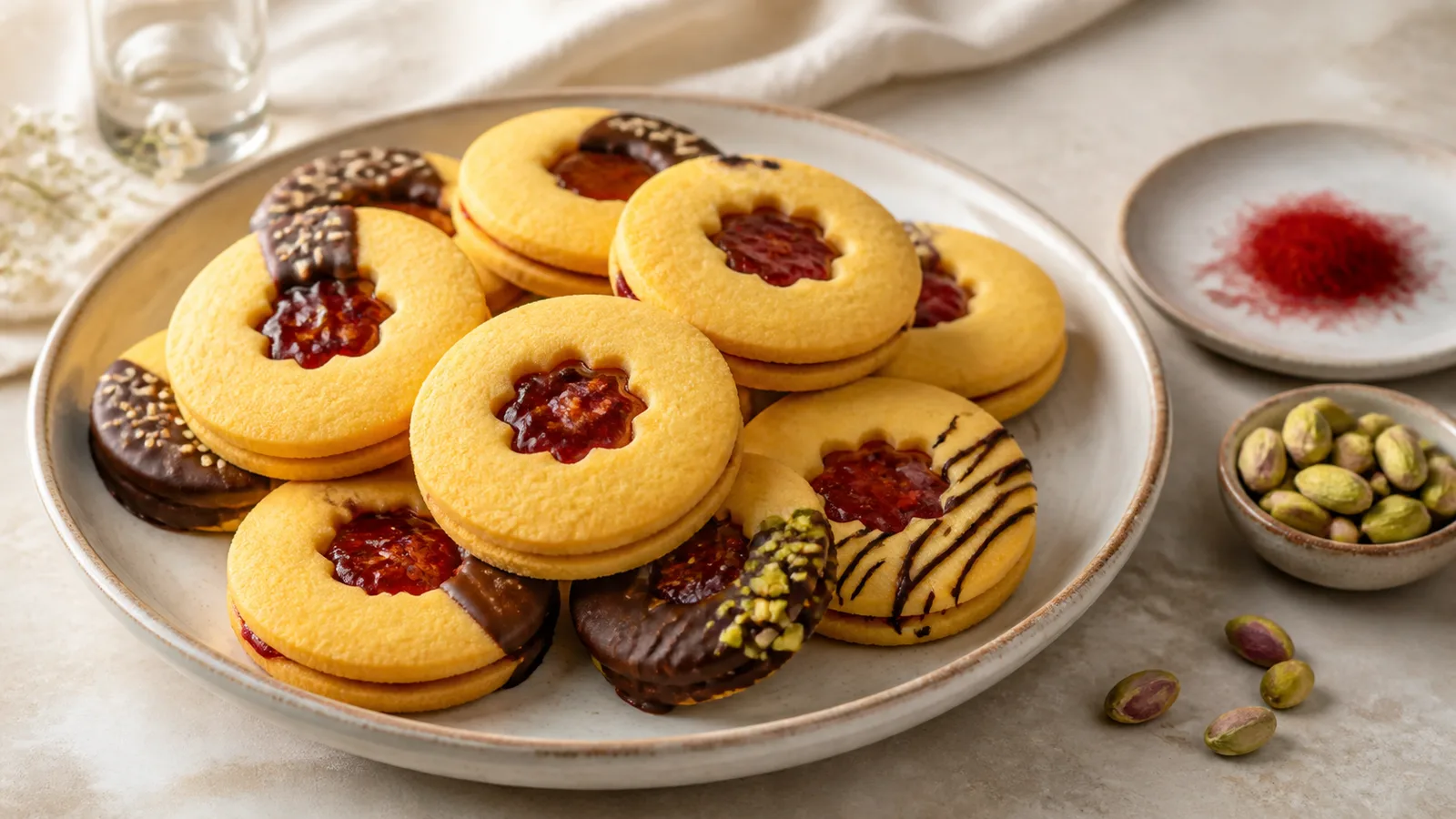
German Sweets Saffron Eid Fitr Recipe is a large-batch jam sandwich cookie flavoured with saffron and vanilla. The dough is rolled thick, baked only until lightly coloured, then paired around strawberry marmalade and decorated with pistachio, sesame or chocolate. The original translation was difficult to follow; this version keeps every ingredient and step while making the quantities and sequence usable.
About these German sweets
“German sweets” is the name attached to this soft sandwich-cookie style in the source recipe. It does not establish that this exact saffron version originated in Germany. What matters in the kitchen is the structure: two thick, tender cookies, one optionally cut with a small centre window, joined with marmalade.
They suit Eid al-Fitr because the dough can be prepared and cut in advance, the cookies look festive on a shared plate, and several finishes can come from one batch. Saffron gives the crumb a warm colour and a restrained floral note rather than turning the biscuits into a strongly spiced sweet.
Ingredients
For the cookie dough
- 600 g plain flour, plus up to 50 g more if needed
- 300 g pastry shortening, softened to room temperature
- 150 g icing sugar (powdered sugar)
- 2 eggs, at room temperature
- 30 ml milk
- ½ teaspoon vanilla
For the saffron syrup
- ½ cup water
- ½ teaspoon saffron, lightly ground
- 2 tablespoons icing sugar
For filling and decoration
- Strawberry marmalade, as needed
- Melted chocolate, sliced pistachios and sesame seeds, as desired
The source called the fat “pastry oil.” A soft pastry shortening matches that instruction more closely than liquid cooking oil. If using a different baking fat, expect the spread and texture to change. The ingredient “lion” in the old method was a translation error for the listed milk.
Before you start
Bring the pastry shortening and eggs to room temperature. The old recipe specifically asked for the fat to sit out for several hours; it needs to be soft enough to cream, not melted or oily.
Line baking trays with parchment paper. Choose one cookie cutter for the outer shape and a much smaller round cutter or piping-tip opening for the centre windows. Pairing equal shapes is easier when the dough is rolled to an even thickness.
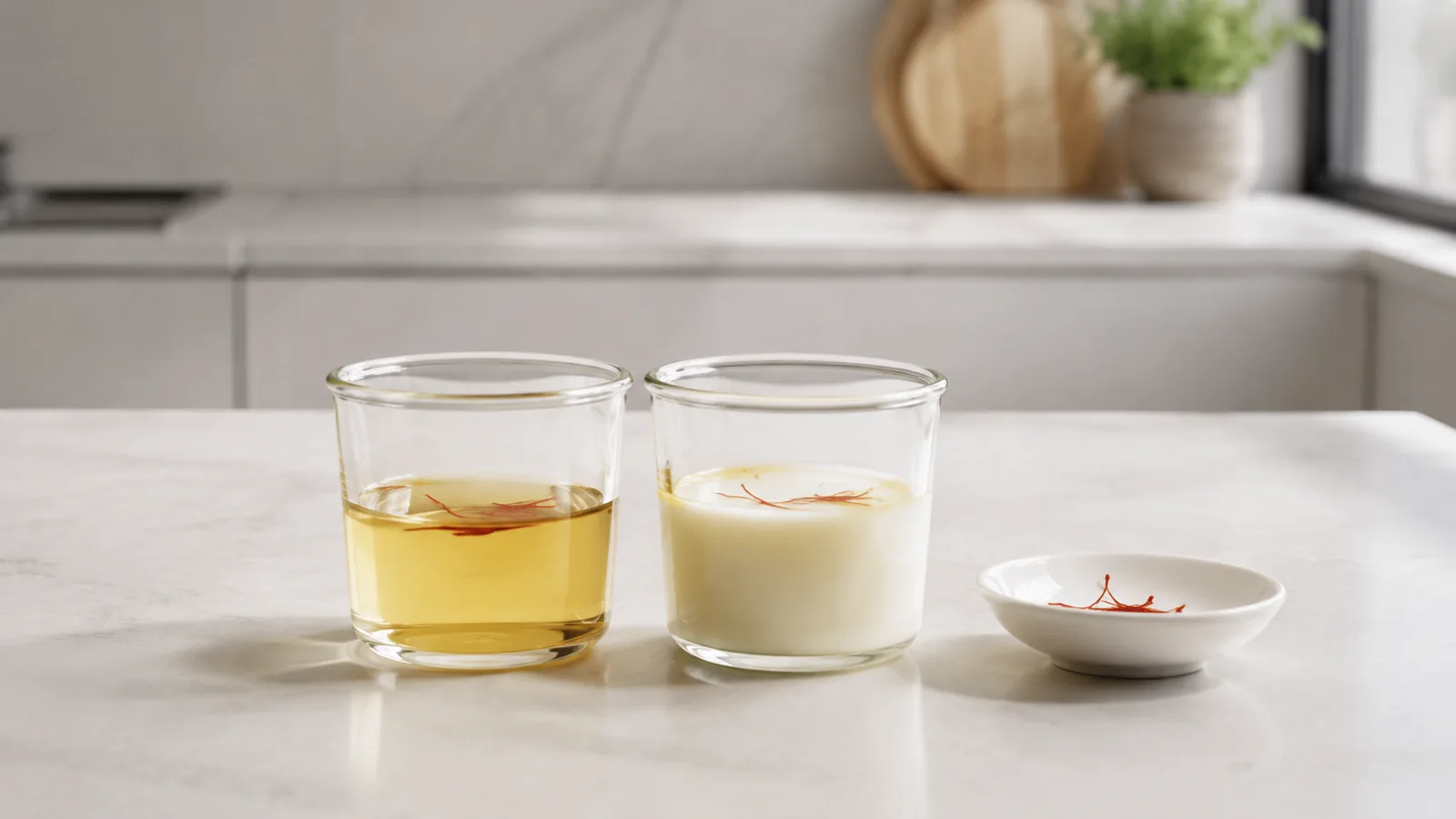
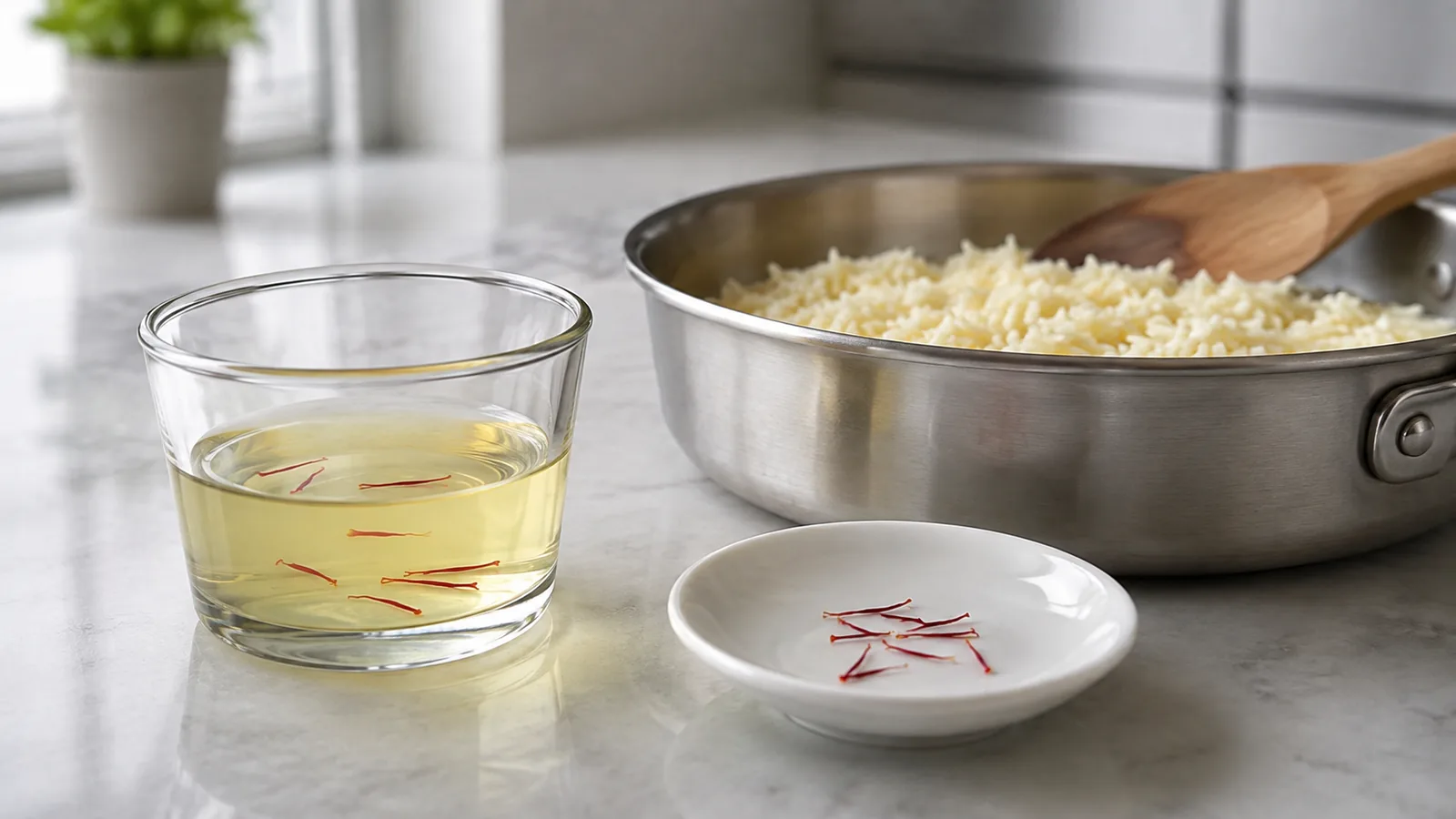
Make the saffron syrup
- Combine the water, 2 tablespoons icing sugar and lightly ground saffron in a small saucepan.
- Warm over low heat, stirring until the sugar dissolves.
- Simmer gently until the liquid reduces to a light syrup, then remove it from the heat and let it cool completely.
The original line “combine saffron and 2 tablespoons of soup spoon” omitted the ingredient after the measurement. The separate ingredient list gives 150 g sugar plus 2 tablespoons, so those two tablespoons logically belong in the saffron syrup. Do not add hot syrup to the creamed fat.
Mix the cookie dough
- Put the softened pastry shortening and 150 g icing sugar in a large bowl. Beat with an electric mixer until smooth, pale and evenly combined.
- Add the cooled saffron syrup and beat again until it is incorporated.
- Add the eggs one at a time. At this point, stir with a spoon or sturdy spatula; the original recipe says the electric mixer is no longer needed.
- Stir in the milk and vanilla.
- Add 600 g flour gradually and mix by hand just until a soft, workable dough forms. If it still sticks heavily, add extra flour a little at a time, up to about 650 g total.
Stop as soon as the dough can be rolled. Adding all the optional flour automatically, or kneading after it comes together, can make the baked sweets dry.
Roll and cut matching pairs
Lightly flour a clean work surface, or cover it with clean food-safe plastic as the original method suggested. Roll the dough to about ½ inch (12 mm) thick. This is intentionally thicker than many crisp cut-out cookies; the source emphasised that a thicker dough gives the better sweet.
Cut two pieces of each shape. Leave one whole for the base. Cut a small round opening in the centre of its partner with a plain piping tip or another small round cutter. Place both pieces on the lined tray, leaving a little space between them.
Bake at 175°C
Heat the oven to 175°C (about 350°F). Bake the cookies for 20–25 minutes, checking the first tray early. They should be set and only lightly coloured rather than deeply browned. Exact time depends on cutter size, thickness, tray colour and the oven.
Let them stand on the tray for a few minutes, then move them to a rack. Fill only when completely cool; warm cookies soften the marmalade and can slide out of alignment.
Fill and decorate the Eid al-Fitr sweets
- Spread a thin layer of strawberry marmalade on each whole cookie, keeping it just inside the edge.
- Place the matching window cookie on top and press very gently.
- Decorate with a small drizzle or dip of melted chocolate, sliced pistachios, sesame seeds, or a combination.
- Let the chocolate set before arranging the sweets on a serving plate.
A restrained finish keeps the saffron and strawberry flavours clear. If the marmalade is very loose, warm it briefly and reduce it, then cool it before filling.
How to avoid common problems
- Sticky dough: add flour by the tablespoon, not by the handful.
- Crumbly dough: stop adding flour; press a small piece together before assuming it needs more liquid.
- Cookies spreading: make sure the shortening was softened, not melted.
- Uneven pairs: use the same cutter and thickness for both halves.
- Sliding filling: cool the cookies and marmalade before assembly.
- Dry sweets: keep the ½-inch thickness and remove them when only lightly coloured.
Storage and serving
Store the unfilled cookies in an airtight container once fully cool. Fill them closer to serving if you prefer a firmer texture; assembled cookies gradually soften where they touch the marmalade.
Serve the German sweets with tea or coffee as part of an Eid al-Fitr assortment. Pistachio, sesame and chocolate can mark different shapes, making the plate varied without changing the base saffron dough.
Recipe basis
All core quantities, the saffron syrup, room-temperature pastry fat, hand-mixed eggs, 600–650 g flour range, ½-inch thickness, paired window shape, 175°C temperature, 20–25-minute bake, strawberry marmalade and three decorations come from the recipe preserved in the original post. Translation repairs are identified in the instructions rather than silently changing the dish.